


Choosing the best WhatsApp chatbot for your business shouldn’t be confusing. With 3 billion users, WhatsApp is now a key customer communication channel yet many “AI-powered” chatbots still rely on simple decision trees that fail in real conversations.
The real goal is finding a chatbot that truly automates support, understands context, and delivers clear ROI without hidden costs. From lead qualification to order updates and appointment booking, this guide focuses on what actually works.
We evaluated 10 leading WhatsApp chatbot platforms based on AI capabilities, integration depth, pricing transparency, setup complexity, and business impact. This guide helps you match platform strengths to your specific automation goals and avoid expensive mistakes.
How We Tested These WhatsApp Chatbots
Choosing a WhatsApp chatbot isn’t about feature lists it’s about how the bot performs in real conversations.
We tested each platform using real-world business scenarios across 100+ conversations to evaluate how well they handle actual customer interactions, not just demo flows.
Our Testing Criteria
We evaluated every tool based on:
- AI Understanding – Can the bot handle typos, slang, and vague queries?
- Context Retention – Does it remember previous messages across multi-step conversations?
- Response Accuracy – How often does it give correct answers on the first attempt?
- Workflow Automation – Can it complete actions like lead capture, booking, or order tracking?
- Integration Depth – How well does it connect with CRM, e-commerce, and support tools?
- Setup Complexity – Time and effort required to go live
Test Scenarios We Used
To simulate real usage, we ran queries like:
- “I want to return my order but I lost the receipt”
- “Book an appointment for next Friday after 6pm”
- “Do you have this product in blue? Size medium?”
- Messages with intentional typos and mixed languages
This helped us identify which platforms offer true conversational AI vs basic rule-based automation.
👉 Important: No chatbot performed perfectly. Even the best tools struggled with highly ambiguous queries or incomplete user inputs.
Quick Answer
The best WhatsApp chatbot depends on your specific use case, budget, and technical requirements.
- Best for advanced AI & omnichannel automation: Helo.ai
- Best for CRM-driven workflows: Respond.io
- Best for e-commerce stores: Tidio
- Best for marketing campaigns: Manychat
- Best for simple team collaboration: WATI
There is no one-size-fits-all solution. The right platform depends on whether your priority is automation quality, ease of use, or cost efficiency.
👉 If your focus is handling complex conversations at scale, AI-first platforms perform better.
👉 If your goal is quick setup and campaigns, simpler tools may be enough.
Platform | Best For | Starting Price | Key Strength |
Enterprise & Omnichannel | Custom Quote | True AI with context retention | |
Respond.io | Growing Teams | $199/mo | CRM integration depth |
Tidio | E-commerce | $24/mo | Fastest Shopify setup |
Manychat | Marketing Automation | $15/mo | Cross-channel campaigns |
WATI | Team Collaboration | $59/mo | Shared inbox workflow |
Botpress | Developers | Free tier | Open-source flexibility |
AiSensy | WhatsApp-First | $45/mo | Broadcast campaigns |
Yellow.ai | Global Enterprises | Custom Quote | 135+ languages |
Interakt | Regional Markets | $49/mo | Unlimited agents |
Gupshup | Custom API Needs | Custom Quote | Infrastructure scale |
What is a WhatsApp Chatbot?
A WhatsApp chatbot is AI-powered conversational software that automates customer interactions on WhatsApp Business Platform through the official WhatsApp Business API. Unlike basic auto-replies in the WhatsApp Business App, true WhatsApp chatbot platforms use natural language processing (NLP) to understand intent, maintain conversation context across multiple messages, and execute complex workflows like order processing, appointment booking, and CRM synchronization.
Modern WhatsApp automation platforms fall into two categories: rule-based chatbots that follow predetermined decision trees, and AI-powered conversational agents that learn from interactions and handle unpredictable queries. The latter category represents genuine conversational AI capable of understanding context, handling typos, and providing personalized responses based on customer history and behavioral data.
Businesses deploy WhatsApp chatbots to handle high-volume repetitive queries, qualify leads automatically, process orders without human intervention, schedule appointments across time zones, and provide 24/7 multilingual customer support. Integration with CRM systems, helpdesks, e-commerce platforms, and payment gateways transforms WhatsApp from a messaging channel into a complete customer engagement platform.
1. Helo.ai
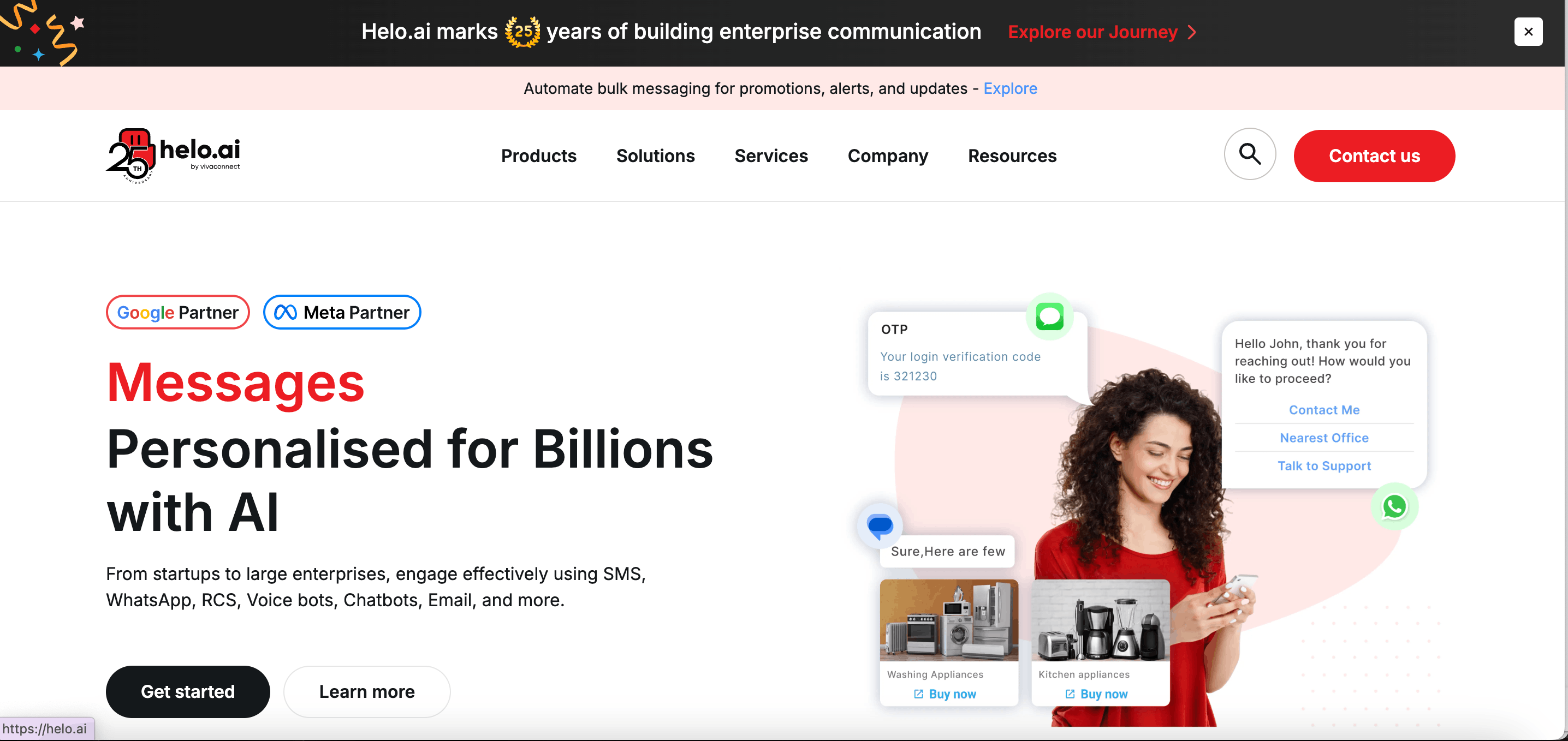
Helo.ai is designed for businesses that need more than basic automation and want to handle complex customer conversations at scale.
Our Testing Experience
In our testing, Helo.ai handled multi-step and unclear queries more reliably than most platforms.
For example, when we tested a refund request without complete details, the bot asked follow-up questions and guided the conversation instead of breaking the flow.
It also performed well when users changed intent mid-conversation or used incomplete messages.
Key Features
- AI-driven conversation handling (not just rule-based flows)
- Context retention across multiple messages
- Multi-channel support (WhatsApp, SMS, RCS)
- Workflow automation for support and lead qualification
Pros
- Strong performance in complex conversations
- Better handling of unclear or messy inputs
- Scales well for high conversation volumes
Cons
- Requires setup and training to perform well
- Not the easiest tool for beginners
- Pricing may not suit very small businesses
Pricing
Pricing is not publicly listed and typically depends on usage, features, and business requirements.
👉 You’ll need to contact the team for a custom quote.
Best Fit
Best suited for:
- Businesses handling large volumes of conversations
- Teams needing automation + CRM/support integration
- Companies prioritizing conversation quality over speed of setup
2. Respond.io
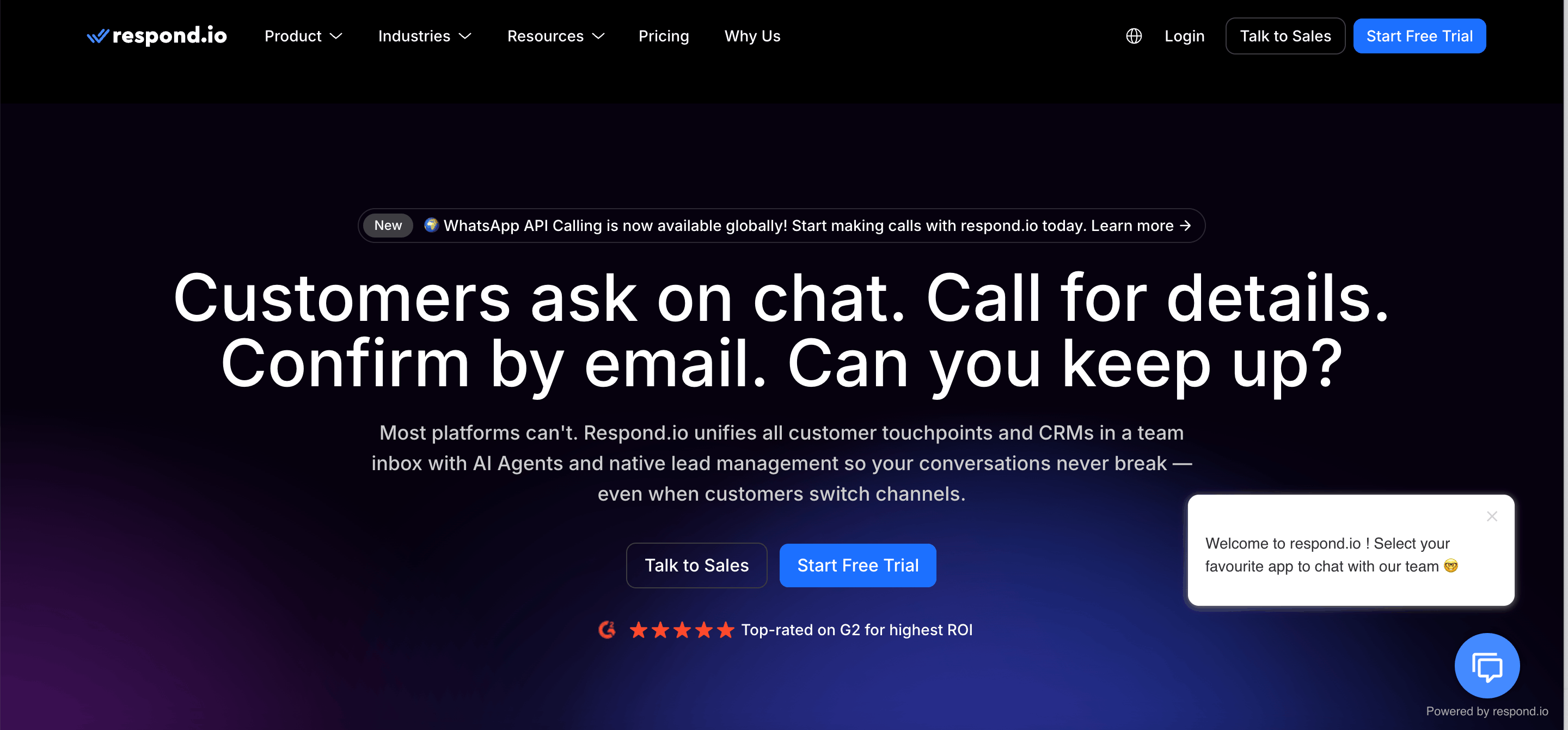
Respond.io is an omnichannel communication platform that integrates WhatsApp with other messaging channels and CRM workflows.
Our Testing Experience
Respond.io performed well in managing conversations across channels and routing queries efficiently. It handled structured workflows effectively, but advanced AI responses depend on integrations rather than built-in intelligence.
Key Features
- Omnichannel inbox (WhatsApp, Instagram, Messenger, etc.)
- Workflow automation and routing
- CRM integrations
- Team collaboration tools
Pros
- Strong multi-channel support
- Flexible automation workflows
- Good for scaling support operations
Cons
- Requires setup and configuration
- AI capabilities are not as advanced out-of-the-box
- Can feel complex for smaller teams
Pricing
Pricing is subscription-based, with additional WhatsApp conversation costs depending on usage.
Best Fit
Best for:
- Businesses managing multiple communication channels
- Teams needing automation + routing + CRM workflows
- Growing support teams
3. Tidio
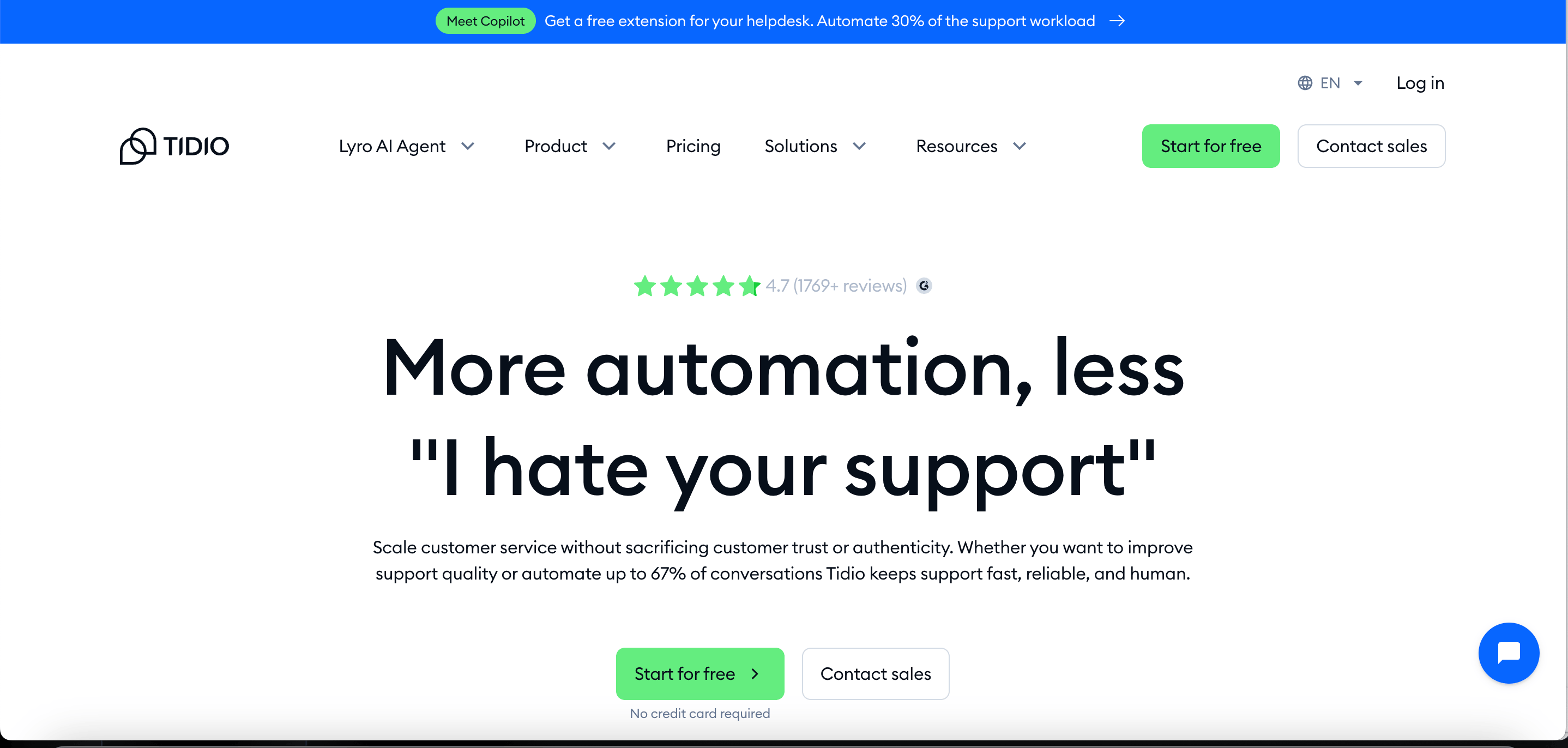
Tidio is a chatbot and live chat platform popular among small businesses and e-commerce brands.
Our Testing Experience
Tidio was easy to set up and worked well for basic automation and live chat scenarios. However, for more complex or multi-step conversations, it relied on predefined flows and struggled with open-ended queries.
Key Features
- Live chat + chatbot in one platform
- Visual chatbot builder
- E-commerce integrations (Shopify, etc.)
- Pre-built automation templates
Pros
- Very easy to use
- Quick setup
- Strong for small businesses
Cons
- Limited advanced AI capabilities
- Not ideal for high-volume automation
- Restricted flexibility for complex workflows
Pricing
Offers a free plan with limited features, along with paid plans based on usage and capabilities.
Best Fit
Best for:
- Small businesses
- E-commerce stores starting with automation
- Teams needing quick setup with minimal complexity
4. Manychat
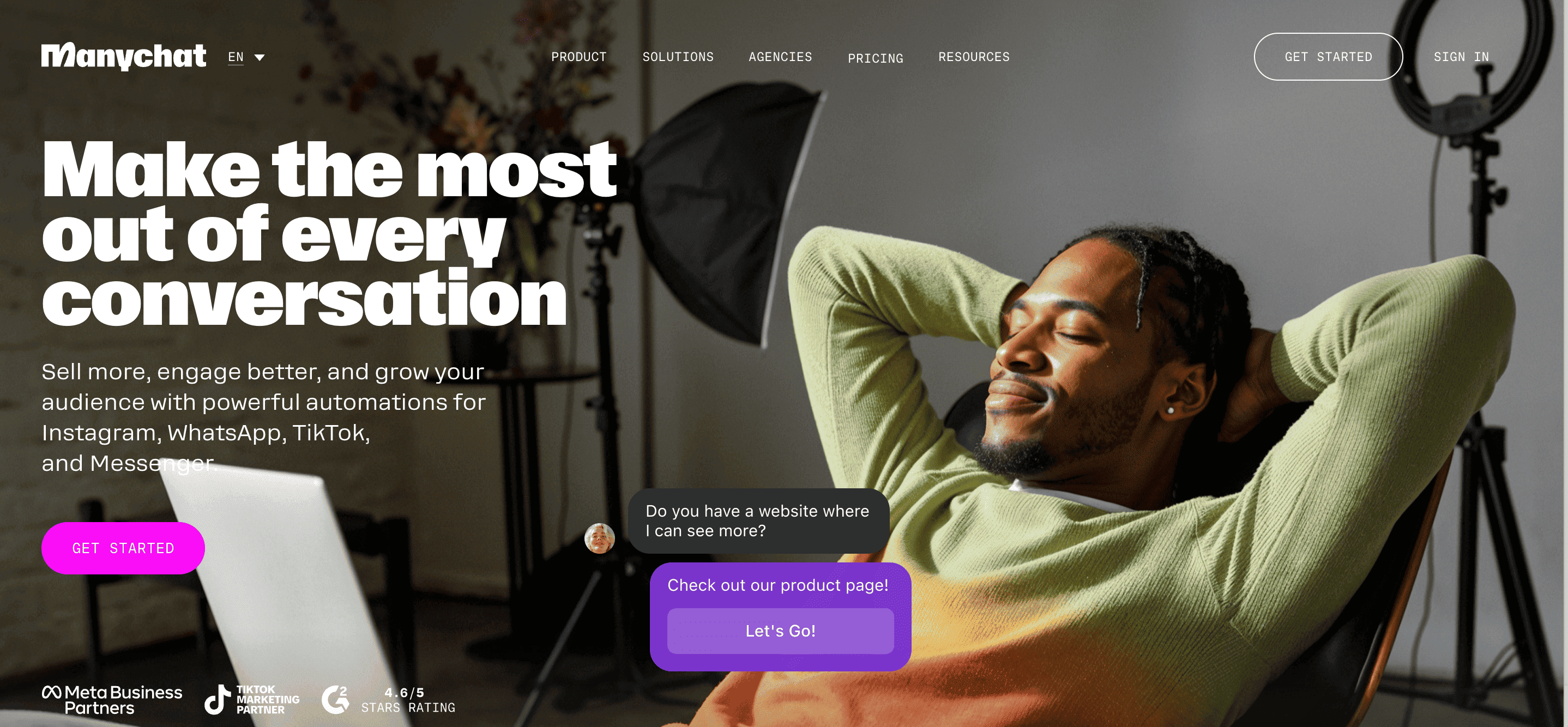
ManyChat is a marketing-focused automation platform widely used for WhatsApp, Instagram, and Facebook Messenger campaigns.
Our Testing Experience
ManyChat performed well for structured marketing flows like lead capture and campaigns. However, it relies heavily on predefined sequences and is less suited for handling dynamic, support-heavy conversations.
Key Features
- Marketing automation workflows
- Broadcast and campaign tools
- Lead capture funnels
- Multi-channel support
Pros
- Strong for marketing campaigns
- Easy to create funnels
- Good integration with Meta platforms
Cons
- Limited conversational AI depth
- Not ideal for support-heavy use cases
- Workflow complexity increases with scale
Pricing
Offers tiered pricing based on contacts and features, along with WhatsApp conversation charges.
Best Fit
Best for:
- Marketing teams
- Lead generation campaigns
- Businesses focused on conversion funnels
5. WATI
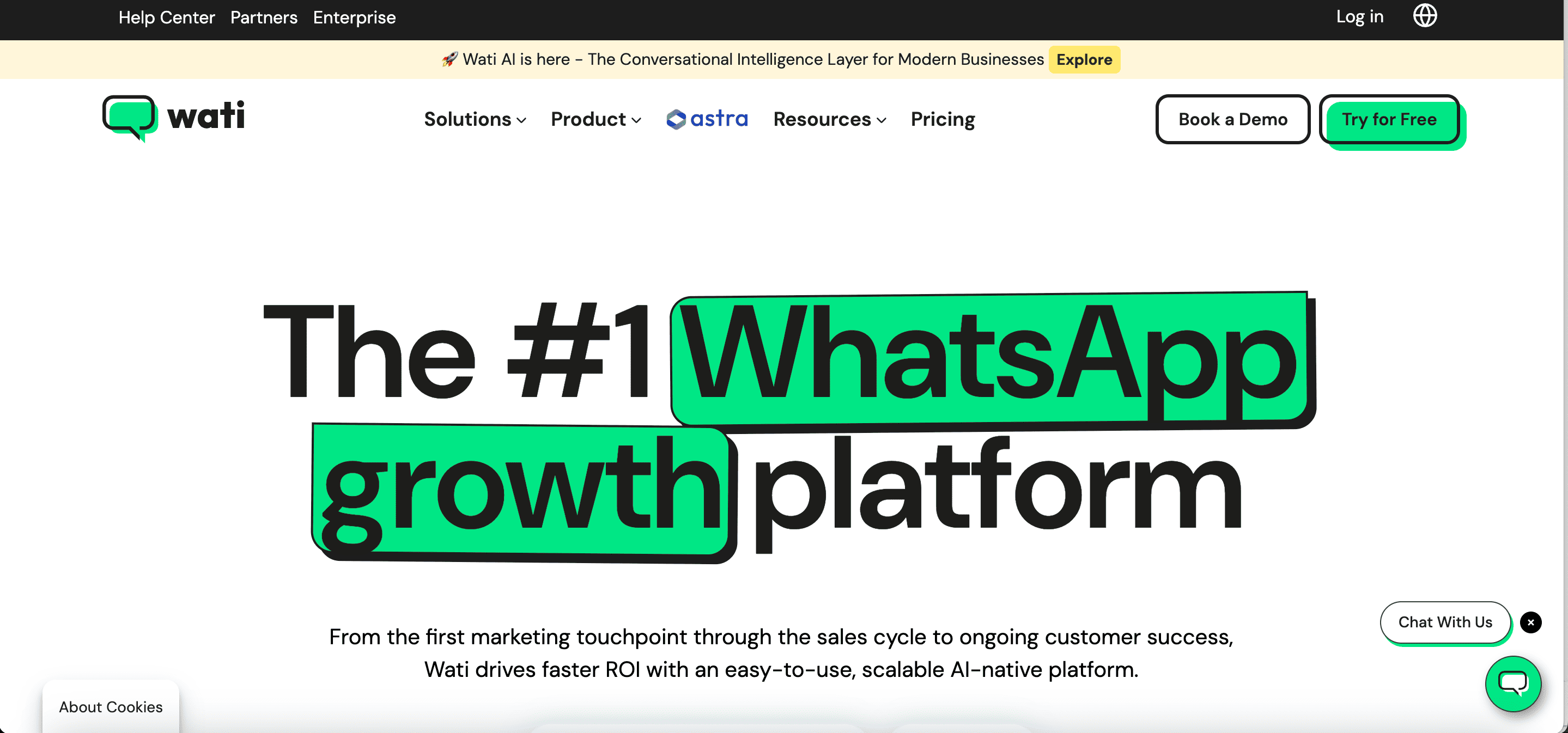
WATI is a WhatsApp-focused platform built on the official WhatsApp Business API, primarily designed for customer support and team collaboration.
Our Testing Experience
In testing, WATI worked reliably for structured workflows like support queries and predefined responses. However, when conversations became less predictable or users asked open-ended questions, the bot relied heavily on predefined flows.
This makes it more suitable for controlled use cases rather than complex conversational AI.
Key Features
- Shared team inbox for WhatsApp
- Broadcast messaging and campaign tools
- No-code chatbot builder
- Integration with CRM and support tools
Pros
- Easy to set up and use
- Strong for team-based customer support
- Good for broadcast campaigns
Cons
- Limited AI capabilities compared to newer platforms
- Relies heavily on rule-based automation
- Can become restrictive for complex workflows
Pricing
WATI offers tier-based pricing depending on features and usage. WhatsApp conversation charges are billed separately.
Best Fit
Best for:
- Small to mid-sized teams
- Businesses focused on customer support and broadcasts
- Teams needing a shared WhatsApp inbox
6. Botpress
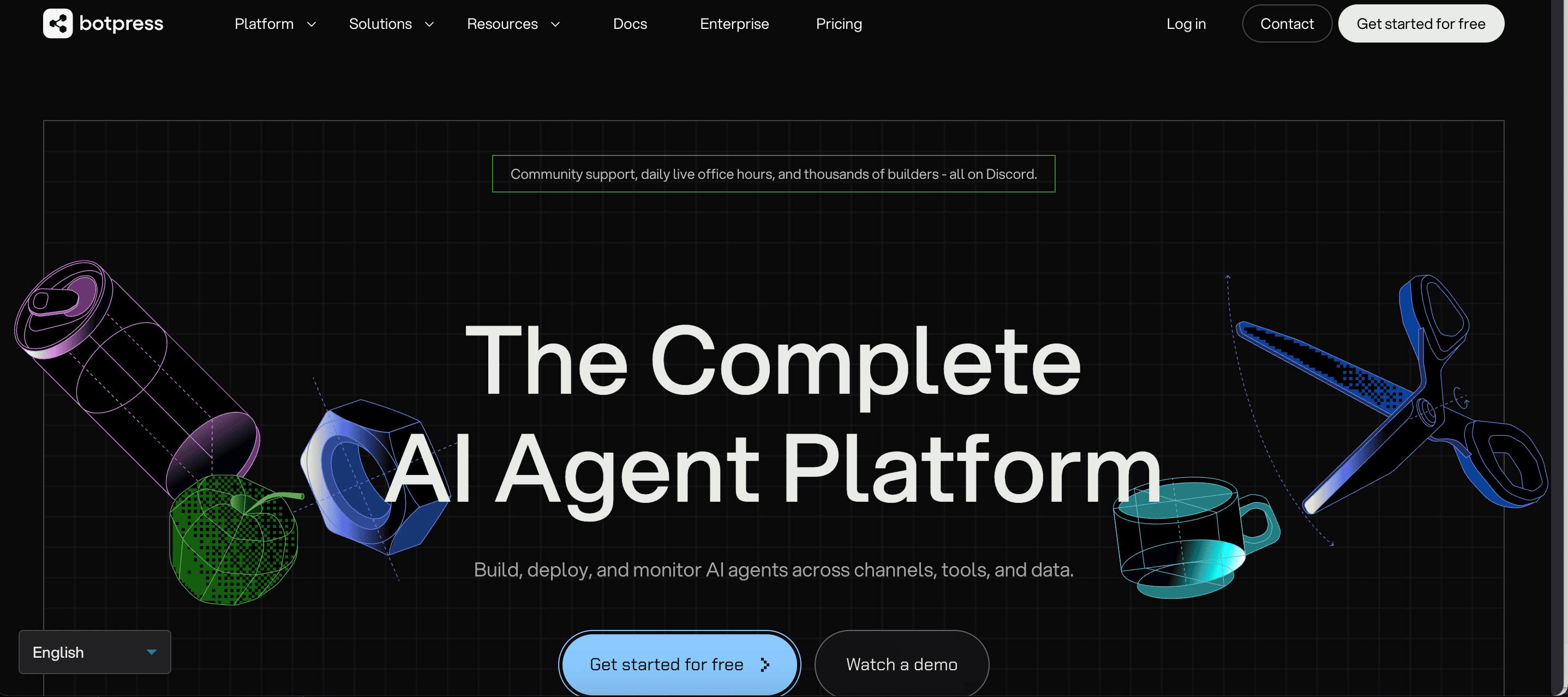
Botpress is a highly customizable AI chatbot platform designed for teams that want control over how their chatbot behaves and integrates with other systems.
Our Testing Experience
In testing, Botpress performed well for building structured and AI-assisted workflows, especially when connected to external knowledge sources.
However, it required more setup compared to plug-and-play tools. The flexibility is powerful, but it also means you need to define logic and flows more carefully.
Key Features
- Advanced AI chatbot builder with LLM support
- Visual flow editor for conversation design
- WhatsApp integration via official API
- Extensive integrations (CRM, APIs, databases)
- Multi-channel deployment
👉 Built on the official WhatsApp API, ensuring secure and compliant messaging
Pros
- Highly customizable and flexible
- Strong AI + developer capabilities
- Supports complex workflows and integrations
Cons
- Steeper learning curve for non-technical users
- Requires setup effort and planning
- Not ideal for quick deployment use cases
Pricing
Offers a free tier with usage-based pricing for AI and messaging. Paid plans scale based on features and usage.
Best Fit
Best for:
- Teams needing custom chatbot logic and control
- Businesses with technical resources or developers
- Use cases requiring deep integrations and flexibility
7. AiSensy
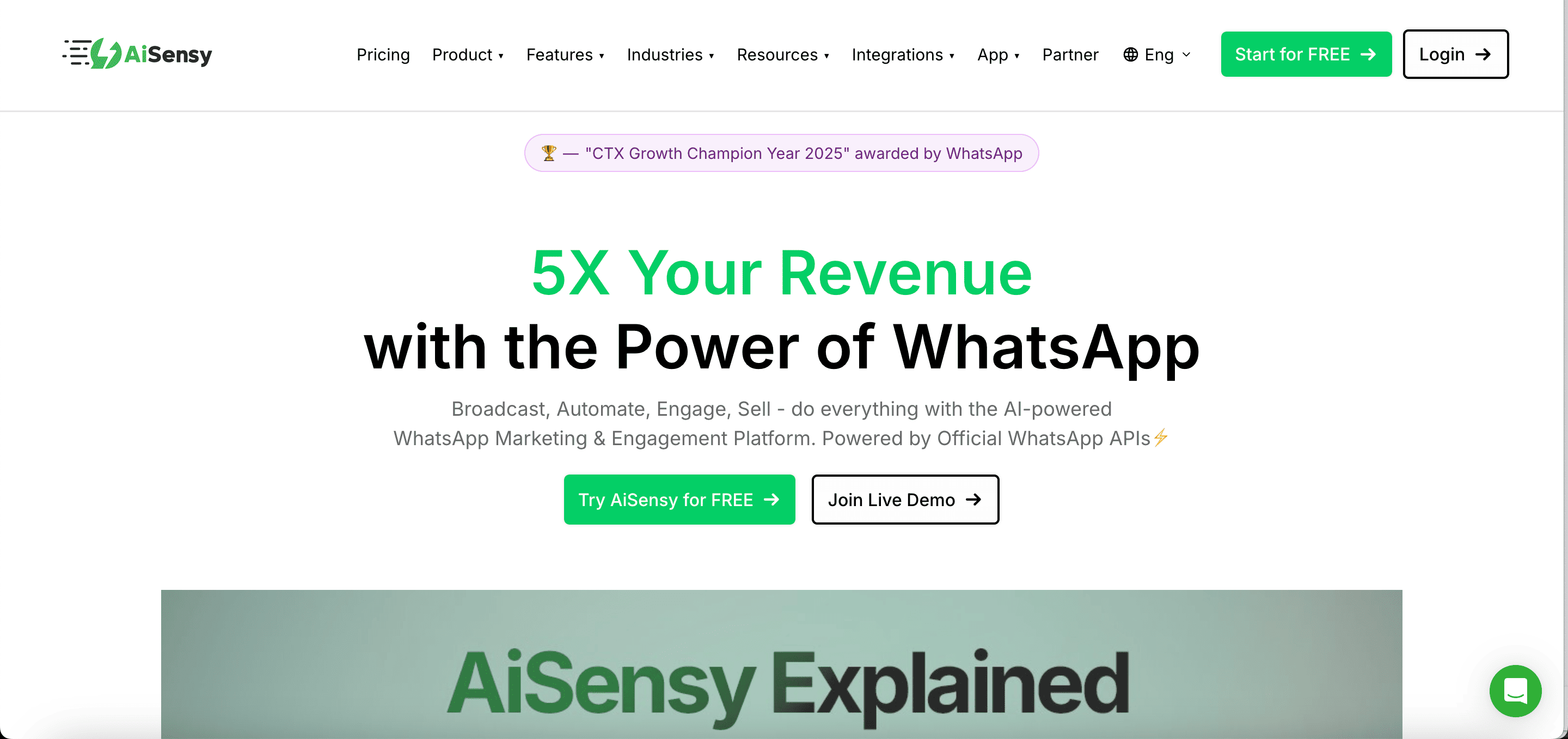
AiSensy is a WhatsApp marketing and engagement platform built for businesses looking to run campaigns and automate communication.
Our Testing Experience
AiSensy worked well for broadcast messaging and basic automation flows. It was easy to get started with, but complex conversations required manual structuring and did not adapt dynamically.
Key Features
- WhatsApp broadcast campaigns
- Chatbot builder
- Template messaging
- CRM integrations
Pros
- Simple onboarding
- Strong for campaigns and outreach
- User-friendly interface
Cons
- Limited advanced AI capabilities
- Heavily flow-based automation
- Less flexibility for complex use cases
Pricing
Subscription-based pricing with additional WhatsApp messaging charges depending on usage.
Best Fit
Best for:
- Small to mid-sized businesses
- Campaign-driven communication
- Teams focused on marketing automation
8. Yellow.ai
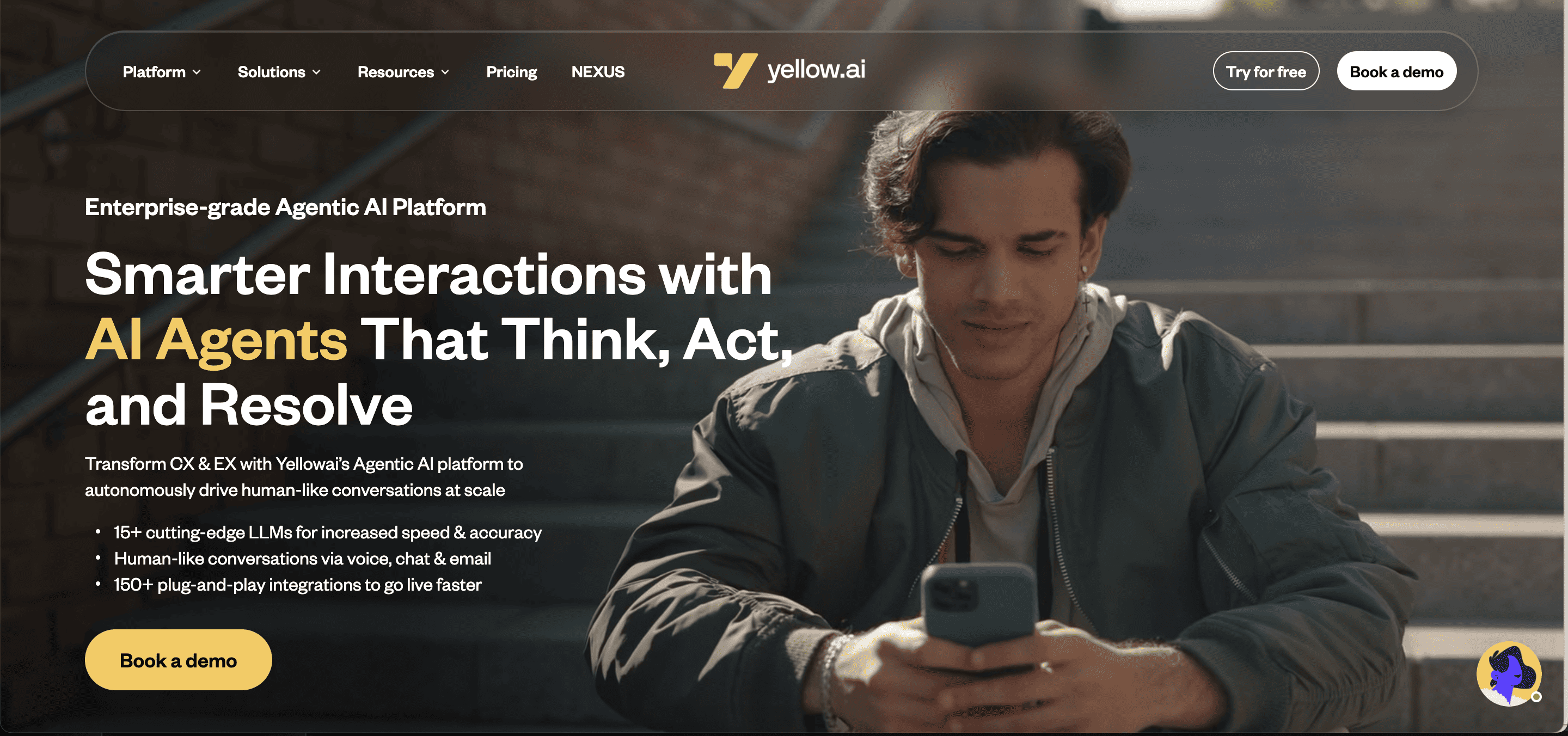
Yellow.ai is an enterprise-grade conversational AI platform designed for automation across multiple channels, including WhatsApp.
Our Testing Experience
Yellow.ai handled complex automation scenarios well, especially in structured enterprise workflows. However, setup and configuration require significant effort, and performance depends on implementation quality.
Key Features
- Advanced conversational AI
- Omnichannel automation
- Voice + chat support
- Enterprise integrations
Pros
- Strong AI capabilities
- Suitable for large-scale automation
- Multi-channel support
Cons
- Complex setup
- Higher cost compared to simpler tools
- Requires technical involvement
Pricing
Custom pricing based on business requirements and scale.
Best Fit
Best for:
- Large enterprises
- Businesses needing advanced AI automation
- Teams with technical resources
9. Interakt

Interakt offers straightforward WhatsApp automation with focus on simplicity and affordability for small and medium businesses primarily in India and Southeast Asia. The platform prioritizes ease of use over advanced features.
Key Features:
Simple Interface – Minimal learning curve for non-technical users
Unlimited Agents – No per-seat pricing restrictions across all plans
Basic Automation – Template-based chatbot flows for common business scenarios
Broadcast Messaging – Segment-based campaign management with scheduling
Payment Integration – Accept payments through WhatsApp with local payment gateway support
Pricing:
Growth: $49/month – Unlimited agents, basic automation, standard support
WhatsApp Business API messaging fees apply based on Meta’s regional pricing.
10. Gupshup

Gupshup is a conversational messaging platform that provides infrastructure for building chatbots and communication workflows across channels, including WhatsApp.
Our Testing Experience
In testing, Gupshup worked more like an infrastructure layer than a plug-and-play tool.
It handled messaging and automation reliably, but required technical setup and integration to build full chatbot experiences.
Key Features
- Multi-channel messaging (WhatsApp, SMS, voice, etc.)
- No-code and API-based chatbot building
- Enterprise-grade integrations
- Automation for marketing, support, and engagement
Pros
- Strong infrastructure and scalability
- Supports multiple communication channels
- Flexible for custom implementations
Cons
- Requires technical expertise to set up
- Not beginner-friendly
- Limited out-of-the-box UI compared to SaaS tools
Pricing
Custom pricing based on usage, channels, and enterprise requirements.
Best Fit
Best for:
- Enterprises and large businesses
- Teams needing custom messaging infrastructure
- Companies building scalable, multi-channel communication systems
👉 Used by businesses for customer engagement, support, and automation across channels
Why Most WhatsApp Chatbots Fail (And What to Avoid)
Most businesses don’t fail because they picked the wrong tool—they fail because they misunderstand how chatbots actually work.
1. Over-Reliance on Decision Trees
Many chatbots marketed as “AI-powered” are still rule-based systems. They break as soon as users deviate from expected inputs.
👉 Result: Poor user experience and drop-offs.
2. Ignoring Training & Optimization
Even advanced AI chatbots require:
- Training data
- Real conversation feedback
- Continuous optimization
Without this, performance remains average.
3. Hidden Costs of WhatsApp API
Many platforms don’t clearly explain:
- Conversation-based pricing
- Marketing vs service message costs
- Scaling costs at higher volumes
👉 Businesses often underestimate total cost by 30–50%.
4. Poor Integration Planning
A chatbot without CRM, support, or order system integration becomes a dead-end tool.
👉 Real value comes from automation + system connectivity.
You can also review WhatsApp opt-in rules to ensure your campaigns stay compliant and avoid delivery issues.
How to Choose the Right WhatsApp Chatbot
Step 1: Define Your Primary Goal
Different WhatsApp chatbot platforms excel at specific use cases. Match your primary automation objective to platform strengths:
- Customer Support Automation → Helo.ai, Respond.io, Yellow.ai
- E-commerce Sales → Tidio, AiSensy, Manychat
- Marketing Campaigns → Manychat, AiSensy, WATI
- Lead Qualification → Respond.io, Helo.ai, Manychat
- Appointment Booking → Tidio, Respond.io, WATI
Step 2: Evaluate AI Capabilities
Test whether platforms offer genuine AI or decision trees by asking:
- Does the bot handle typos and varied phrasing?
- Can it maintain context across 5+ message exchanges?
- Does it understand intent beyond keyword matching?
- Can it handle unexpected queries gracefully?
Only 40% of platforms tested maintained meaningful context beyond 3 exchanges.
Step 3: Calculate Total Cost
WhatsApp chatbot costs include multiple components:
Platform Subscription: $15-$400+ monthly depending on features and scale
WhatsApp API Fees: $0.005-$0.30 per conversation depending on category and country
Additional Users: $30-$100 per seat/month on team plans
Integration Costs: Free (native) to $2,000-$10,000 (custom development)
Overage Charges: $0.10-$0.50 per conversation above plan limits
A realistic monthly cost example: $199 platform + $150 WhatsApp fees + $100 extra users = $449 total.
To understand the exact breakdown of platform fees, Meta charges, and hidden costs, check this detailed guide on WhatsApp API pricing.
Step 4: Verify Integration Requirements
Native integrations eliminate middleware costs and failure points. Prioritize platforms with direct connectors to your essential tools:
- CRM Systems: Salesforce, HubSpot, Pipedrive, Zoho
- Helpdesk Platforms: Zendesk, Freshdesk, Intercom
- E-commerce: Shopify, WooCommerce, BigCommerce, Magento
- Payment Gateways: Stripe, PayPal, Razorpay (regional)
Step 5: Test Before Committing
Request demos and trials from 2-3 shortlisted platforms. During testing:
✓ Build a simple flow matching your actual use case
✓ Test with 20-30 real customer questions
✓ Connect your CRM or primary business system
✓ Measure bot performance on complex queries
✓ Calculate projected monthly costs at your volume
Alos Read: WhatsApp Chatbot for Healthcare
Frequently Asked Questions
How much does a WhatsApp chatbot really cost?
Total WhatsApp chatbot costs include platform subscription ($15-$400/month), WhatsApp Business API conversation fees ($0.005-$0.30 per conversation based on category and country), additional user seats ($30-$100/seat), and integration costs (free for native, $2,000-$10,000 for custom). Marketing conversations cost significantly more than service conversations. Calculate ROI by measuring support cost reduction and conversion lift.
Can I build a WhatsApp bot without coding?
Yes, platforms like Helo.ai, Tidio, Manychat, WATI, and Respond.io offer visual no-code builders with drag-and-drop conversation design. Pre-built templates for common scenarios (lead capture, FAQ, order tracking) enable non-technical users to deploy functional bots in hours. Advanced customization and complex integrations may require developer assistance.
What’s the difference between AI and rule-based bots?
Rule-based chatbots follow predetermined decision trees and break when users deviate from expected paths. AI-powered bots use natural language processing to understand intent, handle typos and variations, maintain context across conversations, and learn from interactions. Our testing showed only Helo.ai, Respond.io, Yellow.ai, and Botpress demonstrated true AI capabilities versus basic keyword matching.
Which chatbot integrates best with Shopify?
Tidio offers the fastest Shopify integration with native connector, product catalog sync, and pre-built e-commerce automation templates. AiSensy provides strong catalog management for WhatsApp-focused selling. Respond.io and Helo.ai support Shopify as part of broader omnichannel strategies with deeper workflow customization.
Do I need WhatsApp Business API?
Yes, advanced chatbot automation requires WhatsApp Business API, which differs from the free WhatsApp Business App. The API enables unlimited messaging, multiple agent access, integration with business systems, and automated conversations. Most chatbot platforms help with API application and approval process, which typically takes 1-2 weeks.
How long does WhatsApp chatbot setup take?
Setup time varies by platform and complexity: Tidio and Manychat enable basic automation in 90 minutes to 2 hours. Respond.io and WATI require 2-4 hours for workflow configuration. Helo.ai and Yellow.ai enterprise deployments take 1-2 weeks including integrations and testing. WhatsApp Business API approval adds 1-2 weeks regardless of platform.
Can chatbots handle multilingual conversations?
Yellow.ai leads with native support for 135+ languages without translation layers. Helo.ai and Respond.io offer strong multilingual capabilities with automatic language detection. Most platforms support multiple languages through translation APIs, but natural language understanding quality degrades with machine translation. Test in your target languages before committing.
What industries benefit most from WhatsApp chatbots?
E-commerce businesses achieve 30-40% conversion lift through automated cart recovery and product recommendations. Healthcare providers streamline appointment scheduling and patient communication. Real estate agents qualify leads and schedule property viewings automatically. Financial services handle account inquiries and transaction alerts. Hospitality businesses manage bookings and guest services across time zones.
Are WhatsApp chatbots GDPR compliant?
Enterprise platforms like Helo.ai, Respond.io, and Yellow.ai provide GDPR compliance features including data processing agreements, user consent management, data retention controls, and right-to-deletion workflows. Businesses remain responsible for implementing compliant conversation design, obtaining proper consent, and maintaining data security. Review each platform’s compliance certifications and data processing terms.
How do I measure chatbot ROI?
Track conversation automation rate (percentage handled without human intervention), average handling time reduction, support cost per conversation, lead conversion rate improvement, and customer satisfaction scores. Compare monthly chatbot costs against support staff savings and revenue impact. Successful implementations typically achieve 60-80% automation of routine inquiries within 3-6 months.
Conclusion
Choosing the best WhatsApp chatbot depends on your business goals, not just features.
If you need advanced automation and AI-driven conversations, platforms like Helo.ai and Yellow.ai are better suited. For simpler use cases like campaigns or basic support, tools like Tidio, Interakt, or Manychat can be easier to get started with.
What matters most is how well the chatbot handles real conversations, integrates with your systems, and scales with your business.
Before deciding, make sure you understand the total cost, including platform fees and WhatsApp conversation charges. You can read our detailed guide on WhatsApp API pricing to get a clearer picture.
In the end, the right WhatsApp chatbot is the one that fits your workflow, budget, and long-term growth—not just the one with the most features.