.png)


You already know your customers are on WhatsApp. The real question is are you using it beyond basic replies?
In practice, this is one of the biggest gaps we see. Many businesses set up WhatsApp but stop at customer support, missing out on automation, segmentation, and revenue-driving campaigns.
In this guide, you’ll learn what WhatsApp marketing actually looks like in 2026, why it works better than traditional channels, how to get started step by step, and which strategies are driving real results today.
Key Takeaways
- WhatsApp marketing is the strategic use of WhatsApp Business tools to promote your brand, engage customers, and drive sales through personalized, two-way messaging.
- WhatsApp messages are widely reported and 45–60% click-through rates for promotional content significantly outperforming email and SMS on every engagement metric.
- Getting started requires five steps: create a business account, collect opt-ins, segment your audience, set up automated messages, and measure performance.
- The WhatsApp Business API is essential for businesses that want automation, CRM integration, and messaging at scale beyond 256 contacts.
- Click-to-WhatsApp Ads on Facebook and Instagram are the fastest-growing acquisition channels for building a subscriber list in 2026.
- WhatsApp works best as part of a cross-channel strategy pairing it with email, SMS, and push notifications for maximum reach.
What Is WhatsApp Marketing?
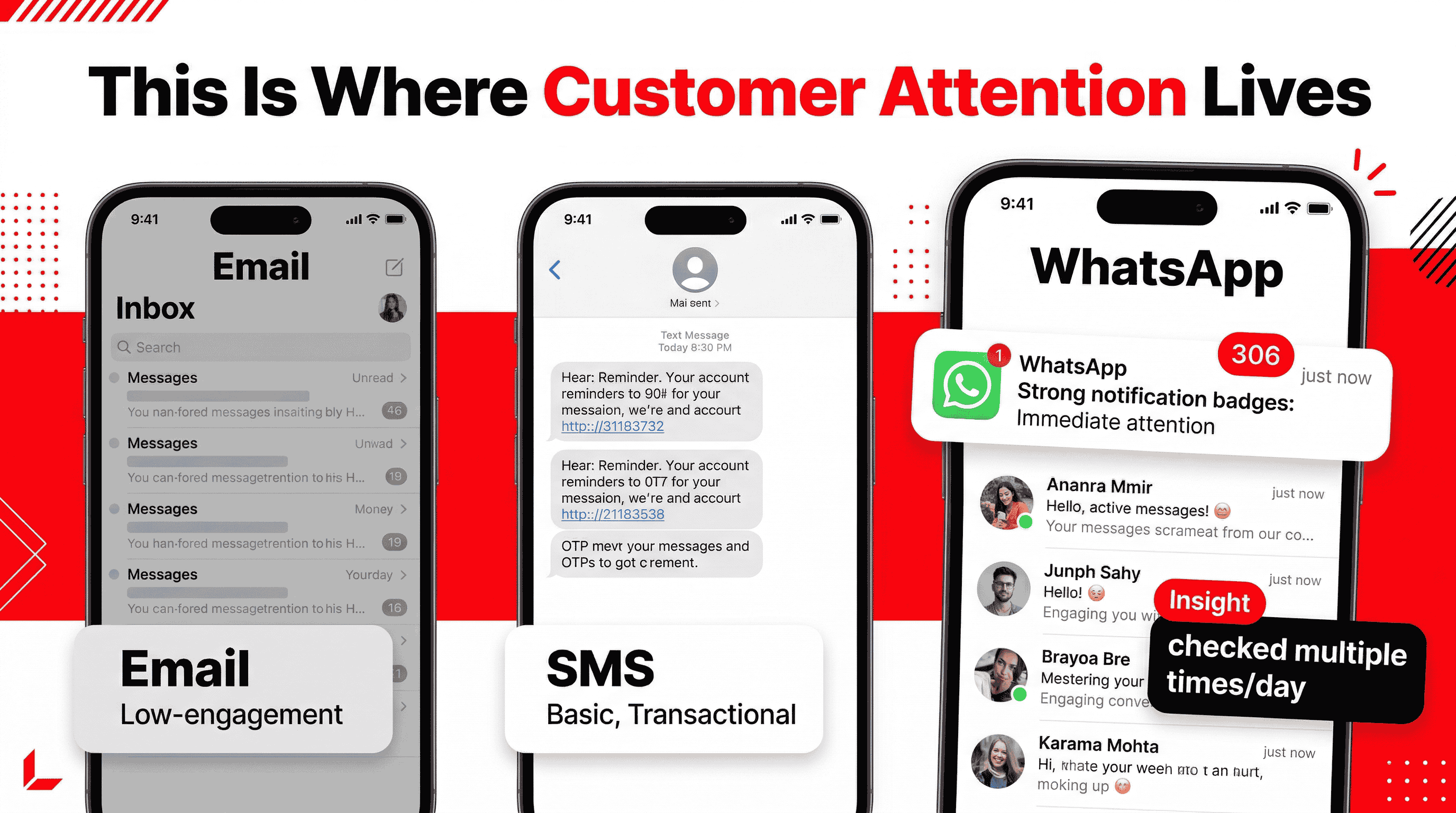
WhatsApp marketing is the practice of using WhatsApp's business tools to promote products, nurture leads, and build customer relationships through personalized, permission-based messaging. It goes beyond simple customer support encompassing promotional campaigns, automated workflows, product catalogs, and interactive commerce experiences, all within the chat interface.
WhatsApp marketing transforms the platform from a simple messaging app into a direct revenue channel. Instead of competing for attention in crowded email inboxes or social media feeds, businesses can reach customers in a space they actively use every day, which increases trust and improves conversion potential.
WhatsApp offers two main business solutions.
The WhatsApp Business App is designed for small businesses and includes basic features like a business profile, quick replies, and limited broadcast messaging.
The WhatsApp Business API, on the other hand, is built for growing businesses that need automation, CRM integration, chatbots, and large-scale messaging capabilities.
What makes WhatsApp marketing unique is its interactive feature set. Businesses can use quick reply buttons, call-to-action buttons, carousel messages with multiple images, WhatsApp Flows for in-chat forms and bookings, and product catalogs powered by the Meta Catalog. These features turn a simple chat thread into a full shopping and engagement experience.
Why Is WhatsApp Marketing Important for Businesses?
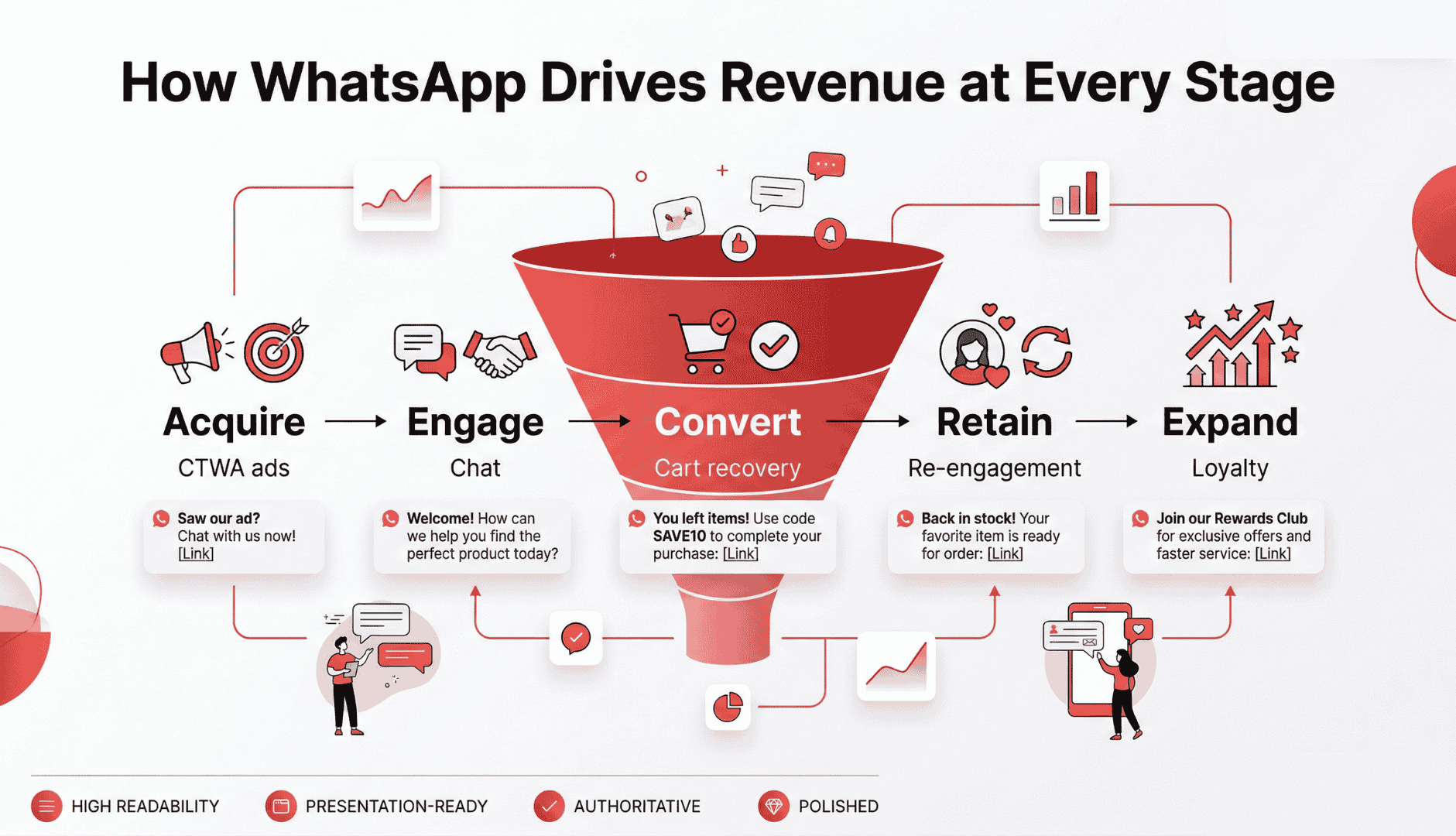
WhatsApp marketing matters because it consistently outperforms traditional marketing channels on every engagement metric open rates, click-through rates, response rates, and cost per conversion.
Compared to traditional channels, WhatsApp consistently delivers stronger engagement. While email open rates typically range between 20% and 30%, messaging platforms like WhatsApp benefit from higher visibility and faster response times.
Unmatched Open and Read Rates
WhatsApp messages achieve an average open rate of 98%, matching SMS and far exceeding email's 20% average . Unlike email, there is no spam folder. Unlike SMS, WhatsApp supports rich media, interactive buttons, and two-way conversations. Messages arrive in the same thread customers use daily, which means they are read within minutes, not hours.
In real campaigns, the difference is visible immediately. Messages that might get ignored in email are often opened within minutes on WhatsApp, simply because of how frequently users check the app.
Higher Conversions Than Email or SMS
Brands using WhatsApp Business API for marketing see higher conversions compared to traditional channels. WhatsApp campaigns drive better engagement, with more users clicking, responding, and completing purchases than SMS and email.
The biggest advantage is not just visibility but the ability to respond instantly. When customers can ask questions and get answers in the same thread, it removes friction from the buying process.
Two-Way Conversations Build Trust
Most marketing channels are one-way. You send a message and hope for a click.
WhatsApp works differently. Customers can reply instantly, ask questions, and make decisions in the same conversation. That back-and-forth is what builds trust — and ultimately drives repeat purchases.
Massive Global Reach
WhatsApp operates in over 180 countries and is the most widely used messaging app across many of them. Globally, it has crossed billions of active users, making it a primary communication channel for both customers and businesses especially across regions like Asia, Latin America, and the Middle East.
Cost-Effective Customer Engagement
WhatsApp helps businesses lower customer acquisition costs by leveraging direct messaging instead of expensive paid advertising. By integrating WhatsApp into your broader omnichannel communication strategy, you can improve engagement on a channel customers actually want to interact with — reducing churn and increasing lifetime value without inflating your marketing budget.
Who Is WhatsApp Marketing For?
WhatsApp marketing is effective across virtually every industry where businesses communicate directly with customers. While ecommerce and retail brands are the most visible adopters, the channel is equally powerful for financial services, healthcare, education, travel, and food service businesses.
Here is how different industries are using WhatsApp marketing today:
- Ecommerce and D2C: Abandoned cart recovery, product launch announcements, order tracking, and personalized product recommendations through carousel messages.
- Retail: In-store promotions, loyalty program enrollment, new arrival notifications, and personalized offers based on purchase history.
- Banking and Financial Services: Real-time transaction alerts, fraud notifications, loan application updates, and secure OTP delivery — Helo.ai clients like Bajaj Finance and Kotak Mahindra Bank are already using this approach.
- Restaurants and Food Delivery: Menu sharing, table reservations, order confirmations, delivery tracking, and loyalty rewards.
- Healthcare: Appointment reminders, test result notifications, prescription refill alerts, and telehealth consultation links.
- Education and Coaching: Enrollment updates, assignment reminders, class schedules, and doubt resolution through chatbots.
- Travel and Hospitality: Booking confirmations, itinerary sharing, flight updates, and upsell opportunities for room upgrades or add-on experiences.
The common thread is simple: if your customers use WhatsApp daily, you should be meeting them there.
How to Get Started with WhatsApp Marketing in 5 Steps
Getting started with WhatsApp marketing requires five steps: creating your business account, collecting customer opt-ins, segmenting your audience, setting up automated messages, and tracking performance. Most successful WhatsApp marketing setups follow a similar pattern: start simple, then layer in segmentation and automation as you grow.
Step 1: Create Your WhatsApp Business Account
Your first decision is choosing between the WhatsApp Business App (free, for small businesses) and the WhatsApp Business API (scalable, for growing and enterprise businesses). The right choice depends on your business size and automation needs.
If you need automation, CRM integration, or messaging beyond 256 contacts, the API is the right path. Choose an official Meta Business Solution Provider (BSP) like Helo.ai that offers a no-code setup, embedded sign-up flow, and direct API access.
Once you have selected your path, create your business profile, add your business name, logo, description, category, address, website, and operating hours. Then complete Meta's business verification to unlock the green tick badge and higher messaging limits.
Step 2: Get Customer Opt-Ins
WhatsApp requires explicit consent before you send any marketing message. This is non-negotiable violating it can restrict your account.
Effective methods for collecting opt-ins include:
- Website forms: Add a WhatsApp opt-in checkbox at checkout or on landing pages.
- Click-to-WhatsApp Ads: Run Facebook and Instagram ads that open a WhatsApp conversation directly — the fastest-growing subscriber acquisition channel in 2026.
- QR codes: Place on product packaging, in-store displays, receipts, and business cards.
- Social media: Add a WhatsApp link to your Instagram bio, Facebook page, and email signatures.
- Exit-intent popups: Offer a discount (such as 10% off the first order) in exchange for opting in before the visitor leaves your site.
Be transparent about what subscribers will receive. Clearly state your business name, message types, and expected frequency. This builds trust and keeps your block rate low which directly impacts your messaging limits.
One common mistake businesses make here is focusing only on collecting numbers, not setting expectations. Clear opt-in messaging usually leads to better engagement and fewer blocks over time.
📌 Read more: WhatsApp Opt in: Complete Compliance & Strategy Guide for 2026
Step 3: Segment Your Audience
Segmentation is what separates WhatsApp marketing from WhatsApp spam. Sending the same generic broadcast to everyone leads to blocks, low engagement, and restricted messaging capacity.
Segment your audience based on:
- Purchase history — repeat buyers versus one-time purchasers versus never purchased
- Engagement level — active, dormant, or newly subscribed
- Lifecycle stage — new subscriber → first purchase → repeat customer → VIP → at-risk
- Location and language — especially important for multilingual markets like India
Different audience segments require different messaging strategies. For example:
VIP customers receive early access and exclusive offers.
New subscribers get a welcome series with a first-purchase incentive.
Dormant users receive re-engagement campaigns.
Cart abandoners get reminders with incentives to complete their purchase.
Platforms like Helo.ai's Broadcast tool let you build these segments using customer data from your CRM, then trigger personalized campaigns automatically — no manual work required.
In most cases, even basic segmentation like separating new users from repeat customers can significantly improve campaign performance compared to sending the same message to everyone.
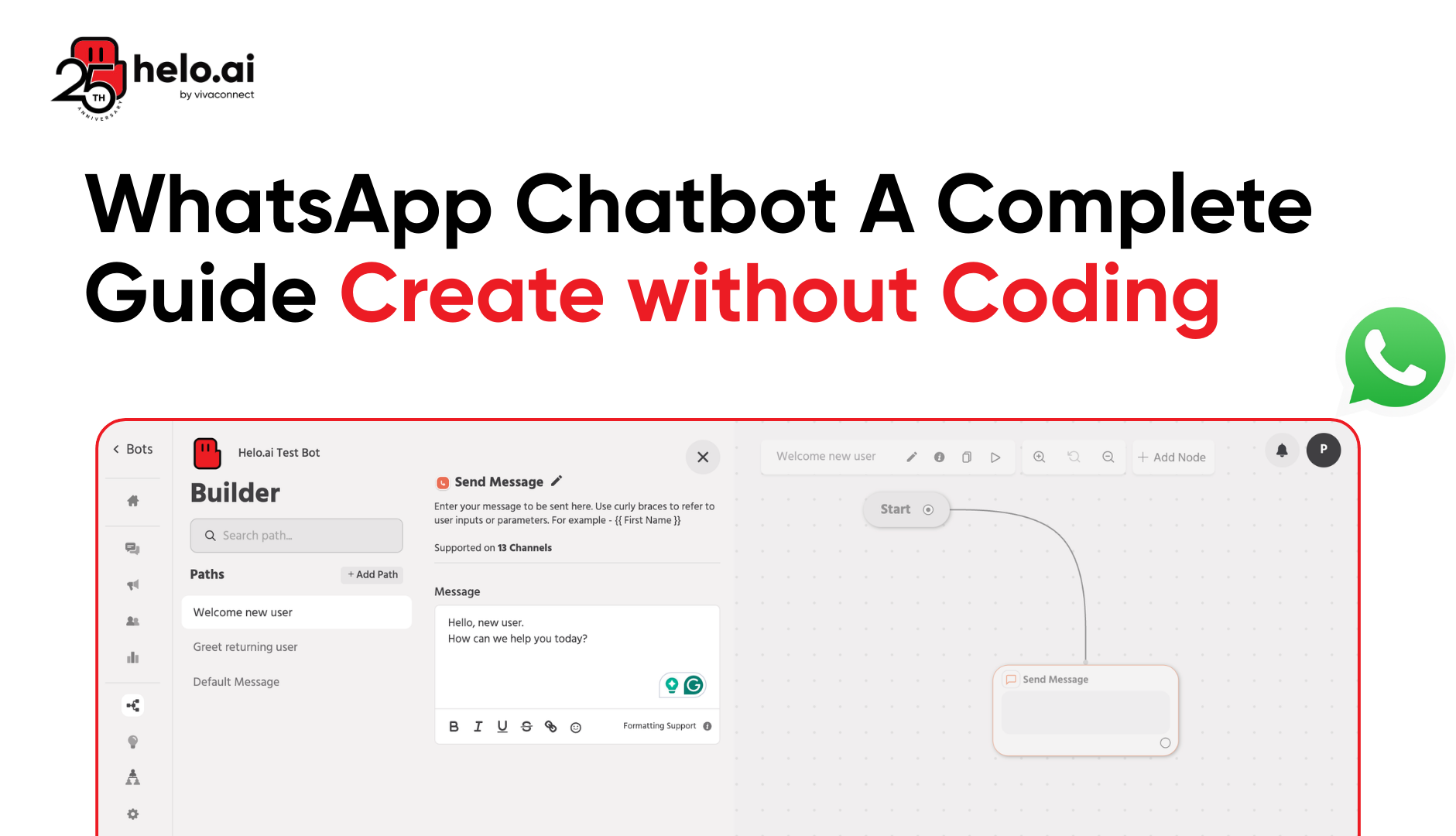
Step 4: Set Up Automated and Personalized Messages
Automation is where WhatsApp marketing becomes truly powerful. It lets you deliver the right message at the right moment without manual intervention.
Businesses typically use the following automated message types to drive engagement and conversions:
- Welcome message: Triggered immediately after opt-in. Introduce your brand, set expectations, and offer a first-purchase incentive.
- Abandoned cart recovery: Triggered 1–4 hours after abandonment. Include the product image, a CTA button linking back to checkout, and an optional discount.
- Order confirmation with cross-sell: Triggered after purchase. Confirm the order details and suggest related products with a "You might also like" carousel.
- Re-engagement: Triggered after 30–60 days of inactivity. Include a personalized offer that acknowledges their previous interest.
Personalization goes beyond adding a first name. Reference the customer's last purchase, browsing behavior, or location. Use quick reply buttons so customers can respond with a single tap instead of typing. Use CTA buttons that take them directly to the relevant product or checkout page.
Every business-initiated message requires a Meta-approved template. Submit templates early — approval typically takes a few hours but can take up to 24 hours for new accounts.
The biggest shift we’ve seen is when businesses move from manual replies to automated journeys. Even simple flows like welcome messages and cart reminders can create consistent engagement without increasing team workload.
Step 5: Measure Performance and Optimize
Tracking performance is essential to scaling your WhatsApp marketing effectively. Without data, you cannot know what is working or where to improve.
Monitor these metrics for every campaign:
- Read/open rate — benchmark: 85–98%
- Click-through rate — benchmark: 15–25%
- Conversion rate — purchases, sign-ups, or bookings attributed to WhatsApp
- Block/report rate — keep below 2%; higher indicates irrelevant content or excessive frequency
- Revenue per message — the ultimate ROI metric
Optimize with A/B testing: test message copy, timing (morning versus evening, weekday versus weekend), CTA button text, and media type (image versus video versus carousel). Monitor your phone number quality rating in Meta Business Manager. A Low rating restricts your messaging limits and can take weeks to recover.
Start with 1–2 messages per week. Increase frequency only if engagement remains high and block rates stay low.
A pattern we often notice is that businesses track delivery but ignore engagement quality. Focusing on replies, clicks, and conversions gives a much clearer picture of what’s actually working.
Best WhatsApp Marketing Strategies That Actually Work in 2026
The following WhatsApp marketing strategies are widely used by businesses to drive engagement, conversions, and customer retention:
1. Run Click-to-WhatsApp Ads (CTWA)
Click-to-WhatsApp Ads on Facebook and Instagram send users directly into a WhatsApp conversation with your business bypassing landing pages entirely. This removes friction and creates an instant 1:1 interaction. CTWA ads are the one of the most effective ways for building WhatsApp subscriber lists in 2026.
These campaigns tend to work best when the first message feels conversational rather than promotional, as users expect a chat experience, not a traditional ad.
2. Automate Abandoned Cart Recovery
Set up an automated flow that triggers a WhatsApp message shortly after a customer abandons their cart. Include the product image, a personalized message, and a one-tap CTA button that takes them straight back to checkout.
Brands like Clarins have used WhatsApp to deliver personalized product recommendations and customer engagement journeys, turning browsing intent into real-time conversations and improving purchase decisions. — Source: WhatsApp Business Success Story
Timing plays a bigger role than most businesses expect earlier reminders generally perform better than delayed follow-ups.
3. Build an Automated Welcome Series
Create a 3-message welcome flow: introduction and brand story → value-driven tip or resource → first-purchase offer. This sets expectations, builds trust, and drives the critical first conversion.
The first message often sets the tone for future engagement, so clarity and value in the welcome flow matter more than aggressive promotions.
4. Send Personalized Product Recommendations
Use purchase history and browsing data to send carousel messages with relevant product suggestions. This approach feels personal — like a recommendation from a friend, not a mass broadcast.
Personalized suggestions tend to perform better when they are tied to recent activity rather than generic bestsellers.
5. Create a VIP Loyalty Channel
Offer your most engaged customers an exclusive WhatsApp experience: early product access, member-only discounts, and loyalty rewards. This drives repeat purchases and higher lifetime value.
Exclusive access works best when it actually feels exclusive overusing it can reduce its impact.
6. Collect Customer Feedback via Quick Replies
After a purchase or service interaction, send a quick feedback request using quick reply buttons (for example, "Great," "OK," "Needs Improvement"). The low-friction format drives significantly higher response rates than email surveys.
Short, quick-reply based feedback flows usually see better completion rates than long-form surveys.
7. Integrate WhatsApp into Your Cross-Channel Strategy
WhatsApp works best when paired with other channels. Use email for long-form content, WhatsApp for time-sensitive nudges, SMS as a fallback, and RCS for rich interactive experiences. Each channel plays to its strength, and the combined approach delivers higher overall conversion.
WhatsApp often works best as a follow-up channel rather than a standalone one, especially when combined with email or ads.
What Should You Do Next?
If you're just getting started, focus on one or two use cases first rather than trying to implement everything at once. This makes it easier to measure impact and scale what works.
The best time to start WhatsApp marketing is now — before your competitors claim the attention of your shared customers.
If you want to start WhatsApp marketing effectively, follow this step-by-step action plan:
- Choose your path: If you have fewer than 256 contacts and need basic features, start with the free WhatsApp Business App. If you need automation and scale, connect with an official BSP like Helo.ai.
- Set up your business profile and complete Meta verification within the first week.
- Launch your first opt-in campaign — add a WhatsApp opt-in to your checkout page, run a small CTWA ad on Instagram, or place a QR code in your store.
- Send your first broadcast — a simple promotional message to a small segment. Track the read rate and click-through rate.
- Iterate and automate — once you see initial results, build automated flows for cart recovery, welcome series, and re-engagement.
The brands that move now — while many competitors are still figuring out their approach — will own the customer relationship on the world's most-used messaging platform.
Why Businesses Trust Helo.ai for WhatsApp Marketing
Helo.ai stands out by combining reliability, scale, and practical usability for teams running WhatsApp campaigns.
- Official Meta Partner & WhatsApp API provider — built for compliance and high deliverability
- Trusted by leading brands —In our experience working with brands like Kotak Mahindra Bank, HDFC Bank, Bajaj Finserv, Axis Bank, Reliance Digital, Tata Power
- Proven results — up to 80% higher response rates and up to 3x better ROI
- Built for growth — automation, personalization, and seamless integrations
Instead of just sending messages, Helo.ai helps businesses turn WhatsApp into a consistent, revenue-driving channel.
Conclusion
WhatsApp marketing is no longer experimental. With 3 billion users, 98% open rates, and dramatically higher conversion rates than email or SMS, it has become one of the most effective channels for reaching and engaging customers in 2026.
To succeed with WhatsApp marketing, businesses need a clear and structured approach. The path forward is straightforward:
The best marketing does not feel like marketing. It feels like a conversation. And WhatsApp is built for exactly that.
Ready to start? Talk to a WhatsApp marketing expert at Helo.ai and get your first campaign live within days.
Frequently Asked Questions About WhatsApp Marketing
What is WhatsApp marketing?
WhatsApp marketing is the use of WhatsApp Business tools to promote products, engage customers, and drive sales through personalized, permission-based messaging at scale.
Is WhatsApp marketing free?
The WhatsApp Business App is free but limited to 256 contacts per broadcast. The WhatsApp Business API involves a platform subscription fee (varies by provider) plus Meta's per-conversation charges, which range from $0.008 to $0.069 depending on the country and message type.
How do I start WhatsApp marketing for my business?
Start by choosing between the WhatsApp Business App (for small businesses) or the WhatsApp Business API (for scale and automation). Set up your business profile, collect customer opt-ins, segment your audience, create message templates, and launch your first campaign.
What is the difference between WhatsApp Business App and WhatsApp Business API?
The Business App is free with basic features and a 256-contact broadcast limit. The Business API supports unlimited contacts, automation, CRM integration, chatbots, and rich analytics — but requires a Business Solution Provider like Helo.ai.
How much does WhatsApp marketing cost in 2026?
Costs include a platform fee ($9–$100+/month depending on the tool) plus Meta's per-conversation charges. In India, marketing conversations cost approximately $0.008 each. In the UK and EU, they cost approximately $0.069. The first 1,000 service conversations per month are free.
Can I send bulk messages on WhatsApp?
Yes, through the WhatsApp Business API. You can send bulk campaigns to segmented audiences using approved message templates. The Business App limits broadcasts to 256 contacts.
What is a Click-to-WhatsApp ad?
A Click-to-WhatsApp ad is a Facebook or Instagram ad that opens a WhatsApp conversation with your business when tapped — instead of sending users to a landing page. It is the fastest-growing subscriber acquisition format in 2026.
Is WhatsApp marketing effective for small businesses?
Yes. Small businesses can start for free using the WhatsApp Business App and upgrade to affordable API tools as they grow. Even basic features like broadcast lists and quick replies can drive meaningful engagement and sales.
What are WhatsApp message templates?
Message templates are pre-approved message formats required for all business-initiated conversations on the WhatsApp Business API. They can include text, images, videos, buttons, and personalization variables. Templates must be submitted to Meta for approval before use.
How do I measure WhatsApp marketing performance?
Track read rates, click-through rates, conversion rates, block/report rates, and revenue per message. Use A/B testing to optimize message copy, timing, and CTA placement. Monitor your phone number quality rating in Meta Business Manager.
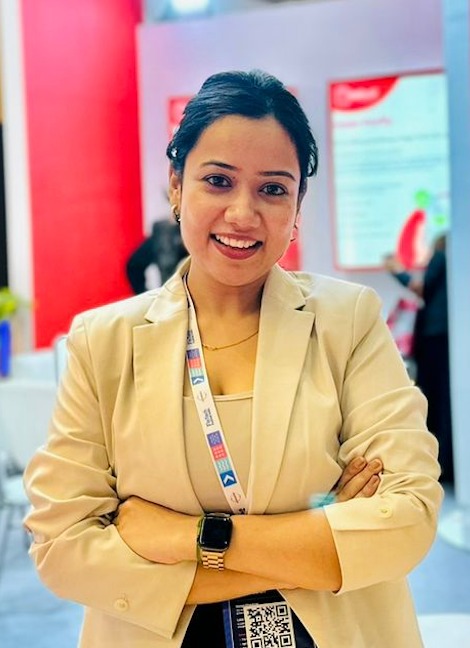
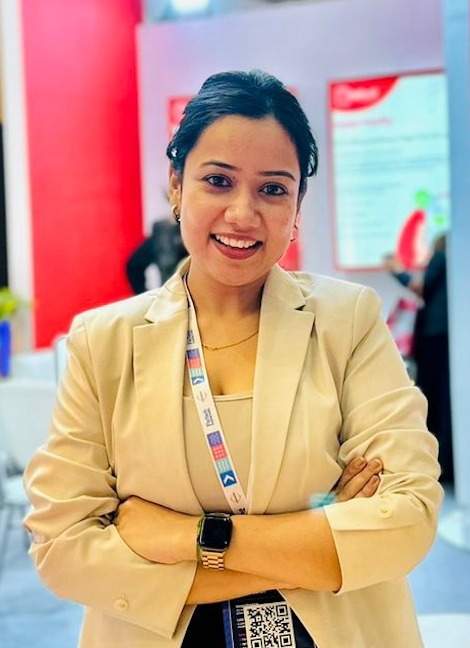
Written by Vidisha Sethi, Sr. Manager – Marketing & Partnerships at Helo.ai by VivaConnect. Vidisha started in sales, took charge of marketing, and now owns both. She is the bridge between big ideas and big deals, bringing 25 years of enterprise communication expertise to every campaign.
Reviewed by Helo.ai Editorial Team — specialists in cloud communication, WhatsApp Business API, and omnichannel customer engagement.
About this guide
This guide was written and reviewed by practitioners working with WhatsApp marketing workflows, automation, and customer engagement strategy. It combines product knowledge, campaign patterns, and editorial research to help businesses make practical implementation decisions.