


Most businesses use WhatsApp like email sending bulk messages and expecting conversions. That’s exactly why it fails.
WhatsApp marketing works differently. It is a high-intent, conversational channel where success depends on timing, personalization, and user consent not volume.
A WhatsApp marketing strategy is a structured approach to using WhatsApp for customer engagement, sales, and support through opt-in, personalized, and automated messaging across the customer lifecycle.
In this guide, you’ll learn 7 proven WhatsApp marketing strategies based on real-world implementation patterns across e-commerce, BFSI, and service businesses along with practical examples you can apply immediately.
Key Takeaways
- WhatsApp delivers 90–98% open rates, making it one of the highest-engagement channels
- Success depends on opt-in, personalization, and automation—not bulk messaging
- High-performing strategies include carousels, lifecycle notifications, catalogs, and chat flows
- In-chat payments and automation reduce friction and increase conversions
- WhatsApp works best when integrated across the full customer lifecycle
Image not found
What is WhatsApp Marketing Strategy?
A WhatsApp marketing strategy is a structured approach to using WhatsApp for customer communication across the lifecycle—from lead generation and engagement to conversion and retention—using opt-in messaging, automation, and personalized conversations to drive measurable business outcomes.
This WhatsApp marketing strategy framework is used globally across industries such as e-commerce, BFSI, SaaS, healthcare, real estate, and travel. While execution may vary by region due to regulations and payment infrastructure, the core principles opt-in messaging, relevance, and conversational experience remain consistent across markets.
Core WhatsApp Marketing Strategy Framework
An effective WhatsApp marketing strategy is built on seven core pillars:
- Interactive product discovery using rich formats
- Timely lifecycle notifications and reminders
- In-chat product catalogues and conversational commerce
- Personalised, intent-driven chat flows
- Frictionless in-conversation payments
- Always-on automated customer support
- Seamless traffic conversion from website to WhatsApp
Compliance checkpoints (must-have)
- Collect explicit opt-in and state what users will receive
- Provide easy opt-out language (“Reply STOP to opt out”)
- Use the correct template category (marketing vs utility vs authentication)
- Avoid unofficial bulk-sending tools (risk of policy violations)
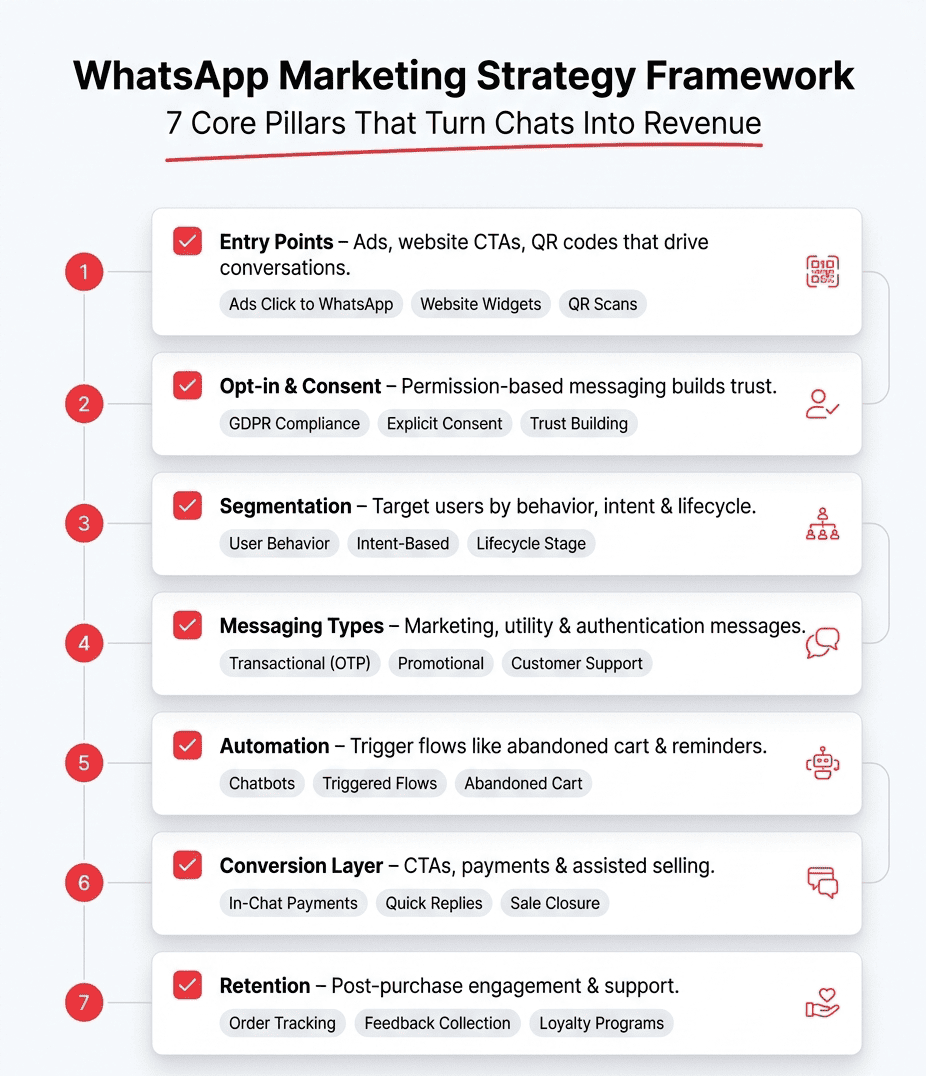
Based on real implementations, businesses that structure their strategy across these layers see significantly better engagement and conversion compared to unstructured campaigns.
1. Implement Carousel Templates to Increase Clicks
What it is
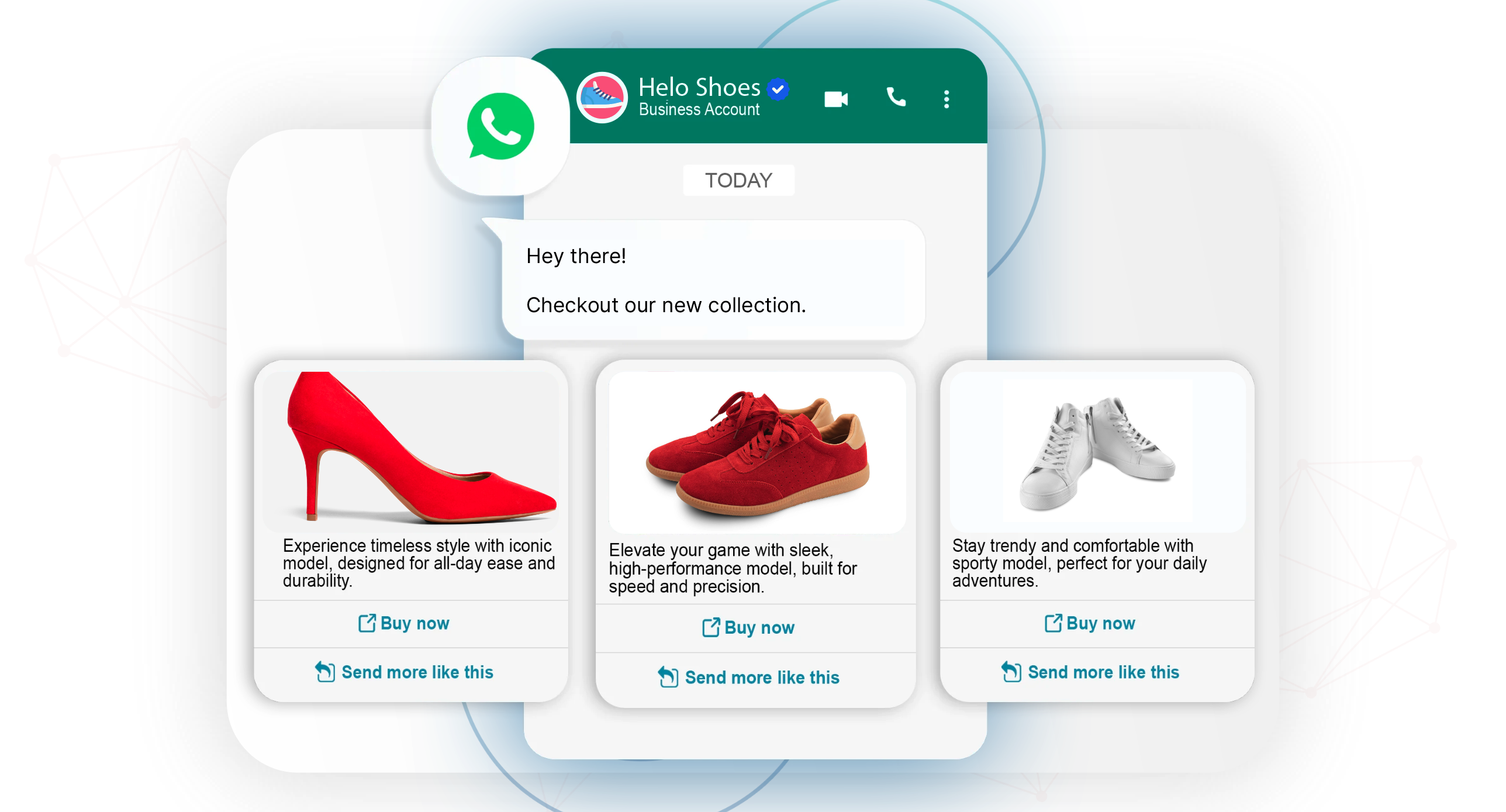
Carousel templates allow you to send a single WhatsApp message with multiple scrollable cards, each containing an image, description, and CTA button.
Why it works
Users prefer visual browsing over text-heavy messages. In campaigns where multiple products are shown in one message, brands typically see higher engagement and more clicks compared to single-image or text-only messages.
How to implement
- Showcase 3–5 top-performing products instead of full catalogs
- Highlight benefits (use cases, outcomes), not just price
- Add clear CTAs like “View Product” or “Buy Now”
- Avoid overloading cards with too much text
When to use
- Product launches
- Seasonal campaigns
- Cross-sell and upsell journeys
2. Automate Reminders and Notifications at the Right Moment
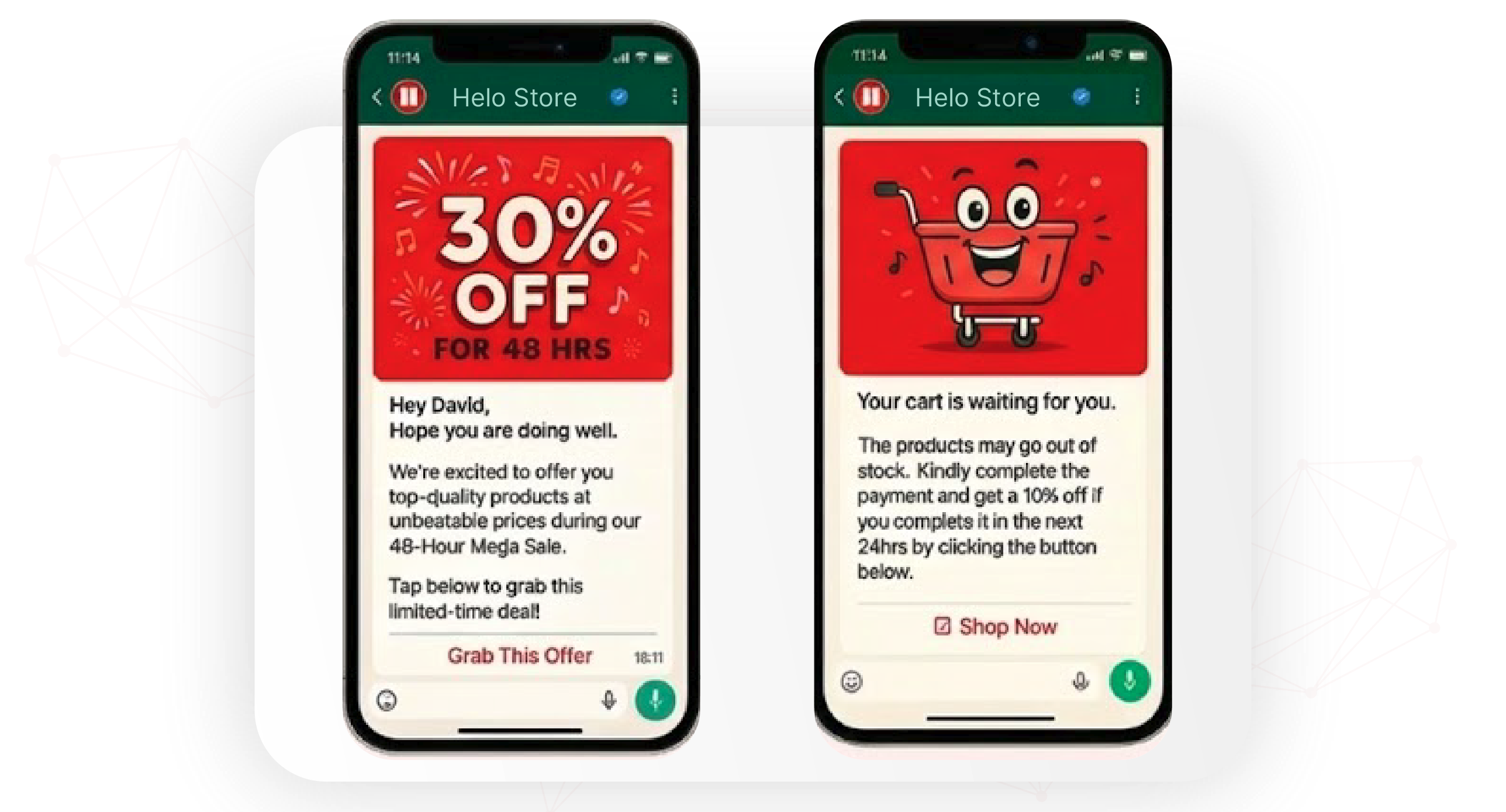
Automated reminders and notifications form the backbone of high-performing WhatsApp marketing Strategy. These messages are triggered by user actions or lifecycle events, making them timely, contextual, and highly effective.
Use automated WhatsApp notifications to keep customers informed throughout their journey. Order confirmations reassure customers instantly after purchase. Shipping updates with real-time tracking links reduce anxiety and inbound support queries. Cart abandonment reminders gently nudge users to complete their purchase without sounding pushy.
What sets WhatsApp apart here is immediacy. These messages appear directly on lock screens and are almost always read within minutes. WhatsApp notifications arrive when they matter most, building trust and reinforcing reliability.
For many brands, these automated touchpoints significantly improve customer retention and repeat purchases.
Best practices:
- Automate delivery based on behavior
- Use conditional triggers such as cart abandonment and post-purchase follow-ups
- Avoid frequent notifications that feel spammy
Ready-to-use WhatsApp Template Examples
Abandoned cart (marketing):
“Hi {{1}}, you left {{2}} in your cart. Want to complete your order now?
[Button: View Cart] [Button: Talk to Support]”
Back-in-stock (marketing):
“Hi {{1}}, good news—{{2}} is back in stock. Want us to reserve one for you?
[Button: Buy Now] [Button: View Options]”
Appointment reminder (utility):
“Reminder: your appointment is scheduled for {{1}} at {{2}}.
[Button: Confirm] [Button: Reschedule]”
Order delivered (utility):
“Your order {{1}} has been delivered. Want help with setup or have feedback?
[Button: Get Help] [Button: Leave Feedback]”
Businesses also use WhatsApp drip marketing to nurture users across the lifecycle automatically.
3. Display Multi-Product Catalogs via WhatsApp
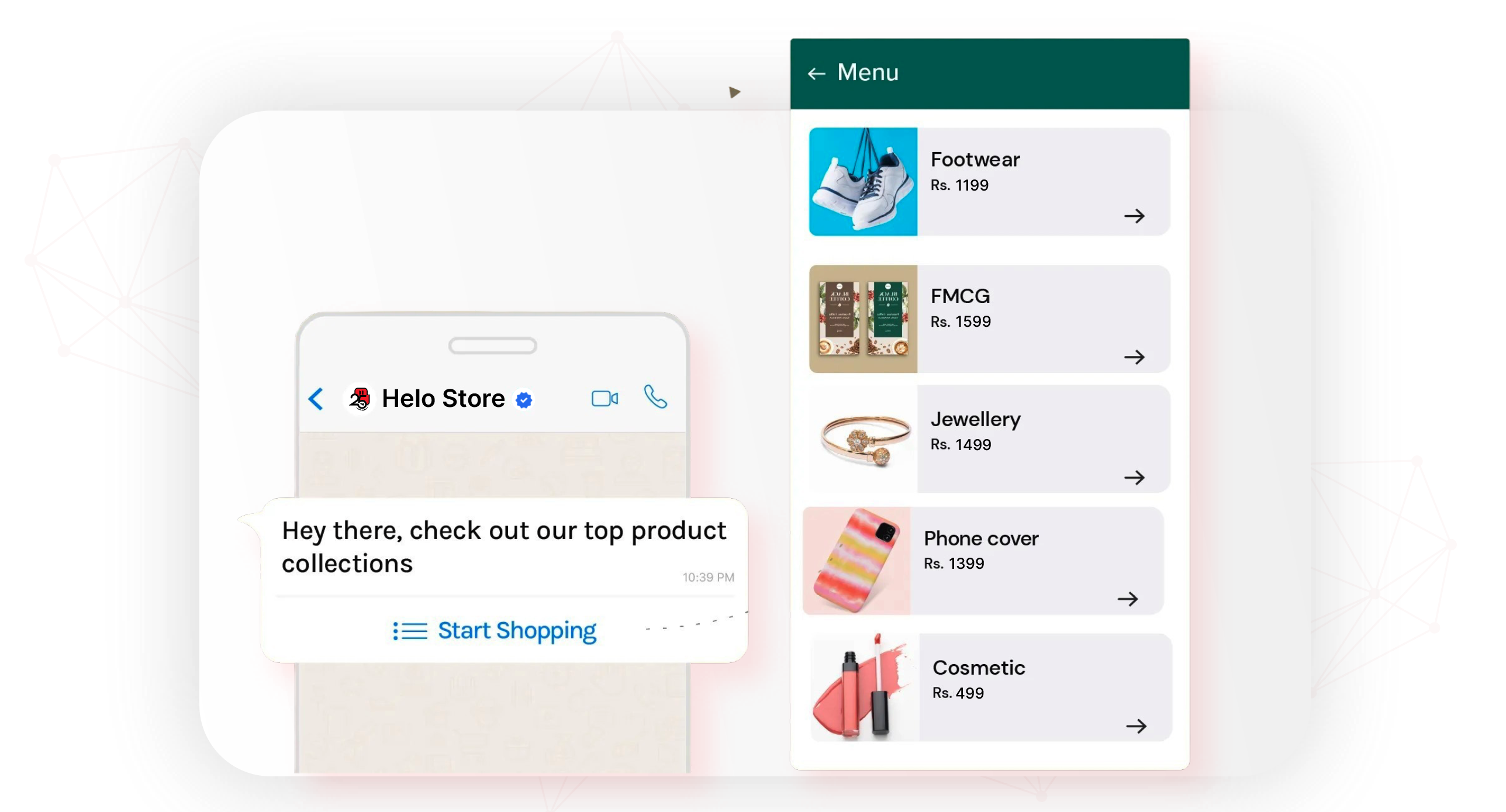
WhatsApp allows businesses to showcase full product catalogues directly within chat. Customers can browse products, view details, add items to cart, and even complete purchases all without leaving WhatsApp.
This approach removes unnecessary friction from the buying process. Instead of redirecting users to external websites where drop-offs are common, brands keep customers inside a familiar environment.
Catalogue-based messaging works especially well for repeat purchases, assisted selling, and reorders. Customers don’t need to search they simply browse and act.
By reducing steps between discovery and purchase, catalogues help brands increase sales with WhatsApp while delivering a smoother shopping experience.
Usage tips:
- Categorize products for easier navigation
- Add CTA buttons like “Add to Cart” or “Buy Now”
- Refresh catalogs seasonally
4.Build Enhanced Personalised Chat Flows
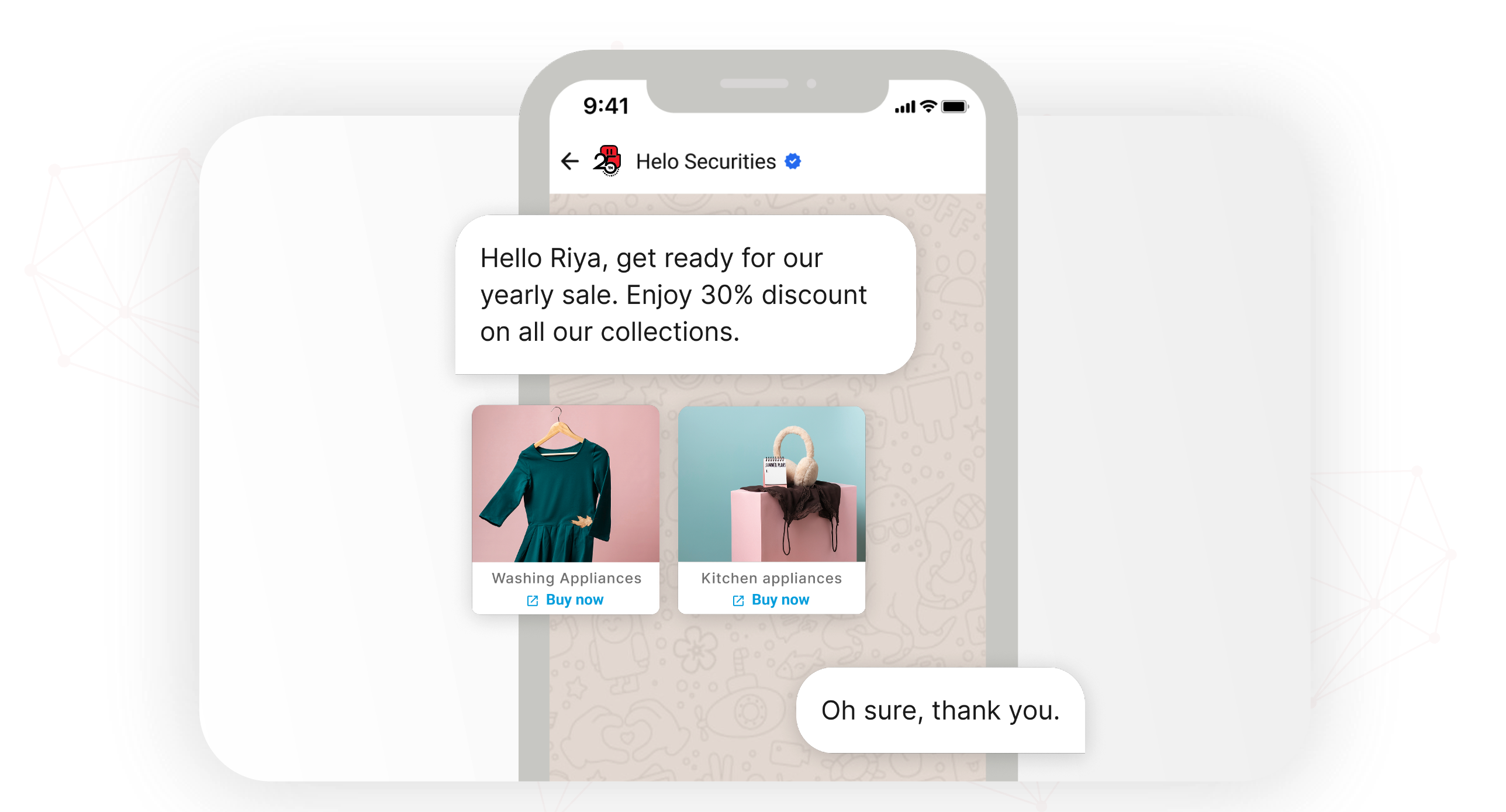
Enhanced personalised chat flows use AI and contextual logic to turn WhatsApp conversations into guided, outcome-driven journeys. Instead of sending generic links or static replies, brands design conversations that adapt in real time based on user intent, inputs, and behaviour.
What makes this approach effective is continuity. Customers don’t feel like they’re navigating a system they feel like they’re having a conversation. Each response builds on the previous one, removing unnecessary steps such as forms, repeated questions, or redirects.
This works especially well for complex actions that traditionally cause drop-offs. Customers can book appointments, apply for financial products, raise service requests, or discover relevant products through natural dialogue. The experience stays focused, intuitive, and personalised throughout.
When conversations feel relevant and easy to complete, brands see higher completion rates, better-quality customer data, and more meaningful engagement—without increasing operational effort.
Key personalization tactics:
- Use customer name and purchase history
- Segment contacts by interest or stage in funnel
- Tailor follow-ups and recommendations
Across implementations, shorter conversational flows outperform long, form-like interactions in completion rate and engagement
5.Enable Payments Directly Inside WhatsApp
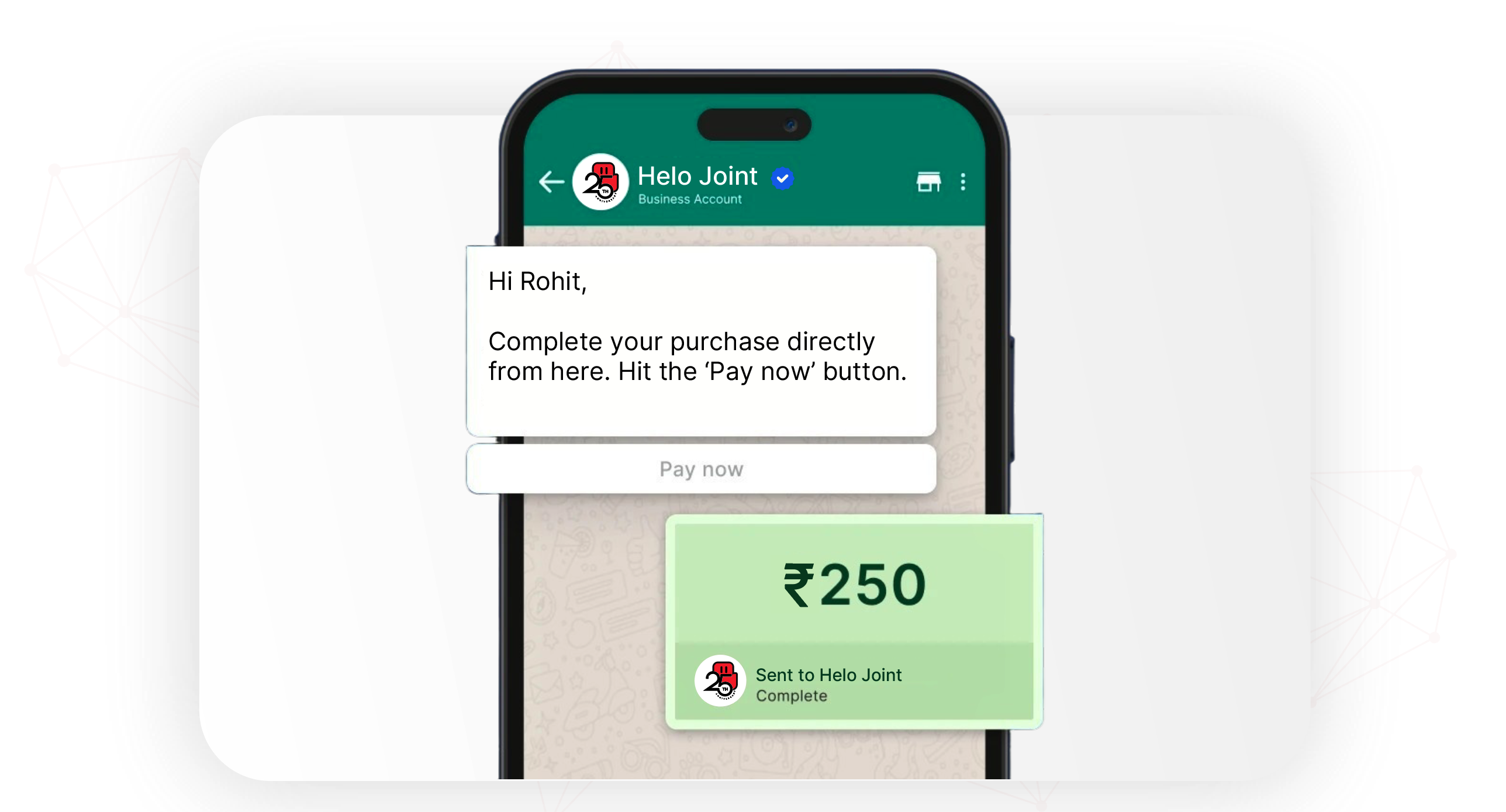
Enabling payments directly inside WhatsApp removes one of the biggest conversion barriers: switching platforms at checkout. With WhatsApp Pay integrated with UPI and multiple payment methods, customers can complete transactions within the same conversation where discovery and decision-making happen.
This approach works because familiarity reduces friction. Customers browse products, review options, and pay without being redirected to unfamiliar pages or re-entering details. The entire flow feels seamless and trustworthy, which shortens the time between intent and purchase.
E-commerce brands benefit from higher checkout completion rates. Service businesses collect consultation or booking fees instantly. Subscription-based companies simplify renewals. Event organisers sell tickets without relying on external payment links.
By keeping conversation, decision, and payment in one place, brands create a smoother end-to-end experience that directly impacts revenue and customer confidence.
Benefits:
- Seamless checkout inside chat
- Reduced cart abandonment
- Higher transaction completion rates
In India, where UPI is widely adopted, in-chat payments significantly improve checkout completion rates.
6. Offer 24/7 Automated Support with Smart Chatbots
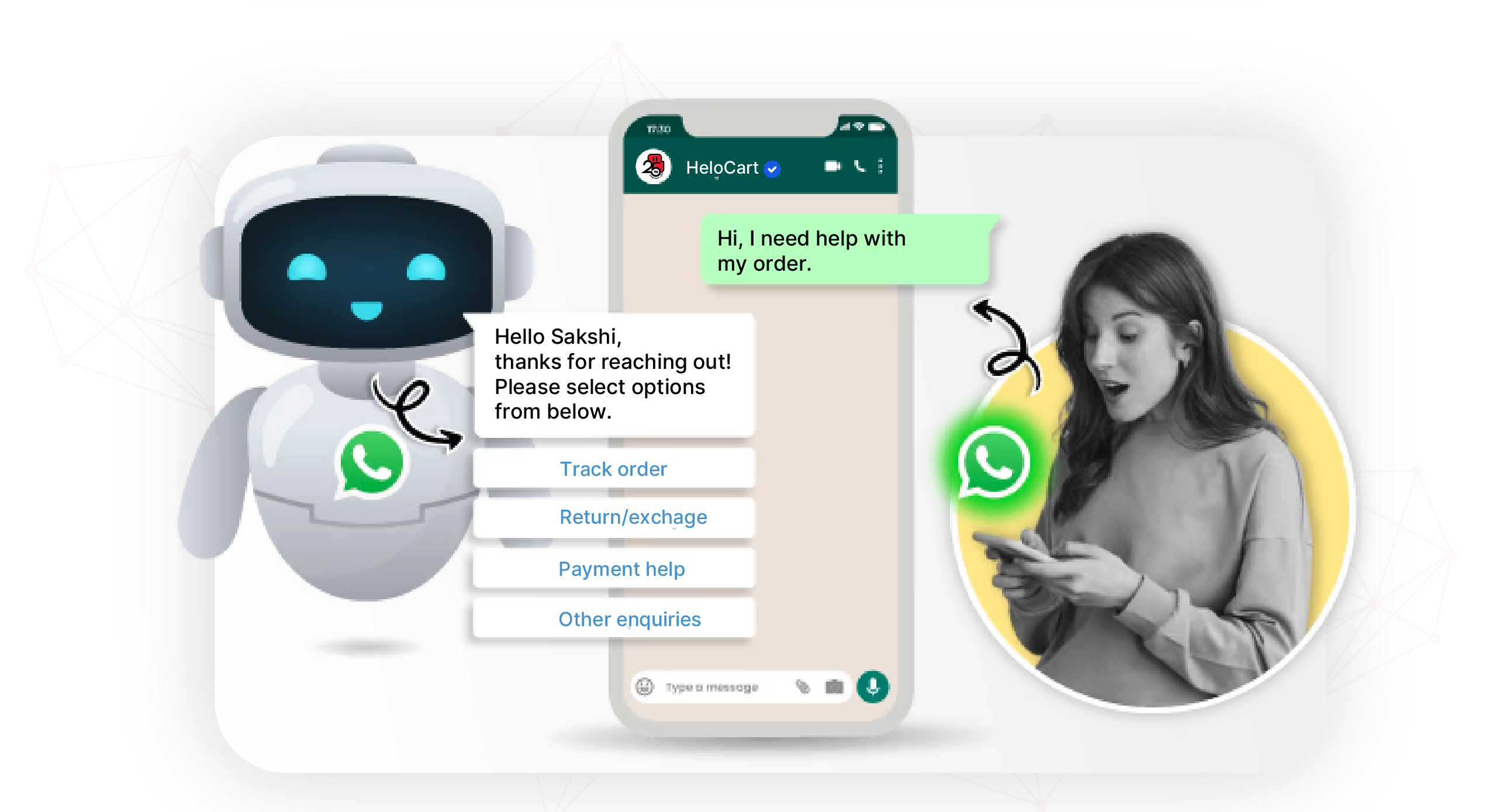
Sales may start the relationship, but support sustains it. Automated WhatsApp chatbots allow brands to offer round-the-clock assistance without increasing support costs or response times.
Chatbots handle high-volume, repetitive queries such as order status, delivery updates, return requests, and FAQs. This instant availability ensures customers always receive timely responses, even outside business hours.
What makes modern chatbots effective is balance. While automation resolves most routine queries, smart bots recognise when a conversation needs human intervention. Complex complaints, sensitive issues, or detailed requests are seamlessly escalated to agents without breaking the conversation flow.
This combination of speed and human backup leads to faster resolutions, lower support load, and a consistently reliable post-purchase experience—key drivers of long-term customer retention.
7. Convert Website Visitors into WhatsApp Conversations
Driving traffic is not enough conversion happens through conversations. Adding “Chat on WhatsApp” buttons, click-to-WhatsApp ads, and QR codes helps businesses turn passive visitors into active leads instantly.
Instead of forcing users to fill forms or wait for responses, WhatsApp enables real-time interaction at the moment of highest intent. Customers can ask questions, get personalized recommendations, and make decisions faster.
This strategy works across industries:
- E-commerce: product queries and size assistance
- B2B: pricing discussions and lead qualification
- Real estate: instant enquiry capture
- Services: guided consultation and booking
By reducing friction between interest and action, businesses can significantly improve conversion rates without increasing acquisition costs.
Driving traffic is not enough conversion happens through conversations. Learn how to improve WhatsApp lead generation with high-intent flows.
High-Impact WhatsApp Marketing Use Cases
Most WhatsApp marketing examples focus on industries. In reality, performance depends on when and why a message is triggered, not just where it is used.
Based on real implementations across Helo.ai by VivaConnect, the highest-performing use cases are aligned with customer intent, timing, and friction reduction.
1. Recover Abandoned Actions (Cart, Form, Enquiry)
When to use: User shows intent but does not complete action (cart, form, enquiry)
Instead of sending generic follow-ups, high-performing brands:
- Trigger messages within 15–30 minutes of drop-off
- Include context (product, action, or enquiry)
- Offer a clear next step (resume, ask, or buy)
Execution insight:
In real campaigns, delayed follow-ups lose effectiveness because user intent decays quickly. Immediate, contextual re-engagement consistently drives higher recovery rates.
2. Qualify Leads Instantly with WhatsApp Conversations
When to use: High-intent traffic from ads or website
Instead of static forms, businesses use WhatsApp to:
- Ask 2–3 qualifying questions
- Segment leads instantly
- Route conversations to sales teams or automated responses
Execution insight:
Conversational qualification reduces drop-offs significantly compared to form-based journeys because users respond faster in chat than filling multi-field forms.
3. Send Real-Time Order & Lifecycle Updates
When to use: Post-purchase or transaction stages
This includes:
- Order confirmations
- Shipping updates
- Delivery notifications
Execution insight:
Proactive lifecycle messaging reduces inbound support queries and builds trust. Customers don’t need to ask for updates—they receive them automatically at the right time.
4. Guide Users to the Right Product or Service
When to use: When users need help choosing (products, services, plans)
Instead of redirecting users to browse:
- Ask step-by-step questions
- Narrow down options dynamically
- Provide curated recommendations inside chat
Execution insight:
In practice, users are more likely to complete decisions when guided through a conversation rather than navigating multiple pages or filters.
5. Complete Payments Directly in WhatsApp
When to use: User is ready to purchase but may drop off during checkout
Instead of redirecting to external pages:
- Share payment links or UPI options inside chat
- Confirm transactions instantly
- Continue engagement post-payment
Execution insight:
In markets like India, where UPI is widely adopted, in-chat payments significantly improve completion rates by eliminating platform switching.
6. Automate Customer Support with Smart Escalation
When to use: High volume of repetitive queries
Use automation to:
- Resolve FAQs instantly
- Provide order tracking and updates
- Handle basic service requests
Execution insight:
The highest-performing setups don’t rely on full automation—they combine instant bot responses with seamless human escalation for complex queries.
In real-world campaigns, timing has a direct impact—messages sent within minutes of user action consistently outperform delayed follow-ups.
7. Convert Website Traffic into WhatsApp Leads
When to use: Capturing users at peak interest (ads, website, QR)
Instead of directing users to landing pages:
- Use click-to-WhatsApp ads
- Add “Chat on WhatsApp” CTAs
- Enable QR-based entry points
Execution insight:
Removing the gap between click and conversation significantly improves lead capture rates because users engage instantly instead of navigating multiple steps.
8. Re-engage Inactive Users with Contextual Messaging
When to use: Users who haven’t interacted recently
Instead of sending generic offers:
- Reference past interactions or purchases
- Ask simple, conversational questions
- Offer relevant next steps
Execution insight:
Contextual re-engagement performs better than promotional blasts because it feels personalized and relevant rather than intrusive.
9. Drive Repeat Sales with Post-Purchase Engagement
When to use: After successful transaction
Use WhatsApp to:
- Share usage tips
- Recommend related products
- Collect feedback
Execution insight:
Brands that continue engagement after purchase see higher retention and repeat purchases compared to those that stop communication after conversion.
Key Insight
The most effective WhatsApp marketing strategies are not campaign-driven—they are trigger-driven and lifecycle-based.
Success comes from sending the right message, at the right moment, with the least friction, not from increasing message volume.
Common WhatsApp Marketing Mistakes
Even with the right strategy, many businesses struggle to see results on WhatsApp. In most cases, the issue isn’t the channel it’s how it’s used in practice.
Here are some common mistakes that limit performance:
1. Treating WhatsApp like a one-way channel
Many businesses still use WhatsApp just to push messages.
What happens:
Users ignore messages because there’s no reason to respond.
What works better:
Start conversations. Ask questions, offer choices, and make it easy for users to reply.
2. Sending messages without clear timing
Messages are often sent in bulk without considering when the user actually needs them.
What happens:
Even relevant messages get ignored because they arrive at the wrong moment.
What works better:
Send messages based on actions—like a recent enquiry, cart activity, or interaction.
3. Making users leave WhatsApp to complete actions
Redirecting users to websites, forms, or external checkout pages breaks the flow.
What happens:
Drop-offs increase because users lose momentum.
What works better:
Keep the journey inside WhatsApp as much as possible—whether it’s browsing, deciding, or completing an action.
4. Overcomplicating conversations
Some businesses try to build long, complex flows that feel like forms instead of conversations.
What happens:
Users drop off midway or stop responding.
What works better:
Keep interactions short, clear, and easy to complete in a few steps.
5. Using the same message for everyone
Sending identical messages to all users ignores their intent and stage in the journey.
What happens:
Messages feel irrelevant, leading to lower engagement and higher opt-outs.
What works better:
Adjust messaging based on what the user has already done—clicked, purchased, or asked.
Many brands fail to see results not because WhatsApp marketing doesn’t work, but because they repeat common execution errors. If you want a deeper breakdown, explore these WhatsApp marketing mistakes businesses should avoid when building a long-term strategy.
Conclusion
WhatsApp marketing is no longer just a communication channel—it is a conversion infrastructure.
The businesses that succeed are not the ones sending more messages, but the ones designing intent-driven, frictionless customer journeys inside WhatsApp.
From discovery to decision and payment, every interaction should reduce effort, not add complexity.
If implemented correctly, WhatsApp becomes more than a marketing tool—it becomes a primary revenue channel.
Choosing the right stack is critical. Explore the best WhatsApp marketing software for automation and scaling.
Turn Conversations into Conversions with Helo.ai
Automate workflows and increase conversions with Helo.ai’s WhatsApp Business API Solution
Image not found
Frequently Asked Questions
Q: What is a WhatsApp marketing strategy?
A WhatsApp marketing strategy is a structured approach to using WhatsApp for customer engagement, promotions, support, and sales. It focuses on permission-based messaging, automation, and personalised conversations to drive higher engagement and conversions.
Q: Is WhatsApp marketing effective for increasing sales?
Yes. WhatsApp marketing delivers open rates of up to 98% and significantly higher click-through rates than email or SMS. When used strategically with automation and personalisation, it helps brands reduce friction and convert intent into sales faster.
Q: Do I need WhatsApp Business API to run WhatsApp marketing campaigns?
For small-scale or manual messaging, the WhatsApp Business App may be sufficient. However, running automated campaigns, using rich formats like carousels, and managing high volumes requires the WhatsApp Business API for scalability and compliance.
Q: What types of messages work best in WhatsApp marketing?
The most effective WhatsApp messages include order updates, reminders, personalised recommendations, conversational support, and interactive formats like carousel templates. Messages that are timely, relevant, and helpful consistently outperform generic promotional broadcasts.
Q: Is WhatsApp marketing compliant with data protection and privacy regulations?
Yes, when businesses collect explicit user opt-ins and send messages using approved templates via the WhatsApp Business API. Following these guidelines ensures compliance with WhatsApp policies and regional data protection regulations.
Q: Can WhatsApp marketing replace email or SMS marketing?
No. WhatsApp works best as part of an omnichannel strategy. While it excels at real-time engagement and conversions, email and SMS still play important roles in reach, formal communication, and fallback scenarios.
Q: How do chatbots improve WhatsApp marketing performance?
Chatbots enable instant, 24/7 responses to common customer queries, reducing wait times and support costs. When combined with human escalation, they improve customer experience, increase resolution speed, and support long-term retention.
Q: What industries benefit most from WhatsApp marketing?
E-commerce, BFSI, travel, healthcare, real estate, and service-based businesses benefit most from WhatsApp marketing due to high customer interaction, time-sensitive communication, and the need for personalised engagement throughout the customer journey.

.png&w=828&q=75)