
.png)


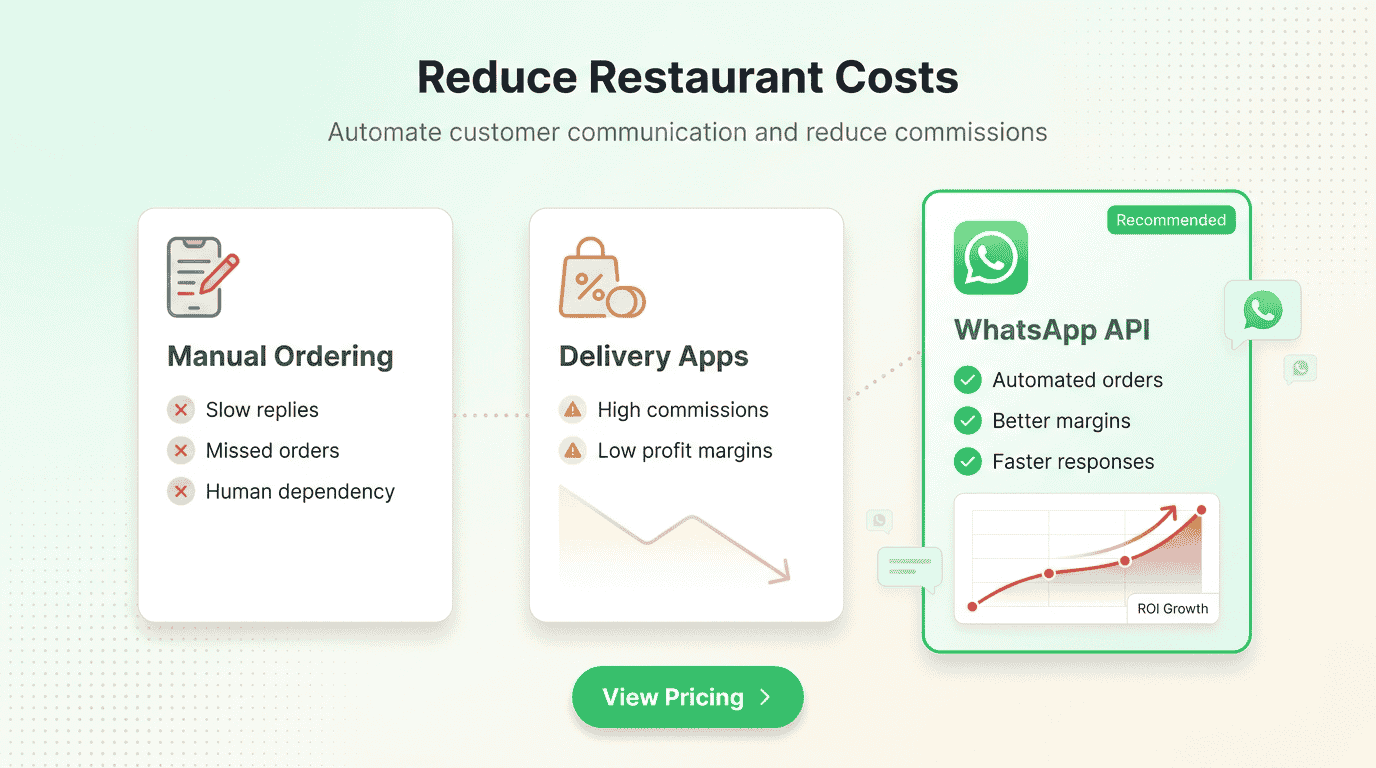
A lot of restaurants depend on aggregators for deliveries to their customers. The trouble is that aggregators take a good chunk of share from every order. Restaurants often lose 20 to 30% of their revenue on platforms like Zomato and Swiggy. If you are a pizza brand, for every ₹500 order, around ₹100 to ₹150 is gone before the food even leaves the kitchen.
And it is not just the commission. Every order placed through an aggregator means the customer relationship stays with the platform, not the restaurant. The restaurant never knows who ordered, what they liked, or how to bring them back.
So more and more restaurants are now turning to WhatsApp API for restaurants to take orders directly. No middlemen. No commission cuts. Customers order through WhatsApp, the restaurant handles it, and the full payment comes straight to them.
Why Restaurants Are Moving to WhatsApp for Direct Orders
Restaurants, especially cloud kitchens, smaller outlets, and up and coming chains, have tight profit margins. Using aggregators for orders and delivery often proves to be not very profitable at scale. Another important concern is that restaurants do not own any customer information. Their names, favourite recipes, order habits everything is data stored with the aggregator. It becomes very difficult for restaurants to then market themselves independently.
Using WhatsApp changes this entirely. When restaurants can personally reach out to their customers, they do not have to pay commissions to any aggregator. They also own the customer data. They can reach out directly with personalisation, which further strengthens their relationship with customers and helps them get more regulars. Since customers already use WhatsApp daily, ordering feels familiar and frictionless.
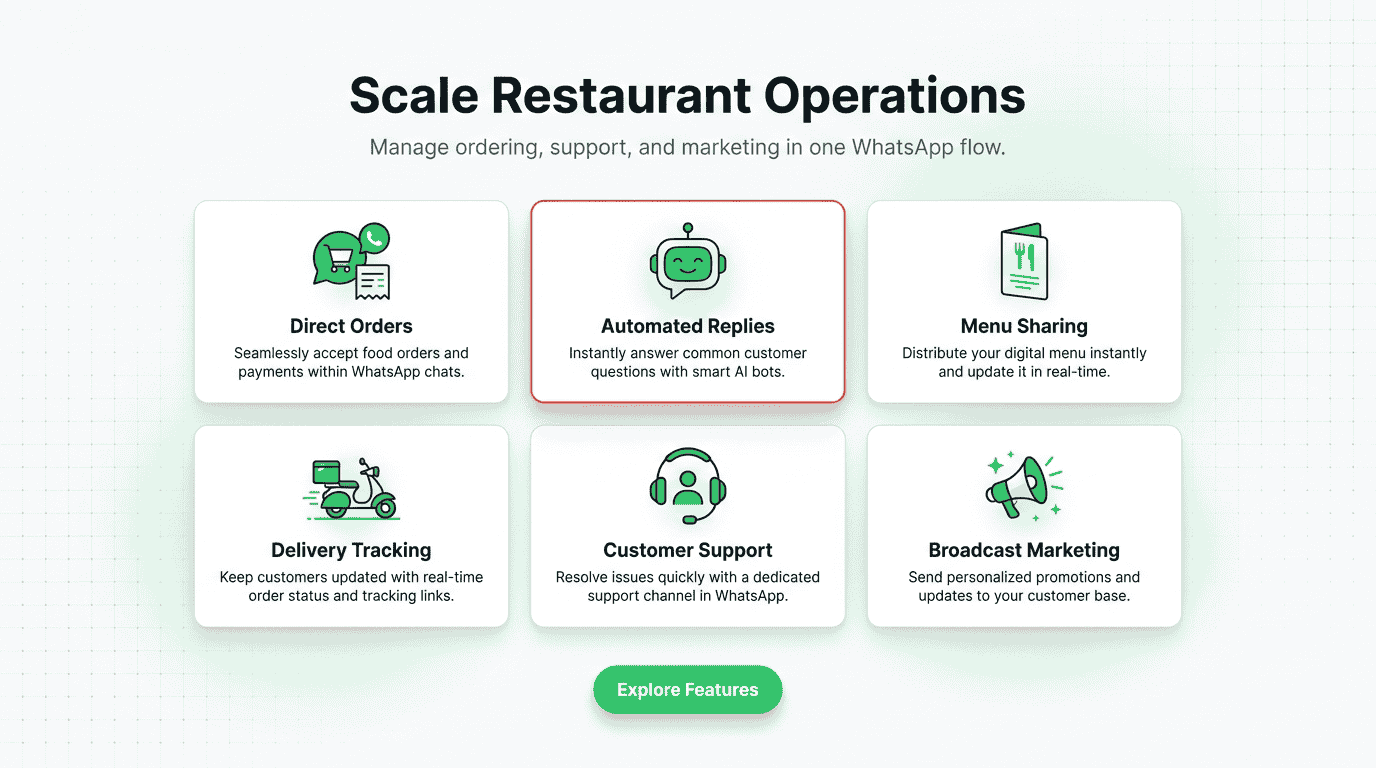
A restaurant can share its menu, take orders, confirm payments, and send delivery updates all inside one conversation, without competing for visibility on aggregator platforms.

How WhatsApp API Works for Restaurants
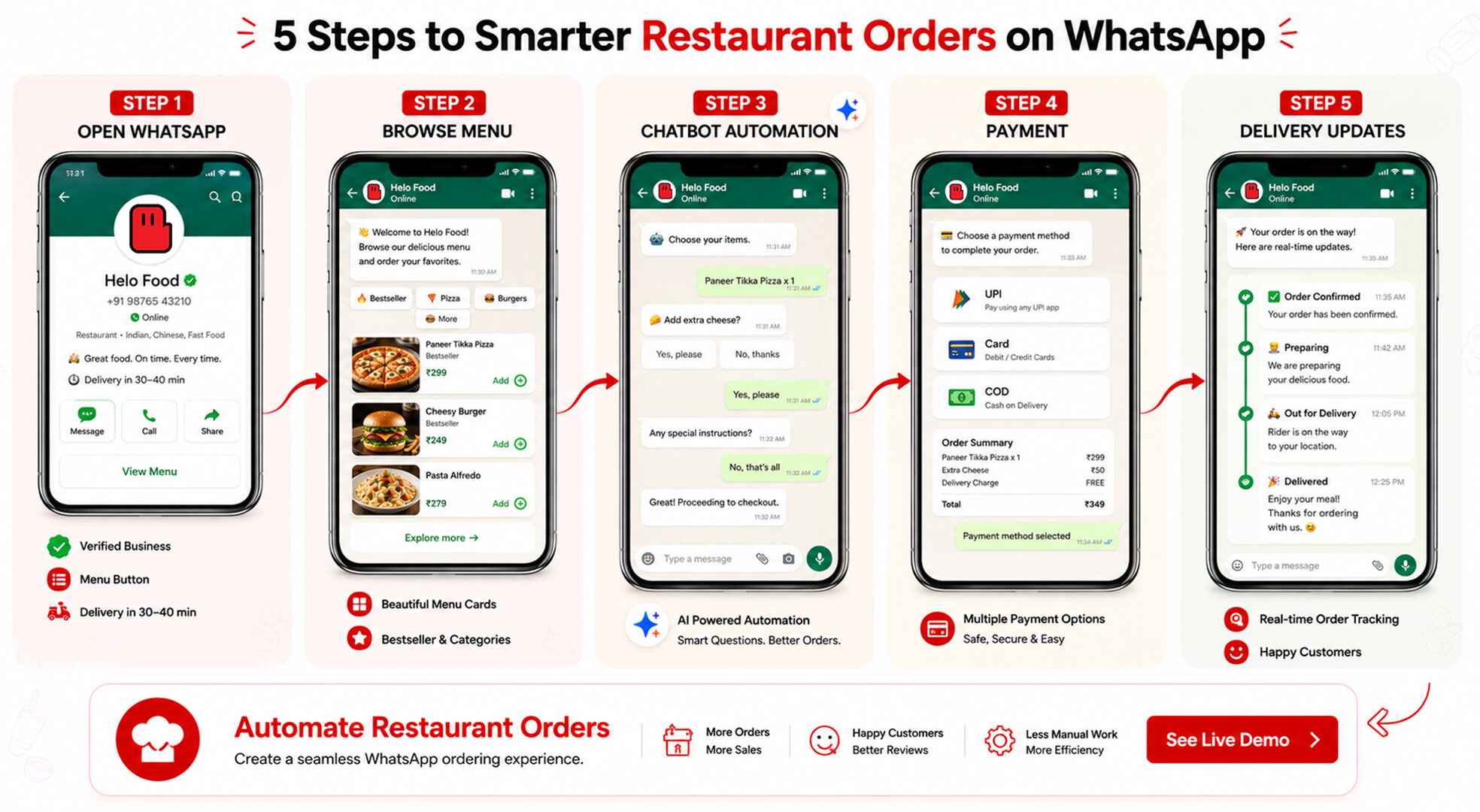
WhatsApp API can be very beneficial for restaurants. Customers can check the menu, customise and place an order, get confirmation, track the delivery, and make payments all within WhatsApp. They do not even have to leave the app.
The API helps automate these messages through restaurant order automation on WhatsApp. No manual work needed to receive orders and send delivery updates. This is especially helpful for cloud kitchens or smaller restaurants that do not have a lot of staff. It also helps a lot during peak hours. The team can focus on cooking and packing, and the orders sort themselves.
For the restaurant, every order becomes one clean conversation, no missed calls and no app fatigue on the customer's end.
Setting Up a WhatsApp Ordering System for Restaurants
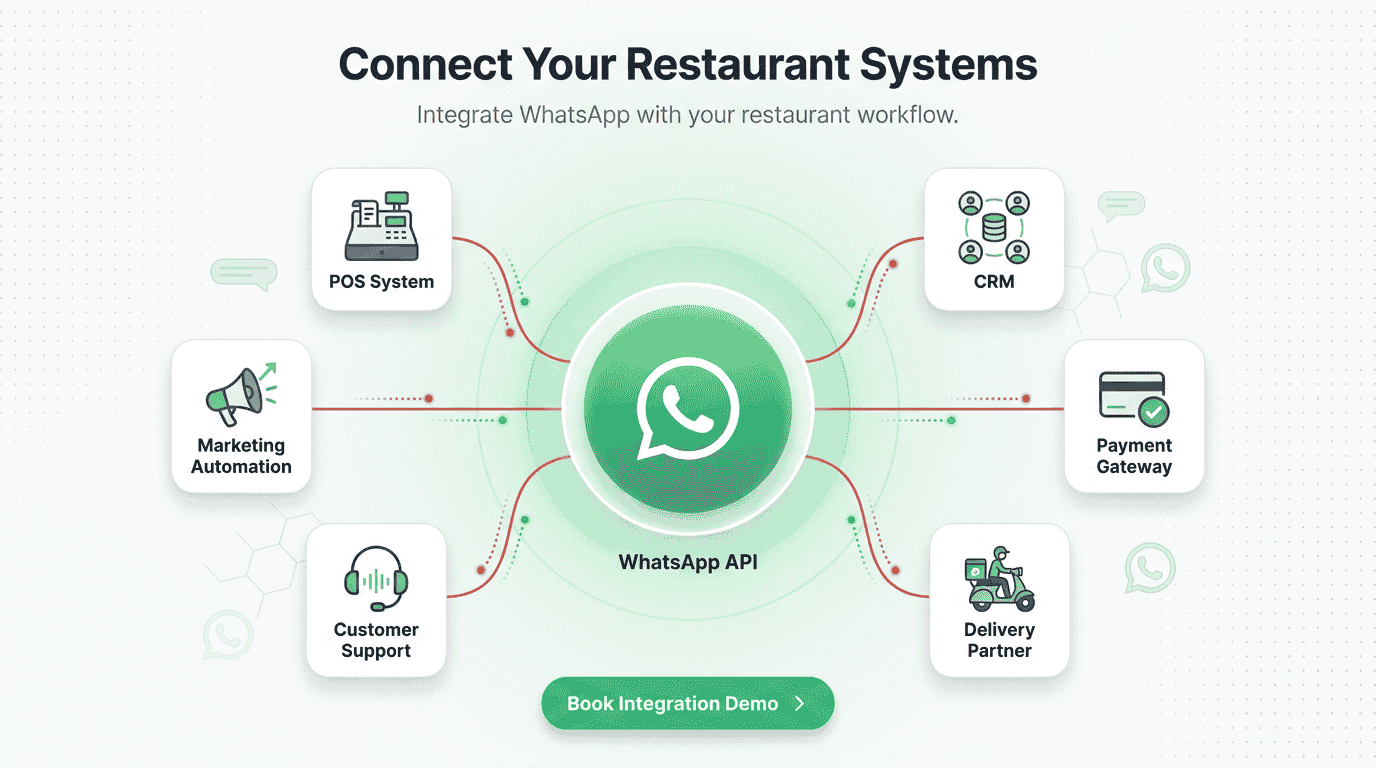
Setting up a WhatsApp ordering system sounds like a big project, but it really is not. Most restaurants get the whole thing running in a couple of weeks.
Connect the WhatsApp Business API: This part usually happens through a BSP like helo.ai They handle the setup, verification, and integrations, so the restaurant does not have to figure out the technical side of the API on its own.

Build the menu catalogue: WhatsApp already has a built-in catalogue feature, which means the entire menu can sit right inside the chat. Every dish can have its own image, description, and pricing, so customers scroll through it exactly like they would on a food delivery app, just without leaving WhatsApp.
Set up the ordering flow: Once the customer decides what they want, the automation handles the rest. The chatbot confirms the items, collects the address, shares the payment link, and pushes the order forward without someone from the restaurant manually managing every conversation.
Connect payments: Payment gateways like Razorpay, Cashfree, or PayU plug into the system easily. The customer completes the payment inside WhatsApp itself, and the confirmation reflects instantly on the restaurant's side.
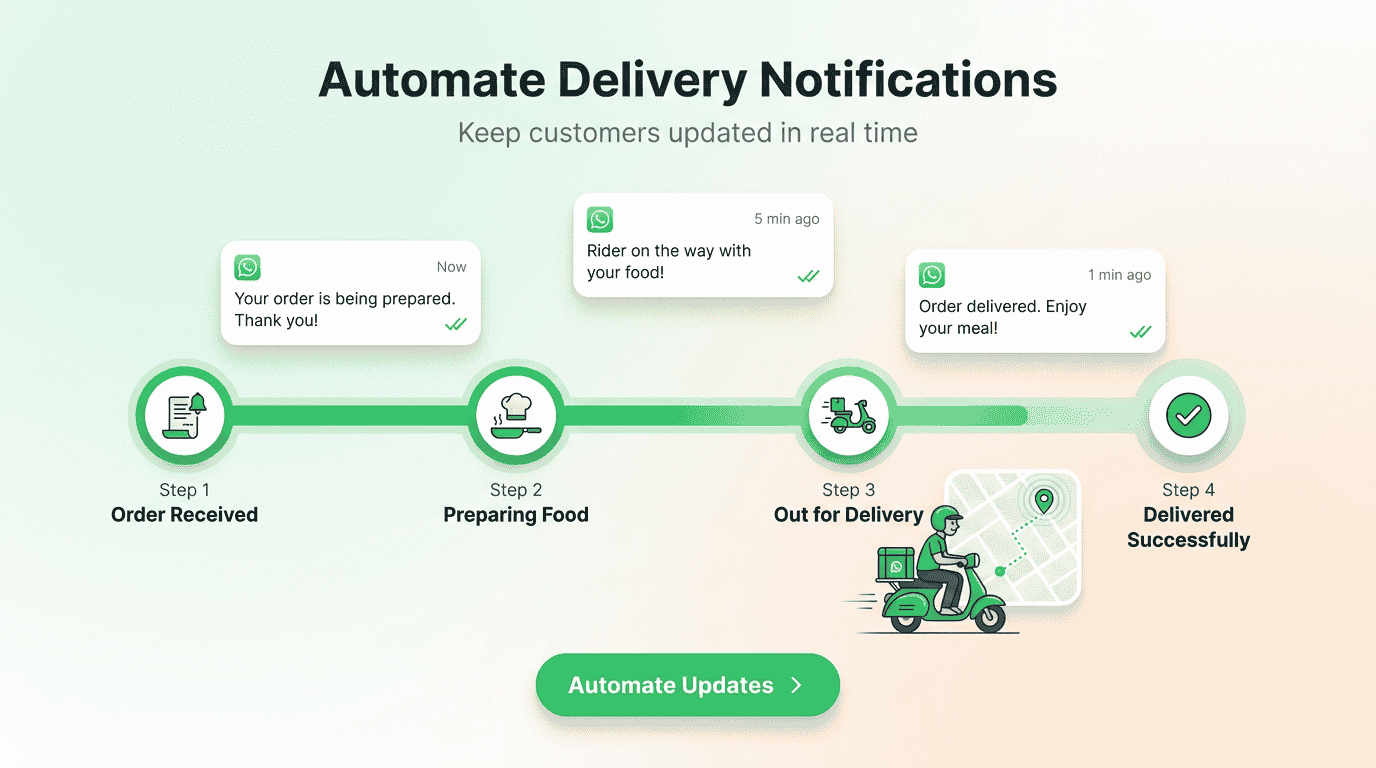
Send order and delivery updates: From the moment the order is placed, the customer keeps getting updates, kitchen, to dispatch, to delivery automatically. No follow-up calls, no chasing the delivery person, no confusion at the customer's end.
WhatsApp Chatbot for Restaurants
A WhatsApp chatbot is highly useful for restaurants because it takes orders without someone from the team manually replying to every single message. Customers can scroll through the menu, customize their order, choose quantities, and place the order directly inside the chat itself. The chatbot then confirms the order, shares the payment link, and passes the details to the kitchen automatically.
It also keeps customers updated throughout the process, from order confirmation to delivery updates, while handling customer queries at any time of the day. So even if someone places an order late at night or during peak lunch and dinner hours, the restaurant is still able to collect and process it smoothly.
For restaurants, this removes a lot of repetitive work that usually eats up staff time. Instead of spending hours answering the same order-related questions, the team can focus on kitchen operations and customer experience while the chatbot handles the routine conversations in the background.
WhatsApp Marketing for Restaurants
Restaurants do not always have to wait for customers to come back and place the next order on their own. With WhatsApp marketing, restaurants can directly reach people who have already ordered before and bring them back with offers that feel relevant instead of random promotions being pushed everywhere.
Things like daily specials, weekend offers, festive thalis, new menu launches, loyalty discounts, all of it can go out as bulk WhatsApp messages to customers who have already opted in. And because people actually open WhatsApp, unlike most promotional emails or SMSes, the chances of the message being seen are much higher.
Restaurants also use it for reservation reminders, which cuts down no-shows quite a bit. Even simple birthday or anniversary offers sent at the right time can drive repeat orders without the restaurant spending heavily on aggregator visibility.
The important part is that the messaging should not feel like a campaign. It should feel like the restaurant knows its customers. The more personal and familiar the communication feels, the better WhatsApp marketing works for restaurants.

WhatsApp API Pricing for Restaurants
Restaurants usually think WhatsApp API pricing is complicated, but the structure is actually quite straightforward once you break it down. There are mainly two layers of cost involved when a restaurant sets up WhatsApp ordering and marketing.
The first is Meta’s conversation charges. WhatsApp charges businesses per conversation, not per message. So if a customer places an order and the restaurant sends confirmations, payment updates, delivery tracking, and support replies within the same 24-hour window, it still counts as one conversation.
For restaurants, utility conversations are the most common. These include order confirmations, payment updates, delivery tracking, and reservation reminders. Marketing conversations are used for things like weekend offers, festive menus, discount campaigns, or loyalty rewards sent
to customers. Meta updates these rates periodically, so it is best to check the official pricing page
The second layer is the BSP platform fee. Providers like helo.ai handle the API access, dashboard, chatbot automation, broadcasts, integrations, and support. In India, marketing conversations cost roughly ₹0.58 to ₹0.80 per conversation, with utility and authentication cheaper still.
The important part is this: even after API costs, WhatsApp ordering is still significantly cheaper than losing 20–30% commission on every aggregator order. For restaurants trying to build repeat customers and direct orders, the long-term cost difference becomes massive.
FAQs
How can restaurants take orders directly on WhatsApp?
Restaurants set this up through the WhatsApp Business API, with the menu catalogue, a payment gateway, and a chatbot all connected together. The customer sees the menu inside the chat, picks what they want, pays, and tracks delivery without ever leaving WhatsApp.
How does a WhatsApp chatbot help restaurants?
A WhatsApp chatbot automates repetitive tasks like taking orders, answering menu queries, confirming payments, and sharing delivery updates. This reduces manual workload and improves response speed.
Is WhatsApp ordering cheaper than Zomato or Swiggy?
In most cases, yes. WhatsApp ordering avoids high per-order commissions charged by aggregator platforms, making it more cost-effective for restaurants focused on direct orders.
Can restaurants send promotional offers on WhatsApp?
Yes. Restaurants can use WhatsApp marketing campaigns to share discounts, loyalty rewards, daily specials, and new menu launches with opted-in customers.
Do restaurants need coding knowledge to set up WhatsApp API?
No. Most WhatsApp API providers offer no-code dashboards and automation builders that make setup manageable without technical expertise.
Close
Restaurants are slowly realising that relying completely on aggregator apps is expensive in the long run. WhatsApp gives them a direct channel to take orders, automate support, stay connected with customers, and drive repeat business without losing a large percentage of revenue on every order. Platforms like helo.ai help restaurants set this up through chatbot automation, direct ordering workflows, broadcasts, and customer engagement tools built specifically for business growth.

.png&w=828&q=75)