


If your product currently sends OTPs, order confirmations, payment reminders, or shipment updates over SMS, your finance team has probably already asked the question: "Can we cut this bill in half?" The WhatsApp transactional API is increasingly the answer but only if you architect it correctly. Most enterprises that migrate transactional traffic to WhatsApp see costs drop 60-90% on utility and authentication messages compared to SMS, with engagement rates climbing 5x. The catch is that WhatsApp's pricing model has shifted twice in the last 18 months, free messaging windows are widely under-utilized, and one wrong template category can quietly inflate your monthly bill by 20x.
This guide is built for exactly that conversation what you'll actually pay, where the traps are, and how to architect a transactional stack that delivers on the promise.
Why Enterprises Are Quietly Migrating Transactional Traffic Off SMS
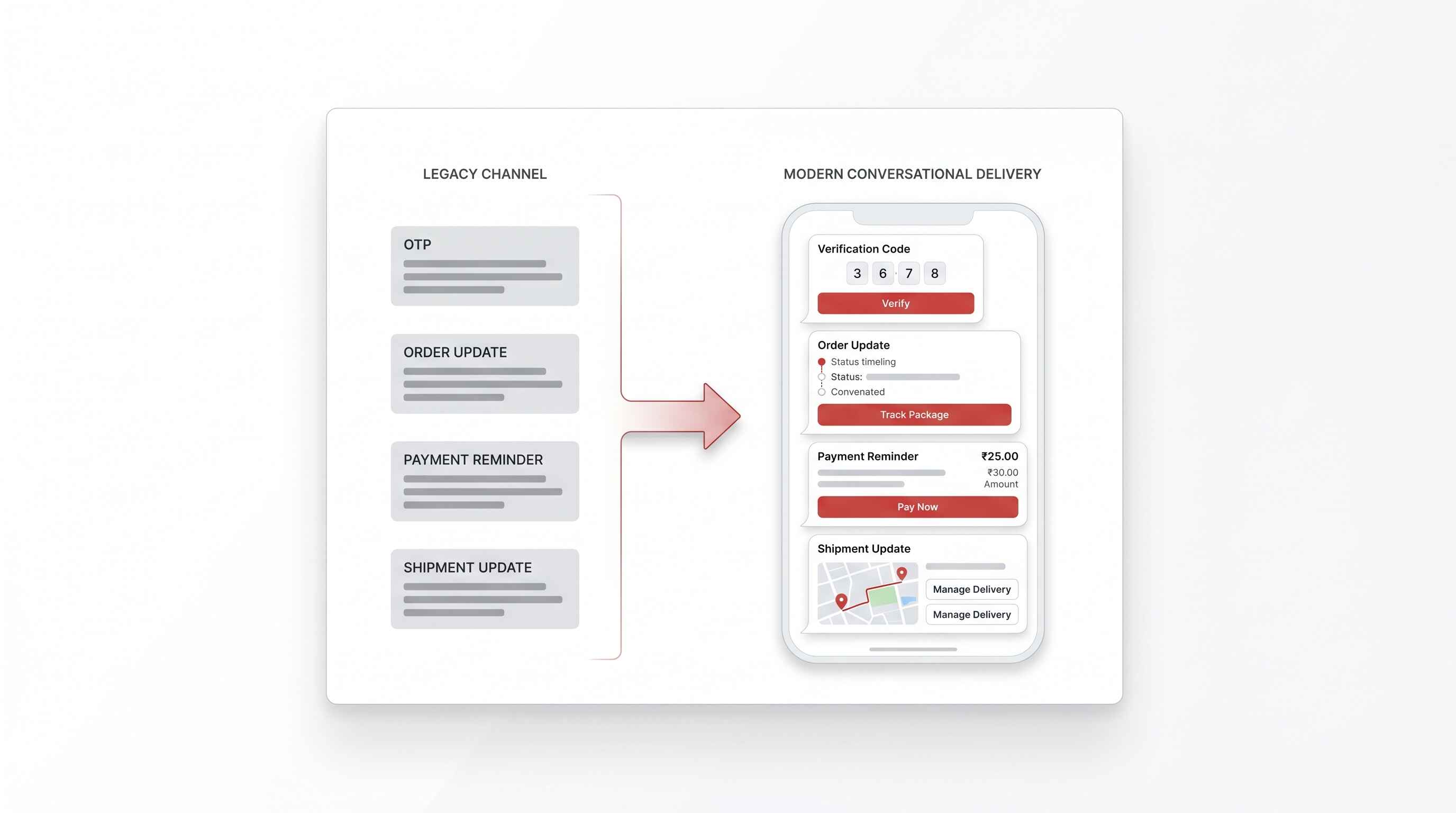
For two decades, transactional messaging meant SMS. It worked. It was reliable. But it was always expensive, always one-way, and always treated as a cost line item — never as a customer experience.
Three shifts have changed that math:
- Engagement collapse on SMS — read rates have dropped below 30% in most markets as users tune out promotional and transactional noise alike
- Per-message economics on WhatsApp — utility and authentication templates now cost a fraction of what SMS costs in most countries
- Two-way conversation built in — a customer can reply to a delivery update, dispute a charge, or confirm an OTP without leaving the message thread
The combined impact is hard to ignore. SMS is becoming a fallback channel; WhatsApp is becoming the primary channel for transactional traffic at enterprise scale.
The Four Categories That Decide What You Pay (and Why It Matters)
This is the single most important concept in WhatsApp transactional messaging — and it's where most teams trip up.
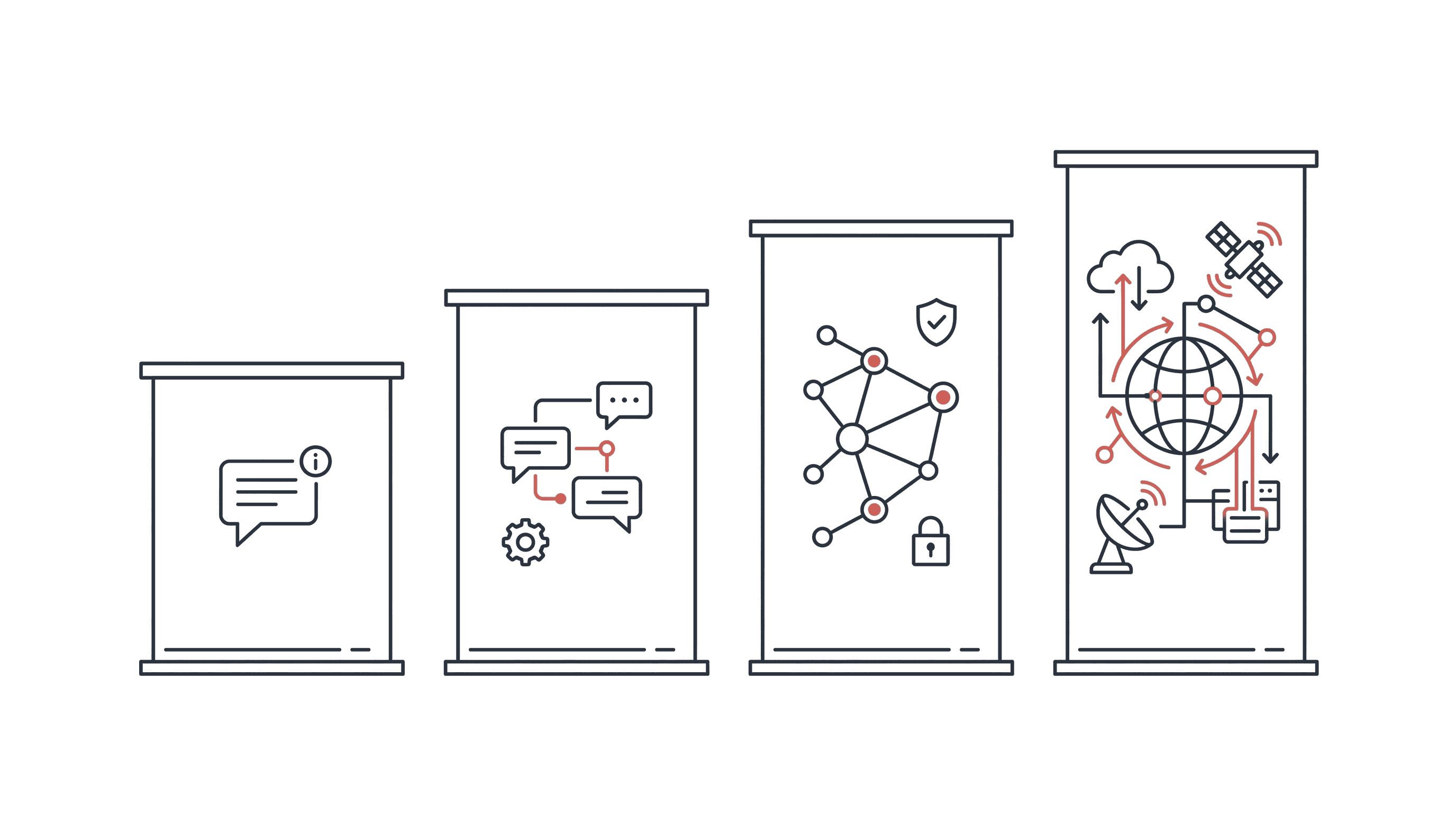
Meta classifies every business-initiated message into one of four template categories, and the category dictates the price:
- Marketing — promotional broadcasts, abandoned cart nudges, re-engagement campaigns. Most expensive category.
- Utility — transactional updates triggered by user action: order confirmations, shipping updates, payment reminders, appointment changes. 80-95% cheaper than marketing.
- Authentication — OTPs and verification codes. Lowest cost per outcome, but with strict format rules (no emojis, no extra links, no marketing copy).
- Service — replies to customer-initiated messages, sent within the 24-hour service window. Free.
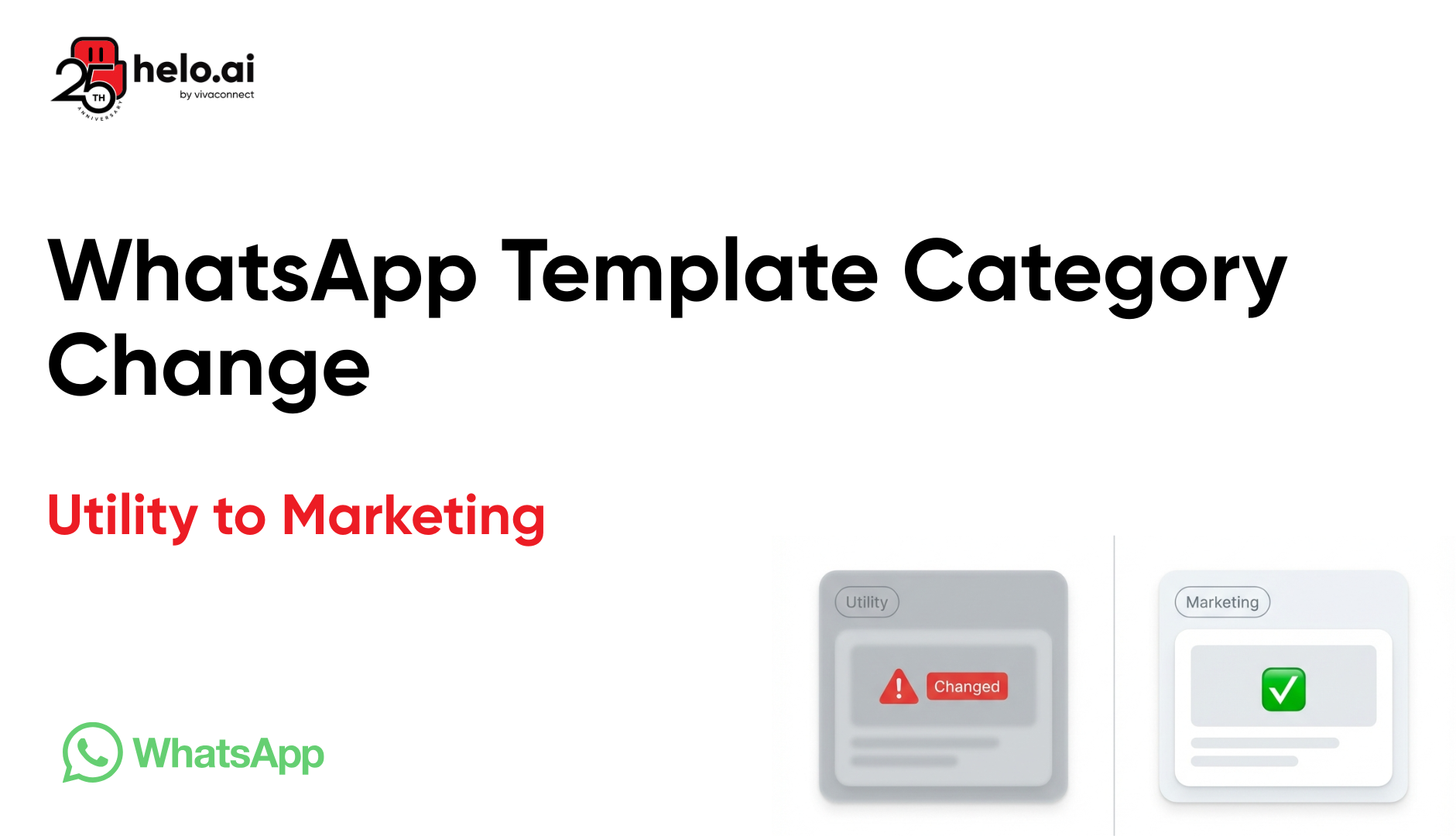
The kicker: if Meta determines your template category is wrong (e.g., you tried to send a marketing message under a utility template), they will reclassify it and bill you accordingly. Misclassification doesn't just risk template rejection — it can quietly multiply your message cost by 5-10x without your team noticing for weeks.
Read : WhatsApp Template Category Changed from Utility to Marketing
The Free Messaging Windows Most Teams Don't Architect Around
If you remember nothing else from this guide, remember this: free messaging windows are the single biggest cost lever in WhatsApp transactional messaging, and most enterprises don't design their flows around them.
There are two windows worth architecting around:
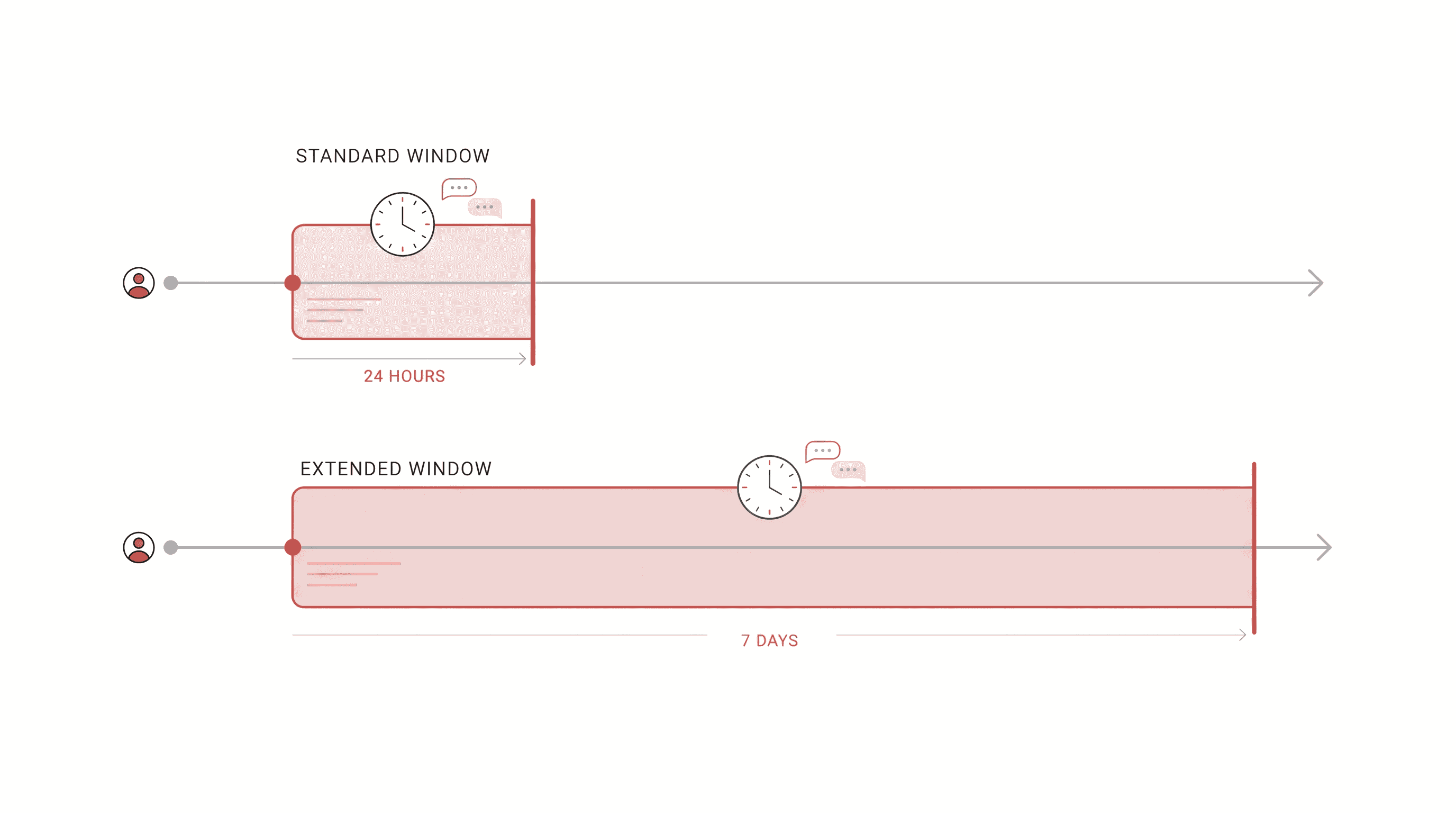
The 24-Hour Customer Service Window
Every time a customer messages your business, a 24-hour window opens. During this window:
- All your replies — including utility template messages — are completely free
- Two-way back-and-forth conversation costs nothing
- You can resolve support tickets, confirm transactions, send updates without paying per message
This window is why "let the customer initiate" is the most under-used optimization tactic. A simple "tap here for your account balance" QR code can drive customers to message you first, opening a 24-hour cost-free corridor.
Also Read: WhatsApp for Customer Support: Benefits, Setup & Real Use Cases
The 72-Hour Free Entry Point Window
When a customer enters via a Click-to-WhatsApp ad on Meta platforms or a Facebook Page CTA button, you get a 72-hour free messaging window — including marketing messages.
For acquisition flows, this is enormous. You can run campaigns where the entire onboarding sequence — qualification, KYC, first transaction — happens at zero messaging cost.
Architecting for free windows isn't a tactic. It's a design philosophy that can cut total messaging costs by 30-50% before you negotiate a single rate.
What WhatsApp Transactional Messages Actually Cost in 2026
Meta moved to per-delivered-message pricing on July 1, 2025, replacing the old conversation-based model. As of January 1, 2026, several markets saw rate revisions, with another update on April 1, 2026. The current structure (verify on Meta's official pricing page):
- Marketing messages — range from roughly $0.0094 in India to over $0.124 in Germany. Wide regional spread, no volume discounts.
- Utility messages (transactional) — typically 80-95% cheaper than marketing, often under $0.01 per message in most major markets. Volume discounts apply.
- Authentication messages — lowest cost per delivery, often $0.003 to $0.05 depending on country. Volume discounts apply.
- Service replies — free within the 24-hour customer service window, anywhere in the world.
For a business sending 500,000 OTPs and order updates monthly, total Meta cost typically lands well under what equivalent SMS would cost — often by 60-80%.
The Authentication-International Trap
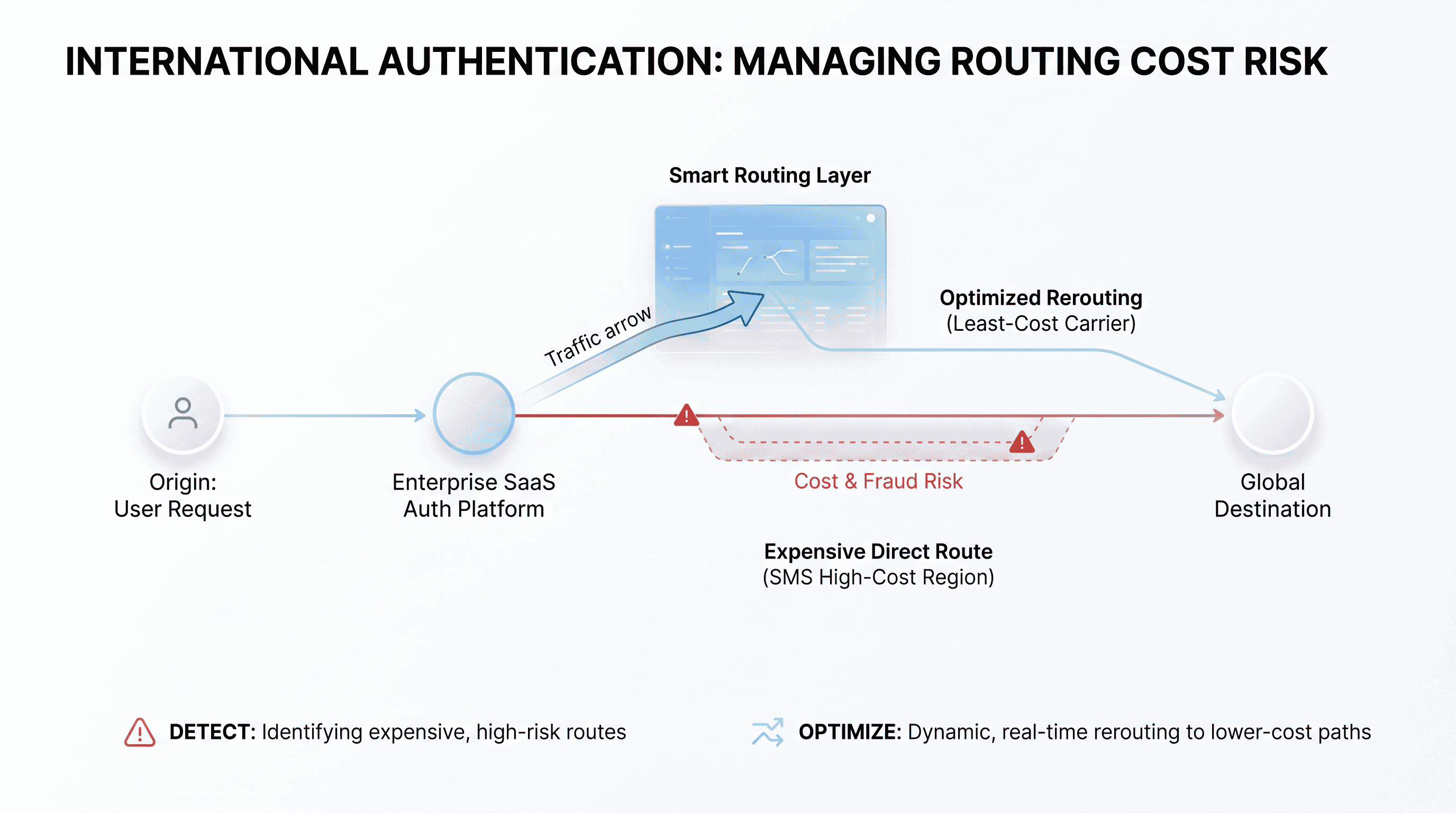
This is the single most expensive surprise on most enterprise bills.
When you send an OTP to a recipient in one of the nine countries Meta classifies under Authentication-International, the rate can be 3-18x higher than the standard authentication rate. A company sending OTPs to international users without segmenting by destination country can see authentication costs spike 200-400% overnight.
The fix: route international OTP traffic through smart channel-selection logic. For destination countries where Authentication-International applies, fallback to local SMS or RCS routes can be dramatically cheaper. This is exactly the kind of optimization an omnichannel CPaaS handles automatically — and a single-channel BSP cannot.
Where Implementations Quietly Break: Template Approval
Here's something pricing guides never tell you: 30-40% of WhatsApp templates get rejected on first submission. For a launch on a tight timeline, this can blow up your go-live by 1-3 weeks.
Common rejection reasons:
- Marketing copy in a utility-category template (most frequent failure)
- Variables that look like they could collect sensitive data
- Generic placeholders ("Hi customer") instead of personalization
- Promotional language ("get 20% off") in authentication or utility templates
- Templates that violate Meta's commerce or financial-services policies
Enterprises with mature deployments solve this by maintaining a template library reviewed against Meta's policy documentation before submission. A good BSP partner will flag policy issues before you submit, not after rejection.
The Real Cost Comparison: WhatsApp Transactional API vs SMS
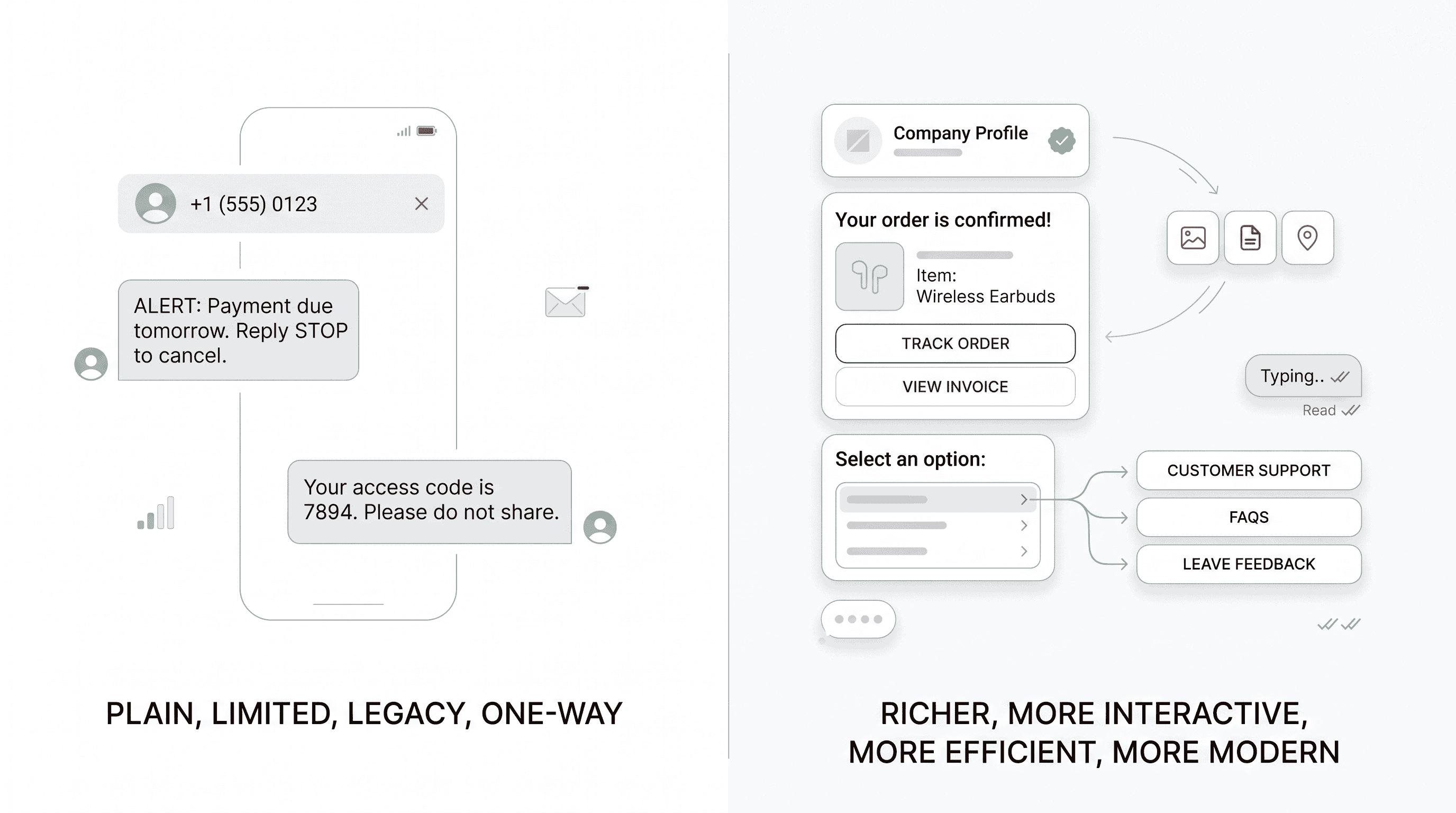
For pure cost-per-delivered-message, WhatsApp wins almost everywhere for transactional traffic. But the real comparison goes beyond rate cards:
- Delivery rate — WhatsApp delivery is more reliable than SMS in most emerging markets where SMS spoofing and operator filtering are common
- Engagement — read rates of 95%+ versus 18-30% for SMS. A delivered message that doesn't get read is wasted spend.
- Two-way capability — SMS replies require keyword routing or short codes; WhatsApp supports rich, contextual replies natively
- Rich media — order receipts with images, location pins, document attachments, payment buttons — all impossible on SMS
- Cost predictability — WhatsApp pricing is destination-based and published; SMS routes can have surprise carrier fees
The strategic answer for most enterprises isn't "WhatsApp instead of SMS" — it's "WhatsApp first, SMS as fallback when WhatsApp fails or the user isn't on the platform."
Architecting a Transactional Messaging Stack That Actually Saves Money
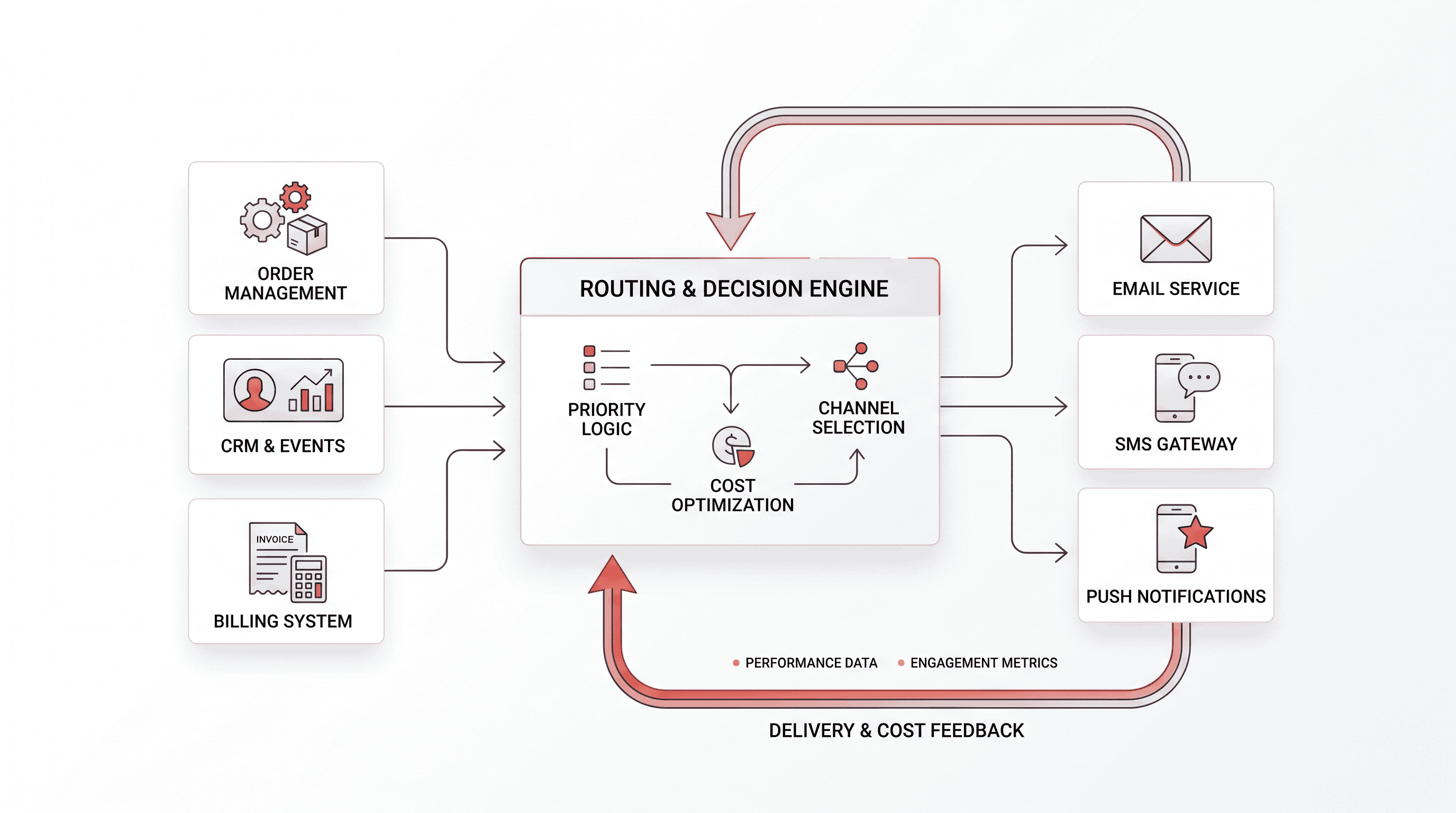
The cost difference between a well-architected and poorly-architected transactional messaging stack at the same volume can be 3-5x. The levers that matter:
- Route transactional traffic to utility templates, not marketing — biggest single cost lever
- Trigger customer-initiated conversations wherever possible to open free 24-hour windows
- Use Click-to-WhatsApp ads as entry points for acquisition flows to capture the 72-hour free window
- Segment by destination country to avoid Authentication-International rate shocks
- Build smart fallback logic so when WhatsApp delivery fails, RCS or SMS picks up automatically
- Monitor template categorization continuously to catch Meta-driven reclassifications early
This isn't theoretical. Enterprises running this architecture see consistent 40-60% cost reductions versus a direct SMS-to-WhatsApp lift-and-shift.
What to Look For in a Transactional Messaging API Provider
The BSP market is crowded. Most are built for D2C marketing volumes, not enterprise transactional throughput. Questions that separate the serious vendors:
- Are they an official Meta Business Solution Provider?
- Do they support omnichannel fallback (RCS, SMS, voice) when WhatsApp delivery fails?
- Can they handle authentication template approvals at scale and route international OTPs intelligently?
- Do they offer transparent pricing without hidden per-message markups?
- Can they sustain enterprise message throughput during peak events (sale days, festival traffic) without throttling?
- Do they integrate natively with your CRM, core systems, and identity stack?
If the answer to any of these is unclear, the vendor will struggle with enterprise transactional volumes.
Why helo.ai Is Built for High-Volume Transactional Traffic
helo.ai is an AI-powered omnichannel CPaaS platform that unifies WhatsApp, RCS, SMS, Email, and Voice in a single stack — built for high-volume transactional and authentication traffic. Smart routing automatically falls back to the most cost-effective and reliable channel when WhatsApp delivery fails or when destination-country economics favor SMS.
What sets helo.ai apart for transactional messaging:
- Omnichannel routing logic — automatically picks the cheapest reliable channel by destination country and message category
- Template management at scale — pre-submission policy checks reduce rejection rates dramatically
- Authentication-International handling — intelligent routing avoids the 3-18x rate trap
- Compliance frameworks aligned with global data protection standards
- Enterprise throughput — proven at high message volumes during peak events
- Transparent pricing without hidden per-message markups
Built for the way enterprise transactional messaging actually works — at scale, across geographies, and across every category.
Conclusion
WhatsApp transactional API isn't just a cheaper version of SMS — it's a different architecture. The companies winning in 2026 aren't the ones who lifted-and-shifted their SMS templates to WhatsApp. They're the ones who redesigned their messaging flows around free windows, smart category selection, intelligent destination routing, and omnichannel fallback. The savings are real and measurable, but only if you build it right. If you're evaluating providers, the question isn't
"how much does WhatsApp transactional messaging cost?" — it's "which partner can architect this so the cost is as low as it should be?" Talk to the helo.ai team, see live high-volume transactional deployments, and walk into your next finance review with a 50%+ cost reduction plan.
FAQs
1. How much do WhatsApp transactional messages cost in 2026?
Utility (transactional) and authentication templates typically cost a fraction of marketing messages — often under $0.01 per delivered message in most major markets, with volume discounts applying. Service replies inside the 24-hour customer-initiated window are free globally. Exact rates depend on recipient country and category.
2. What's the difference between WhatsApp utility template and marketing template pricing?
Utility templates are 80-95% cheaper than marketing templates. Utility covers transactional updates (order confirmations, shipping, payments). Marketing covers promotions and broadcasts. Misclassification can cause Meta to reclassify your template and bill at the higher rate.
3. WhatsApp transactional API vs SMS for OTP and order updates — which is cheaper?
For utility and authentication messages, WhatsApp is almost always significantly cheaper than SMS in most markets — often 60-90% lower. SMS still wins on raw cost in some Western markets, but WhatsApp's higher engagement and two-way capability typically delivers better ROI per dollar spent.
4. What is the free WhatsApp messaging window for transactional updates?
Two windows exist. The 24-hour customer service window opens when a customer messages your business — all your replies inside it are free. The 72-hour free entry point window opens when a customer arrives via Click-to-WhatsApp ad — all messages inside are free, including marketing.
5. How do you set up WhatsApp transactional messaging for a business?
Partner with an official Meta Business Solution Provider like Helo.ai, register a verified business number, set up your message templates by category (utility, authentication, marketing) and submit for approval, integrate the API with your backend (CRM, ERP, or transactional system), and set up smart routing logic for destination-based optimization and channel fallback.