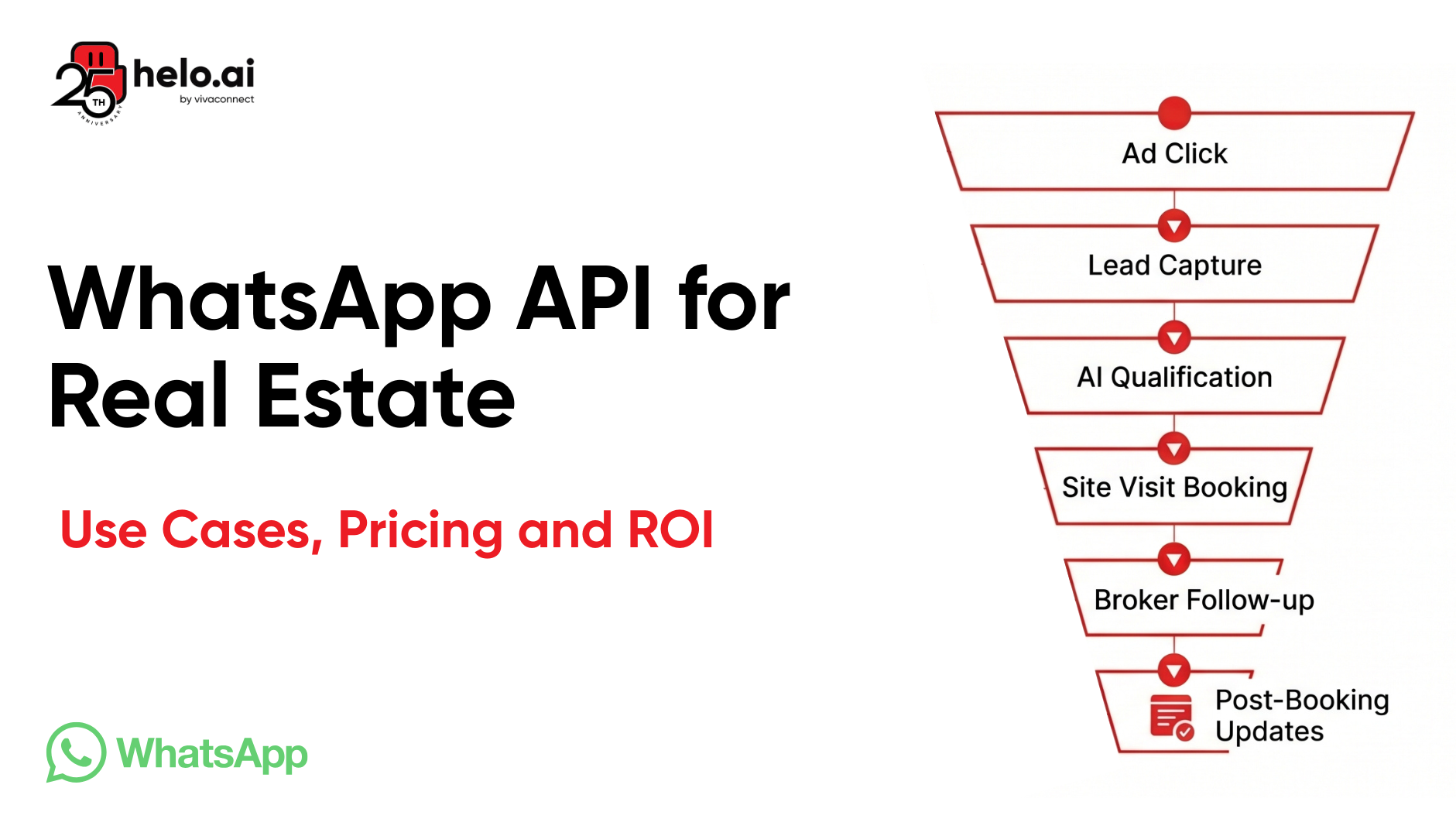



For most property dealers, the problem is not getting leads. The real problem starts after the lead comes in. Buyers ask for brochure details, price, location, possession timeline, or site visit availability, and if the reply does not come fast enough, the conversation moves to another broker or builder. That is exactly where WhatsApp automation changes the process. Instead of depending on manual replies, property dealers can use WhatsApp to respond instantly, qualify buyer intent, share project details, schedule visits, and keep follow-ups moving without losing context.
If you searched for WhatsApp Automation for Property Dealers, you are probably not looking for a high-level definition. You want to know what to automate, how the workflow should look, what kind of messages actually help, and how to stop good leads from going cold. This guide covers exactly that. It explains the real estate use cases that matter most, where automation fits in the buyer journey, what official WhatsApp capabilities support these workflows, and how property dealers can build a system that feels fast without becoming impersonal.
Why property dealers are moving to WhatsApp automation
Property buying is a long decision journey. Buyers compare locations, budgets, property types, payment plans, family preferences, and site visit schedules over days or weeks. That is why channels like email often lose momentum while WhatsApp keeps the conversation alive in one thread. A dealer can send the brochure today, a payment plan tomorrow, a site visit reminder next week, and a follow-up after the visit without forcing the buyer to restart the conversation from zero. That continuity is what makes WhatsApp especially strong for real estate.
On the official platform side, WhatsApp Business Platform capabilities include text, rich media, interactive messages, templates, analytics, and webhook-based workflows. For property dealers, that means the channel can support brochure sharing, reminders, lead updates, structured replies, and more advanced conversational flows instead of only basic chatting. Meta also makes clear that template messages, account assets, analytics, and webhooks are part of the platform’s business infrastructure, which matters when teams want to automate at scale.
What property dealers usually want to automate first
Most dealers do not need to automate everything from day one. The best first automations are usually the ones that save response time and reduce repetitive manual work. In real estate, that usually means instant reply after inquiry, lead qualification, brochure and project detail sharing, site visit booking, reminders, and basic nurture follow-ups. These are the parts of the journey where delays hurt conversion most.
A practical rule is simple: automate what is repetitive, high-frequency, and structured; keep human control where persuasion, negotiation, or emotional reassurance is needed. That balance is where the best-performing property automation systems usually sit.
Practical tip: The first automation goal for a property dealer should not be “replace sales.” It should be “make sure no warm lead waits for a reply.”
The ideal WhatsApp automation flow for property dealers
1. Lead comes in from ads, portal, website, or QR code
The journey usually starts on a property portal, website form, Meta ad, or an offline QR code. Once the inquiry is submitted, the biggest win is speed. Instead of waiting for manual assignment, the buyer should receive an immediate WhatsApp message that acknowledges the inquiry and starts the conversation. This is especially effective when using Click-to-WhatsApp paths, because the user is already choosing a messaging-first interaction.
2. Instant reply and intent capture
The first automated reply should not dump too much information. It should greet the lead, reference the project or location if possible, and ask one or two qualifying questions. This is where many competitors underperform. They mention “lead qualification” as a feature, but they do not explain that the first message should reduce confusion, not create it.
A simple example would be:
“Hi, thanks for your interest in our property at [Location]. To share the right options, may I know your budget range and whether you want ready-to-move or under-construction?”
This keeps the conversation moving and signals that the buyer will get relevant options rather than generic sales pressure.
3. Automated qualification
Property dealers lose time when agents ask the same opening questions repeatedly. WhatsApp automation can collect those details first, then push only meaningful leads to the sales team. The most useful qualification fields are usually budget range, preferred location, property type, BHK preference, possession timeline, financing status, and whether the buyer is looking for self-use or investment.
4. Auto-sharing brochures, images, and project details
Once the buyer’s preference is clear, the next automation step is content delivery. Instead of waiting for an agent to manually send brochures or project summaries, the system can automatically share the correct brochure, floor plan, sample images, payment highlights, or video walkthrough links. WhatsApp Business Platform supports rich media and interactive messages, which makes this much more useful than a plain-text response.
A useful improvement here is to sequence the content rather than sending everything at once. Buyers often respond better when the conversation feels guided: first the brochure, then key availability, then a site visit prompt, then a financing or location follow-up if relevant. That type of pacing is practical and logically stronger than a single content dump.
5. Site visit booking and reminders
For many property dealers, the real conversion event is not just the inquiry. It is the site visit. That is why site-visit automation deserves its own section instead of being buried under “follow-up.” Buyers should be able to choose a preferred slot, receive confirmation, get directions, and then receive reminders closer to the appointment. WhatsApp Flows are especially relevant here because Meta officially supports appointment-style and structured response experiences inside WhatsApp.
6. Post-visit follow-up and nurture
Many property leads do not convert on the first visit. They compare options, discuss with family, review finances, and come back later. That means post-visit follow-up is one of the most important workflows to automate. Instead of relying only on agents to remember every follow-up, the system can send a thank-you message, ask about interest level, share updated availability, or offer a virtual walkthrough for other family members.
This is also where segmentation matters. A buyer exploring for self-use may care about neighborhood and commute, while an investor may respond better to messages about appreciation potential, rental demand, or unit availability. That small increase in relevance adds practical value without turning the content into unrealistic speculation.
7. CRM sync and sales handoff
Automation becomes much more valuable when it does not live in isolation. The system should log lead details, responses, interest stage, and site-visit status into CRM so agents know the context before they call. One of the strongest content gaps in ranking competitors is that many mention CRM integration as a feature, but they do not explain why it matters operationally. For property dealers, CRM sync means fewer missed leads, better visibility, cleaner handoffs, and less repetition in buyer conversations.
The best use cases of WhatsApp automation for property dealers
A strong article on this keyword should show the use cases in business language, not just in platform language. For property dealers, the most important use cases are instant inquiry response, automated lead qualification, brochure and floor-plan sharing, site visit scheduling, reminder workflows, virtual tour coordination, new listing alerts, post-visit follow-up, broker or channel-partner coordination, rental reminder and payment workflows for relevant segments, and cold-lead re-engagement. These use cases appear across the competitor landscape, but most competitors do not frame them in the actual order a property-sales pipeline uses them.
What should not be automated
Not every part of the property sales process should be left to automation. Negotiation, serious objection handling, legal reassurance, financing sensitivity, and emotionally complex purchase decisions still benefit from human involvement. The best systems use WhatsApp automation to protect speed and consistency in the early and middle funnel, then let experienced agents step in where trust and persuasion matter most.
This is one place where adding a short editorial-style sentence helps credibility: automation should make the sales team sharper, not invisible.
WhatsApp Business App vs API for property dealers
A single broker or very small setup may start with the WhatsApp Business App, but serious property automation usually needs the API layer. Meta’s platform documentation makes it clear that business-scale messaging depends on formal account assets, templates, analytics, webhooks, and programmable workflows. That is what enables multi-step automation, CRM sync, template messaging, and structured integration beyond simple app usage.
Read Complete Comparsion: WhatsApp Business App Vs WhatsApp Business API
Setup basics property dealers should understand
For teams implementing this seriously, the technical foundation usually includes a WhatsApp Business Account, business phone number setup, webhooks to capture inbound events and delivery status, approved message templates for outbound communication beyond the customer service window, and a system for storing lead context. Meta’s official getting-started guide also makes clear that businesses need app setup, account connection, token management, and webhook configuration as part of a proper implementation path.
There is also an important messaging rule to state accurately: businesses must obtain user opt-in before sending template messages, and templates are the approved way to message users outside the customer service window. This is especially important for property promotions, reminders, and nurture campaigns.
Compliance and practical caution for real estate in India
In Indian real estate, teams often also consider RERA-related disclosure discipline in promotional communication and keep consent, approved templates, and message records organized. It is best to present this carefully: not as legal advice, but as an operational best practice for a regulated industry where communication transparency matters.
A good one-line addition after this paragraph could be: For regulated sales journeys, clear opt-in, approved templates, and documented communication reduce operational risk.
Common mistakes property dealers should avoid
One common mistake is automating too much too early. Another is sending the same brochure and the same follow-up to every buyer, regardless of whether they are an investor, end-user, NRI, or rental lead. A third is thinking that a bot alone will fix conversion problems when the real issue is poor qualification logic, weak handoff, or lack of CRM visibility. These are practical, realistic issues that many competitor pages mention only indirectly, even though they are often what determine whether automation helps or annoys.
FAQ: WhatsApp Automation for Property Dealers
What is WhatsApp automation for property dealers?
WhatsApp automation for property dealers means using the WhatsApp Business Platform or connected business tools to automate repetitive parts of the real-estate sales process, such as instant replies, lead qualification, brochure sharing, site visit booking, reminders, and follow-up messaging. The goal is to reduce lead leakage and respond faster without relying entirely on manual chat handling.
How can WhatsApp automation help property dealers get more conversions?
It improves conversion indirectly by shortening response time, structuring lead qualification early, keeping follow-ups consistent, and making it easier to move interested buyers toward a site visit or next sales step. For property dealers, speed and continuity usually matter more than sending more messages.
What should property dealers automate first on WhatsApp?
The best first workflows are instant reply after inquiry, qualification questions, brochure or floor-plan sharing, site visit scheduling, and reminder messages. These are easier to implement than advanced AI flows and usually deliver visible operational value quickly.
Can property leads from portals be sent directly to WhatsApp?
Yes, many businesses connect portal or ad-generated inquiries into WhatsApp workflows so that the first response goes out immediately. The real value comes when that lead is also synced into CRM and routed based on qualification instead of staying as an isolated chat.
Is the WhatsApp Business App enough for property automation?
For very small-scale use, it may be enough to start conversations manually. But if a property dealer wants team workflows, templates, CRM sync, multi-step automation, webhooks, or larger lead volumes, the API-based setup is usually the better fit.
Can WhatsApp automate site visit booking?
Yes. Site visits are one of the most practical automation use cases because the process is structured. A buyer can choose a preferred date or slot, receive confirmation, get reminders, and reschedule when needed. This can be made even stronger with structured WhatsApp Flows.
Is WhatsApp automation compliant for real estate businesses?
It can be, as long as businesses follow platform rules like user opt-in and approved template usage, and also manage any local regulatory communication requirements carefully. In real estate, compliance should be treated as part of the workflow setup, not as an afterthought.
Conclusion
WhatsApp automation for property dealers works best when it is built around the actual buyer journey, not around a generic feature list. The strongest systems help teams respond instantly, qualify leads early, send the right property details, book site visits, and keep follow-ups alive until the buyer is ready to move. That is why this topic sits at the center of both sales productivity and customer experience in modern real estate.



.png&w=828&q=75)