


Customer acquisition costs keep rising. For many D2C brands, increasing budgets is no longer the easiest path to growth.
That is why more founders are looking for ways to increase LTV without increasing ad spend.
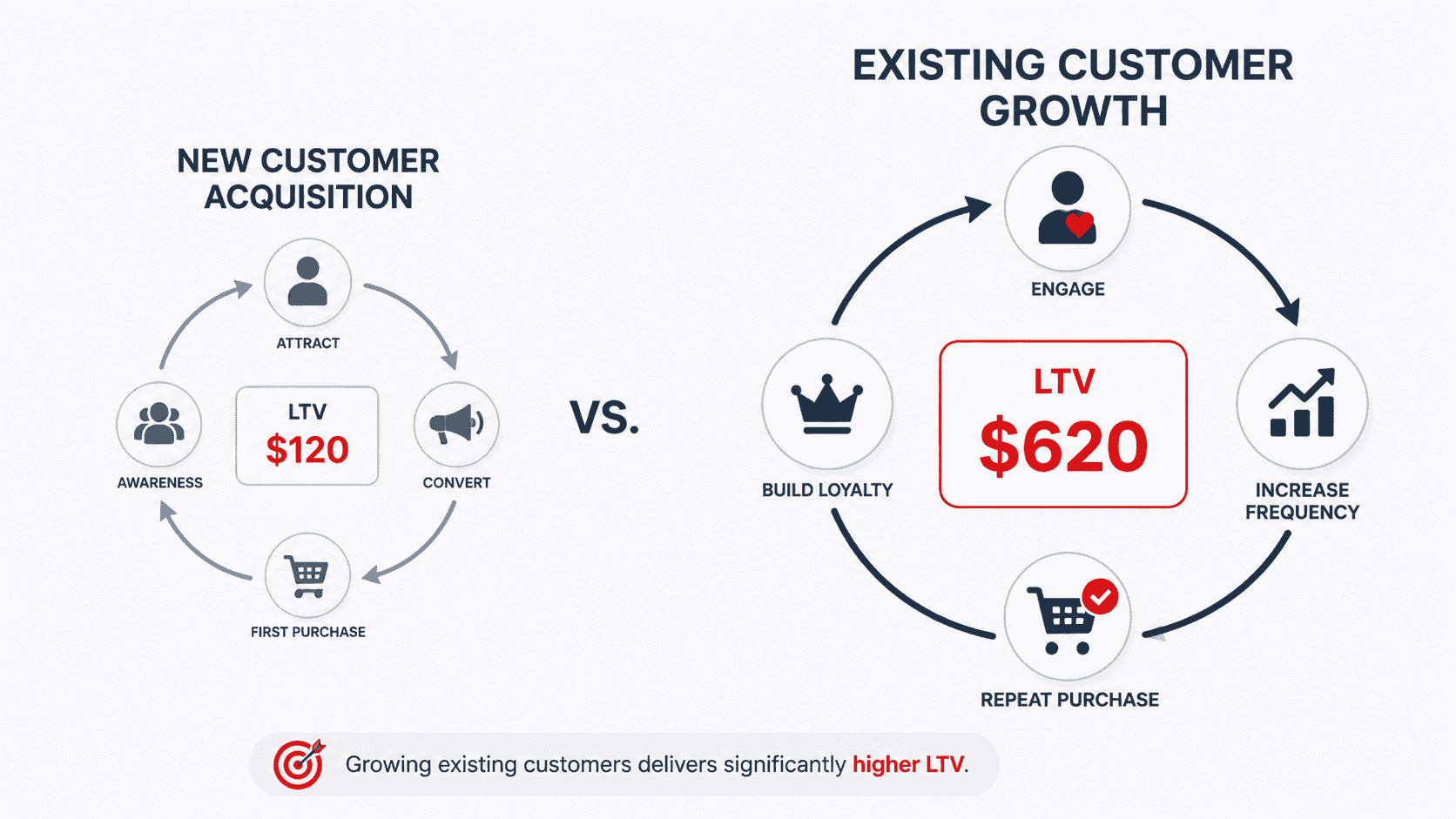
The logic is simple. If existing customers buy more often, stay longer, and spend more over time, revenue grows without constantly pouring more money into acquisition.
The challenge is that many brands focus heavily on getting the first order and far less on what happens after it. Yet the customers you already have are often your biggest growth opportunity.
Why LTV Matters More Than Ever
Lifetime value (LTV) measures how much revenue a customer generates throughout their relationship with your brand.
When LTV increases:
- Customer acquisition becomes more profitable
- Marketing efficiency improves
- Retention grows stronger
- Revenue becomes more predictable
Many brands try to improve profitability by cutting costs. The better approach is often increasing the value of every customer you acquire.
After all, acquiring a customer once is expensive. Keeping them coming back is usually much cheaper.
Recent industry data shows that a 5% improvement in customer retention can boost profits by 25-95%. Repeat customers often drive 60% or more of revenue for optimized D2C brands, even when they represent a smaller share of the total customer base. Acquiring a new customer costs 5-25x more than retaining or reactivating an existing one.
The Real Problem: Most Customers Never Place a Second Order
One of the biggest reasons D2C brands struggle with growth is that first-time buyers never return.
A customer discovers the brand, places an order, receives the product, and then disappears.
This creates a constant dependency on acquisition.
The brands that successfully increase customer lifetime value focus on the period immediately after purchase. They understand that retention starts long before a customer is ready to buy again.
Many D2C brands lose customers after the first order because post-purchase communication drops off. See data and strategies in our guide: Why D2C Brands Lose Customers After First Order.
Build Better Post-Purchase Experiences
Many brands go silent after checkout.
Customers receive an order confirmation, a delivery notification, and then nothing.
That silence creates missed opportunities.
Strong post-purchase experiences keep customers engaged through:
- Order updates
- Delivery notifications
- Product education
- Usage tips
- Review requests
- Reorder reminders
These touchpoints maintain engagement and keep the brand top of mind between purchases.
Post-purchase communication is one of the highest-leverage areas for improving retention and LTV. Learn how in our guide: How Post-Purchase Communication Improves Customer Retention.
Increase Repeat Purchases Through Retention Marketing
If you want to grow LTV organically, repeat purchases matter more than almost anything else.
Retention marketing focuses on bringing existing customers back instead of constantly chasing new ones.
Some of the most effective customer retention strategies for D2C include:
Personalized Reorder Reminders
Many products have natural replenishment cycles. Skincare, supplements, pet products, and consumables all create opportunities for timely reorder reminders. The key is sending reminders when customers are likely to need the product again, not weeks too early or too late.
Win-Back Campaigns
Not every inactive customer is lost forever. A well-timed win-back campaign can reactivate customers who simply became distracted or forgot about the brand. See proven reactivation strategies: How to Reactivate Inactive Customers.
Product Recommendations
Customers who trust one product are often open to trying another. Cross-sell and upsell recommendations can increase customer lifetime value while improving the customer experience.
Explore more tactics for driving repeat sales in our guide: Best Ways to Increase Repeat Purchases for D2C Brands. Also see WhatsApp-specific repeat sales approaches: WhatsApp Campaigns for Repeat Sales.
Use Segmentation Instead of Sending the Same Message to Everyone
Not all customers behave the same way.
A first-time buyer and a customer who has ordered five times should not receive identical communications.
This is where segmentation becomes important.
Many retention leaders use RFM segmentation, which groups customers based on:
- Recency
- Frequency
- Monetary value
This helps brands identify:
- High-value customers
- Loyal customers
- At-risk customers
- Inactive customers
The result is more relevant communication and stronger engagement.
Personalized messaging based on behavior significantly lifts revenue and LTV. Discover how in our guide: How Personalized Messaging Increases D2C Revenue.
Loyalty Is Built Through Consistency
Many brands think loyalty programs alone increase retention.
They help, but loyalty is usually the result of consistent positive experiences.
Customers return when they:
- Trust the product
- Receive excellent service
- Feel valued
- Hear from the brand at the right moments
The goal is not simply to create transactions. It is to build habits.
When customers automatically think of your brand when they need a product again, LTV increases naturally.
See how to turn first-time buyers into loyal customers: How to Turn First-Time Buyers into Loyal Customers.
Why Retention Usually Beats More Ad Spend
Imagine two brands.
The first doubles its ad budget.
The second improves repeat purchase rates by 15%.
The second brand often sees better long-term profitability because it extracts more value from every customer acquired.
Acquisition creates customers.
Retention creates growth.
That is why leading D2C brands increasingly invest in customer lifecycle marketing, post-purchase engagement, and repeat purchase strategies rather than relying entirely on paid acquisition.
Industry benchmarks confirm retention is far more efficient: acquiring new customers costs 5-25x more than retaining existing ones, and the probability of selling to an existing customer is 60-70% versus just 5-20% for a new prospect. A healthy LTV:CAC ratio starts at 3:1, with top D2C brands achieving 4-6:1 through strong retention.
Effective Tactics to Increase LTV Without More Ad Spend
Tactic | Description | Why It Boosts LTV for D2C Brands |
|---|---|---|
Post-Purchase Communication | Order confirmations, shipping updates, delivery notifications, education | Builds trust immediately and reduces early churn after first purchase |
Reorder Reminders | Timely nudges based on product usage cycles (supplements, skincare, etc.) | Captures natural repurchase moments and increases repeat rates |
Win-Back / Reactivation | Personalized campaigns for inactive customers | Recovers revenue from lapsed buyers at fraction of acquisition cost |
RFM Segmentation | Group by recency, frequency, and monetary value | Delivers relevant messages that drive higher engagement and spending |
Product Recommendations | Cross-sell/upsell based on past purchases | Increases average order value and overall lifetime revenue |
Consistent Multi-Channel Engagement | Ongoing value-driven touchpoints across WhatsApp, email | Turns one-time buyers into habitual, high-value customers |
These tactics work best when automated into ongoing journeys rather than one-off efforts.
Conclusion
Brands looking to increase LTV without increasing ad spend should focus on what happens after the first purchase. Better post-purchase experiences, retention marketing, customer segmentation, reorder reminders, and personalized communication all contribute to stronger customer relationships and higher lifetime value.
The goal is not simply acquiring more customers. It is helping existing customers stay longer, buy more often, and generate more value over time.
Increase LTV with WhatsApp Retention
helo.ai helps D2C brands increase customer lifetime value through personalized WhatsApp journeys, reorder reminders, post-purchase engagement, and retention campaigns that keep customers coming back.
Increase LTV with WhatsApp retention — book a demo.
FAQs
How to increase LTV without increasing ad spend for D2C brands?
The most effective approach is improving retention through repeat purchases, customer engagement, personalization, post-purchase communication, and automated retention marketing. Focus on extracting more value from existing customers instead of solely chasing new acquisitions.
What is customer lifetime value (LTV) and why does it matter?
LTV measures the total revenue a single customer generates over their entire relationship with your brand. Higher LTV makes every acquisition more profitable, improves marketing ROI, creates predictable revenue, and reduces pressure to constantly increase ad budgets.
Why do most D2C customers never place a second order?
Many brands go silent after the first purchase. Customers receive basic confirmations and delivery alerts but then receive no further relevant communication, education, or reminders. This leads to brand forgetfulness, competitor switching, and high churn after the initial order.
How do post-purchase experiences impact customer lifetime value?
Strong post-purchase communication (updates, tips, reviews, reminders) builds trust, reduces early churn, and keeps the brand top-of-mind. Poor or absent post-purchase experiences are a leading cause of customers never returning, directly lowering LTV.
How do reorder reminders and win-back campaigns help increase LTV?
Reorder reminders catch customers at natural replenishment points for consumables and subscriptions. Win-back campaigns reactivate inactive or lapsed customers. Both drive repeat purchases at much lower cost than acquiring new buyers, directly boosting lifetime value.
What role does segmentation (like RFM) play in boosting LTV?
RFM segmentation groups customers by recency, frequency, and monetary value so brands can send highly relevant messages instead of one-size-fits-all blasts. This increases engagement, repeat purchase rates, and overall revenue per customer.
Why is retention marketing more effective than increasing ad spend?
Retention leverages customers you've already acquired. Acquiring new customers costs 5-25x more, while existing customers convert at 60-70% rates. A 5% retention improvement can lift profits 25-95%, and repeat buyers often account for the majority of revenue with far lower ongoing costs.
How can WhatsApp automation improve LTV for D2C brands?
WhatsApp delivers superior open rates, faster responses, and better engagement than email for time-sensitive messages like delivery updates, reorder reminders, and personalized offers. Automated WhatsApp flows ensure consistent, relevant communication that drives repeat purchases and higher lifetime value. See why it outperforms email: Why WhatsApp Works Better Than Email for D2C Brands. Explore flows in Best WhatsApp Automation Flows for D2C Brands.

.jpeg&w=96&q=75)