


WhatsApp has an open rate of 98%. Research also shows a 45 to 60% response rate for promotional content, a strong opportunity for businesses to promote their products and stay connected with customers. Yet many businesses still struggle with a low response rate on WhatsApp. It is not bad luck. About 60% of users read messages within 5 minutes. This means the ability to improve WhatsApp response rate is not just a possibility, it is a result of systematic planning and structured messaging.
Why Your WhatsApp Response Rate Is Low
If you are not getting replies on WhatsApp, it usually comes down to a few core issues. Most of them are not technical; they are strategy and execution gaps.
1. Your Messages Do Not Encourage a Reply
Many businesses send informational messages like:
“Check our latest offer”
These messages get opened but do not lead to action because they do not ask the user to respond.
WhatsApp works best when messages:
- ask a question
- give options
- or guide the user to the next step
2. You Are Sending the Same Message to Everyone
Sending identical messages to all users reduces relevance.
Users respond when messages match:
- their intent
- their stage in the journey
- and their past interaction
Without segmentation, your messages feel generic — and get ignored.
3. Your Messages Lack a Clear CTA (Next Step)
If a user reads your message but does not know what to do next, they will not respond.
High-performing WhatsApp messages always include:
- a clear question
- a simple action
- or a quick reply option
4. Poor Timing and Frequency Reduce Trust
Even a good message can fail if sent at the wrong time.
Common mistakes:
- sending messages too early or too late
- sending too frequently without value
This leads to:
- users ignoring messages
- or marking them as spam
5. You Are Not Using Interactive Message Formats
Plain text messages require effort to respond.
WhatsApp provides features like:
- quick reply buttons
- list messages
- interactive templates
These reduce friction and increase replies significantly.
6. No Follow-Up Strategy
Most responses do not come from the first message.
Without follow-ups:
- interested users drop off
- conversations never continue
A structured follow-up sequence improves response rates consistently.
7. Your Opt-in Quality Is Low
If users have not clearly opted in, they are less likely to respond.
A strong opt-in ensures:
- better engagement
- higher trust
- and improved response rates
7 Steps to Improve Your WhatsApp Response Rate
Now that we recognise the problems, let's look at some solutions. There are strategies that, when implemented correctly, can significantly improve response rates on WhatsApp.
Step 1: Segment Your Audience
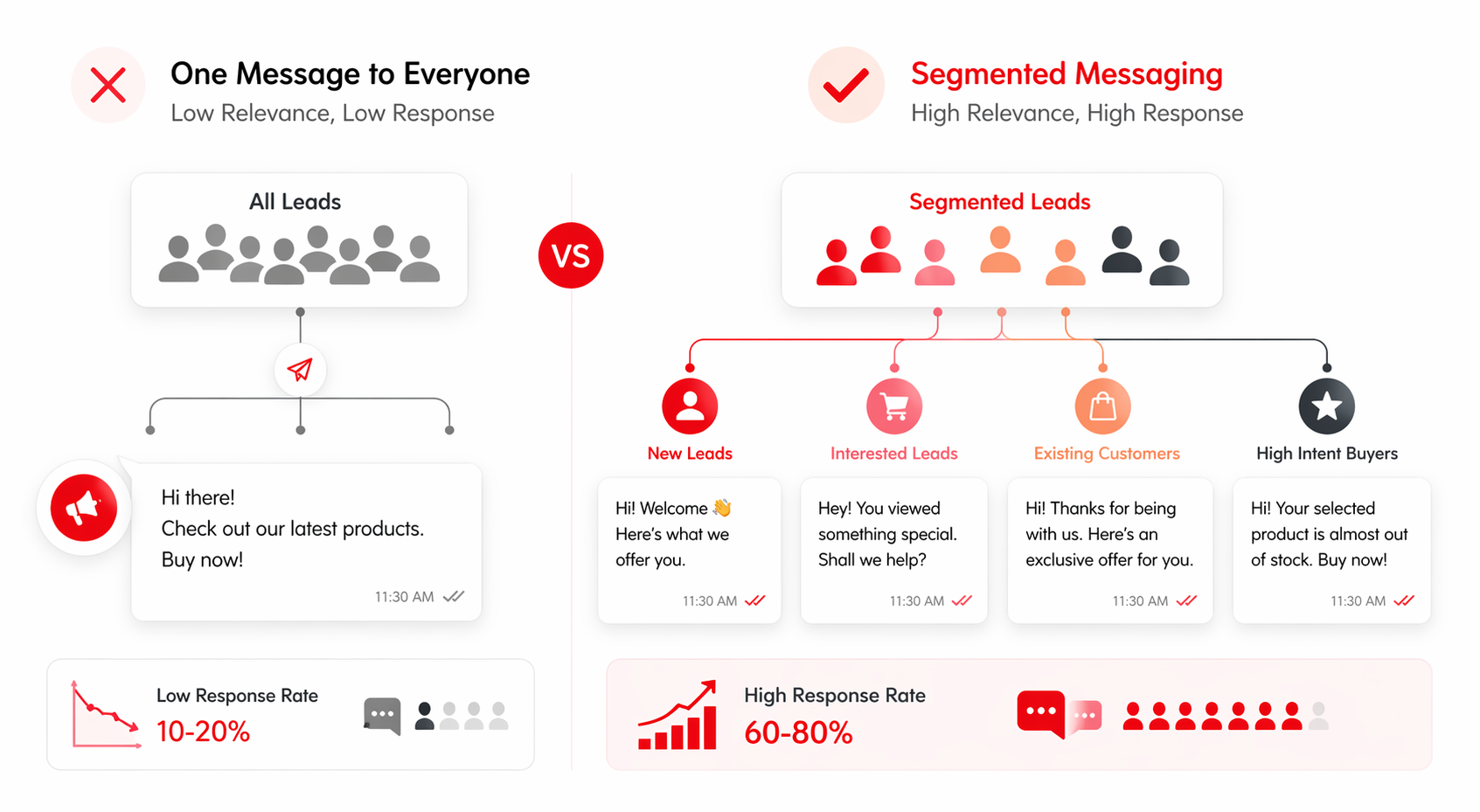
Sending the same message to every potential customer is a significant mistake. It decreases the chances of getting a response. Group your leads by behaviour and understand what holds relevance to each segment. Experiment with different messages for different groups to learn what content, CTAs and tone work for whom. Response rates improve when people receive messages they find relevant. What people find interesting, they engage with.
Step 2: Get Your Timing Right
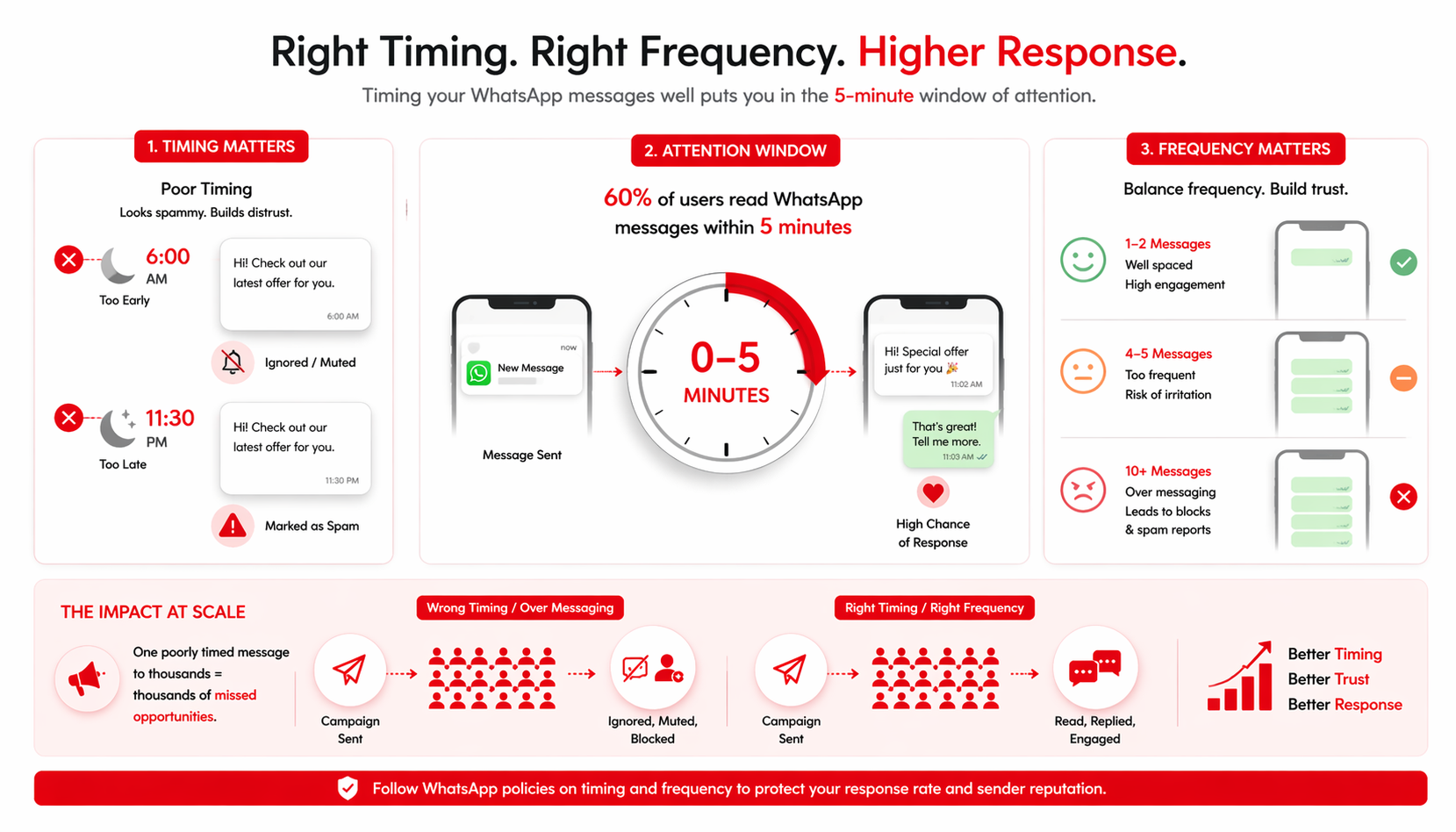
The time you send your messages plays a significant role in building trust and getting responses. Research shows that 60% of users read WhatsApp messages within 5 minutes of receiving them — which means timing your messages well puts you directly in that window of attention. Messages sent at odd hours, very early in the morning or late at night, appear spammy. Once a lead perceives your account as spam, getting them to respond becomes significantly harder.
It is equally important to manage the frequency of your messages. Sending too frequently without proper gaps irritates leads and damages trust. For enterprise businesses sending campaigns to thousands of contacts simultaneously, one poorly timed send means thousands of missed opportunities at once. Building a timing strategy and following official WhatsApp policies around message frequency protects both your response rate and your sender reputation.
Step 3: Make Automation Feel Human
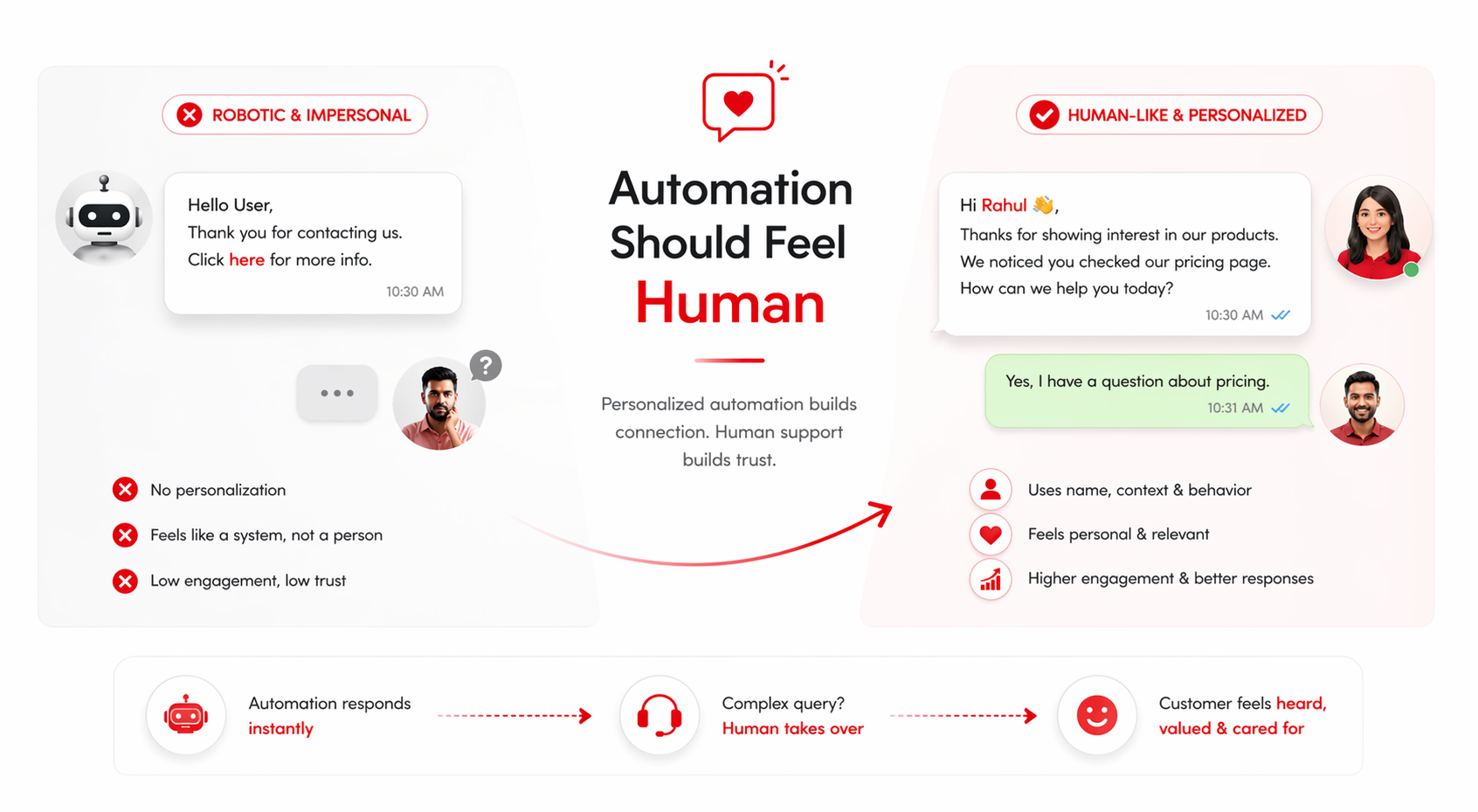
As important as it is to have automated messages that get back to leads instantly, it is equally important to make them feel personal. There has to be space for variables like names, location and relevant context within these automated messages. That personalisation is what builds connection with customers and leads.
For large-scale businesses, automation is indispensable. But it also becomes harder to make that automation still feel like a real human connection, which is exactly what needs to be achieved to get responses. Automated messages need to stay relevant to each customer's concerns, needs and interests. And when things get complex, human intervention must follow without delay. This way the customer feels genuinely connected to and cared for by the business, not just processed by a system.
Step 4: Keep Messages Short and Include a Clear CTA
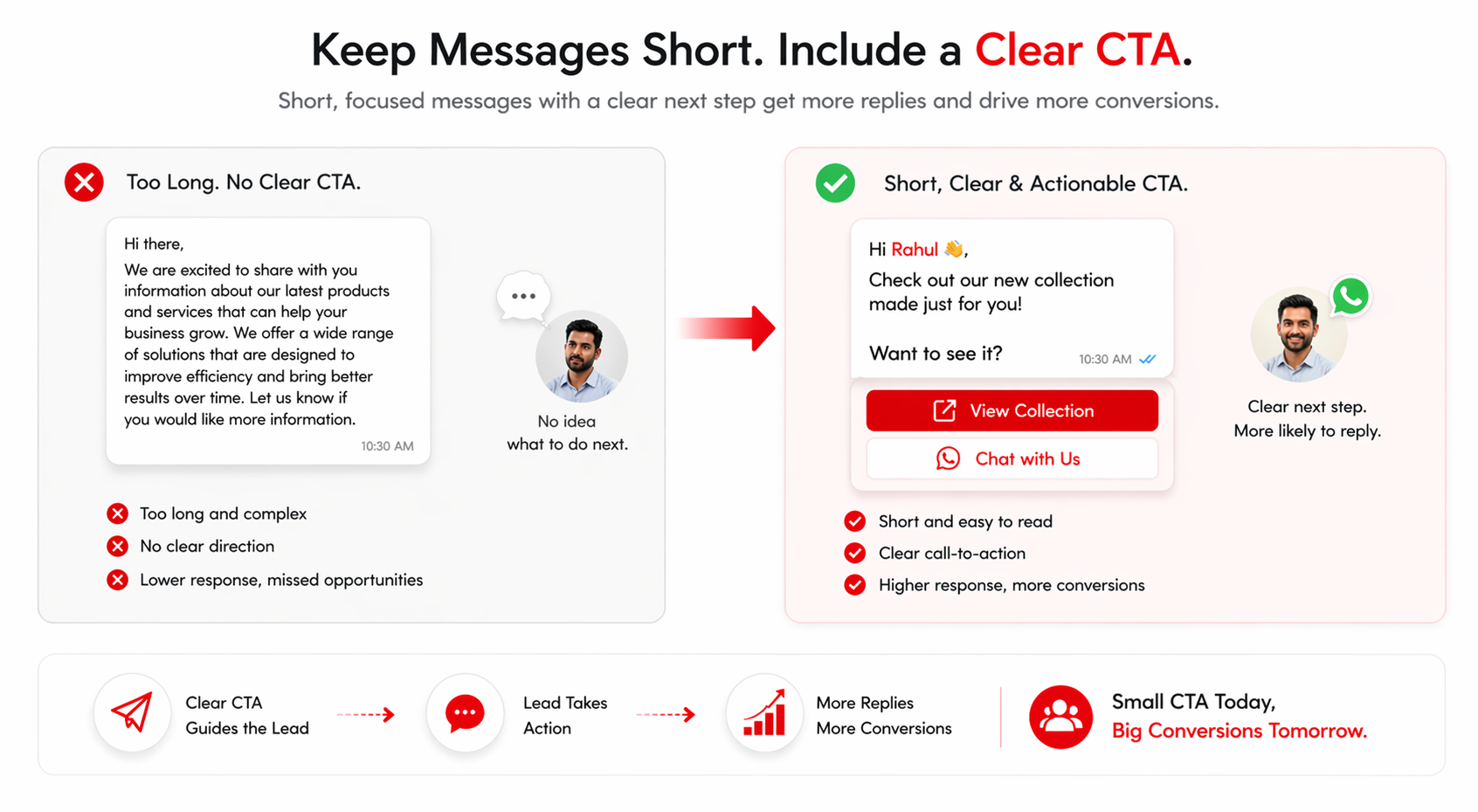
WhatsApp is a personal channel. The messages your business sends cannot be long and complex, they need to hold the lead's attention and direct them toward the next step. Make sure every message sent on WhatsApp is intriguing and gives the customer a clear idea of what to do next.
Response rates improve significantly when messages end with a question, a button or a clear direction. Without that, even interested leads do not know how to move forward — so they do not. For large-scale businesses, unclear or missing CTAs across thousands of messages means missing out on thousands of potential conversions every day. Leads that were interested and highly probable customers. That is a big loss that a simple, clear CTA could have prevented.
Step 5: Use Interactive Message Formats
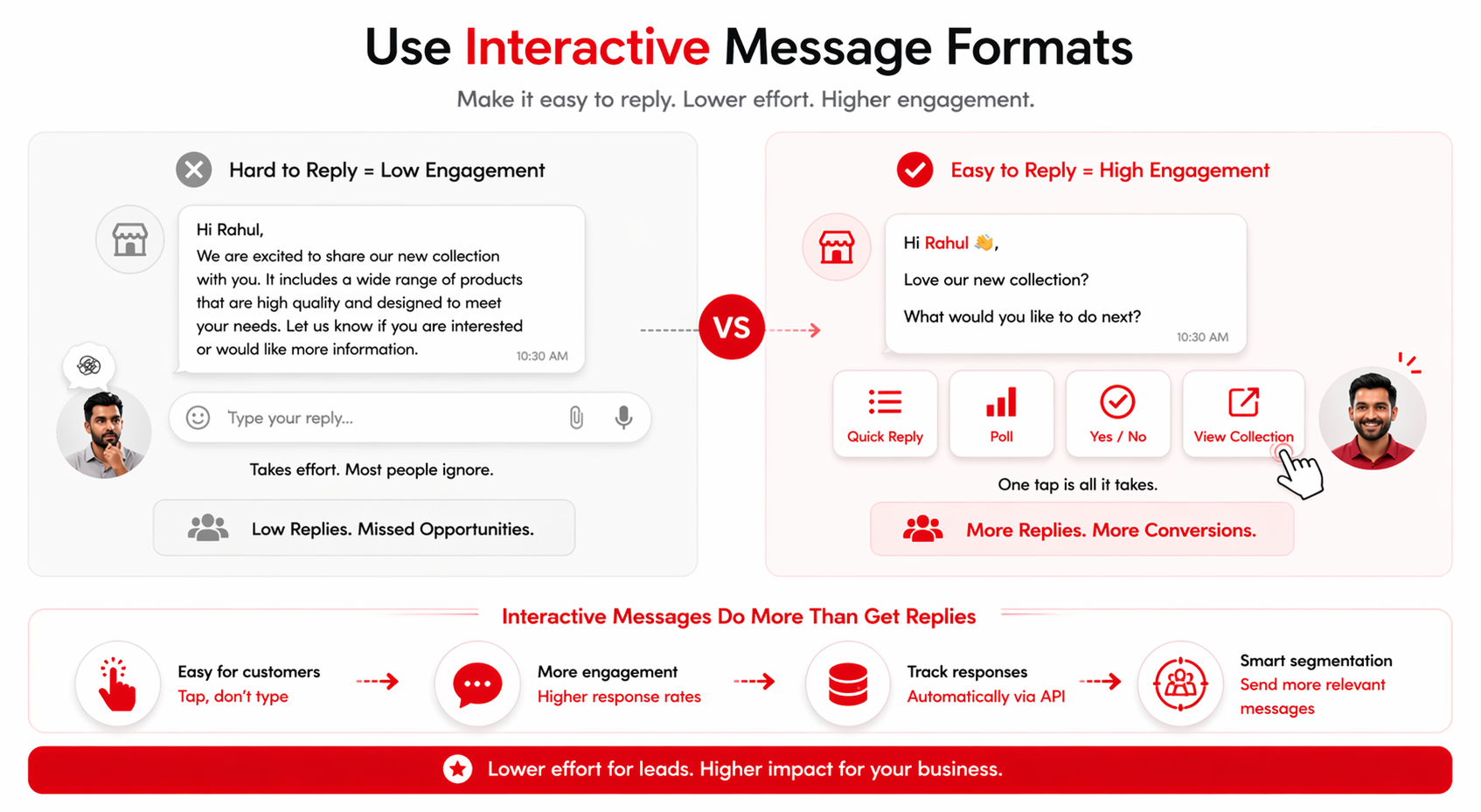
Responding to your messages must not take significant effort from the customer. Make it easy to reply. Use polls, quick reply buttons, yes or no questions, and links with engaging templates that make leads want to click and explore further.
WhatsApp allows businesses to send interactive messages through the Business API. These formats reduce the friction of responding dramatically. A tap is easier than typing a full reply, and when you lower that effort, more people engage. For large businesses, interactive messages through the API offer an additional advantage. They make it possible to track customer responses automatically and segment leads based on how they interact. This means every reply becomes data that helps you send more relevant messages going forward, creating a cycle of improving engagement over time.
Step 6: Build a Quality Opt-in List
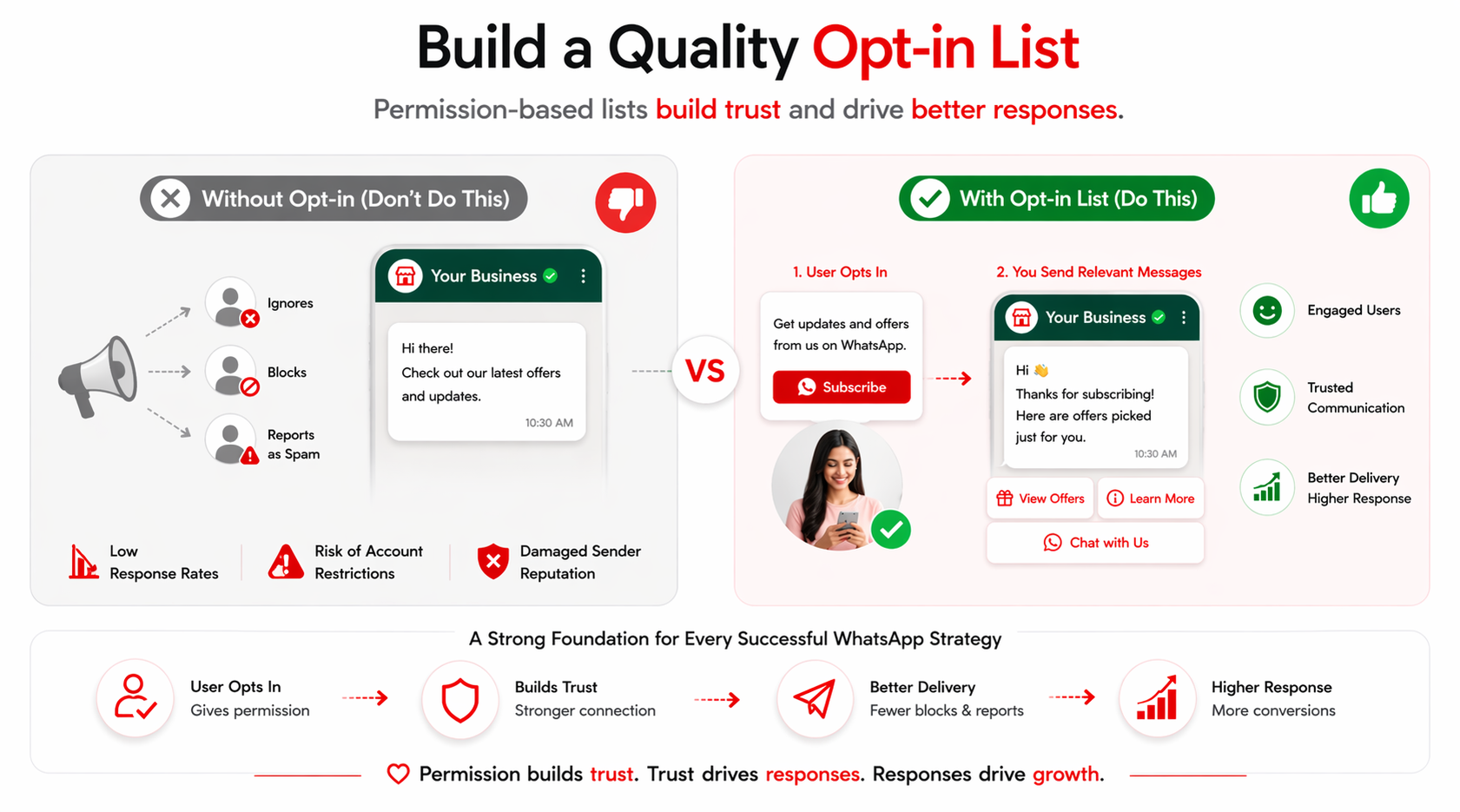
Before sending messages it is important to build a list of users who have explicitly opted in to receive communication from your business. If you keep messaging unverified users without a proper opt-in list, response rates drop significantly. People who have not heard of or chosen to hear from a business are unlikely to respond.
Sending messages to users who have not opted in also damages your business account's reputation. WhatsApp has policies against this and for enterprises managing large lists of leads, the risk of your account being flagged as spam increases considerably. A damaged sender reputation makes it harder to reach even the leads who do want to hear from you. Building a clean, permission-based list is not just a best practice. It is the foundation every other step in this list depends on.
Step 7: Track, Test and Optimise
Most businesses never track the responses they receive. That is a wasted opportunity. After sending messages you must measure what happens. See what works, what timing gets the most replies, what type of content resonates with which segment of customers, which CTA drives the most clicks.
Keep testing new messages and send them to segmented audiences. If a certain message gets significantly more responses, send more of it. This is A/B testing in practice — comparing two versions of a message to find what performs better, then building on what works. Track open rates, reply rates and click rates for every campaign.
This step is especially important for enterprises that have large numbers of customers across a vast range of segments. Small improvements in response rate across thousands of messages add up to significant results over time.
When what you send, who you send it to, and when you send it all work together, improving your WhatsApp response rate stops being a challenge and becomes a system. Forming a thoughtful strategy around each of these steps is what separates businesses with high engagement from those constantly wondering why customers are not replying. Companies like helo.ai help businesses manage exactly this at scale, so no message, no lead and no opportunity goes to waste.
FAQ
Why is my WhatsApp response rate low?
Your WhatsApp response rate is low mainly because your messages do not create a reason for users to reply. Most businesses send one-way promotional messages without a question, CTA, or interaction trigger. When users are not guided to respond, they may read the message but ignore it.
What is a good WhatsApp response rate?
A good WhatsApp response rate for marketing campaigns typically falls between 30% and 60%, depending on audience quality, segmentation, and message relevance. Rates below 10% usually indicate issues with targeting, messaging structure, or engagement design.
How can I increase WhatsApp response rates?
You can increase WhatsApp response rates by sending messages that feel conversational instead of promotional. Messages should include a clear question or action, be personalized to user segments, and reduce effort for the user to respond. Using follow-ups, better timing, and interactive formats also significantly improves engagement.
Does timing affect WhatsApp response rate?
Yes, timing directly affects response rates. Messages sent when users are active and likely to check WhatsApp receive higher engagement. Poor timing, such as late-night or overly frequent messages, reduces trust and increases the chance of messages being ignored.
Why do segmented WhatsApp messages get better responses?
Segmented messages perform better because they match user intent and behavior. When users receive content relevant to their interests or stage in the journey, they are more likely to respond compared to generic messages sent to a broad audience.
What type of CTA works best on WhatsApp?
The best CTAs on WhatsApp are simple and require minimal effort. Direct questions, yes or no options, and quick reply buttons perform better than complex instructions because they make it easier for users to respond immediately.
Do follow-ups help improve WhatsApp response rates?
Yes, follow-ups significantly improve response rates because many users do not reply to the first message but may respond later. A structured follow-up sequence helps re-engage users and increases the chances of conversion over time.
Why is opt-in important for WhatsApp marketing?
Opt-in is important because users who explicitly agree to receive messages are more likely to engage. Without proper opt-in, messages feel intrusive, which leads to lower response rates and can also negatively impact sender reputation.
What are interactive WhatsApp messages?
Interactive WhatsApp messages are message formats that allow users to respond with a single tap instead of typing. Examples include quick reply buttons, list messages, and structured response options, all of which reduce friction and improve engagement.
How does segmentation improve WhatsApp marketing performance?
Segmentation improves performance by ensuring that each user receives messages aligned with their behavior, interest, or stage in the buying journey. This increases relevance, which directly improves response rates and reduces message fatigue.

.jpeg&w=96&q=75)