




In today’s rapidly evolving financial services sector, omnichannel finance is no longer a luxury; it’s a necessity. This approach fundamentally changes how institutions engage with customers, creating a single, seamless experience across all touchpoints. From the mobile banking app to a face-to-face meeting at a physical branch, an effective omnichannel strategy is the key to building customer satisfaction and trust.
Defining Omnichannel Finance in Today’s Landscape
The financial services industry keeps changing. It is important to know what omnichannel finance is. Omnichannel finance brings many ways for people to connect with banks. You can be on the web, use your phone, or visit a branch. This helps meet customer needs. You get a smooth feel when you move from one way to another.
- Holistic customer journey: All the ways people talk to your business work together. This helps make the whole experience smooth and easy for everyone.
- Enhanced convenience: Customers can change how they connect with you, like online or in person, with no trouble at all.
- Tailored interactions: Using customer data makes it possible to give people services that feel made just for them. This makes customers feel happier. When financial institutions plan with these ideas, they can keep up with changes in banking. They can make sure people get what they want, based on customer preferences and the need for seamless experiences.
What is Omnichannel Finance?
Omnichannel finance pulls together customer interactions from the many places that people reach out. The idea is to have banks and other financial institutions feel joined up. It brings both digital and face-to-face help into one smooth system. This helps people talk with their financial institutions in the way that fits them best. People find it easier to get what they need, and the whole experience is better for everyone.
Omnichannel vs. Multichannel Finance: The Key Difference
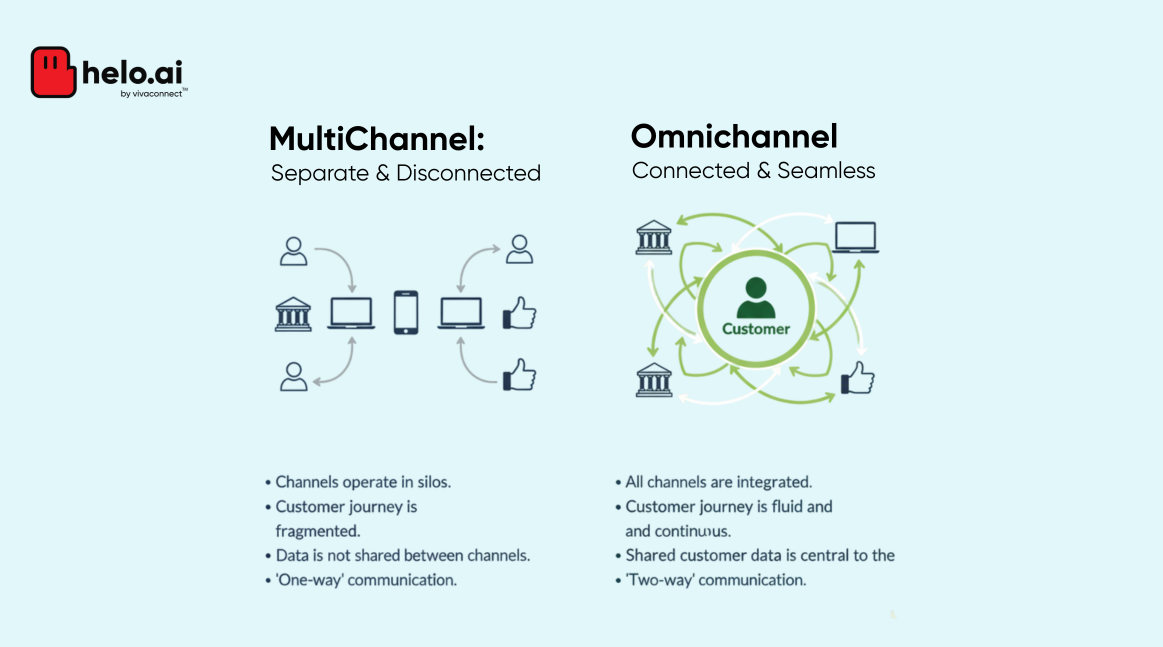
Understanding the difference between omnichannel vs multichannel banking is critical for any institution aiming for fintech innovation. While multichannel banking offers multiple channels for communication, these channels often operate in silos.
An omnichannel strategy, however, connects every channel to create one fluid, continuous journey for the customer, ultimately boosting bank customer loyalty
- Multichannel finance is when a financial institution talks to customers through more than one platform. But these channels do not always work together.
- Omnichannel finance is different. It connects all touchpoints and makes the customer journey feel easy and smooth.
- When all the platforms and channels work as one, customer satisfaction can go up. Customers feel loyal to the financial institutions that get this right. A connected approach can meet customer expectations. This helps these institutions do well as the world becomes more digital. Customer engagement is key in both ways, but it works best when everything is joined together.
Why Omnichannel Finance is Revolutionizing Banking
The way people use banking is different now because of how banks use omnichannel finance. This new style lets you do many things:
- Customer Experience: When financial organizations bring together different channels, they help make the customer journey easy and smooth. This shows that they care about what people want and like.
- Real-Time Engagement: Now, customers can talk with their banks through mobile apps, social media, or at physical branches. This helps people feel happy and feel close to the bank.
- Data-Driven Insights: Financial organizations use customer data to offer services that people really want. When they know what their customers need, they can make them feel loyal and get them to come back. These things help customers feel the banking services work better and the connection is stronger over time.
Meeting Evolving Customer Expectations
Meeting what the clients want is important for financial institutions right now. There are some main things for them to work on:
- Personalization: Make every service match what each person needs. Use what you know about how they use online banking and what they like. This helps make them feel good with you.
- Seamless Experiences: Make each time someone uses your service feel easy and simple. Do this with your online banking, apps, and at your physical branches. When these feel the same, people feel safe, and it is easy for them to switch from one to the other.
- Real-Time Support: Give help to people as soon as they ask for it. Use chatbots or get a person to jump in fast. This shows you care about their needs.
If financial institutions do these things well, people feel close to them. This makes people want to use their services again and again over time.
Seamless Integration Across Digital and Physical Channels
Smooth integration between digital and physical channels can make the customer journey feel easy. It helps people feel happy and interested. A few important things to include are:
- Unified Platforms: An omnichannel banking platform keeps things the same whether you use mobile apps, websites, or go to physical branches. It lets people move from one to the other with no trouble.
- Real-Time Access: People can get the information they want right away, whether they are online or offline. This helps them make better choices.
- Personal Touch: Each time a customer talks with the bank, it feels real and important. This makes people feel valued and helps build loyalty.
- Adaptability: When financial institutions bring different channels together, they can meet customer needs and give a better customer experience. This keeps things connected as banks grow with the times, using omnichannel banking to help people in new ways.
Core Benefits of Omnichannel Finance for Customers and Banks
The top goal right now is to give a better customer experience. It lets people talk about their own needs and get help that suits them. There are many ways to use financial services. The options are a mobile app, online banking, or physical branches. Because of this, customer satisfaction gets better.
Banks get more from using the omnichannel approach. With this, they use customer data and make one plan for all channels. This helps banks make customer loyalty and customer retention go up. It also helps financial institutions stand out in the changing banking landscape.
If banks pick omnichannel finance, they grow customer engagement and give good service on every channel.
Enhanced Customer Experience and Engagement
Giving people a great omnichannel customer experience helps them feel more interested and involved. There are some important things to know about this.
- Personalized Services: When banks use customer data to set up what they offer, people feel good about using the services. This helps to make them stay with the bank for a long time.
- Immediate Support: You can get answers quickly when you use a mobile app or call the call center. People feel better when they get help right at that time.
- Consistent Interactions: Banks give seamless experiences on their website and their mobile app. By doing this in different places, people feel a stronger connection to the bank. This can help keep customers with the bank longer.
- Feedback Mechanisms: Banks use customer insights to fix and improve what they offer. This helps people feel part of the changes and leads them to trust the bank more. This way, every part in the banking sector gets better together.
Improved Personalization and Service Consistency
A personal way in the banking sector can really make the customer experience better. When financial institutions use customer data, they are able to give what works best for each person. This helps with customer satisfaction. People get advice and options that fit where they are in life and with money.
It is important to keep the service the same on all channels. A smooth move between different channels is needed. This helps people feel at ease. You should get the same good feel when you use mobile banking, check social media, or call customer support. When things match up like this, people feel more trust in their bank and become loyal. A strong omnichannel experience helps banks keep their people and builds loyalty in the banking sector.
The Business Value: Competitive Edge and Growth
To keep up in the fast-changing banking landscape, financial institutions have to use an omnichannel approach. The main business values for this are:
- Better customer loyalty: When banks give people easy and smooth interactions on various channels, it helps build strong connections. This makes people feel good and come back. A good experience helps banks keep their customers.
- New sources of income: Talking to people in a personal way lets banks upsell and cross-sell other banking services. These methods help banks get better and even be leaders in financial services. This is a good way for banks to grow in the future. Using customer insights to know what people want helps make the customer base strong. Over time, this leads to lasting success.
Driving Customer Loyalty and Retention
Making strong connections with customers is important for financial institutions that want people to stay loyal. A good way to do this is to use an omnichannel strategy. It helps people get a better customer experience by letting them use different channels. This way, people can get help or talk to you through various channels.
- Make your messages feel personal so they match each customer’s likes and needs.
- Always give the same service. This way, people know they can count on their financial partner every time.
- Use customer data to change what you offer and to know what a customer needs before they ask. This builds a good bond. These ways can help boost customer satisfaction. They also help you grow a loyal customer base that will stick with your brand, even in a tough banking landscape.
Unlocking New Revenue Streams
Exploring new ways to make money is important in an omnichannel finance strategy. When financial institutions work to make customer interactions better on many platforms, they can reach more people. They can also try to connect with people they did not before. The financial institutions can offer more services to all customers. Here are some main ways to do this:
- Using customer data helps you learn what people want but do not have yet. When you know this, you can make better products for them.
- Running focused omnichannel marketing campaigns makes it easier to reach and get new customers.
- Using new technology, like AI, helps you know each person better and make deals just for them. These ways not only make customers feel good and raise customer satisfaction, but they also help people stay loyal. This means steadier profits in the busy banking landscape.
Building Trust Through Omnichannel Experiences
Building a strong and trusted omnichannel experience needs a few key things that help connect with people well.
- Data Security: Using strong security measures on each platform keeps customer data safe. This helps people feel confident. It makes them trust you more.
- Transparency: When you talk in a clear way about products and services, everyone knows what they get. This helps people feel important and well-informed.
- Personalization: If you speak or act in a way that fits what each person likes, you build a good connection. This can help hold on to customer loyalty.
These strategies help banks create a friendly place in the banking landscape. They make customer needs important and help people feel welcome. When banks do this, they can build strong and long-lasting relationships with their customers.
Ensuring Data Security Across Channels
Making sure data security is safe is important for everyone in an omnichannel finance system. You need to use strong encryption. This helps keep all personal information private. You need the same safety for mobile banking and contact centers. It is good to check and review these places often. This way, you find risks early and make your security stronger.
Teaching people safe habits in the banking sector is good because it helps them know what to do. It also helps them feel safe. When banks are open about how they use data, people feel they can trust the bank more. That makes using the bank feel better. If banks talk with users often and early, it can make people feel happy with the bank. It can also make them want to stay with the bank for a long time.
Transparency and Personalized Communication
A clear and honest way to talk is important for trust in the world of omnichannel finance. When financial institutions use customer insights and also give a personal feel, people feel happier. Here are some things to keep in mind:
- Tailored Messaging: When you share news with customers on their preferred channels, they pay more attention. This helps make the customer journey better, because people get what matters to them in the way they like.
- Real-Time Updates: Instant alerts for account changes or offers keep people connected. These updates improve your time with each customer and help you build a strong omnichannel experience.
- Open Dialogue: When you ask people for feedback on social media, at call centers, and other places, it makes them feel heard. Open talks build trust, meet customer expectations, and help customers come back. These steps make the customer experience smooth for everyone.
Essential Technologies Powering Omnichannel Finance
Essential technologies that help make omnichannel finance work are the ones you see below:
- APIs: Make it easy for different systems to share data. They help things run well on many platforms.
- Cloud Computing: Gives a way to store and use customer data quickly. You can get what you want at any time, and the space can grow as needs change.
- AI and Machine Learning: Use machine learning to read what people do and what they like. This helps companies make the right choices so customers get what they want, without doing extra work.
- Data Analytics: Checks customer interactions to see what people look for. After some time, this helps businesses learn what customers want so they can make their services better and keep everyone pleased.
- Mobile Apps: Give people access to services on their phones or other devices. This makes things simple and keeps people busy through their preferred channels. When these new ways all work together, they make each step easier and improve the whole omnichannel experience for the customers.
Role of APIs, Cloud Computing, and AI
APIs, cloud computing, and AI help change the way finance works in different places. These tools help link different ways that financial institutions connect with people. This makes it easy for customers to feel like all the ways they use their bank, no matter the channel, work together as one smooth customer experience. People like that they can use several channels and everything is connected for them.
- APIs are used to connect different systems. This helps customer interactions be faster and smoother on all platforms.
- Cloud computing lets companies grow and take on more work when they need. Because of this, they can meet customer needs better.
- AI looks into customer data. With this, companies know what people like and make services just for them.
All of these things work together in financial services. They help customer satisfaction go up. They keep people more involved. Now, when we use the omnichannel approach, we get better results for us and them.
Leveraging Data Analytics for Personalization
Using data analytics can change how financial institutions help people. Banks watch how you use their services and what you like. This helps them offer special options that fit each customer’s needs.
Financial institutions use several main ways to look at user data. One way is to split data, which helps them spot easy patterns about how people act. They also watch what people do on various channels. This helps them make the user experience better.
At the same time, they use tools that can guess what people may want or do next. Because of this, customers feel that the bank knows and cares about them. Many feel happy with the bank and start to come back again. In the end, financial institutions can meet new needs and catch up with others in the field.
RCS in banking: The next step in digital customer experience
Rich Communication Services (RCS) is changing the way people use the digital banking world. It lets users talk to others in a way that feels more personal and fun. With new and better features, this way to talk and connect helps everyone say things easily, quickly, and in real time. Now, people can use the service to do all their banking and chat in a much smoother way.
- You get messages so you can talk to others and ask for help when you need it.
- You get alerts and updates that feel like they are made just for you.
- You use quick links that take you straight to services in their mobile apps.
RCS lets people feel a real human touch in financial services. This makes everything feel more personal for each user.
RCS can also help build strong ties between people and financial institutions. If a financial institution wants to make its omnichannel experience better, using RCS is a smart idea.
Learn how RCS in Banking is transforming customer journeys
Developing an Effective Omnichannel Strategy in Finance
To build a good omnichannel strategy in finance, you need to focus on a few main things.
- Setting Clear Objectives: Make a list of goals you can measure. These goals should match what your customers want. This will help to improve their experience.
- Key Performance Indicators (KPIs): Choose the KPIs that you will use to track how you are doing. Use these KPIs to notice changes, make what you do better, and keep your plan moving forward.
- Creating Unified Customer Journeys: Make sure the customer can move easily from one step to the next, whether they are online or meeting face to face. This is good for customer satisfaction and keeps people happy.
- Leveraging Technology: Use tools like APIs and data analytics. This will help you give a personal feel to each customer. It also makes your work easier, increases operational efficiency, and helps with customer engagement. All these things grow a strong link with your customer base.
Setting Clear Objectives and KPIs
Setting clear goals and KPIs is key to a good omnichannel strategy. It helps your team work as one group. The team will know what to do, and customer interactions get better on every channel. Every touchpoint feels easier for people who use your products or services. There are some main things you should think about.
- Customer Engagement: Track how people use each digital platform. This will help you see if they feel happy with what you offer, and how good your customer engagement is.
- Conversion Rates: Watch how each channel gets people to become paying customers. It can show you which platform works best and how it helps your sales.
- Customer Retention: Keep an eye on the number of people who come back and buy again. This shows how loyal your customers are and how good you are at keeping them.
- Response Times: Look at how long it takes on average for you to answer and fix customer problems. This will tell you how well your service works for them. Use these points to help financial institutions make their omnichannel banking experience better.
Creating Unified Customer Journeys
Making sure the customer journey is easy is key to a better customer experience in omnichannel finance. This means:
- The process begins by checking each place where a customer might come in. This includes everything from mobile banking apps to things someone does at the branch. We make sure that things feel easy when people move from one spot to the next.
- Customer data is brought together from every channel. Doing this helps each chat feel personal and helps to meet customer needs as they come up.
- We use feedback all the time to make these customer journeys better. When customer satisfaction goes up, customers feel loyal to the brand. A good plan helps financial institutions give customers better service. The team can make changes when people want. That makes the service strong and simple in mobile banking and all other ways.
Omnichannel Marketing: Engaging Customers Everywhere
Creating an omnichannel marketing plan helps financial institutions talk to customers in many ways. With this plan, they can reach people no matter where they are or what device they use. It makes it simple for people to find and use the services offered by these financial institutions. People feel like their needs are being met in every way.
By using omnichannel marketing, financial institutions will be able to get more people interested. It is a good way to use new ideas and give better service. It helps connect with people and keep them coming back. The team can talk to customers not just through one method, but with all the ways people use now. This works better now and will help in the future, too.
- Personalization: When you make marketing campaigns that match what people like and how they act, the message feels more real to them. This can help you reach your goal in digital banking.
- Consistency: If you keep your messaging the same on every channel like the web, social media, mobile, and in-branch, people feel they can trust your brand. A steady feel in every space helps your customer feel good about your business.
- Data Utilization: When you use customer data, you can change the way you talk to people and what you offer them. This can be used at every step they take in their journey. A plan like this leads to better customer satisfaction and helps build loyalty. This is now one of the most important things in digital banking.
Personalization in Digital Campaigns
Building strong digital campaigns that connect with people starts by making every message feel personal. When you do that, you help make the customer experience better and share things they like and need. Here are some things you can try:
- Use customer data to see what people want and like. This helps you send the right message to them.
- Set up automatic tools to send offers made for each person fast.
- Check what customers did before to make your marketing efforts work better. When you build an omnichannel customer experience, you talk with people in different ways and places. This helps the organization reach people in a better way and makes them want to come back. A personal touch makes the customer experience feel good, and it helps customers stay happy.
Consistency in Messaging and Service Offers
Financial institutions need to say the same message on every channel. This is very important. A clear message helps improve customer engagement. People feel good when they get simple communication. The way you talk to them on social media, mobile apps, or call centers really matters. To do this well, you must keep the message the same each time you reach your customers.
- Make sure the branding and key messages are the same on every platform.
- Use an omnichannel banking platform to keep all information up to date in real time.
- Teach your customer service representatives to share a message that matches across the board. Ask them to fit what they say for each person, but always use the main message. This helps keep customer loyalty strong and shows everyone that the service is stable and unified.
Key Challenges Financial Institutions Face
It is not easy for financial institutions to handle all the different ways people do banking. There are many issues in this area that need to be fixed.
- Integration Complexities: A bank may find it hard to connect many systems and platforms. This can slow down some of their daily work.
- Legacy Systems: Old technology can make it tough for a bank to change its way of working with customers, especially when it wants to use more channels.
- Regulatory Compliance: A bank has to stay alert for new rules. Keeping up with laws is not easy. This takes a lot of time and effort.
- Data Security: A bank must keep all customer details safe and use strong security measures on every channel. Solving problems like these is key if you want the most from the omnichannel banking experience.
Overcoming Integration Complexities and Legacy Systems
Managing old computer systems is key for financial institutions to build a good omnichannel strategy. There are strong ways to deal with these problems. Here are some top ways you can use:
- Modernization of Infrastructure: Updating old systems with APIs and the cloud can help connect work on the various channels. It makes it easier to give people a better customer experience while using omnichannel banking.
- Data Synchronization: Making sure customer data is fresh and up to date right away helps keep customer interactions simple and the same on each channel.
- Employee Training: Teaching staff the right skills gives them what they need to give a good customer experience, no matter which way customers reach out. When you do these things, you help build a strong omnichannel banking experience for people on all the various channels.
Managing Regulatory and Compliance Demands
Navigating the rules and keeping things right in omnichannel finance needs a proactive plan. The key things you should do are:
- Set up compliance systems that fit new rules in each place.
- Watch customer transactions all the time. This makes it easier to follow the law and spot either risky or strange actions.
- Put money into strong security measures to keep important customer information safe. A big step is to work hard on data security.
- Train staff often about the rules and make sure they follow clear steps. This helps everyone stay up to date with what needs to be done.
By putting time and effort into these steps, financial institutions can build trust with their customers. They also make sure service works well on all channels. Strong security measures, good care, and data security keep them ahead.
Future Trends Shaping Omnichannel Finance by 2025
The way people handle money in channels will change a lot by the year 2025. Some big trends in this area are shaping up now.
- AI-driven automation: This is a new way to make things run better and faster at work. It brings quick answers and helps people do their job with less effort.
- Hyper-personalization: Banks will use customer data more to offer products and services that fit what each person wants or needs.
- Integration of digital and physical channels: You can go online for banking or visit the bank in person and move easily between both ways of banking now and later on. These better choices help people feel good about their time with the bank and will push the banking sector to higher customer expectations in the future.
Rise of AI-Driven Automation and Virtual Assistants
Rapid changes in AI are changing how people use financial services. There are more automation tools now. Virtual assistants are here to help too. These digital options give support and services right when you need them. The help can be made just for you, so it fits what you need. Some of the key benefits include:
- The team now works faster and gets back to people in less time.
- Answers to questions from customers are now more correct.
- Different systems now work well together, which helps make the omnichannel experience feel better. When customers use these new tools, financial institutions are ready to meet new customer expectations. This helps change the whole banking landscape. Now, clients feel a good and personal touch at every step. The service is the same for everyone, no matter how or where they reach out.
Increased Focus on Hyper-Personalization
The move to hyper-personalization is changing how financial institutions talk to people. By focusing on made-for-you interactions, they make the customer experience better. Services now fit what each person likes and needs. Here are some key ways that help:
- Banks use customer data to give people financial advice that fits their lives.
- They use AI and machine learning to understand customer behavior. These tools help banks guess what their customers may want in the future.
- Banks run marketing campaigns for special customer groups. This lets them talk to people about what they want. When banks do these things, it helps build customer loyalty and trust. A good omnichannel banking experience needs this trust from everyone.
Conclusion
Omnichannel finance is changing the way financial institutions work with people. The main goal now is to give people seamless experiences and make each interaction feel personal. Here are a few things you should know:
Serving people through several channels matters a lot. Using AI and analytics helps you get to know your people better and keeps them happy. A strong omnichannel strategy helps build loyalty and can bring in more money for your business. When banks and other financial institutions follow these ideas, they can keep up with changes and make good relationships in the banking sector. This move to a full omnichannel strategy is just starting, so there is a lot more to come.
Frequently Asked Questions
How does omnichannel finance improve the customer experience?
Omnichannel finance gives people a better customer experience. It lets them switch between online and in-person services with no problem. This makes things easy for everyone and helps customers feel happy. People can get personal help fast, and feel like they belong with the company. All these things help customers feel closer to the company and make the bond stronger.
What steps should banks take to develop a successful omnichannel strategy?
To create a good omnichannel strategy, banks need to set clear goals that match what customers want. They should spend money on new technology so everything works well together. Banks have to give people a smooth trip across all the channels they use. It is also important to look at how things are going by checking KPIs often. This way, they can change or improve how they do things. Doing all this helps keep up with customer needs and grows customer satisfaction.
What technologies are most critical for effective omnichannel finance?
Key technologies that help financial institutions offer smooth service on every channel include easy-to-use APIs, cloud computing to grow when more is needed, and AI that adds a personal touch. These tools let financial institutions give people a simple experience each time they connect and also help the work stay quick and useful on every channel.





.jpeg&w=96&q=75)