

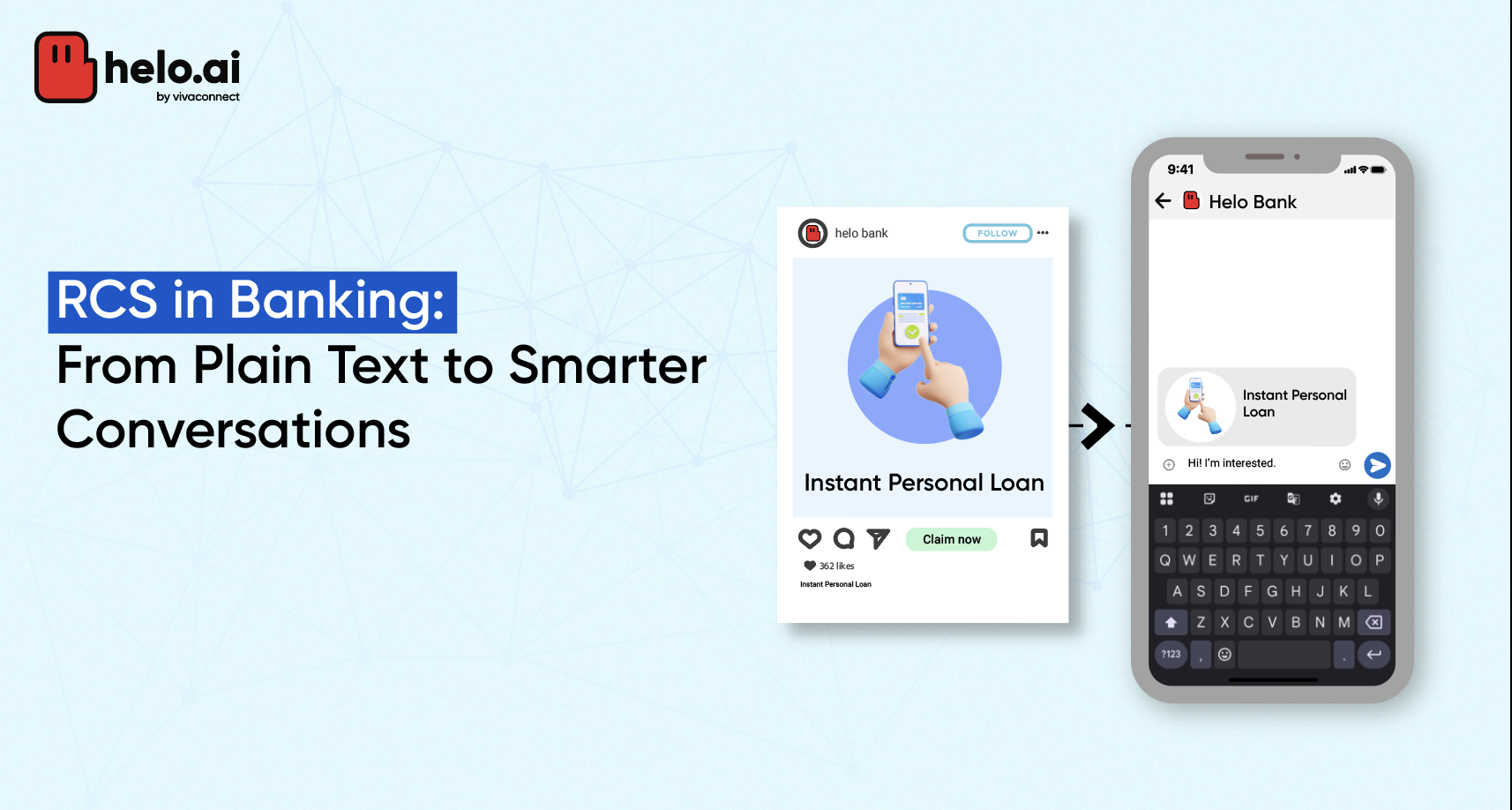


Most conversations about RCS in banking stop at the surface level:
- The rich visuals
- The verified sender
- The interactive messaging.
Those features are important, but what really makes RCS powerful for banking is the API layer that runs behind it.
But, more on it later. Let’s take a step back and see what most banks are doing when it comes to messaging.
Every bank customer knows the routine: your phone buzzes, you check the message, and it’s the same kind of SMS you’ve seen for years.
These updates are useful, but let’s be honest, they’re dry, unbranded, and far too easy to fake. In fact, SMS phishing scams have exploded in recent years, leaving customers constantly second-guessing if a message is really from their bank.
At the same time, customer expectations have changed. People spend hours every day inside WhatsApp, Instagram, and slick apps where conversations feel intuitive, interactive, and instant. Against that backdrop, an old-school SMS looks out of place.
That gap between what customers expect and what they get is where RCS in banking is stepping in. Rich Communication Services (RCS) by Google transforms simple alerts into secure, branded, and interactive conversations.
For banks, this isn’t just about sending prettier messages. It’s about rebuilding trust, reducing fraud, and engaging customers in the way they now expect.
What Is RCS and Why Does It Matter for Banks
RCS is often described as the evolution of SMS, but the difference is bigger than an upgrade. It turns a flat, text-only message into something that feels like a mini app inside the customer’s inbox.
With RCS, a bank can:
- Display its logo, brand colours, and verified badge so customers know the message is real.
- Share updates with images, carousels, and videos instead of plain words.
- Add action buttons like “Pay Now” or “Report Fraud” right inside the message.
- Track delivery, reads, and clicks to see what’s working.
And the best part? Customers don’t need to download anything. RCS runs in their default messaging app giving banks the universal reach of SMS with the engagement of modern chat.
Now, getting back to our earlier conversation, the RCS API.
Why RCS API Is the Game-Changer for Digital Banking?
As discussed, most conversations about RCS in banking stop at the surface level the rich visuals, the verified sender, the interactive messaging. Those features are important, but what really makes RCS powerful is the API layer that runs behind it.
The RCS API is what transforms banking communication from a single channel into a scalable, intelligent engagement platform.
Here’s why the API approach changes everything for banks and financial institutions.
1. Seamless Integration With Core Banking Systems
Banks already rely on multiple systems: CRMs, fraud detection engines, core banking platforms, and payment gateways. The RCS API integrates directly with these systems, ensuring messages are triggered by real-time events.
- Fraud detection can trigger instant RCS alerts with transaction verification.
- Loan approvals can generate personalised RCS messages with onboarding steps.
2. Unified Omnichannel Communication
One of the main challenges banks face is fragmentation. Not every customer uses RCS some are still on SMS, WhatsApp, or email. With the RCS API connected to an omnichannel CPaaS platform, banks can automatically route communication to the right channel.
3. AI-Driven Personalisation at Scale
By connecting RCS with analytics and AI engines through the API, banks can move from generic blasts to personalized interactive messaging.
- Regular defaulters can receive smart payment reminders with flexible options.
- Premium customers can receive personalized offers and product recommendations through interactive carousels.
4. Security and Compliance by Design
A major advantage of the RCS API is the security of RCS built into every interaction. Messages are tied to verified sender IDs, encrypted in transit, and fully auditable. Logs can be pushed into compliance dashboards, reducing risk for regulated industries like BFSI.
5. Actionable Insights and Analytics
Unlike SMS, which gives almost no reporting, the RCS API provides structured analytics: delivery rates, open rates, clicks, button selections, and even customer journey drop-offs. This data can flow into CRMs or BI dashboards.
RCS vs. SMS: How are they different?
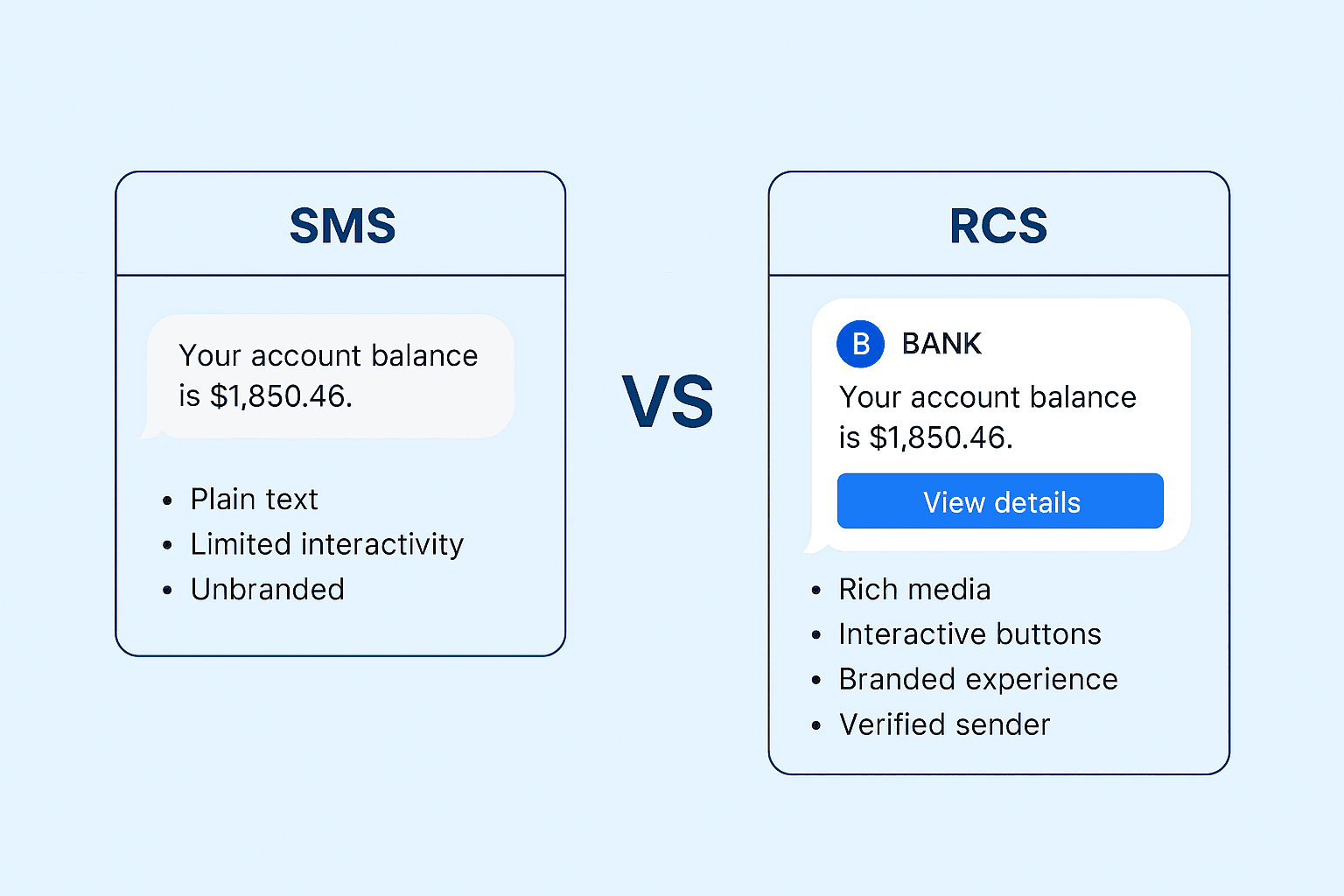
SMS has been the industry’s workhorse. It’s simple, accessible, and universal. But compared to RCS, it looks outdated:
For customers, SMS feels like an instruction. RCS feels like a conversation. For banks, SMS offers no insights. RCS gives a clear picture of customer behavior.
Check out our detailed RCS vs SMS comparison guide.
Benefits of RCS for Banks
Banks don’t adopt new technology for fun. They do it to solve business problems. The benefits of RCS for banks cut across trust, efficiency, and experience.
1. Engagement That Converts
A plain SMS saying “Your bill is due” is easy to ignore. An RCS reminder with the amount, due date, and a “Pay Now” button gets acted on immediately. That’s why RCS campaigns have been shown to deliver 80–130% higher CTRs than SMS.
2. Security Customers Can See
The security of RCS isn’t hidden in the backend. Customers see your logo, your name, and a verified check right at the top. That visual trust marker kills most phishing attempts before they start.
3. Cost Savings Through Automation
Contact centers are overwhelmed with routine questions: balance checks, EMI reminders, card activation. With RCS, those can be handled instantly through interactive messaging and chatbots cutting costs and improving response times.
4. Insights That Drive Strategy
SMS leaves banks guessing. RCS provides detailed reporting: who opened, who tapped, and which message performed better. That turns communication into a measurable, optimizable channel.
5. A Better Customer Experience in Banking
At the end of the day, customers don’t judge a bank by its systems. They judge by experience. RCS takes everyday banking communication fraud alerts, OTPs, statements, reminders and makes them smoother, safer, and more user-friendly.
RCS Use Cases in Banking: From Fraud Alerts to Customer Engagement
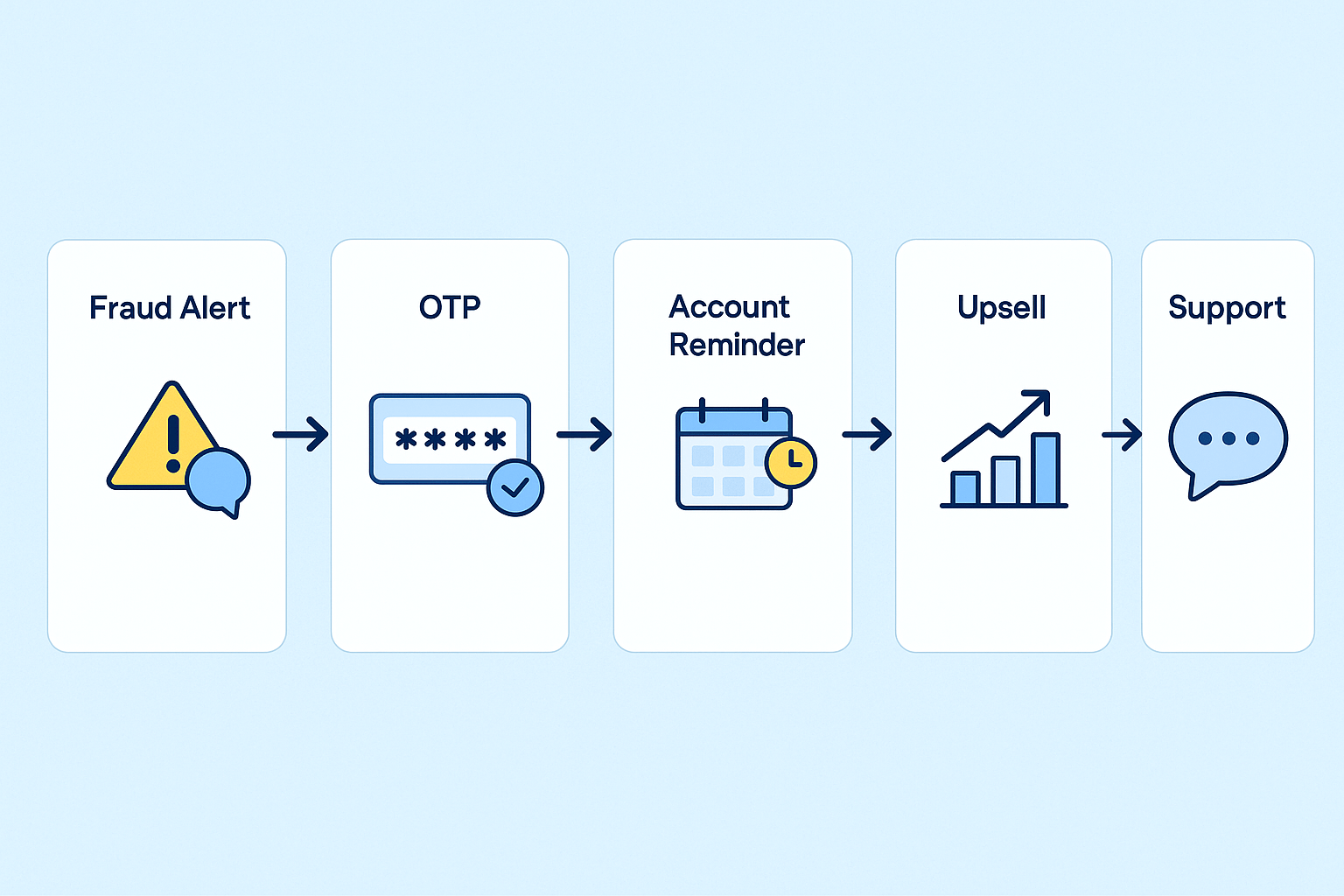
The most important question for banks when they look at new channels is: what value does this add for the business and for customers? Rich media isn't the only thing that RCS does for banks. It also helps solve real problems, protect revenue, and make the overall banking experience better for customers.
Here are the RCS use cases that have had the biggest effects on banking:
Secure Payments
RCS lets you pay with just one click right in the messaging thread. It shows the amount due, the bill details, and a "Pay Now" button.
Impact: Fewer drop-offs, faster settlements, higher repayment rates, and more trust.
Fraud Alerts & Transaction Verification
RCS fraud alerts come from a verified sender with the bank's logo, unlike spoofable SMS. Customers can quickly say yes or no to transactions.
Impact: Less fraud, fewer arguments, and better digital security.
Bill Payment Reminders
RCS makes reminders into interactive cards that show payment history, the amount due, and options for direct payment.
Impact: More payments on time, lower collection costs, and better cash flow predictability.
Appointment Scheduling
Customers can make, confirm, or change appointments right in the messaging app.
Impact: Fewer people not showing up, more efficient RM/branch operations, and better use of resources.
Rich Customer Engagement
RCS lets banks send out videos that explain things, compare products, and let customers fill out forms.
Impact: Sales cycles that are shorter, a better understanding of the product, and a stronger brand difference.
Real-Time Feedback
You can add quick surveys and rating options to RCS chats.
Impact: More people respond, better NPS scores, and problems get fixed faster.
Personalised Marketing & Cross-Sell
Targeted carousels and personalised offers make campaigns more interesting and easier to track.
Impact: better return on investment, more people buying the product, and marketing that feels personal.
Strong security and compliance
Every RCS message has a verified sender identity and is encrypted, which lowers the risk of phishing.
Impact: A stronger commitment to following the rules and showing trust in every interaction.
Proof That RCS Works
This isn't a theory. Banks and fintechs are already seeing results:
- BankBazaar boosted click-through rates by 80–130% on RCS campaigns compared to SMS.
- A Sinch study showed 55% of financial institutions call RCS “game-changing.”
- 54% of banks cite fraud prevention as their top reason for adopting RCS.
How to Start the RCS Journey
Banks don’t need to leap all at once. A phased approach works:
- Pick the right CPaaS partner (like Helo.ai) that offers RCS along with SMS, WhatsApp, and Email.
- Verify your sender profile so messages carry your logo and trust badge.
- Start with high-value use cases: fraud alerts, OTPs, account updates, and payment reminders.
- Plan for fallbacks on non-RCS devices.
- Measure, learn, and expand into promotions, onboarding, and support.
The Road Ahead: Future of RCS in Banking
The real potential of RCS lies in what’s next:
- AI-driven personalization: Predictive alerts and offers tailored to individual customers.
- End-to-end encryption: Stronger safeguards for sensitive data.
- Banking inside messaging: Imagine completing a loan application or KYC without leaving your inbox.
- Market growth: Analysts expect the RCS market to reach $22 billion by 2028, with banking as a major driver.
7 Ways RCS in Banking Transforms Customer Experience and Trust
Most blogs stop at saying RCS vs SMS is about richer visuals or branded senders. But for banks, the story goes much deeper. Today’s customers expect security, speed, and seamless journeys and SMS alone can’t deliver.
That’s why RCS in banking is more than an upgrade. It transforms every message from a static notification into a secure, interactive, and measurable conversation. For decision makers, this isn’t about prettier messages.
It’s about lowering fraud risk, reducing costs, and improving the overall customer experience in banking.
Here are seven ways RCS is already reshaping the financial services landscape.
1. Fraud Protection That Customers Can Trust
SMS is one of the most exploited channels for fraud. Customers often wonder: “Is this message really from my bank?”
With RCS API–enabled verified sender IDs, messages arrive with the bank’s logo, name, and a visible trust badge. Customers know instantly that the message is authentic.
2. Instant Transaction Verification
Instead of sending a code and asking customers to type it somewhere else, RCS delivers interactive messaging with built-in actions. Customers can tap “Approve Transaction” or “Report Fraud” directly inside the thread.
3. Payment Reminders That Drive Action
Missed payments hurt repayment cycles and increase collection costs. A plain SMS reminder often gets ignored.
With RCS, reminders become actionable journeys: the message shows the due date, the amount owed, and includes a “Pay Now” button.
4. Smarter Onboarding Journeys
First impressions are everything. Traditional onboarding via paper forms or plain SMS links often causes friction.
RCS enables guided digital onboarding: KYC completion, account activation, or loan application steps delivered interactively in the message app.
5. Richer Customer Engagement and Cross-Selling
SMS campaigns are one-way broadcasts. RCS enables personalized, interactive marketing with carousels, images, videos, and deep links. Banks can showcase credit cards, loan options, or investment products in a format that feels intuitive and engaging.
6. Lower Cost-to-Serve Through Automation
Every call into a contact center adds cost. Routine queries — balance checks, statement requests, EMI due dates — don’t require a human agent.
Through RCS API integrations, banks can embed chatbots and tap-to-chat features inside messages. Simple queries get resolved instantly, while complex issues can escalate seamlessly to live agents.
7. Actionable Insights and Analytics
SMS gives almost no feedback you only know if a message was delivered. By contrast, the RCS API provides advanced analytics: who opened the message, who clicked a button, and where customers dropped off.
Conclusion: From Notifications to Conversations
For decades, SMS has been the silent backbone of banking. But in a digital-first world, it’s no longer enough. Customers expect security, personalization, and seamless interaction.
That’s why RCS in banking matters. It transforms routine messages into trusted conversations, reduces fraud risk, and creates a customer experience that matches today’s expectations.
Banks that move first will lead the next era of customer trust and engagement. Those that wait will be stuck with outdated tools and disengaged customers.
The choice is simple: keep sending plain notifications or start building real conversations. RCS is here and it’s the future of banking communication.
FAQs on RCS in Banking
1. What is RCS in banking?
RCS (Rich Communication Services) in banking is the next generation of SMS that allows banks to send branded, interactive, and secure messages. Instead of plain text, banks can send verified alerts, fraud checks, payment reminders, and even one-click payment options inside the customer’s messaging app.
2. What is RCS in cyber security?
In cybersecurity, RCS helps protect customers from phishing and spoofed SMS attacks. Since RCS messages come from verified sender IDs with bank logos and trust badges, customers can instantly recognize authentic messages and avoid fraud.
3. What is an example of an RCS message?
A typical example is a credit card bill reminder. Instead of a plain SMS that says “Your bill is due”, an RCS message shows the due date, bill amount, and a “Pay Now” button in the same message — all from a verified bank sender.
4. How is RCS different from SMS in banking?
RCS is richer and more secure than SMS. While SMS is plain text and easy to spoof, RCS supports images, carousels, videos, clickable buttons, verified senders, and analytics. It’s essentially a WhatsApp-like experience inside the default SMS inbox.
5. What are the main benefits of RCS for banks?
The key benefits of RCS for banks include:
- Stronger fraud protection with verified messaging
- Higher engagement through interactive messaging
- Faster collections with one-click payments
- Lower service costs with chatbots and automation
- Better analytics and campaign ROI
6. What are common RCS use cases in banking?
Some top RCS use cases in banking are:
- Fraud alerts and OTP verification
- Payment reminders with Pay Now buttons
- Account updates and mini-statements
- Onboarding journeys and KYC flows
- Personalized offers and cross-sell campaigns
- Real-time customer feedback surveys
7. Is RCS secure for financial transactions?
Yes. The security of RCS is one of its biggest advantages. Messages are encrypted, tied to verified sender identities, and cannot be spoofed like SMS. This makes it far safer for fraud alerts, OTPs, and transactions.
8. Does RCS work on all phones?
RCS is widely supported on Android devices but is still rolling out on iOS. Banks usually combine RCS with fallback channels (SMS, WhatsApp, or email) to ensure no customer is left out.
9. How does RCS improve the customer experience in banking?
RCS makes banking interactions more seamless and trustworthy. Customers can check balances, approve transactions, make payments, or chat with support — all inside a secure, branded message thread.

-2.webp&w=828&q=75)

.jpeg&w=96&q=75)