.jpeg)



A customer buys an outfit during Diwali. Another tries a skincare brand because of a festive offer. Both make a purchase, but will they come back when the discounts disappear?
For retail brands, that second purchase matters. Festive campaigns can bring in new customers, but keeping them interested after the sale takes a different approach.
Some brands are already rethinking what happens after the first order. Their strategies offer useful lessons for retailers looking to build repeat business without relying on another round of discounts.
What are brands doing differently after the first purchase?
The Bear House: Recommending the next product, not just another shirt
Men's fashion brand The Bear House built much of its business around shirts. It is now looking to grow sales of denim, trousers and complete outfits.
The idea is straightforward. A customer who buys a shirt might be interested in trousers that go with it or an outfit for another occasion. Rather than simply promoting more shirts, the brand can suggest products that complement the original purchase.
Inc42 reported this approach in September 2026, drawing on conversations with D2C brands about their festive-season plans. The article does not provide a verified repeat-purchase uplift for The Bear House, so this is best understood as a retention strategy rather than proof of a specific result.
What other brands can learn: The first purchase gives a brand a starting point. Recommendations based on what a customer actually bought can make the next offer more relevant.
Libas: Giving different customers different reasons to return
Ethnic-wear brand Libas takes a more personalised approach.
According to Inc42, Libas segments customers by factors such as product interests, age, location and season. It then uses WhatsApp and other communication channels to tailor messages.
That makes a difference during and after the festive season. A customer who bought a saree may be interested in wedding wear next. Someone who purchased a kurta may respond better to a new collection suited to a different occasion.
Sending both customers the same sale message ignores what the brand already knows about them.
Libas's example shows how customer segmentation can help brands make their communication more relevant. The published report describes the approach, but does not establish a specific increase in repeat purchases attributable to it.
What other brands can learn: Use purchase history and customer preferences to decide what to recommend, rather than sending every buyer the same promotion.
Is there evidence that repeat purchases are increasing?
One useful example comes from Admitad's Diwali 2025 case study.
Admitad reported a 25% rise in repeat purchases among loyal cashback users for AJIO during its festive campaign reporting. This provides a concrete repeat-purchase result, although it does not establish that all of the additional purchases happened after the festive sale ended.
The distinction matters. A campaign can increase repeat purchases during a promotion without proving that customers continue buying at full price afterwards. The published case study also does not independently establish how much of the reported change was caused by cashback. Admitad labels its figures “indicative”.
At a glance: what each example shows
Brand | What it is doing | Type of evidence |
The Bear House | Moving shirt buyers towards denim, trousers and outfits | Reported strategy, no repeat-purchase figure |
Libas | Segmenting customers and tailoring WhatsApp messages | Reported strategy, no repeat-purchase figure |
AJIO (via Admitad) | Cashback for loyal users | Vendor-reported, indicative: 25% rise in repeat purchases |
For brands measuring long-term retention, the next question is whether customers return once the promotional period is over.
Why are brands looking beyond festive sales?
Festive campaigns can bring a surge in orders, but the customer relationship does not end at checkout.
In its India Festive Report 2025 (data from October to December 2024), AppsFlyer analysed more than 20.5 million app installs and over US$576 million in user acquisition and remarketing spend across several app categories.
The report found that iOS shopping app session volume rose 20% after Diwali, while remarketing spend on Android shopping apps increased 26% in the post-peak period.
These figures describe shopping-app engagement and marketing spend, not confirmed repeat purchases by retail customers. Still, they show why marketers pay attention to the period after the main festive rush: customer activity can continue, creating opportunities to reconnect with shoppers.
For retailers, the important question is what happens next. Does a customer return to browse, place another order or disappear until the next major sale?
What should brands measure after the sale?
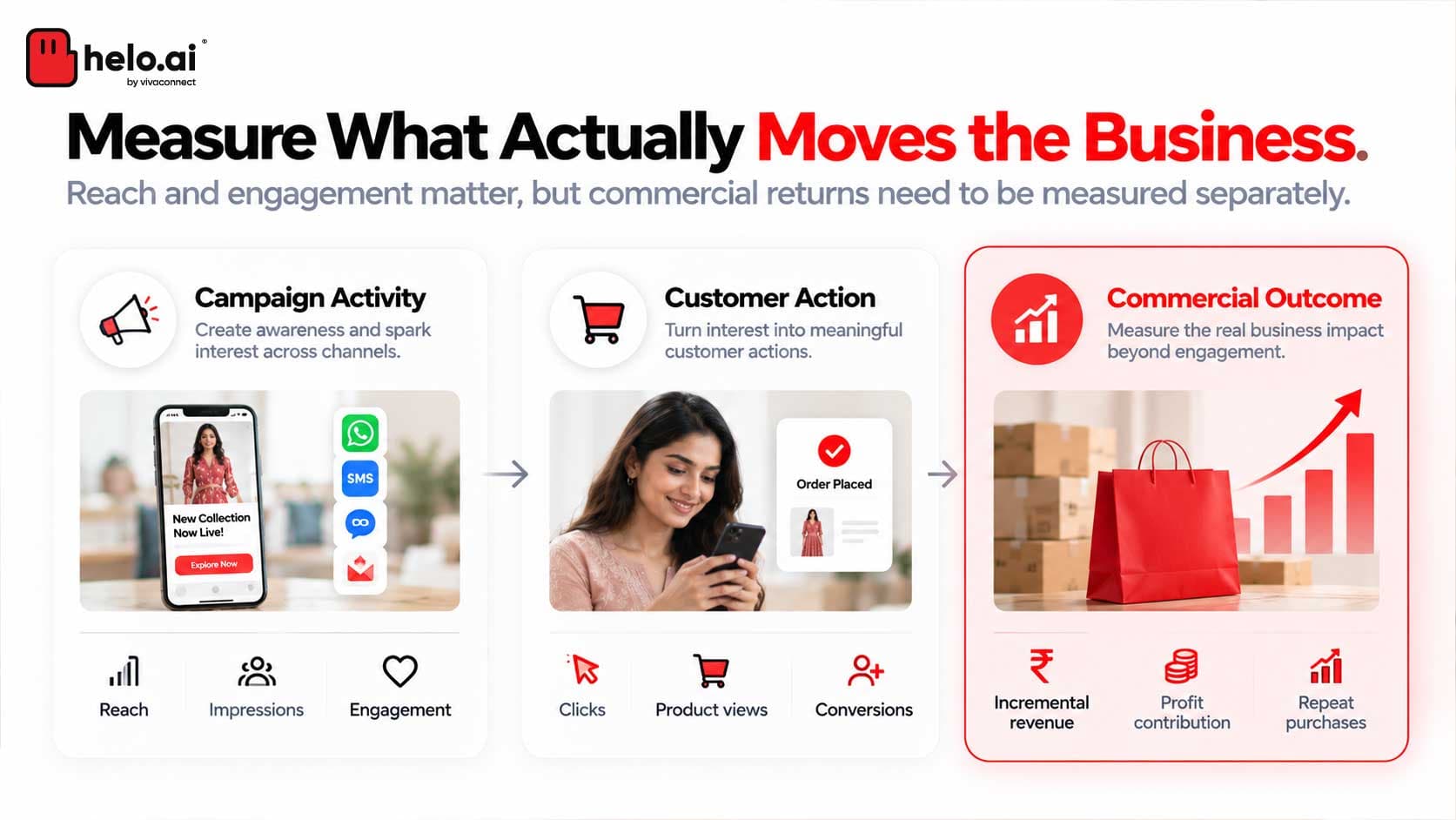
A high festive sales figure does not tell the whole story. Brands need to track what first-time buyers do afterwards.
A useful starting point is to measure:
- Repeat-purchase rate: What share of first-time customers place another order?
- Time to the second purchase: How long does it take for customers to return?
- Purchases without discounts: Are customers coming back when a major offer is not running?
- Product combinations: Which first purchases lead to interest in related products?
- Customer re-engagement: Which messages or recommendations lead to a real purchase, rather than just a click?
The measurement period should fit the product. A skincare customer may reorder within weeks, while someone buying festive clothing may not need another outfit for several months.
A 90-day window can be useful for tracking some categories, but it should not be treated as a universal benchmark for every retailer.
Measuring more than orders? The CPaaS KPI Handbook covers 50+ WhatsApp, SMS and RCS metrics, with formulas and worked examples.
How can customer communication help bring shoppers back?
The examples above point to two practical approaches: make the next product relevant and make the next message useful.
A retailer might recommend trousers to someone who bought a shirt, share a new collection with a customer who has shown interest in a particular style, or remind a customer to replenish a product they use regularly.
Timing matters, too. Too many messages can become irritating, while generic promotions give customers little reason to pay attention.
This is where Helo.ai can fit naturally. Its positioning is AI that connects businesses with customers. Across channels such as WhatsApp, SMS and voice, Helo.ai can support customer updates, reminders and conversations as part of a retailer's broader customer communication strategy.
The goal is not to message customers more often. It is to make each interaction relevant to what they need and what the brand can genuinely offer.
The takeaway: The first sale is only the beginning
The Bear House is exploring product recommendations that build on a customer's first purchase. Libas uses customer segmentation to make its communication more relevant. Admitad's festive reporting also points to repeat-purchase activity among AJIO's loyal cashback users, though it does not prove lasting post-sale retention.
These examples offer different lessons, but they share one important question: what gives a customer a reason to return?
For retail brands, the work after the festive sale deserves as much attention as the campaign that brought customers in. The real test is whether customers come back when the discounts are gone.
Frequently asked questions
How do brands turn festive-season buyers into repeat customers?
Reported approaches include recommending related products after the first purchase (The Bear House) and segmenting customers by interests, age, location and season (Libas). Inc42 reports no uplift figure for either.
What should retailers measure after a festive sale?
Repeat-purchase rate, time to the second purchase, purchases without discounts, product combinations and re-engagement that leads to a real purchase.
Does a 25% rise in repeat purchases prove lasting retention?
Not by itself. Admitad reports a 25% rise among AJIO's loyal cashback users. The case study does not show whether those purchases happened after the sale ended, or how much cashback caused them.