

Most D2C brands obsess over acquisition. New customers. More traffic. Lower CAC.
But sustainable growth rarely comes from acquisition alone.
The brands that consistently outperform their competitors are usually better at keeping customers, not just finding them. That's why understanding the best retention tactics for D2C has become one of the most important priorities for ecommerce teams today.
Customer acquisition costs continue to rise, while repeat customers often generate a disproportionate share of revenue. If your customers buy once and never return, growth becomes increasingly expensive.
Retention changes that equation.
Why Customer Retention Matters More Than Ever
A first purchase creates revenue. A second purchase creates momentum. A third purchase often creates profitability.
That's because the acquisition cost has already been paid. Every repeat order improves customer lifetime value and reduces dependence on paid acquisition.
Yet many brands focus heavily on getting the first sale while investing very little in what happens afterward.
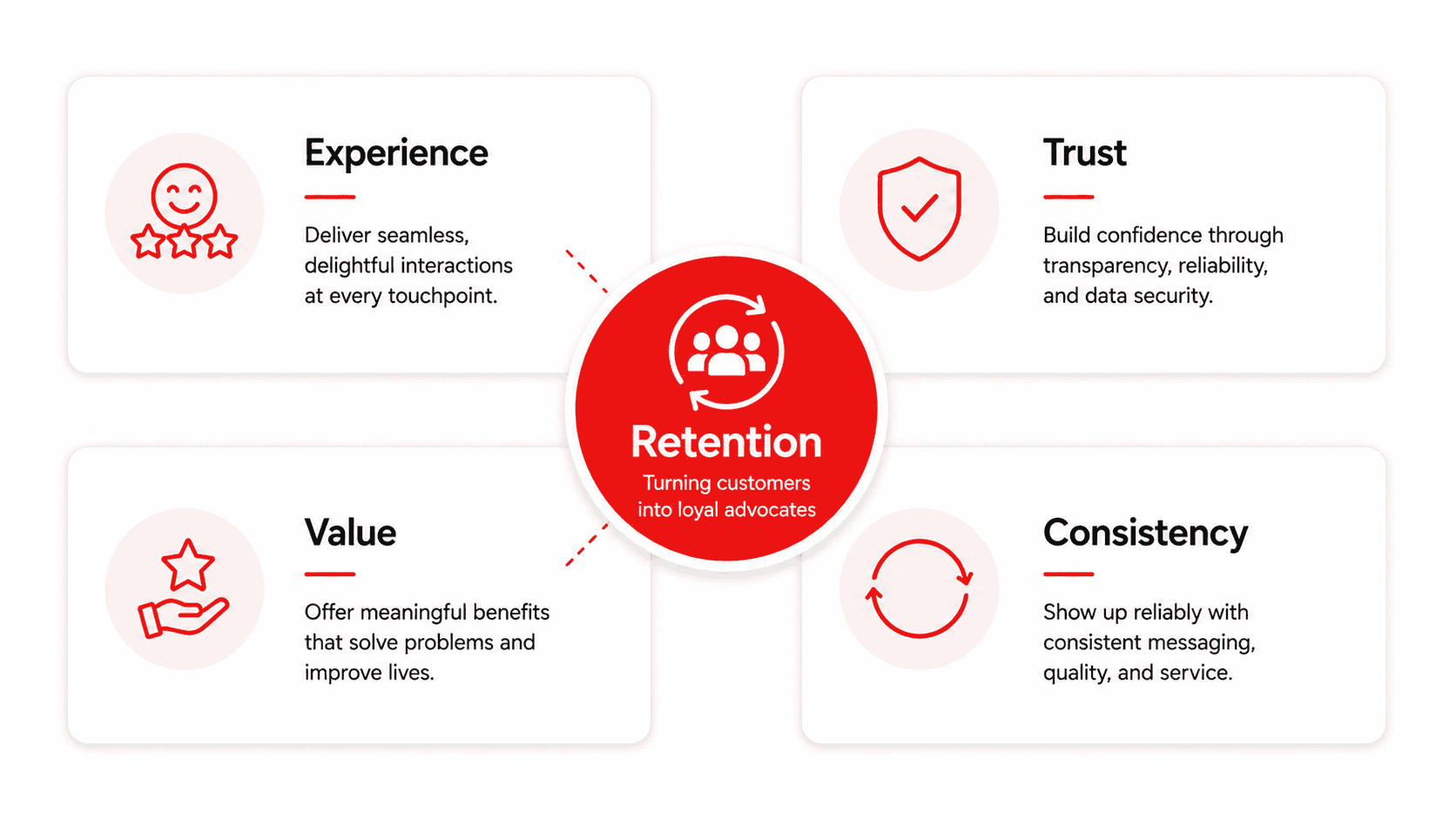
Customer retention is not simply about keeping customers happy. It's about building a system that gives customers reasons to come back.
According to industry benchmarks, the average D2C repeat purchase rate sits between 20–30%, meaning 70–80% of customers never buy again after their first order. In the Indian D2C market specifically, 30-day repeat rates average around 12% and 90-day around 18% for many brands.
See data on why many D2C brands lose customers after the first order in our guide: Why D2C Brands Lose Customers After First Order.
The Biggest Retention Mistake D2C Brands Make
Many brands disappear after the purchase.
The customer places an order, receives the product, and hears nothing until the next promotional campaign arrives weeks later.
That gap creates a problem.
Customers forget brands surprisingly quickly. Competitors enter the picture. Habits change. Attention shifts elsewhere.
Retention suffers not because customers disliked the experience, but because the relationship was never developed beyond the transaction.
The strongest retention strategies begin immediately after the first order.
Build a Strong Post-Purchase Experience
Retention often starts with customer experience.
Before customers consider buying again, they evaluate the first purchase.
Questions naturally arise:
- Did the order arrive on time?
- Were delivery updates clear?
- Was the product as expected?
- Was support responsive when needed?
A smooth post-purchase journey builds trust. A frustrating one creates churn.
Order confirmations, shipping updates, delivery notifications, and proactive communication all contribute to a stronger customer experience and higher retention rates.
Learn how to strengthen this in our guide: How Post-Purchase Communication Improves Customer Retention.
See also: Instant Order Confirmation Customer Trust.
Personalization Increases Repeat Purchases
Not every customer wants the same thing.
A customer who purchased skincare products has different needs than someone buying fashion or supplements.
The most effective customer retention for ecommerce brands comes from relevance.
Personalized communication based on purchase history, browsing behavior, or customer preferences helps create experiences that feel useful rather than promotional.
Customers are far more likely to engage when the message reflects their interests and needs.
Discover strategies for this in our guide: How Personalized Messaging Increases D2C Revenue.
Reorder Reminders Drive Repeat Revenue
Many products have predictable repurchase cycles.
Customers may intend to buy again but simply forget.
This is especially common in categories like:
- Supplements
- Beauty products
- Pet supplies
- Personal care
- Household essentials
Well-timed reorder reminders help brands reconnect with customers at the exact moment a new purchase becomes relevant.
Often, the difference between a repeat order and customer churn is simply a reminder arriving at the right time.
Explore proven tactics in our guide: Best Ways to Increase Repeat Purchases for D2C Brands.
Explore automation for this in our guide: Best WhatsApp Automation Flows for D2C Brands.
Loyalty Is Built Through Consistent Engagement
Retention is rarely driven by a single campaign. It develops through ongoing engagement.
That could include:
- Product education
- Review requests
- Loyalty rewards
- New product recommendations
- Replenishment reminders
- Exclusive customer offers
Each interaction strengthens familiarity with the brand.
Over time, familiarity becomes trust. Trust becomes loyalty. And loyalty drives repeat purchases.
Customer Segmentation Improves Retention Performance
One reason many retention programs fail is that every customer receives the same message.
Not every customer is equally engaged.
Some customers purchased recently. Others haven't ordered in months. Some are high-value customers. Others are still evaluating the brand.
Segmentation allows brands to communicate differently with each audience based on behavior and lifecycle stage.
This improves relevance and often leads to stronger retention outcomes.
Retention Is a System, Not a Campaign
Many D2C brands think of retention as a promotion sent once a month.
The highest-performing brands treat it differently.
They build retention into the customer journey itself.
Every touchpoint contributes:
- Order confirmation
- Delivery communication
- Customer support
- Product education
- Review collection
- Reorder campaigns
Instead of relying on occasional campaigns, they create a consistent experience that encourages customers to return naturally.
See how WhatsApp supports this across the journey in our guide: Why WhatsApp Works Better Than Email for D2C Brands.
Effective Retention Tactics at a Glance
Tactic | Description | Why It Works for D2C Retention |
|---|---|---|
Post-Purchase Communication | Order confirmations, shipping updates, delivery notifications | Builds immediate trust and reduces early churn |
Personalization | Tailored messages based on purchase history and behavior | Increases relevance and engagement rates |
Reorder Reminders | Timely nudges for consumables (beauty, supplements, etc.) | Catches customers at the exact moment of need |
Loyalty Programs | Rewards, exclusive offers, tiered benefits | Encourages ongoing engagement and repeat buys |
Consistent Engagement | Product tips, reviews, recommendations over time | Turns one-time buyers into loyal customers |
Segmentation | Different messages for new, active, or lapsed customers | Improves response by matching lifecycle stage |
These tactics work best when combined into an ongoing system rather than one-off efforts.
Conclusion
The best customer retention strategies for D2C brands aren't complicated.
They focus on delivering great experiences, maintaining meaningful communication, and staying relevant long after the first purchase.
Brands that consistently invest in retention often see stronger customer lifetime value, lower acquisition pressure, and more predictable growth.
Because in D2C, the most valuable customer isn't the one who buys once. It's the one who keeps coming back.
Start a Retention Engine in WhatsApp
helo.ai helps D2C brands automate retention through WhatsApp with post-purchase journeys, reorder reminders, personalized campaigns, delivery updates, and customer engagement flows that drive repeat purchases.
Start a retention engine in WhatsApp — see how.
FAQs
What are the best retention tactics for D2C brands?
The most effective tactics include post-purchase communication, personalized messaging, reorder reminders, loyalty programs, and strong customer experiences. These work together as a system rather than isolated campaigns.
How to retain D2C customers?
D2C brands can improve retention by maintaining consistent engagement after purchase, delivering excellent service, using personalization and timely reminders (like reorder notifications), and creating reasons for customers to return through value-driven communication.
Why is customer retention important for ecommerce?
Retention increases customer lifetime value, reduces reliance on acquisition spending (which is rising), and creates more sustainable long-term growth. Repeat customers often account for a large portion of revenue with much lower costs.
What drives repeat purchases in D2C?
Repeat purchases are typically driven by product satisfaction, personalized and relevant communication, timely reminders based on usage cycles, positive post-purchase experiences, and ongoing engagement that builds loyalty.
How can WhatsApp help customer retention?
WhatsApp enables brands to stay connected with customers through high-visibility channels for delivery updates, reorder reminders, personalized offers, and post-purchase engagement campaigns. It often delivers better open and response rates than email for time-sensitive retention messages.

.jpeg&w=96&q=75)