


OTPs within seconds? Delivery update just as your package leaves the warehouse? And many such fast, automated messages. All this is possible with a piece of technology most people don’t think about the SMS gateway.
SMS is still one of the most reliable and effective channels. But sending SMS manually… that’s not possible. Just imagine the complexity and amount of attention to detail taht will be required if done manually. Well, in the era of technology, doing this manually is nothing less than stupidity.
Thankfully, a solution to this problem was launched alongside the launch of SMS in 1992. It’s called SMS gateway. Over the years it has evolved and become easier to use for business and improved the overall customer experiences as well.
In this blog, we’ll break down what is SMS gateway is, how it works, its key features, and how to choose the right type for your business.
What Is an SMS Gateway?
Imagine sending thousands of text messages without touching your phone OTPs, delivery updates, reminders, and alerts, all fired off in seconds. Sounds like magic? It’s not. It’s the power of an SMS gateway.
In a world where speed and automation are everything, businesses can’t afford to send messages manually. That’s where SMS gateways come in — they allow your app, website, or software to send and receive SMS messages instantly, without needing a phone or a SIM card. Whether you’re a startup or a large-scale enterprise, SMS gateways help you reach customers across the globe in real-time.
But what exactly is an SMS gateway? How does it work? And which type should you choose?
This blog will walk you through everything you need to know:
- What an SMS gateway is (and what it isn’t)
- How it works behind the scenes, from app to mobile network
- Types of SMS gateways, from cloud-based APIs to direct telecom connections
- Why they’re essential for modern customer engagement
- How to choose the SMS Gateway Provider based on speed, coverage, cost, and compliance
You'll also discover how easy it is to integrate one into your existing systems — with real-time delivery, API automation, failover protection, and two-way messaging that lets customers reply directly.
In today’s fast-moving digital landscape, SMS is still one of the most powerful communication channels. And with the right gateway, you can use it to build trust, boost conversions, and keep customers in the loop — without missing a beat.
How SMS Gateways Work Behind the Scenes
Message Flow: From App to Recipient
Here’s a quick breakdown of the technical process:
- Your app sends a message to the SMS gateway using an API.
- The gateway formats the message for mobile networks.
- It then routes it via a telecom provider's Short Message Service Center (SMSC).
- The message reaches the user’s phone as a normal SMS.
This seamless process occurs in seconds, ensuring near-instant delivery.
Real-Time Messaging and Delivery Logic
Advanced gateways also offer:
- Delivery reports
- Failover routing (alternative carriers if the first fails)
- Two-way SMS (users can reply)
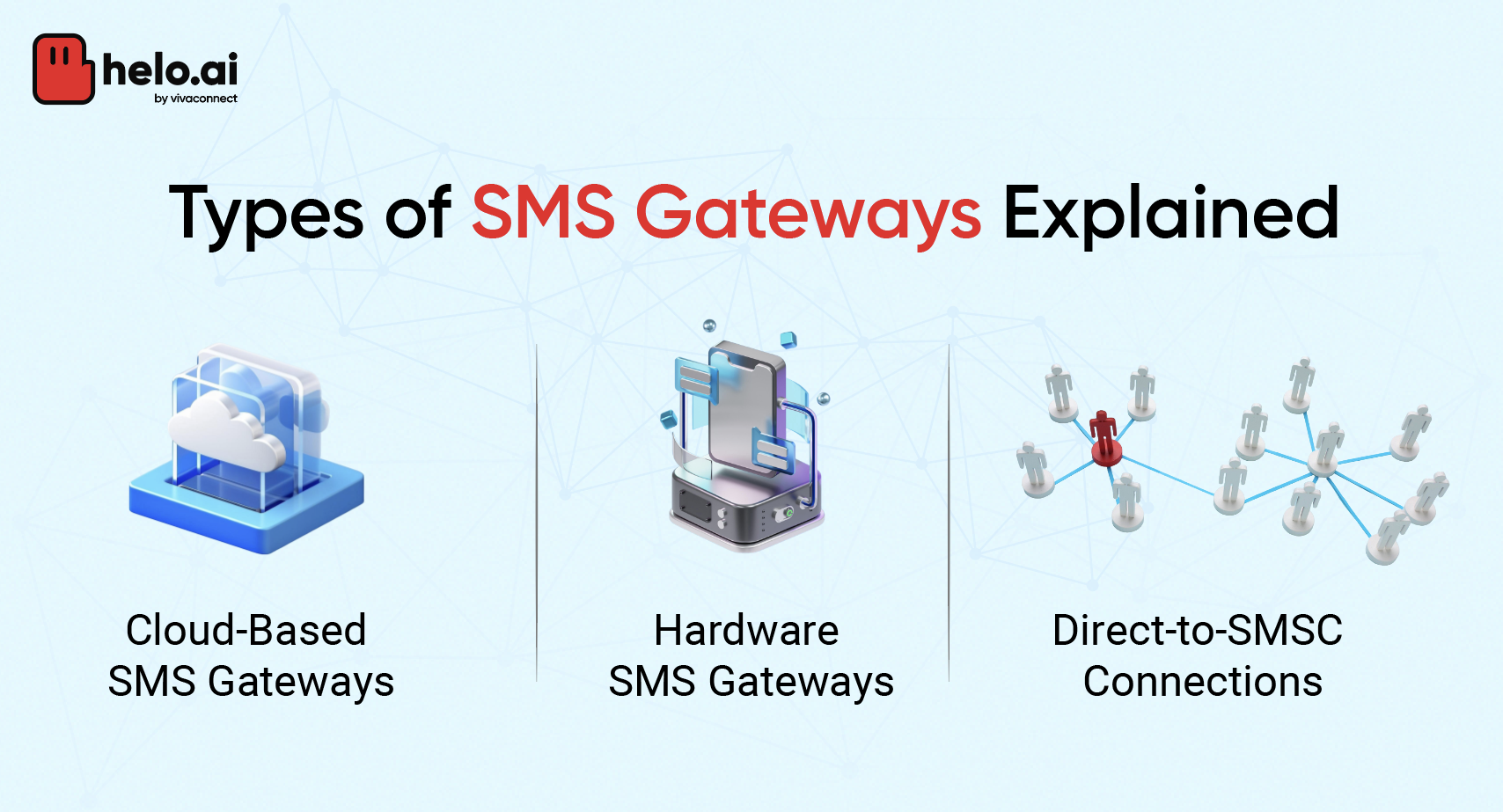
Types of SMS Gateways Explained
Cloud-Based SMS Gateways
Most common and scalable, these services operate entirely over the internet.
Pros:
- Easy integration via REST APIs
- Supports large volumes
- No need for local hardware
Ideal for: E-commerce, SaaS apps, CRMs
Hardware SMS Gateways
Physical devices with SIM slots installed onsite.
Pros: | Cons: |
|---|---|
Operate without the internet | Maintenance overhead. |
Total control over message sending | Scalability limitations |
Best for: Local operations or strict data environments
Direct-to-SMSC Connections
This method connects directly to the telecom’s messaging infrastructure.
Pros: | Cons: |
|---|---|
Unmatched message delivery speed | Requires contracts and setup with carriers |
Full customization | High initial costs |
Best for: Telecoms, banks, or high-volume SMS senders
Top Benefits of Using an SMS Gateway for Your Business
Benefit | Description |
|---|---|
High Open Rates | SMS has open rates over 98%, compared to ~20% for email. |
Real-Time Delivery | Messages typically arrive within seconds. |
API Automation | Easily integrate with your software or e-commerce platform. |
Scalability | Send thousands of messages instantly, even during peak hours. |
Global Reach | Reach customers worldwide with support for international delivery. |
SMS Gateway vs SMS API
This is a common confusion, especially for non-technical teams.
Here’s a simple explanation:
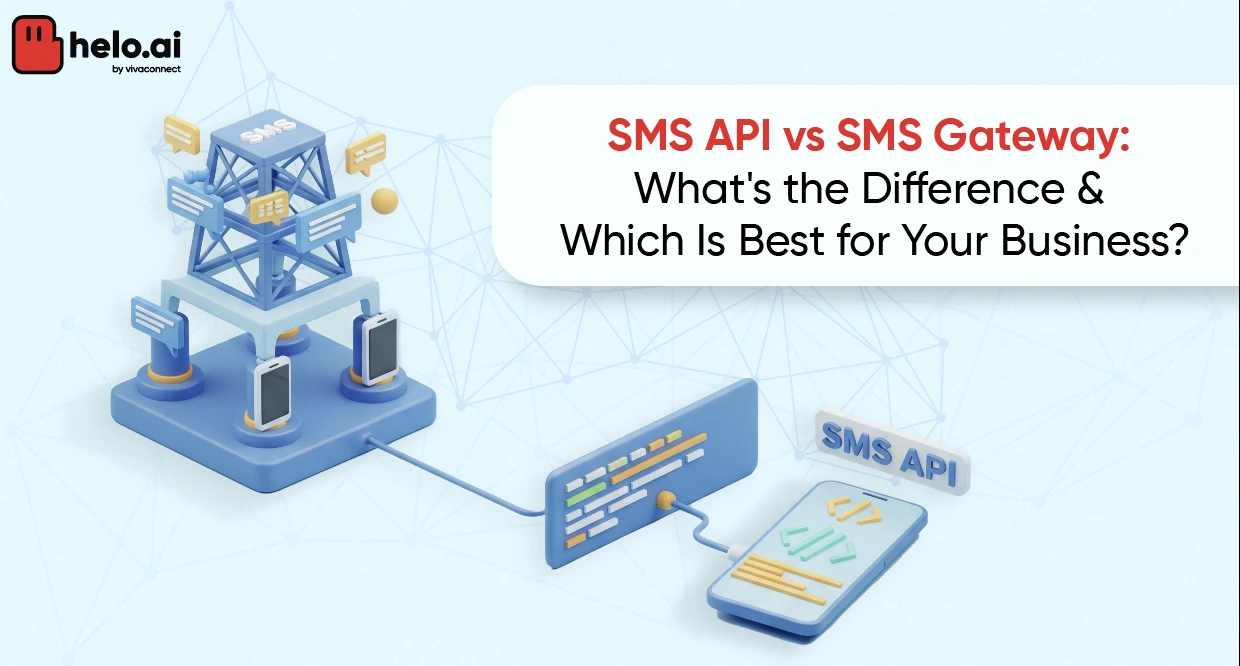
- An SMS Gateway is the infrastructure — it connects to mobile carriers and handles message routing, delivery, and compliance.
- An SMS API is the interface — it's how your software talks to the gateway.
So, while the gateway delivers the message, the API is the tool developers use to send and manage those messages from your platform.
See the full difference between SMS API and SMS Gateway
Choosing the Right SMS Gateway Provider
Choosing the right SMS Gateway Provider is key to successful SMS implementation.
Coverage and Message Delivery Speed
Make sure the provider offers global coverage and low-latency delivery.
API Access, SDKs, and Developer Support
A good provider should have:
- Well-documented APIs
- SDKs for popular languages (Python, PHP, Java)
- Sandbox/testing environments
Cost, Scalability, and Legal Compliance
Compare per-message pricing, volume discounts, and adherence to laws like GDPR, TCPA, or TRAI.
How to Integrate an SMS Gateway with Your App or Website
Steps to Integration:
- Sign up with a gateway provider.
- Get your API credentials (key and secret).
- Connect using your preferred stack (Node.js, Python, PHP, etc.).
- Send a test message and analyze delivery reports.
- Handle edge cases like failed delivery or retries.
Sample Code Snippet (Using REST API):
POST /send-sms
{
  "to": "+15551234567",
  "from": "MyBiz",
  "message": "Your order has shipped! Tracking #: 123456"
}
Most providers offer SDKs and plugins for faster integration with platforms like Shopify, WordPress, and WooCommerce.
Security, Compliance, and Legal Best Practices
Risks to Watch For:
- SMS Spoofing: Faking sender ID
- Phishing (Smishing): Fraudulent links via SMS
- SIM Swapping: Hijacking numbers to intercept SMS
Best Practices:
- Use dedicated sender IDs
- Implement opt-in/opt-out features
- Follow country-specific SMS marketing rules
- Encrypt sensitive data at rest and in transit
Legal Tip: Always check local laws like GDPR (EU), TCPA (US), or TRAI (India) before launching mass SMS campaigns.
Frequently Asked Questions (FAQs)
1. What does an SMS gateway do?
It allows businesses to send and receive SMS messages from software systems through mobile networks — at scale, and in real-time.
2. What is the SMS Gateway Key?
It’s a secure authentication token used to validate your system’s access to the SMS gateway via API.
3. What is the SMS Gateway sender ID?
It’s the name or number shown on the recipient’s phone when they receive your SMS. It can be alphanumeric (like "BANKALERT") and is subject to carrier or regulatory approval.
4. What is SMS Gateway?
An SMS Gateway is a platform that connects business applications to telecom networks, enabling automated SMS communication.
5. What is the difference between SMS and MMS?
SMS is text-only; MMS supports media like images, video, and audio.
6. Can I use an SMS gateway for international messaging?
Yes, most cloud providers support global routes. Just verify delivery rates and pricing.
7. Do SMS gateways support two-way communication?
Yes—if you use a longcode or shortcode with reply capability.
8. What’s the average delivery time for SMS?
Typically 1–5 seconds under normal conditions.
9. Can I send bulk promotional messages?
Yes, but ensure compliance with opt-in rules and avoid spammy content.
10. What if the recipient’s phone is off?
The gateway retries for up to 72 hours, depending on settings and provider.
How Helo.ai Simplifies Enterprise SMS Delivery
If you’re sending OTPs, alerts, or campaigns, speed and security are everything.
With Helo Broadcast, you can send one intelligent campaign that reaches users via SMS, WhatsApp, RCS, or even voice — depending on what’s most likely to land and convert.
For SMS alone, here’s what sets Helo apart:
- 97% of OTPs delivered in under 5 seconds
- 99.99% uptime
- Direct telco connections ensure fast, secure delivery
- Smart fallback from other channels to SMS if needed
- Real-time insights to measure impact, clicks, and response
CONTACT HERE to know more.


.jpeg&w=96&q=75)