
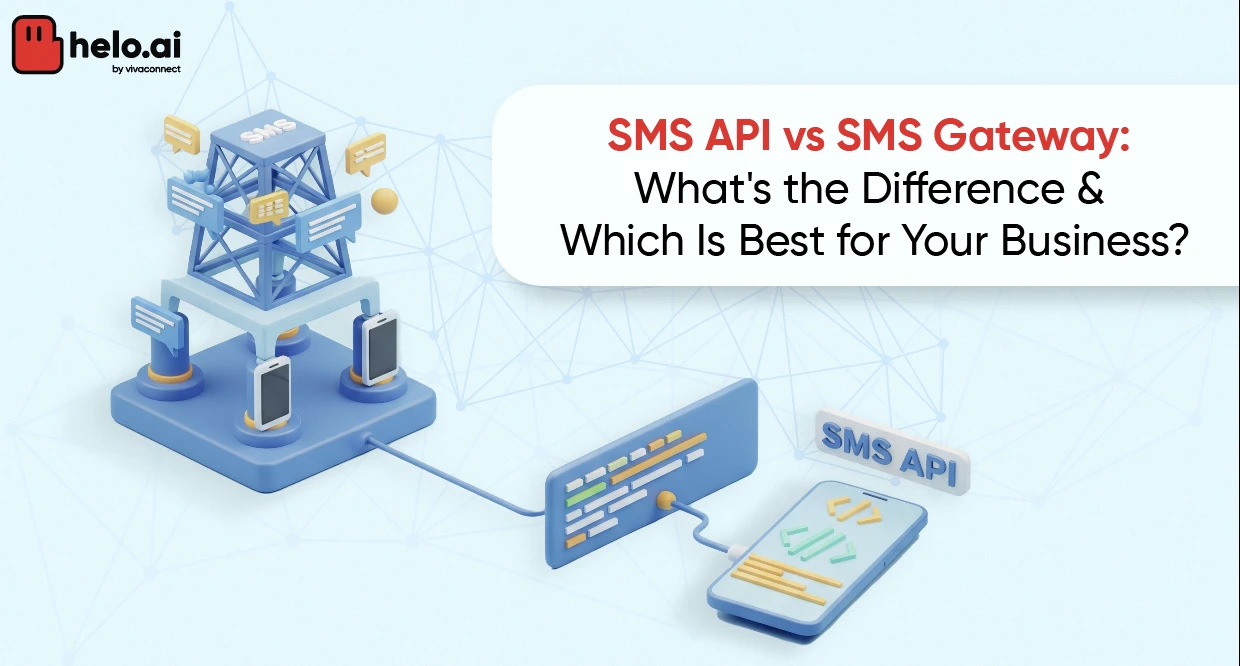


There's no doubt that every business’s heart is a customer. Today's customers expect instant, reliable communication, especially when it comes to critical messages like OTPs, transaction alerts, appointment reminders, or delivery updates. For enterprises, SMS is still the best way of communication, even in the era of WhatsApp and RCS.
When businesses plan to start with SMS, two terms usually pop up: SMS Gateway and SMS API. This is something that confuses a lot of people. They sound like two sides of the same coin, and in some ways, they are. Both help you send messages to your customers. But they serve very different roles. Choosing the right one is important as the wrong one can lead to inefficiencies, delivery issues, or scaling problems down the road.
So, what’s the real difference? And which one makes sense for your use case?
In this guide we will break down a clear difference between SMS gateway and SMS API, and what is best for business whether you’re sending OTPs, automating support flows, or running high-volume marketing campaigns. This blog is clear, simple, and with real-world logic so you can choose the right path for your business.
What is an SMS API?
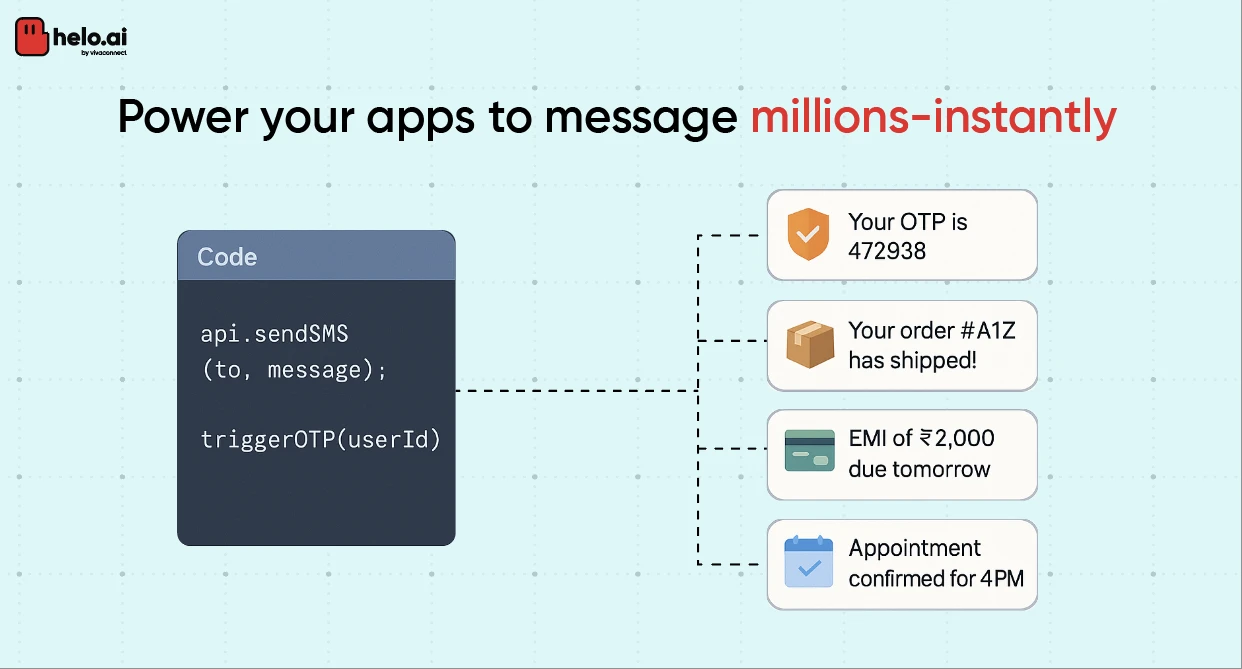
An SMS API (Application Programming Interface) is a developer-friendly interface that allows your systems like websites, mobile apps, CRMs, ERPs, or any backend platform to send and receive SMS messages programmatically.
Instead of logging into a dashboard or manually uploading contact lists, you embed messaging capabilities directly into your workflows. This means your applications can trigger messages automatically based on customer actions, system events, or campaign logic.
With just a few lines of code, your teams can:
- Send OTPs instantly after login attempts or transactions
- Push delivery updates, appointment reminders, or payment alerts
- Automate campaign sends based on CRM events or user behavior
- Respond to customer queries via two-way SMS in real time
Key benefits of an SMS API:
1. Superfast delivery that's also reliable
SMS APIs reach telecom carriers directly, and messages are delivered in seconds, not minutes. With open rates of more than 90% and texts read in minutes or less, it's the quickest way to reach your audience in real time.
2. Automated sending and triggered messages
Specify triggers such as online purchase, appointment booking, or cart abandonment and the API automatically sends messages. No more uploading by hand or scheduled blasts just timely, relevant communication every time.
3. Personalized messaging at scale
Add dynamic place holders order summary, location, customer name drawn from your CRM or triggers. You have the power of one-to-one messaging at scale, so your SMS always has that personal, relevant touch.
4. Enriched two-way communications & chat-style assistance
Customers can text back to confirm appointments, ask questions, or leave comments and your system can branch responses or provide follow-throughs. This conversation flow builds trust and engagement.
5. Integrated omnichannel communications
SMS is not isolated; it complements email, push, and RCS. Brands that integrate SMS into omnichannels have better response rates, primarily through message reinforcement across channels.
6. Worldwide reach with country‑level compliance
Whether you're sending OTPs in India or promos in the US or EU, SMS APIs handle regional regulations, opt-in/out flows, and carrier routing. You can scale internationally without extra compliance headaches.
7. Scalable, carrier‑grade infrastructure
Send dozens to tens of millions of messages without sweating. Leading suppliers offer failover routing, message queueing, and traffic shaping to meet carrier constraints while ensuring delivery pace.
8. Real-time analytics & delivery insights
SMS APIs offer delivery reports, failed message history, and engagement statistics. This optimizes your campaigns, informs your strategy about time and format, and enhances ROI in the long run.
9. Cost-effective engagement
Compared to paid channels and email, SMS yields better visibility and response for less. When paired with strategic triggers or flash sales, ROI goes even further less expense, bigger bang.
10. Integrated short link tracking
Need to know if your customers actually click your links? Most modern-day SMS APIs have click tracking in real-time and support for short link generation. Using a product like Shortify by Helo, one can shorten URLs, track campaign results, and maximize SMS engagement all within one platform.
Common enterprise use cases:
- E-commerce: Order confirmations, shipping updates, return status
- Banking & Fintech: OTPs, EMI reminders, fraud alerts
- Customer Support: Ticket updates, follow-ups, satisfaction surveys
- Healthcare & Insurance: Appointment alerts, policy renewals, claim status
If you’re looking to build automated, scalable, and intelligent SMS workflows, an SMS API is the modern approach that offers flexibility and speed. But for this you should have some tech capabilities in place.
What is an SMS Gateway?
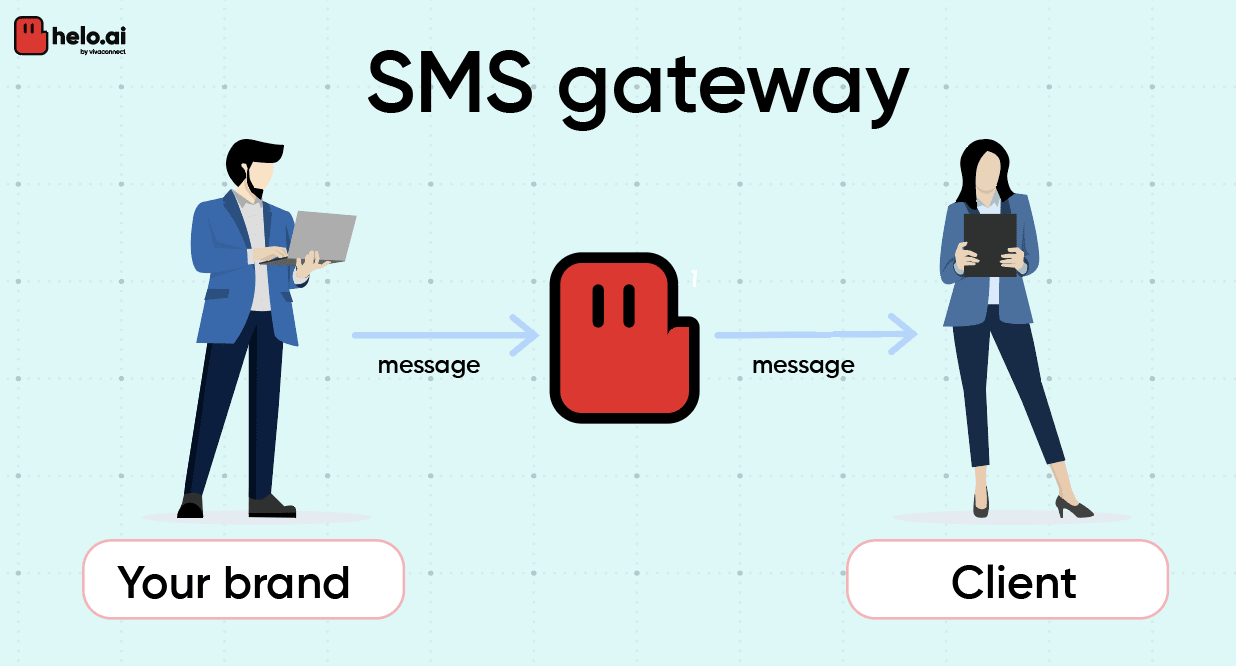
An SMS Gateway is the underlying infrastructure that enables SMS delivery from your system to mobile networks. In simple terms, it acts as a bridge between your software and telecom operators, translating your messages into a format that mobile carriers can understand and delivering them to users’ phones.
Whether you’re sending messages via an API, uploading a file through a web dashboard, or using a bulk campaign tool, the SMS Gateway is what actually sends the SMS.
It handles:
- Protocol translation (e.g., HTTP, SMPP, XML)
- Message routing across telecom providers
- Delivery retries and prioritization
- Compliance filters like DLT (in India) or GDPR (in EU)
Unlike APIs, SMS Gateways don’t always require technical expertise. Most platforms offer intuitive dashboards where you can:
- Upload a contact list (CSV or Excel)
- Draft your message (personalize if needed)
- Hit “Send” and reach thousands within seconds
Key benefits of an SMS Gateway:
1. Instant, high-volume delivery
SMS Gateways are scalable, so you can send thousands (or millions) of messages in a matter of seconds. Perfect for bulk SMS campaigns, flash sales, or urgent notifications, no bottlenecks, no delays.
2.No-code, one-click integration
Perfect for operations and marketing departments, today's SMS Gateway solutions allow individuals to execute campaigns without writing a single line of code. Most incorporate easy-to-use dashboards, webhooks, and CRM integrations perfect for SMS marketing for e-commerce or SMS appointment reminders.
3.Cloud platform, no maintenance of hardware
There are no local telecom hardware or servers required because it's a cloud service. You have automatic updates, high uptime, and global carrier connectivity simply login and send, anywhere.
4.Global reach with local delivery quality
Through international routes and direct carrier links, SMS Gateways have access to nearly all nations, including low-connectivity regions. Local gateways also enjoy better delivery rates and lower per-SMS cost than global APIs.
5.Reliable compliance and integrated filtering
Gateways also integrate regulatory elements like DND filtering, opt-out support for GDPR, and management of STOP words facilitating simplified compliance with bulk SMS regulations.
6.Affordable and ROI-driven
SMS is cheap, usually only several paise per message even when scaled. With open rates above 98% and rapid delivery, ROI for SMS marketing campaigns for purposes is frequently 10–20× or more.
7.Two-way interaction and rich messaging
Aside from blasts, all SMS Gateways also have 2-way messaging, polls, and transactional messages like OTPs or confirmations. Others also have MMS/RCS for more rich media messages.
Common enterprise use cases:
- Marketing: Flash sales, festival campaigns, promotional offers
- Utilities & Telecom: Monthly bill reminders, service updates
- Education & Healthcare: Appointment alerts, fee/payment reminders, emergency notices
- Government & Public Services: Local alerts, awareness campaigns, disaster communication
- BFSI & Fintech: Loan and credit card offers, bill payment reminders, notices and alerts
An SMS Gateway is perfect if you want speed, scale, and simplicity especially when you need to send thousands of messages quickly, without setting up custom integrations.
SMS Gateway vs SMS API: Key Differences
Feature | SMS API | SMS Gateway |
|---|---|---|
Purpose | Integrates SMS into apps/workflows | Sends SMS via interface or system |
Technical Skill | Requires development effort | Minimal/no coding needed |
Customization | Highly customizable | Template-based |
Scalability | Scales with your app | Handles mass campaigns |
Control | Full logic control | Limited control |
Speed to Deploy | Longer (needs dev setup) | Immediate via UI |
Ideal For | Product, tech, or dev teams | Marketing, ops, and support teams |
Which One Should You Use?
Use SMS API if:
- You have a development team
- You need dynamic workflows (e.g., OTPs, transaction alerts)
- You want to sync with your CRM, ERP, or internal systems
- You want to automate, personalize, and scale messaging logic
Use SMS Gateway if:
- You want to get started fast
- You don’t want to write any code
- You’re sending promotional messages in bulk
- You’re a small or mid-size team handling communications manually

Example Use Cases
Scenario | Best Fit | Why |
|---|---|---|
OTP Verification | SMS API | Needs instant, automated trigger with high delivery success |
Marketing Campaigns | SMS Gateway | High-volume, time-based sends with easy setup |
E-commerce Order Updates | SMS API | Integrated into purchase flow |
Healthcare Appointment Reminders | SMS Gateway | Scheduled reminders in bulk |
Two-way Customer Support | SMS API | Enables real-time chat with system responses |
SMS Protocols Used
- SMS APIs usually use REST, HTTP, or JSON
- SMS Gateways often use SMPP, HTTP, SOAP, or XML
Both work with carrier networks but differ in how much access and control they provide.
Security & Compliance
Both SMS APIs and Gateways can be secure if implemented correctly. For enterprise use:
- Ensure DLT compliance in India
- Use encryption for message payloads
- Work with providers that offer ISO certifications, message logs, and delivery reports

Helo.ai SMS Solution: Secure, Scalable, Developer-First Messaging
Need to send OTPs, alerts, or updates automatically and reliably?
The Helo SMS API lets you plug SMS into your systems with just a few lines of code.
Need to send marketing blasts, payment reminders or brand awareness seamlessly?
The Helo SMS Gateway lets you do it smoothly in just a few clicks.
Here’s what makes it work:
- Fast delivery: Built for real-time triggers like login codes or payment confirmations
- Simple integration: REST-based API that works with any tech stack
- Scalable performance: Send thousands of messages per second
- Compliance-ready: DLT-verified routes, sender ID support, and built-in failover
- Flexible use cases: OTPs, reminders, promotions, notifications you choose
No complex dashboards. No manual work. Just clean, programmable SMS.
Explore Helo SMS solutions and start building today.
Final Thoughts
Both SMS APIs and SMS Gateways are critical tools in the business messaging stack. The difference lies in control, customization, and how deeply messaging ties into your workflows.
- If you’re running promotions, alerts, or newsletters a Gateway may be enough.
- If you need personalized, automated, integrated messaging an API is your best friend.
At Helo.ai, we support both models. Whether you want to send OTPs in milliseconds or broadcast a campaign to 10 million users, we’ve got the tech (and the compliance) to back you.
Talk to us to see which setup fits your business and how to get started fast.
Frequently Asked Questions
1. What’s the main difference between an SMS gateway and an SMS API?
An SMS API is a developer tool that lets you send SMS from your application programmatically. An SMS gateway is the underlying system that connects to mobile networks to deliver those messages. In short: the API triggers, the gateway delivers.
2. Which one is better for bulk messaging: SMS gateway or SMS API?
SMS Gateways are ideal for non-technical teams running bulk campaigns via dashboards. SMS APIs can handle bulk too — but require developer setup. Choose based on whether you need manual control (gateway) or automated logic (API).
3. Can I use an SMS gateway without coding?
Yes. Most SMS gateway providers offer web portals where you can upload contact lists, draft messages, and send campaigns — all without writing a single line of code.
4. Is an SMS API more secure than using a gateway?
Security depends on the implementation. SMS APIs allow advanced encryption, token-based access, and audit logging — which makes them better suited for sensitive use cases like OTPs or transaction alerts. Gateways are secure too, but with less control over encryption protocols.
5. Can I get two‑way SMS with both options?
Yes. Both SMS APIs and gateways support two-way messaging, as long as your virtual number or shortcode is configured for replies. APIs offer more flexibility in automated response handling, CRM logging, and chat routing.
6. What protocols do gateways and APIs use?
- Gateways: Typically use SMPP, HTTP, XML, or SOAP.
- APIs: Often built on REST or HTTP, with JSON/XML payloads.
Some platforms support multiple protocols for integration flexibility.
7. Which is more cost-effective for a small business?
Gateways are usually more cost-effective upfront — especially if you’re sending manual campaigns or alerts. APIs add more value long-term if you need automation, personalization, or integration with your systems.
8. How do I choose between SMS gateway vs SMS API?
Choose an SMS Gateway if:
- You want to send bulk campaigns quickly
- You don’t have a technical team
- You’re looking for low setup costs
Choose an SMS API if:
- You want to automate messages based on system events
- You have a developer team or existing tech stack
- You need deeper control and reporting
9. Can I switch later from gateway to API?
Yes. Many providers offer both, and migrating from a gateway to an API is possible — though it may require account changes, new credentials, or slight system reconfiguration.
It’s best to start small, then scale as your needs grow.
10. What are real-world use cases for each?
SMS Gateway is ideal when you need to send messages manually, without code:
- Sending flash sale promotions to a large contact list
- Reminding customers of appointments through uploaded spreadsheets
- One-time campaign blasts or seasonal announcements
- Basic two-way support via a shared inbox
SMS API works best when automation and system integration are key:
- Sending OTPs or login codes instantly upon user request
- Triggering order or transaction alerts directly from backend systems
- Running personalized drip campaigns linked to CRM data
- Automating two-way chatflows, support routing, or feedback collection

.jpeg&w=96&q=75)