
.png)


The Short Answer
The best Wati alternative depends on what's pushing you to switch. For enterprises and regulated industries needing compliance and omnichannel scale, Helo.ai leads. For budget-conscious SMBs, AiSensy offers transparent pricing and free approvals. For D2C and Shopify brands, Interakt and Zoko are strong. For global omnichannel needs, Infobip; for developer-scale custom builds, Gupshup and Twilio. Below, we compare all 12 honestly — including their cons — plus when Wati might still suit you, and how to migrate cleanly.
Transparency note: Helo.ai is included in this comparison and evaluated against the same criteria as every other platform. Our goal is to help you find the right fit — whether that's Wati, Helo.ai, or another tool entirely.
At a Glance: The 12 Best Wati Alternatives
- Helo.ai — Best for enterprise & regulated industries
- AiSensy — Best for budget-conscious SMBs
- Interakt — Best for CRM-driven D2C teams
- Zoko — Best for Shopify merchants
- Gallabox — Best for service businesses
- Infobip — Best for global omnichannel enterprise
- Gupshup — Best for developer-scale volume
- Respond.io — Best for multi-team support
- DelightChat — Best for e-commerce support + marketing
- Twilio — Best for custom developer builds
- Brevo — Best for multi-channel marketing
- Twixor — Best for journey-based automation
Why Businesses Look for a Wati Alternative
First, let's be fair: Wati is a solid platform. It's an official WhatsApp Business Solution Provider offering a shared team inbox, broadcasts, no-code chatbots, and API access genuinely well-suited to small and mid-sized teams getting started with WhatsApp. Many businesses use it happily for years.
That said, the search for a Wati alternative is usually driven by a handful of recurring frustrations as businesses grow:
Cost and pricing concerns. As teams scale, per-agent and per-conversation costs can climb, and some users report being caught off guard by charges for things like API approval assistance or green-tick (Blue Tick) verification. Total cost of ownership often matters more than the headline monthly fee.
Support response times. A frequent theme in user reviews is that support can be slow — a real problem when WhatsApp's approval and compliance processes need timely expert help.
Automation depth. Wati's no-code chatbot is great for straightforward flows, but businesses needing complex branching, advanced AI, or deep workflow logic often find they outgrow it.
Omnichannel needs. Wati is WhatsApp-centric. Teams that want to unify WhatsApp with SMS, RCS, voice, and email under one platform start looking elsewhere.
Scaling and fit. As one comparison aptly put it, growing brands' strategic needs simply outgrow a foundational tool — they need more sophisticated revenue, compliance, or integration features.
💡 Quick tip: Before switching, write down your specific reason for leaving Wati — cost, support, automation, or omnichannel. The "best" alternative is entirely different depending on which one it is. This list is tagged by best-fit use case to help you match.
What to Look for in a Wati Alternative
Judge any alternative against these criteria: official WhatsApp Business API access (non-negotiable); transparent pricing with no surprise markups on Meta's rates or hidden approval/verification fees; automation depth that matches your roadmap, not just today's needs; integrations with your CRM, e-commerce, and payment stack; support quality with fast, expert response; scalability that won't punish you with exponential cost as volume grows; and, for regulated sectors, compliance grade (audit logs, data controls, certifications).
💡 Practical tip: Ask any provider two direct questions — "Do you charge extra for API approval or green-tick verification?" and "Do you mark up Meta's per-message rates?" The clarity (or evasiveness) of their answers tells you a lot about the total cost you'll actually pay.
The 12 Best Wati Alternatives in 2026
1. Helo.ai
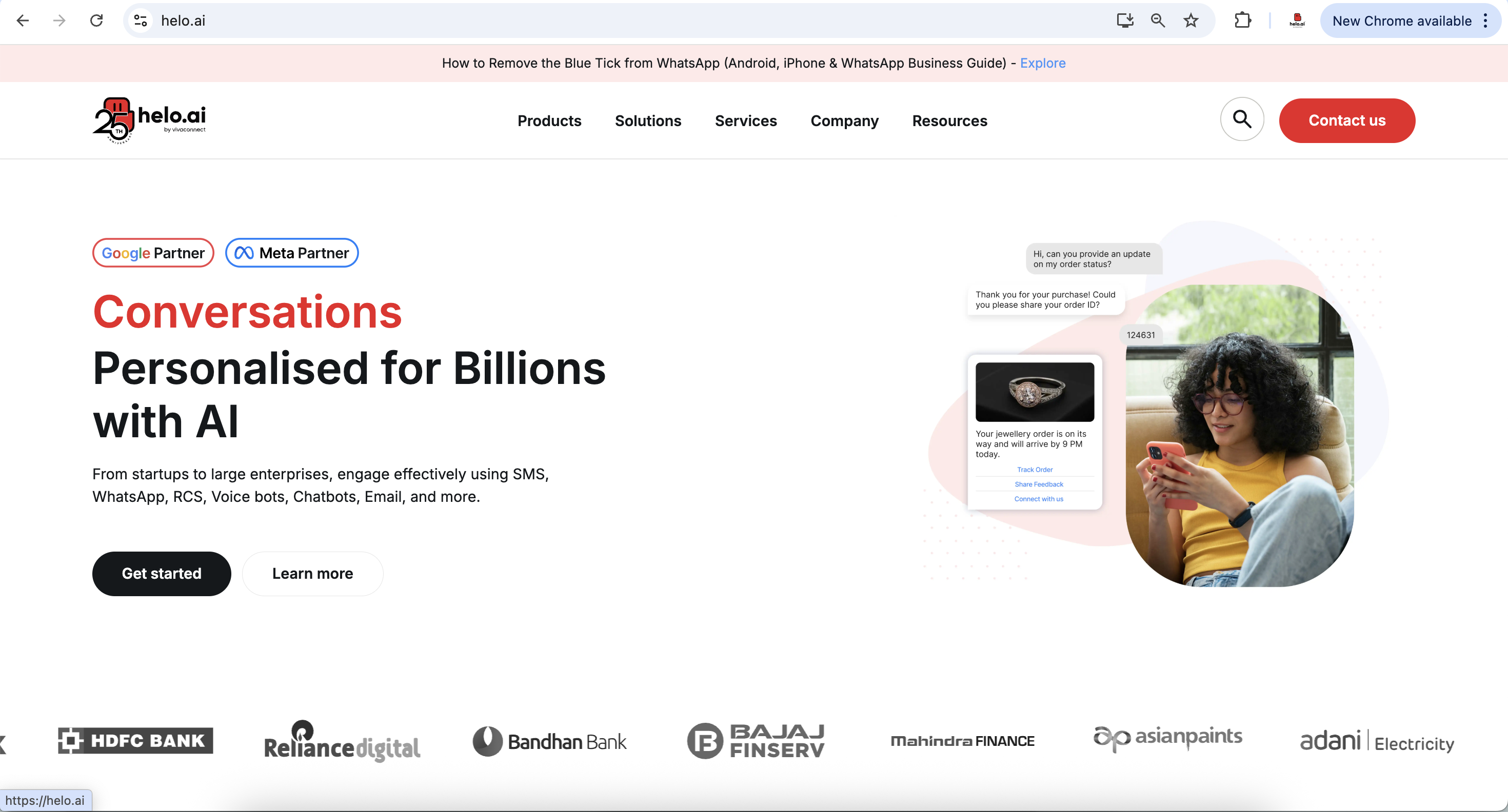
Overview: Helo.ai is an enterprise-grade communications platform built on the official WhatsApp Business API, backed by 25 years of CPaaS experience and a network powering 200M+ WhatsApp messages a month across banking, fintech, insurance, retail, and e-commerce. Where Wati is built for early-scale teams, Helo.ai is built for organisations that treat customer messaging as mission-critical infrastructure — with the compliance, uptime, and integration depth that regulated industries demand.
What you can do with it: Run large-scale broadcast and campaign management; unify WhatsApp with SMS, RCS, voice, and email in one true omnichannel stack; deploy NLP-grade chatbot automation; integrate deeply with enterprise CRM, ERP, and core systems; and operate under compliance-grade controls (DPDP, GDPR, sector-specific norms) with full audit logging.
Pros:
- Deep compliance and security posture suited to BFSI, insurance, and healthcare
- Genuine omnichannel beyond WhatsApp (SMS, RCS, voice, email)
- Proven enterprise scale, deliverability, and uptime
- Dedicated onboarding, template strategy, and human support
- Strong custom integration capability for complex backends
Cons:
- Built for mid-market and enterprise needs — more than a solo founder or hobby store requires
- Pricing is quote-based rather than instant self-serve checkout
Free trial: Demo and scoping on request.
Pricing model: Custom / quote-based.
Best for: Banks, insurers, large retailers, and any regulated or high-volume business where compliance and omnichannel can't be compromised.
2. AiSensy
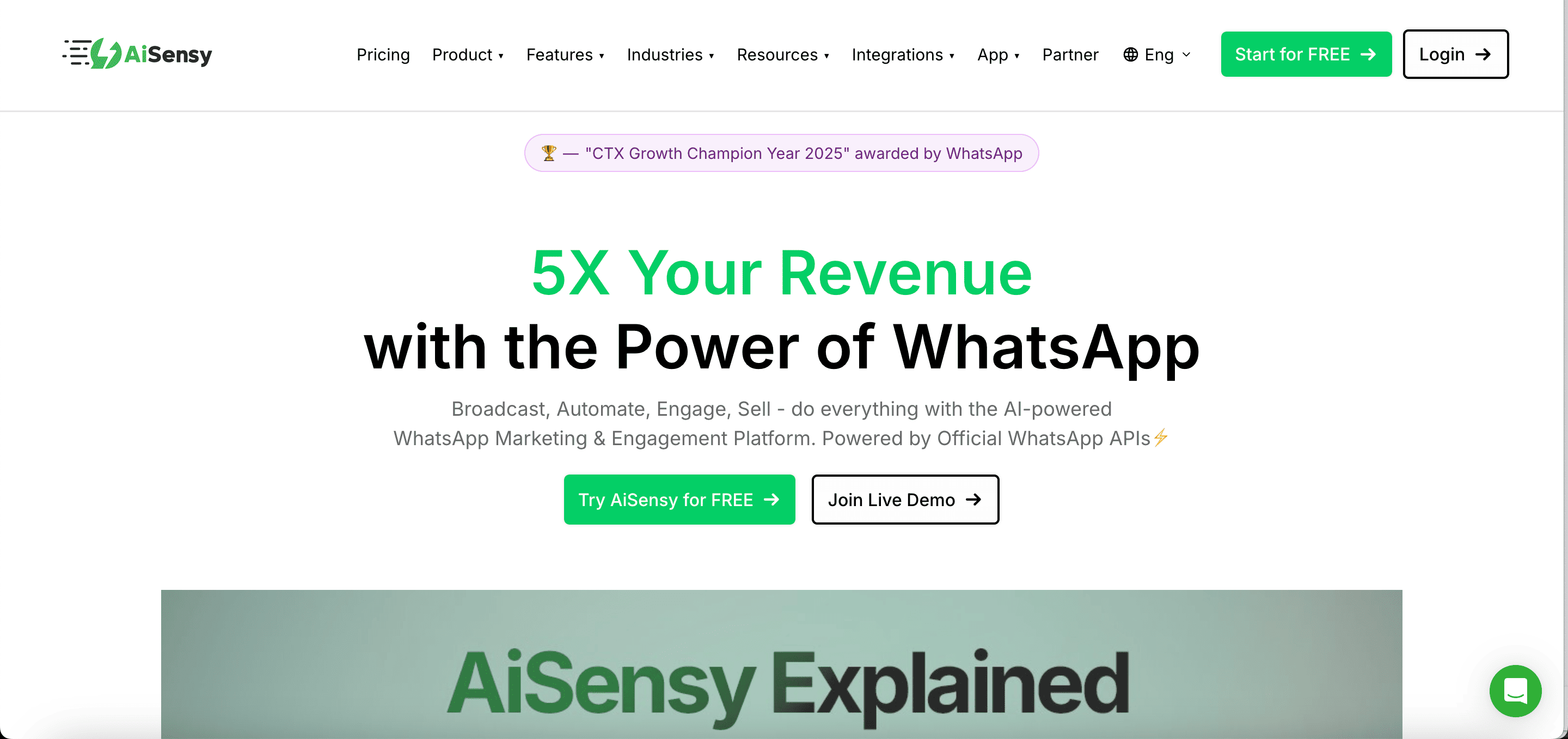
Overview: AiSensy is a no-code WhatsApp marketing platform built on the official API, widely cited as a balanced Wati alternative for small and mid-sized businesses. It's known for free API approval and green-tick assistance — directly addressing two of Wati's most-complained-about hidden costs — and for unlimited broadcasts.
What you can do with it: Send broadcasts to unlimited opted-in users; automate abandoned carts, order confirmations, and delivery notifications; run an NLP-powered AI chatbot for 24/7 support; send catalogues and collect payments in-chat; and connect natively to Shopify, WooCommerce, and other stores.
Pros:
- Free WhatsApp Business API approval and green-tick (vs. paid on some platforms)
- Unlimited broadcasts to opted-in users
- NLP-powered AI chatbot (understands natural language, unlike keyword-only bots)
- Multi-channel support (call, WhatsApp, email) and onboarding assistance
- Competitive, transparent pricing with a free trial
Cons:
- Primarily WhatsApp-focused, not full omnichannel
- Some advanced features and higher tag/attribute limits sit on upper tiers
- Geared to SMB/growth rather than complex enterprise compliance
Free trial: Yes — free plan plus a 14-day premium trial.
Pricing model: Subscription + per-message.
Best for: SMBs and growth-stage marketers wanting affordable, no-code WhatsApp marketing.
3. Interakt
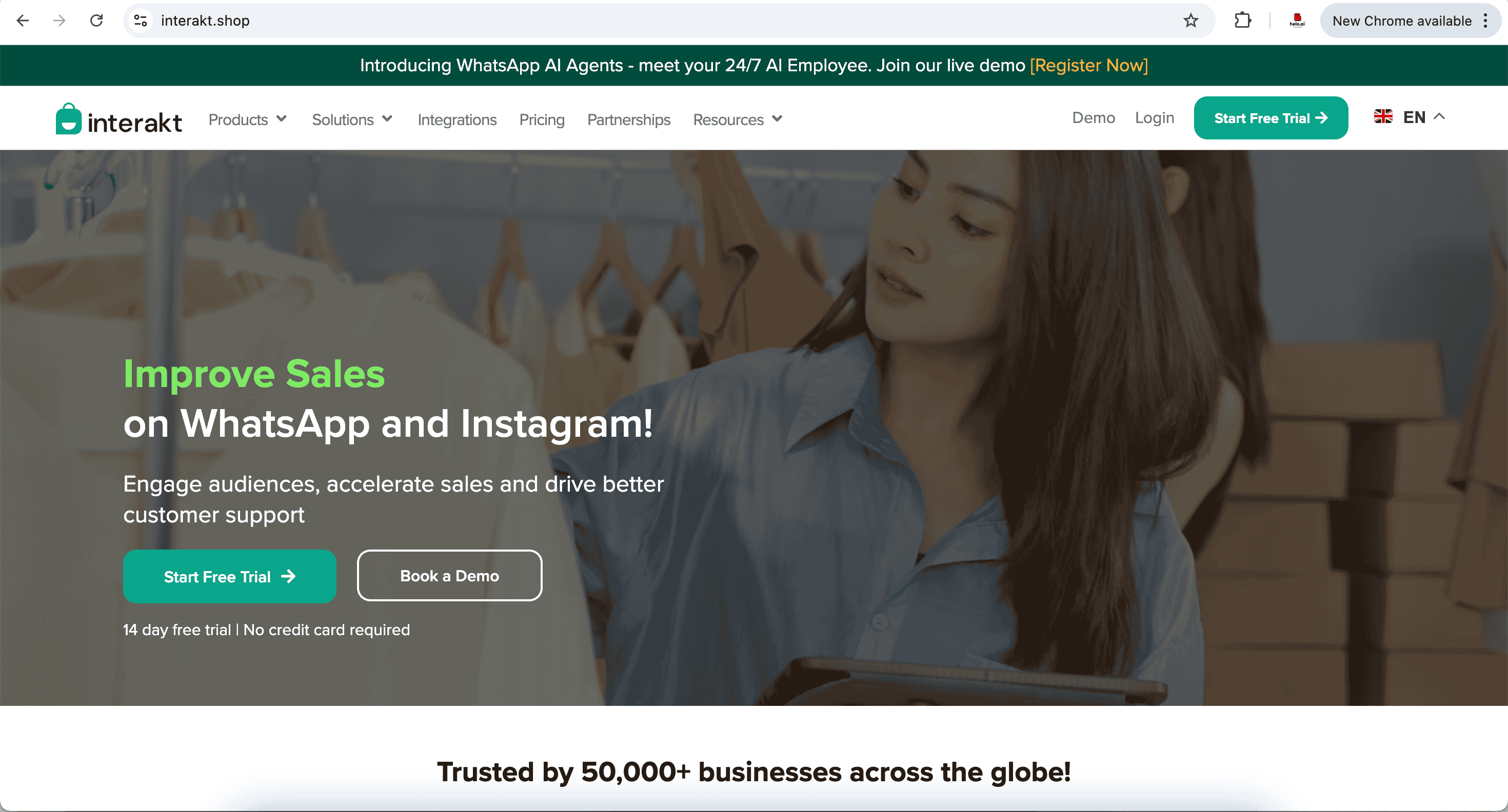
Overview: Interakt is a WhatsApp engagement suite with strong e-commerce focus and CRM-style data sync, popular with D2C brands that want structured customer data alongside their messaging, not just tags and chat history.
What you can do with it: Sync customer and order data bidirectionally; run catalog-based selling; trigger abandoned-cart and order-status flows; manage a multi-agent inbox; and get relatively quick API approval with green-tick assistance.
Pros:
- Strong e-commerce and catalog focus
- CRM-style bidirectional data sync (beyond simple tagging)
- Quick setup and API approval
- Good Shopify and store integrations
Cons:
- Automation depth can be limiting for complex, branching flows
- Dashboard can feel busy to new users
- Support is largely email-based
- Per-conversation markup applies
Free trial: Yes — 14-day trial.
Pricing model: Subscription + per-message.
Best for: D2C and e-commerce teams that need structured CRM fields, not just segmentation.
4. Zoko

Overview: Zoko is an all-in-one WhatsApp platform built tightly around Shopify commerce, bundling broadcasts, a shared inbox, and in-chat selling for online stores.
What you can do with it: Broadcast campaigns; recover abandoned carts; confirm COD orders; collect reviews; manage conversations from a mobile app; and sell directly inside WhatsApp.
Pros:
- Clean, intuitive UI
- Strong Shopify e-commerce feature set (cart recovery, COD confirmation, reviews)
- Multiple live-agent support
- Mobile app available
Cons:
- Can become expensive at higher volumes
- Integrations largely limited to Shopify
- No native chatbot connection
- Per-message markup applies
Free trial: Yes — 7-day trial, no card required.
Pricing model: Subscription + per-message (with markup).
Best for: Shopify merchants who want commerce features baked into WhatsApp.
5. Gallabox

Overview: Gallabox is a no-code, WhatsApp-focused platform on the official API, known for an easy chatbot builder and shared inbox that suit service businesses and lead-driven teams.
What you can do with it: Build no-code chatbots; run drip campaigns and bulk messaging; manage a shared team inbox; and connect to e-commerce tools like WooCommerce and Shopify.
Pros:
- Very easy no-code chatbot builder
- Solid engagement and drip-campaign features
- Shared team inbox
- Affordable entry tier
Cons:
- Analytics could be deeper
- Starter plan limits the number of agents
- Add-ons (Shopify integration, dedicated account manager) cost extra
Free trial: Yes — 14-day trial.
Pricing model: Subscription + per-message.
Best for: Service businesses and lead-gen teams wanting quick chatbot deployment.
6. Infobip

Overview: Infobip is a global CPaaS provider offering WhatsApp within a wide omnichannel suite, suited to multinationals that need many channels and broad international coverage from one vendor.
What you can do with it: Run WhatsApp, SMS, email, and voice from a single platform; deploy at global scale; and integrate with enterprise systems.
Pros:
- Excellent global reach and coverage
- Reliable enterprise-grade infrastructure
- Broad channel and integration support
- Mobile app available
Cons:
- Higher pricing
- Interface feels dated to some users
- WhatsApp is one of many channels, not a core focus
- Customer support can be a separate paid add-on; omnichannel breadth can overwhelm smaller teams
Free trial: Yes — limited conversational credits.
Pricing model: Custom / quote-based.
Best for: Global enterprises needing true multi-channel communication at scale.
7. Gupshup
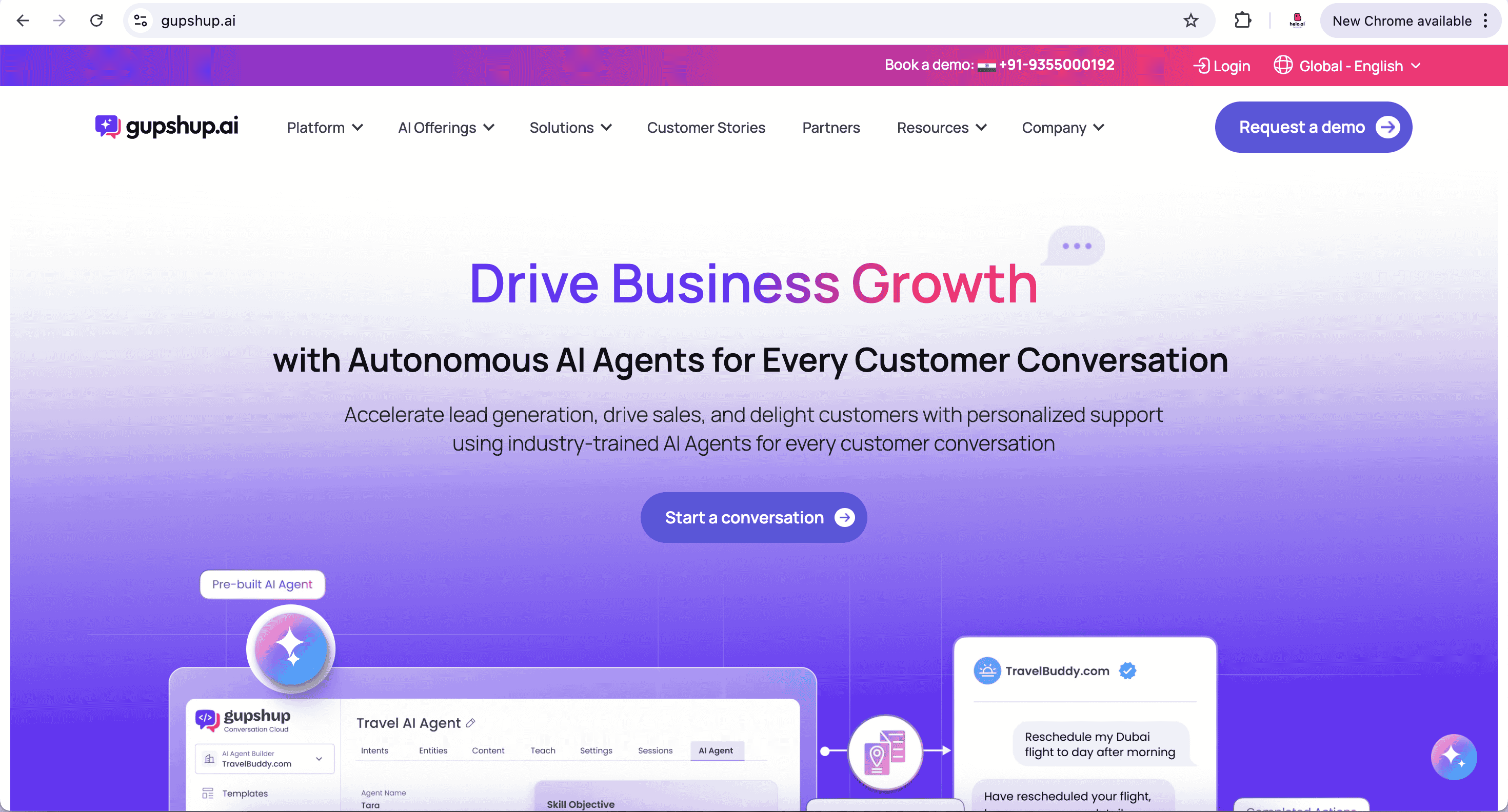
Overview: Gupshup is a large conversational-messaging platform offering robust programmable API access and very high-volume throughput across multiple channels.
What you can do with it: Build programmatically on a flexible API; deploy bots; and send across multiple channels at high deliverability and scale.
Pros:
- Handles very high message volumes reliably
- Broad API and multi-channel breadth
- Strong fit for developer-led deployments
Cons:
- More technical to set up and operate
- UI and onboarding favour developers over marketers
- Custom pricing typically requires upfront commitment
Free trial: Yes — trial credits.
Pricing model: Subscription + volume / custom.
Best for: Tech teams and high-volume senders needing programmable scale.
8. Respond.io
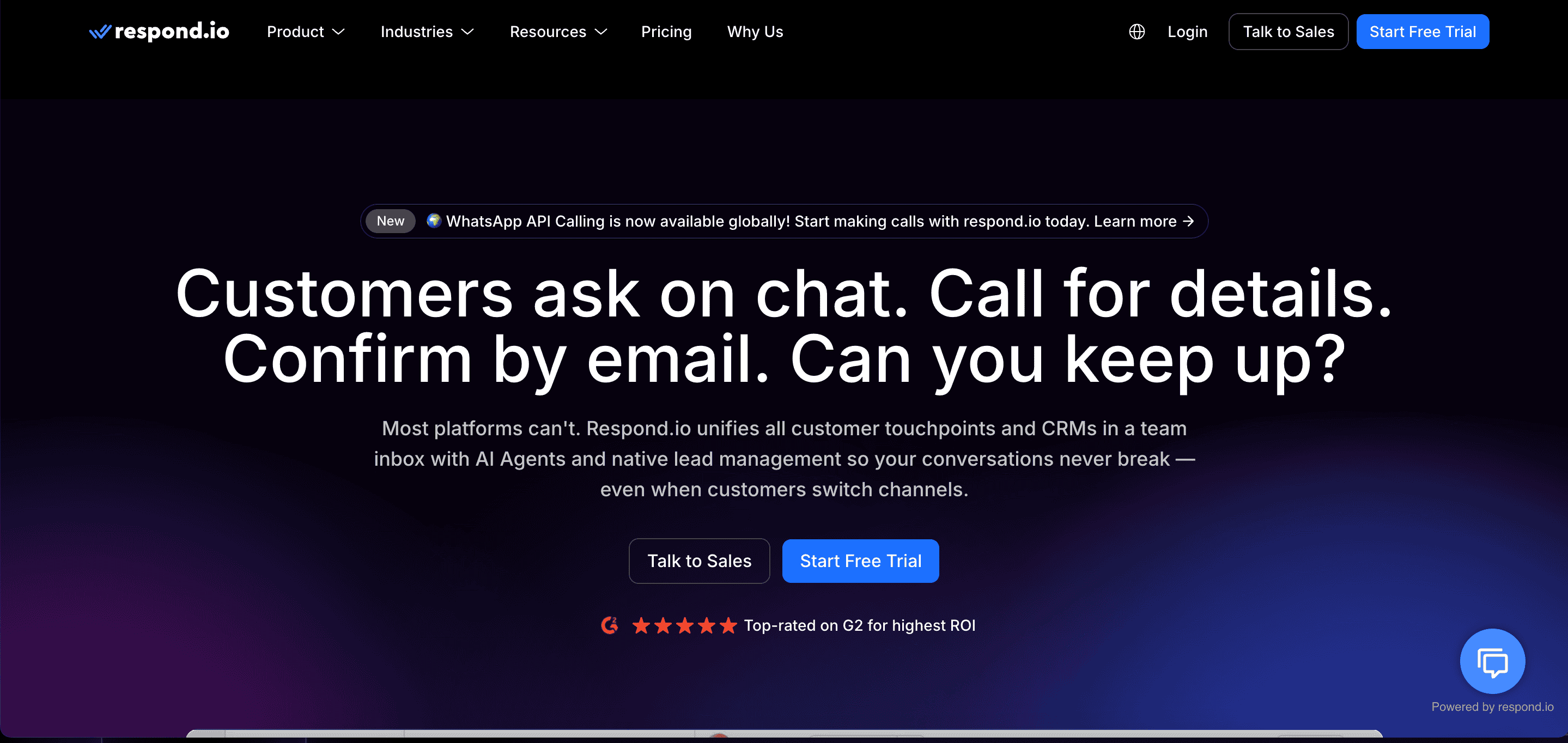
Overview: Respond.io is a centralised customer-conversation platform unifying WhatsApp, Messenger, and other channels, built for managing high message volumes across multiple teams.
What you can do with it: Run an omnichannel inbox; build automation workflows; sync with your CRM; integrate chatbots; and route conversations across multiple agents and teams.
Pros:
- Polished, easy-to-use interface
- Strong for customer service at scale
- Capable automation workflows
- Free tier for limited contacts
Cons:
- Higher pricing on growth tiers
- Support is largely email with slower response
- No automatic inactive-contact cleanup
Free trial: Yes — 7-day trial.
Pricing model: Subscription + per-message.
Best for: Multi-team support operations managing conversations across channels.
9. DelightChat

Overview: DelightChat blends omnichannel customer support with WhatsApp marketing, tailored to e-commerce stores that want both functions in one tool.
What you can do with it: Manage an omnichannel inbox (WhatsApp, Instagram, Facebook, email); automate abandoned-cart and order flows; integrate deeply with Shopify; track ROI; and build no-code chatbots.
Pros:
- Strong support + marketing combination
- Deep Shopify integration
- Built-in ROI tracking
- Responsive customer support
Cons:
- Best suited to e-commerce (less ideal for other sectors)
- Conversation-charge management can be complex
- Costs rise at high conversation volumes
- No free plan
Free trial: Yes — 14-day trial.
Pricing model: Subscription + per-message.
Best for: E-commerce teams wanting support and marketing unified.
10. Twilio
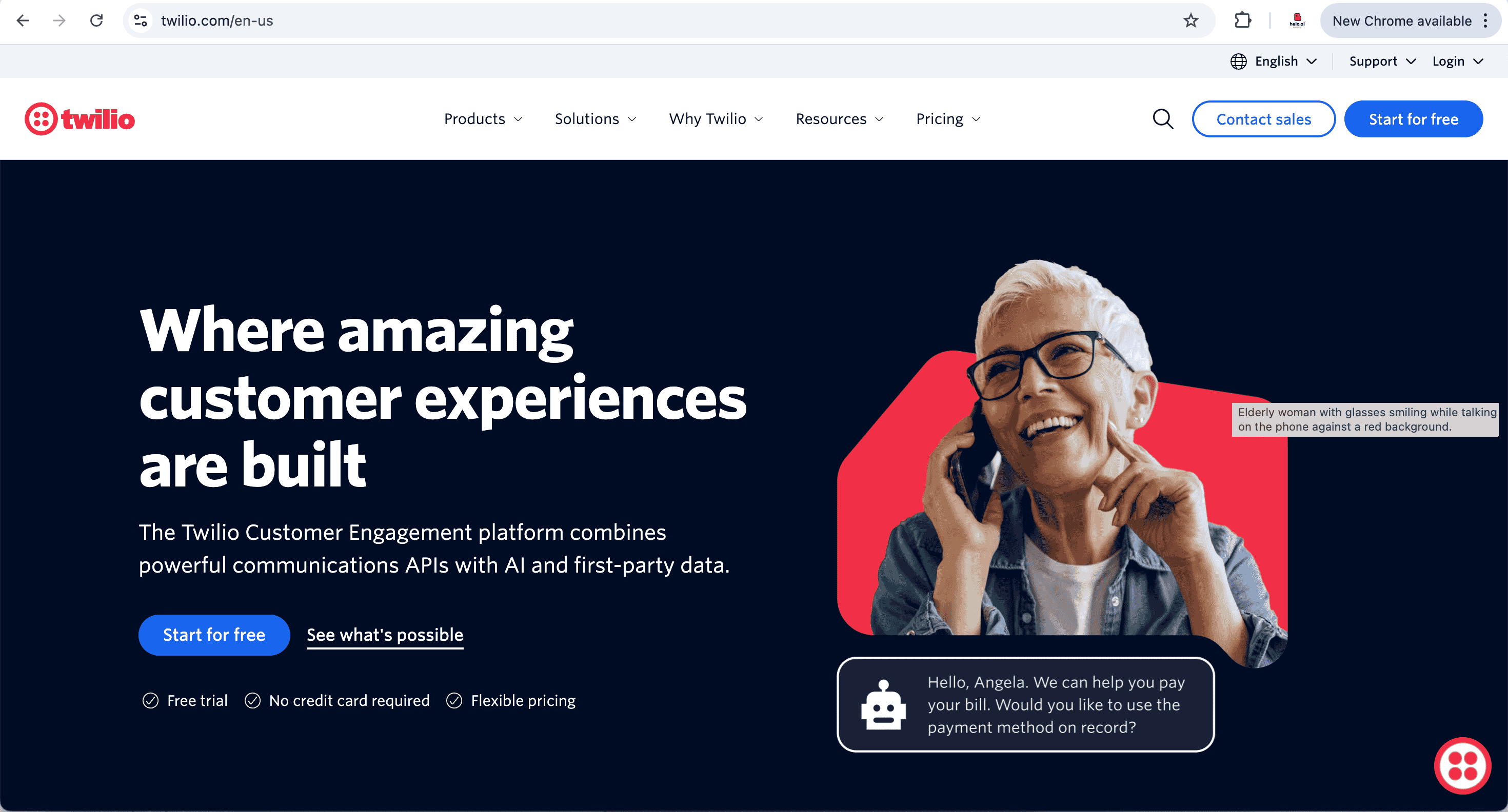
Overview: Twilio offers WhatsApp through its programmable messaging API, ideal for engineering teams building fully custom messaging experiences into their own apps and systems.
What you can do with it: Build completely custom messaging across WhatsApp, SMS, voice, video, and email using programmable APIs and strong documentation.
Pros:
- Maximum flexibility and customisation
- Reliable global infrastructure
- Excellent developer documentation
- Pay only for what you use
Cons:
- Requires significant development resources
- No ready-made marketing dashboard
- Not suitable for non-technical teams
Free trial: Yes — trial credit.
Pricing model: Pay-as-you-go + per-message.
Best for: Engineering teams building bespoke messaging workflows.
11. Brevo
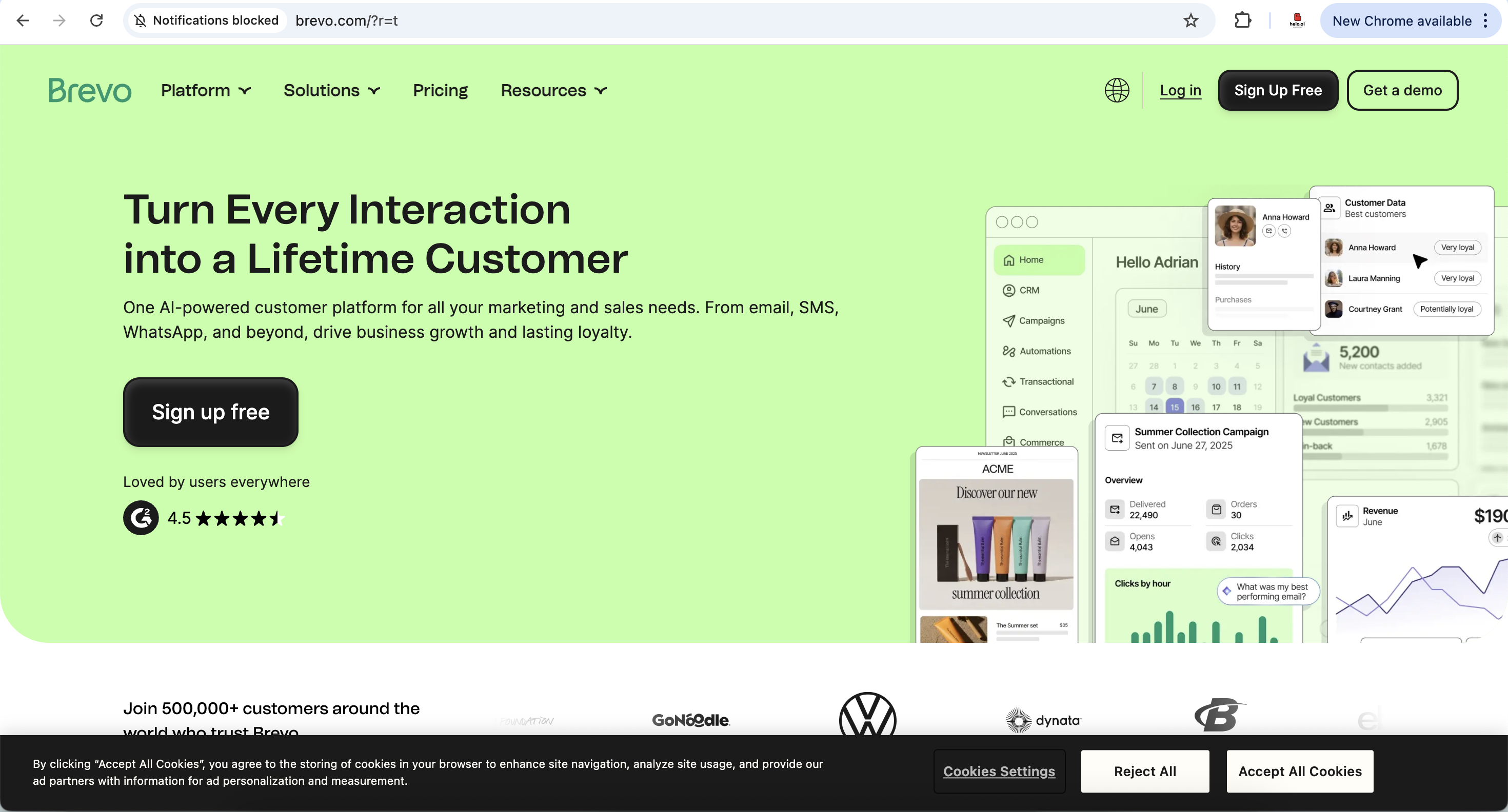
Overview: Brevo (formerly Sendinblue) is a broader marketing suite spanning email, SMS, and WhatsApp, letting teams run WhatsApp campaigns alongside other channels from one interface, with built-in CRM.
What you can do with it: Run WhatsApp campaigns next to email and SMS; manage contacts in a built-in CRM; and automate cross-channel marketing as an official Meta Business Partner.
Pros:
- Unified multi-channel marketing (email + SMS + WhatsApp)
- Great for teams already using Brevo for email
- No extra licensing/setup fees on core plans
Cons:
- WhatsApp is one module among many, so WhatsApp-specific depth is lighter
- Advanced WhatsApp automation is less mature than dedicated tools
Free trial: Yes — free tier available.
Pricing model: Subscription + per-message.
Best for: Teams wanting WhatsApp inside a broader marketing suite.
12. Twixor
Overview: Twixor is a customer-engagement platform automating interactions across WhatsApp, SMS, and web chat, with a focus on journey building and rich messaging from a single place.
What you can do with it: Build multi-step customer journeys; automate campaigns and workflows; route by intent; and deliver rich messaging with analytics, using no-code/low-code setup.
Pros:
- Strong journey/workflow builder
- Omnichannel (WhatsApp, SMS, web)
- Intent-based routing and rich message support
- Analytics and performance tracking
Cons:
- Less brand recognition than the largest players
- Enterprise positioning may exceed small-team needs
- Pricing is typically custom (less self-serve transparency)
Free trial: On request.
Pricing model: Custom / quote-based.
Best for: Teams wanting sophisticated, journey-based campaign automation.
Quick Comparison Table
# | Tool | Best For | Pricing Model | Free Trial | Omnichannel |
|---|---|---|---|---|---|
1 | Helo.ai | Enterprise & regulated | Custom / quote | On request | ✅ Full |
2 | AiSensy | Budget SMBs | Subscription + per-msg | ✅ | WhatsApp-focused |
3 | Interakt | CRM-driven D2C | Subscription + per-msg | ✅ 14-day | WhatsApp-focused |
4 | Zoko | Shopify merchants | Subscription + per-msg | ✅ 7-day | WhatsApp-focused |
5 | Gallabox | Service businesses | Subscription + per-msg | ✅ 14-day | WhatsApp-focused |
6 | Infobip | Global enterprise | Custom / quote | ✅ | ✅ Full |
7 | Gupshup | Developer-scale | Subscription / custom | ✅ | Multi-channel |
8 | Respond.io | Multi-team support | Subscription + per-msg | ✅ 7-day | Multi-channel |
9 | DelightChat | E-com support+marketing | Subscription + per-msg | ✅ 14-day | Multi-channel |
10 | Twilio | Custom dev builds | Pay-as-you-go | ✅ | Multi-channel |
11 | Brevo | Multi-channel marketing | Subscription + per-msg | ✅ | ✅ Full |
12 | Twixor | Journey automation | Custom / quote | On request | Multi-channel |
When Wati Might Still Be the Right Choice
In the spirit of an honest comparison, switching isn't always the answer. Wati may still be your best option if you're a small-to-mid team that values its specific shared-inbox workflow, if your automation needs are straightforward and well-served by its no-code builder, if you're WhatsApp-only with no near-term omnichannel plans, and if your current pricing tier works comfortably for your volume. If none of the frustrations in this guide actually apply to you, there's no urgency to move. The smartest switch is one driven by a concrete need — not by FOMO.
💬 From our team: In our experience, the businesses happiest after switching are the ones who could name exactly what they needed that their old tool couldn't do. Those who switch on a vague "maybe something's better" often churn again. Define the gap first.
How to Migrate From Wati (Step-by-Step)
If you've decided to switch, here's how to do it cleanly:
Step 1: Audit what you use — list active templates, chatbot flows, integrations, agents, and contact segments in Wati so nothing is lost.
Step 2: Choose your new platform based on your specific reason for leaving (use the comparison above).
Step 3: Migrate your WhatsApp number — your new provider initiates number migration from Wati through Meta, preserving your verified number and green tick. Coordinate timing to minimise downtime.
Step 4: Recreate templates and flows — rebuild and resubmit templates for Meta approval, and rebuild chatbot flows. Good providers assist during onboarding.
Step 5: Reconnect integrations and import contacts — re-link CRM, e-commerce, and payment tools, and import opted-in lists.
Step 6: Test, then go live — run test campaigns and bot flows, then monitor delivery and quality rating through the first week. For setup foundations, see our WhatsApp API integration guide.
Which Wati Alternative Is Right for You?
Your Reason for Leaving Wati | Recommended Picks |
|---|---|
Need enterprise scale + compliance (BFSI, healthcare) | Helo.ai, Infobip |
Want lower cost / no hidden approval or green-tick fees | AiSensy, Gallabox |
D2C / Shopify e-commerce | Interakt, Zoko, DelightChat |
Need true omnichannel (SMS+RCS+voice+email) | Helo.ai, Infobip, Brevo |
Developer building custom workflows | Twilio, Gupshup |
Multi-team customer support at scale | Respond.io |
Journey-based campaign automation | Helo.ai , Twixor |
For deeper comparisons, see our guides to the best WhatsApp API provider and best WhatsApp marketing software.
Conclusion
The best Wati alternative isn't universal — it's the one that solves your specific reason for leaving. If hidden costs are the issue, prioritise transparent-pricing platforms. If you're outgrowing automation or need omnichannel and compliance at scale, enterprise-grade platforms like Helo.ai are built for exactly that. And if none of Wati's limitations actually affect you, staying put is a perfectly valid choice.
If you're a growing or enterprise business — especially in a regulated or high-volume environment where compliance and deliverability can't be compromised — Helo.ai powers 200M+ WhatsApp messages a month and can map the right migration path for you. Talk to our team and we'll scope your switch in 30 minutes.
Frequently Asked Questions (FAQs)
1. What is the best Wati alternative in 2026?
The best Wati alternative in 2026 depends on your needs. For enterprises and regulated industries, Helo.ai leads on compliance and omnichannel scale; for budget-conscious SMBs, AiSensy offers transparent pricing and free approvals; for D2C and Shopify brands, Interakt and Zoko are strong. The right choice is driven by your specific reason for switching — cost, support, automation, or omnichannel.
2. Why do businesses switch from Wati?
Businesses switch from Wati most commonly due to rising per-agent or per-conversation costs, charges for API approval or green-tick verification, slower support response times, automation that's too basic for complex needs, and a desire for omnichannel capabilities beyond WhatsApp. As companies scale, their needs often outgrow Wati's foundational feature set.
3. Is there a free Wati alternative?
Several Wati alternatives offer free tiers or trials. AiSensy provides a free plan, Respond.io offers a free tier for limited contacts, and most platforms including Interakt, Gallabox, and DelightChat offer 7-14 day free trials. Note that all official WhatsApp Business API tools still incur Meta's per-message charges regardless of the platform's own free tier.
4. What is the best Wati alternative for Shopify and e-commerce?
For Shopify and e-commerce, the strongest Wati alternatives are Interakt (catalog and CRM-style sync), Zoko (Shopify-native commerce with cart recovery and COD confirmation), and DelightChat (combined support and marketing with deep Shopify integration). The best fit depends on whether you prioritise marketing, support, or in-chat selling.
5. What is the best Wati alternative for enterprise or regulated industries?
For enterprise and regulated industries like banking, insurance, and healthcare, Helo.ai and Infobip are the strongest Wati alternatives. They offer compliance-grade controls (DPDP, GDPR, sector-specific norms), audit logs, omnichannel reach, and enterprise integrations that foundational SMB tools typically lack.
6. Can I keep my WhatsApp number when switching from Wati?
Yes. You can migrate your existing verified WhatsApp Business number from Wati to a new provider through Meta's number-migration process. Your new provider initiates the migration, preserving your number. You'll need to recreate message templates and chatbot flows on the new platform, but your verified number and green tick carry over.
7. Is Wati or its alternatives better for small businesses?
Wati works well for small businesses with straightforward WhatsApp needs and a comfortable pricing tier. However, budget-conscious small businesses often find alternatives like AiSensy or Gallabox offer better value through transparent pricing, free API approvals, and unlimited broadcasts. The better choice depends on whether cost, support, or automation is your priority.

.png&w=828&q=75)