

Quick Answer
The best SMS API for startups isn't the cheapest one on a pricing page. Look for four things: delivery reports you can trust, real help with DLT registration, pay-as-you-go pricing with no hidden charges, and an OTP fallback channel. Get these right before launch and you won't need to migrate during your fastest growth.
Most startups choose an SMS provider the way they choose a domain name: quickly, cheaply, and without much thought about the future. It works fine until the first real traffic spike. Then OTPs start arriving late, delivery rates drop without explanation, and your engineering team loses a sprint debugging someone else's infrastructure.
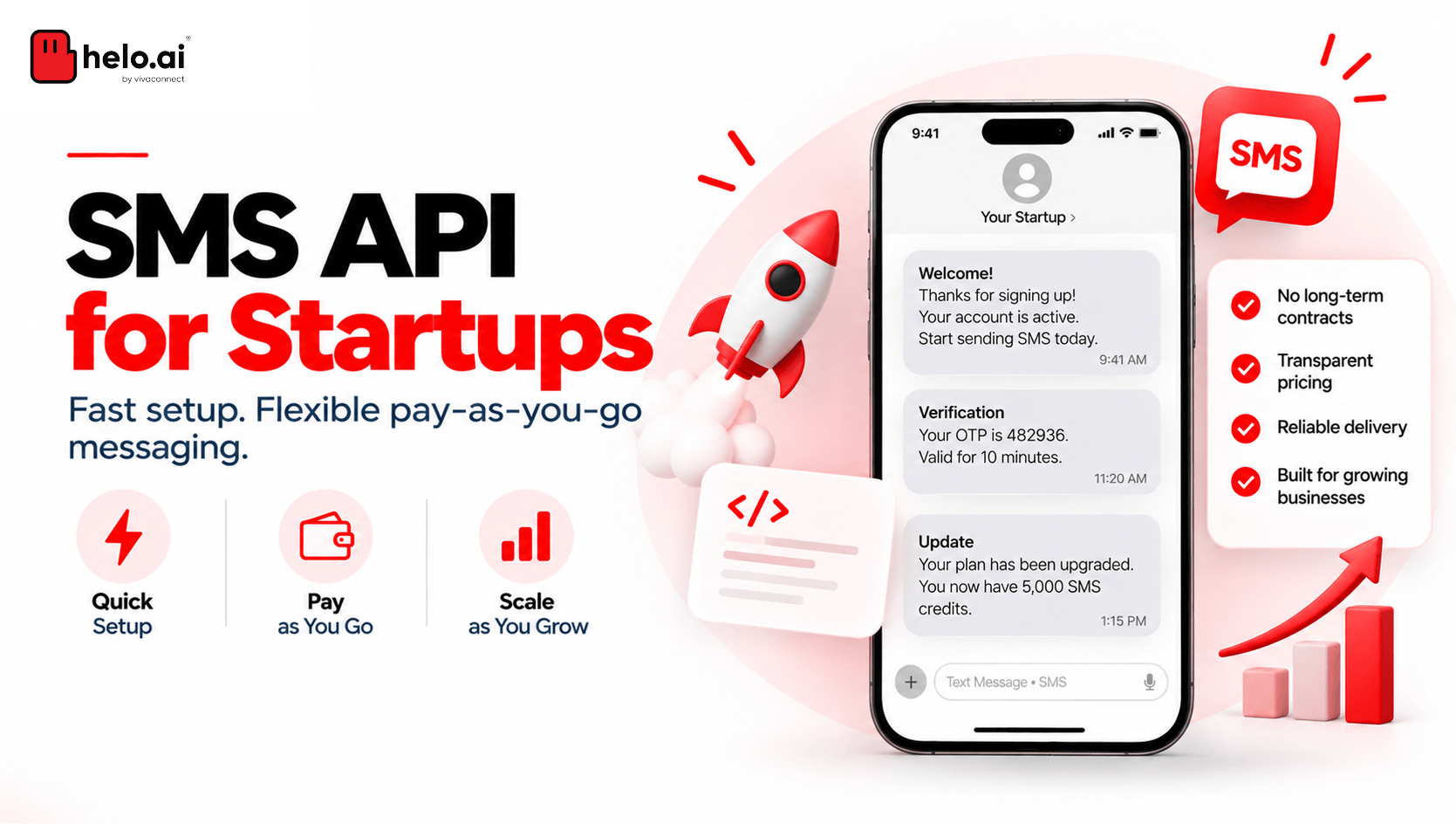
Choosing an SMS API for startups is really a bet on the future. You're not buying for today's 500 signups. You're buying for the product you'll have in eighteen months. Here's how to make that bet well.
Why Picking an SMS Provider Is Harder for Startups
Enterprises have procurement teams, legal review and months to evaluate vendors. You have a launch date and a founder asking why OTPs aren't working yet.
That time pressure pushes startups toward the provider with the fastest signup, not the best fit. The trouble is that SMS problems show up late. A weak provider looks fine at 1,000 messages a month. Its limits appear at 10 lakh, which is exactly when switching is most painful. Think of it like pouring a foundation: mistakes are cheap to fix before the building goes up and very expensive afterwards.
Choosing an SMS API for Startups in India: The Scorecard
Forget feature checklists; nearly every provider claims the same features. Score providers on the criteria that actually cause problems later:
Criterion | What Good Looks Like | Red Flag |
|---|---|---|
Delivery visibility | Webhook DLRs with operator error codes | Only "sent" or "submitted" statuses |
DLT support | Hands-on help with PE, header and template approval | "Just send us your templates" |
Pricing | Clear per-SMS INR rates, GST shown upfront | Credits that expire, unclear route pricing |
Commitment | Pay-as-you-go to start, volume tiers later | Annual lock-in from day one |
Engineering | Idempotency support, clear TPS limits, sandbox | Undocumented rate limits |
Channels | SMS plus WhatsApp and voice for fallback | SMS only |
Support | Named contacts, runbooks, fast escalation | Ticket queues with multi-day responses |
Delivery Visibility Comes First
If you only take one thing from this article, make it this: "accepted" doesn't mean "delivered." An HTTP 200 only tells you the provider received your request. What matters is the final delivery report from the operator, pushed to your webhook with an error code you can act on.
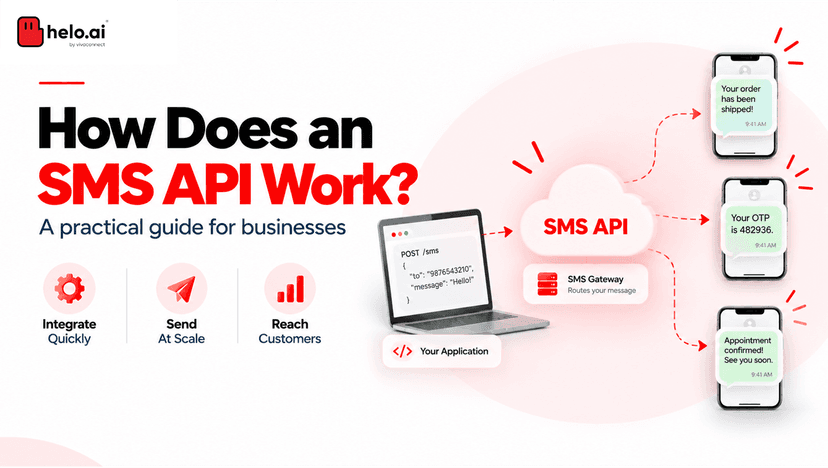
Providers that show only submission statuses leave you guessing when things go wrong. If you want to understand where messages actually fail, our guide on how an SMS API works walks through the full delivery loop.
DLT Support That Actually Helps
Every Indian startup sending commercial SMS must register its business entity, sender ID and every message template on a DLT platform. It isn't difficult, but it's full of details: template wording, variable limits, category selection. A good provider reviews your templates before you submit them, so you don't lose a week to a rejection.
A Pay-As-You-Go SMS API with Transparent Pricing
Early on, your volume is unpredictable. A pay-as-you-go SMS API lets you pay for what you send and move to volume tiers once your usage pattern is clear. Check the details too: Is GST included? Do credits expire? Are OTP routes priced differently from promotional ones?
Engineering Basics: Idempotency, TPS and Retries
Ask every vendor three questions:
- Do you support idempotency keys? Without them, an automatic retry after a network timeout can send the same OTP twice and charge you twice.
- What's my TPS limit, and can I burst? A marketing blast shouldn't delay login OTPs.
- How do your webhooks handle failures? Do they retry, and in what order do events arrive?
A vague answer to any of these is a warning sign.
What Your SMS Bill Looks Like at Each Growth Stage
Founders usually model SMS costs as a single line item. It's better to model it the way your volume will actually grow. Here's an illustrative example using typical transactional rates:
Stage | Monthly SMS | Rate (illustrative) | Cost + 18% GST |
|---|---|---|---|
MVP / beta | 5,000 | ₹0.20 | ₹1,180 |
Early traction | 50,000 | ₹0.18 | ₹10,620 |
Growth | 5,00,000 | ₹0.15 | ₹88,500 |
Scale | 50,00,000 | ₹0.13 | ₹7,67,000 |
Two factors quietly push these numbers up:
- Retries. If 20% of users request a second OTP, your OTP volume is effectively 1.2 times higher.
- Unicode. Regional-language messages hold only 70 characters per segment, so a longer Hindi OTP message can cost double.
For the full breakdown of routes, segments and hidden charges, see our guide to SMS API pricing per message.
DLT Registration for Startups: Your Pre-Launch Timeline
This is where most launches slip. Plan DLT like any other dependency on your critical path:
When | Task |
|---|---|
3–4 weeks before launch | Register as a Principal Entity on an operator DLT portal |
3 weeks before | Register your sender ID (header) |
2–3 weeks before | Draft and submit every template: OTP, alerts, and promotional if needed |
1–2 weeks before | Test in sandbox; check that template text matches exactly |
Launch week | Go live, monitor delivery reports hourly, fix rejections quickly |
Approval times vary by operator, so treat the buffer as essential, not optional. If you'd rather not handle this in-house, DLT management services can take it off your team's plate.
Beware of "Skip DLT" Shortcuts
Some providers offer to let you send immediately under their own registration. It's tempting when you're racing a deadline. But under TRAI's framework, the business sending commercial messages is expected to register its own entity, header and templates, and compliance responsibility doesn't disappear because someone else's name is on the registration. Your brand also won't appear as the sender. Do it properly once, and it's done.
Don't Build on SMS Alone: Plan Your OTP Fallback
A single-channel OTP flow has a single point of failure. More startups now send OTPs on WhatsApp first and fall back to SMS automatically, combining WhatsApp's better user experience with SMS's near-universal reach.
The mix that works depends on your users. Our comparison of WhatsApp vs SMS for OTP helps you decide. What matters now is choosing a provider that can support both channels through one integration, so adding a fallback later doesn't mean integrating a second vendor.
5 Mistakes That Make Startups Switch Providers Within a Year
- Choosing on price alone. The cheapest route often costs the most in lost signups.
- Measuring API success instead of delivery success. Your dashboard may look healthy while users wait for codes that never arrive.
- Treating DLT as a launch-week task. Template rejections don't care about your launch date.
- Sending OTPs and campaigns on the same pipe. One big campaign can delay every login for an hour.
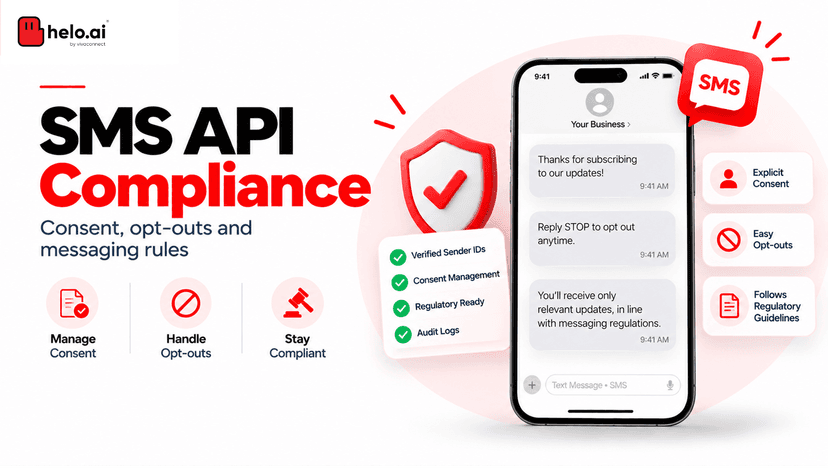
- Ignoring compliance until something goes wrong. Complaints and suspensions hit your OTPs too. Our SMS API compliance guide covers the 2025 rule changes.
Launch Faster with helo.ai
helo.ai combines direct operator routes, hands-on DLT onboarding and real-time delivery reporting, so your team can ship features instead of debugging SMS. For authentication, helo.ai Verify adds intelligent routing across WhatsApp and SMS, with 97% of OTPs delivered within 10 seconds. Explore the helo.ai SMS API.
Book a demo to set up messaging that scales with your startup.
Conclusion
The right SMS API for startups is one you won't have to replace once you start growing. Prioritise delivery visibility, real DLT support, transparent pay-as-you-go pricing and a fallback channel, and model your costs across growth stages, not just for this month.
Choose on these criteria and SMS becomes infrastructure you rarely have to think about. Choose on price alone and you'll likely be migrating in the middle of your growth.
FAQs
How to choose an SMS API as an early-stage startup?
Score providers on delivery reports, DLT support, pricing transparency, idempotency and channel coverage, not on feature lists. Test real OTP delivery on all four major Indian operators before you commit.
Is there an SMS API free trial for testing?
Most providers offer test credits or a sandbox. Use the trial to test actual delivery speed and DLR accuracy, not just whether the API responds.
Do providers offer an SMS API startup plan?
Some offer startup credits, discounted rates or onboarding support for early-stage companies. Ask directly, especially if you can share projected volumes.
What's the best OTP SMS API for startups?
One with priority transactional routes, delivery reports from the operator, idempotency support and a built-in WhatsApp or voice fallback. Measure how quickly OTPs arrive, not just the price per message.
When should a startup move from pay-as-you-go to committed pricing?
Once your monthly volume has been stable for two to three months. By then you can forecast accurately and negotiate volume tiers without overpaying for capacity you don't use.