

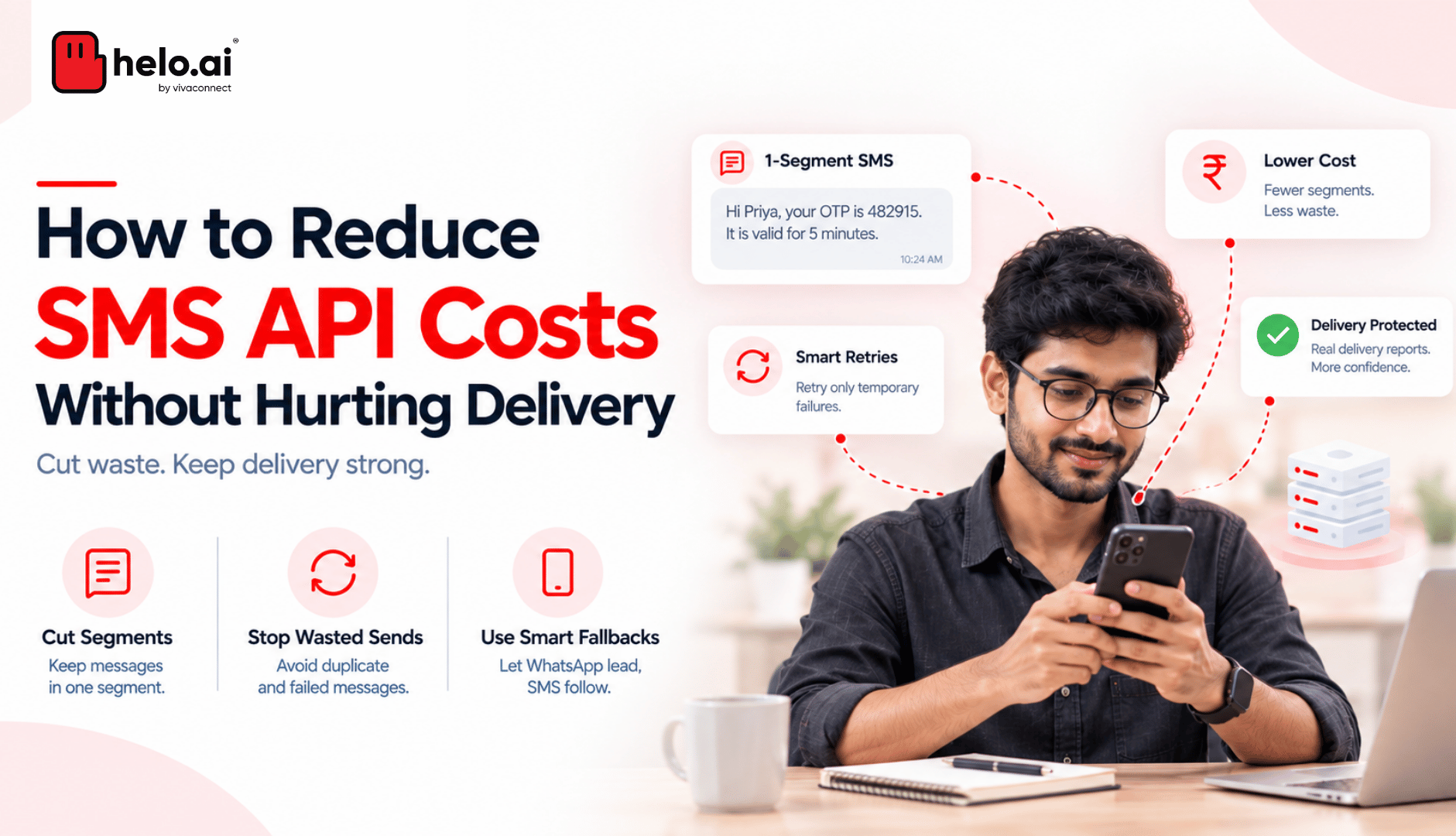


SMS bills rarely grow because of one big decision. They grow through small leaks: a template that tips into a second segment, retries that resend delivered messages, bots requesting OTPs. Teams that want to reduce SMS API costs usually find more savings in those leaks than in negotiating the per-message rate. This guide covers where the money goes and how to recover it.
How to reduce SMS API costs: 8 levers
- Keep every message within one segment.
- Avoid Unicode where the language allows it, and budget for it where it doesn't.
- Shorten links and trim template text.
- Validate numbers before the first send.
- Suppress numbers that return permanent failures.
- Retry only temporary failures, using idempotency keys, and cap OTP resends.
- Block SMS pumping with rate limits and country allow-lists.
- Send OTPs over WhatsApp first where users have it, with SMS as the fallback.
Where SMS pricing actually goes
SMS pricing has four parts: the per-segment rate, fixed fees, verification fees, and waste. Most teams watch only the first.
Cost component | India | United States |
|---|---|---|
Per-message rate | Transactional SMS commonly quoted at ₹0.15–0.25 | Provider rate plus carrier surcharges of about $0.0035–0.005 |
Fixed fees | DLT entity and header registration, ₹5,900 each | 10DLC brand and campaign registration fees |
Verification fees | Varies by provider | Some verify APIs charge $0.05 per successful verification |
Waste | Failed sends, duplicates, fraud, extra segments | Same |
A useful audit metric is cost per successful outcome, such as cost per verified login, not cost per message sent. It captures every leak in one number. For current Indian rates, see our guide to SMS API pricing in India.
Cut the cost of each message
Keep SMS segments to one
SMS segments work like postage by weight: cross the threshold, and the price jumps. A standard GSM-7 message fits 160 characters in one segment. Add a single emoji or special character, and the whole message switches to Unicode, which fits only 70.
Longer messages split into multiple SMS segments, each billed separately. Regional-language templates in India use Unicode by default, so budget for them per segment and keep them tight.
Design templates and links for length
Every character in a template is paid for on every send. Remove greetings that add nothing, use short brand names, and move details behind a link. A long tracking URL can push a message into a second segment by itself. A URL shortener for SMS keeps links compact and adds click tracking.
In India, keep DLT template variables tight, since longer variable values can split messages unexpectedly.
Stop paying for waste
Suppress numbers that will never deliver
Numbers that return permanent failures, such as invalid or deactivated numbers, should leave the send list automatically. Delivery reports provide the signal. Validating numbers at signup catches landlines and malformed entries before the first charge. If validation runs through a third party, check its data-processing terms under India's DPDP Act.
Retry and resend with limits
Retries should target only temporary failures, such as timeouts or congestion. An idempotency key stops a retried request from sending a second message. For OTPs, cap resends per number per hour. Uncapped resend buttons invite both frustrated taps and SMS pumping, where bots trigger OTPs to premium-rate numbers.
Shift the channel mix
WhatsApp OTP first, SMS as fallback
WhatsApp OTP is the biggest single lever in India. Since July 1, 2025, Meta charges per delivered template message. In India, authentication messages cost about ₹0.115 each at Meta's rate, before any provider markup.
A WhatsApp OTP also shows read receipts, which makes failures visible. SMS stays as the fallback for users without WhatsApp. Our comparison of WhatsApp vs SMS for OTP covers the trade-offs. For repeat logins, passkeys reduce OTP volume further.
Why the cheapest route often costs more
Low-cost "grey" routes and SIM-based gateways can look cheaper per message. Some send from ordinary SIM cards so carriers treat traffic as personal messages, avoiding business-messaging rules. These routes often return unreliable delivery reports, get blocked, and trigger retries. In India, they also bypass DLT, which creates compliance risk. Measure cost per successful delivery, not per send.
Tracking, data, and ownership
Split SMS spend by use case: OTP, transactional alerts, and campaigns. Track segments per message, failure rates, and cost per successful outcome weekly. Give each use case an owner, since savings stall when nobody owns the bill.
Cost reports contain phone numbers and message metadata. Restrict access by role and mask numbers in exports. Reconcile provider invoices against internal send logs, since legacy billing and ERP systems often count messages rather than segments.
Conclusion
The fastest way to reduce SMS API costs is to fix segment length and waste before renegotiating rates. Keep messages to one segment, stop paying for numbers that never deliver, and cap retries. In India, move OTPs to WhatsApp first with SMS as the fallback. Helo.ai's SMS API includes delivery reports, fallback routing, and link shortening to support each of these steps.
Frequently asked questions
Is WhatsApp OTP cheaper than SMS OTP in India?
Usually, yes. Meta's authentication rate in India is about ₹0.115 per delivered message, while transactional SMS is commonly quoted at ₹0.15–0.25. Provider markups vary, so compare total cost per verified user.
How much does DLT registration cost in India?
Principal Entity registration typically costs ₹5,900 including GST on an operator's DLT portal. Each sender header costs another ₹5,900. Template registration is free, but every template needs approval before use.
Why does one SMS count as two messages?
The message exceeded one segment. GSM-7 messages fit 160 characters. Any emoji or special character switches the message to Unicode, which fits 70 characters per segment.
Does phone number validation reduce SMS costs?
Yes, when lists contain invalid, landline, or outdated numbers. Validation stops charges for sends that can never deliver. Clean, recently verified lists gain less from it.
Is a verify API cheaper than a raw SMS API?
Not always. Some verify APIs charge a fee per successful verification on top of message costs. They can still save money through built-in fraud controls, fallback, and fewer failed verifications.


.jpeg&w=96&q=75)

.png&w=828&q=75)