


What Is an Omnichannel Messaging Solution?
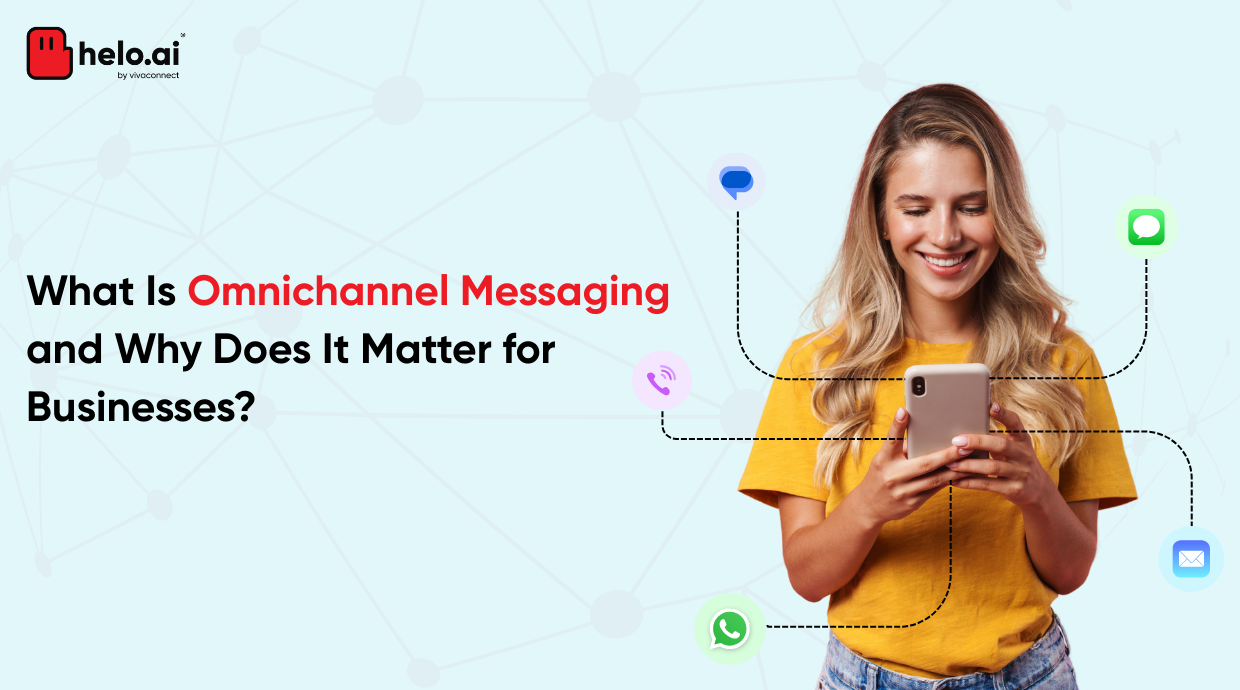
Have you had to explain your issue many times to different people in customer service? An omnichannel messaging solution stops that from happening. This service lets your customer communication from different messaging channels, like SMS, email, and social media, come together on one unified platform.
By bringing all those messages into one place, your teams can see and reply to all conversations easily. This makes the whole experience feel smooth and connected for the customer.
Your business does not have to handle many inboxes for every channel. You can use a unified platform to watch the full customer journey. With this, if someone begins on web chat and then sends an email, your agent can see it all. The team knows the full story.
This way of talking helps a lot with customer satisfaction. It also makes your brand look good. Every exchange is smooth and fast, which helps what people think of your business.
What Exactly Is Omnichannel Messaging?
At its core, omnichannel messaging is a way of making all your communication channels work as one. With this strategy, your brand offers consistent customer support that feels natural each time someone reaches out. You do not have to jump between different platforms. Instead, it lets you keep a single, smooth conversation going with your customer.
This way of working uses customer data that is shared at every step. It helps to make sure you and your team have what you need, no matter the channel the customer picks to contact you. So, your team gets all the info to give help that fits what the customer needs. This helps to give a better and smoother feel for everyone involved.
Key Principles of Omnichannel Communication
To give a good customer experience with omnichannel communication, you should follow some simple rules. Your main goal is a smooth customer journey. Every part needs to feel easy and linked together. Always put the customer's needs and likes at the center of your plan.
This makes them feel comfortable wherever they talk to you. It is very important to know what the customer wants. Make it simple for people to talk to your brand in the way that suits them most. You need to join different ways of talking so talks can move easily from one place to another.
Do you know which of these ways your customers like best? The main rules for this are as follows: Consistency means keeping the same tone on every channel. Integration means linking all ways of talking and letting them share data with each other. Customer-centricity means focusing on what customers want and making their time feel easy and smooth.
Omnichannel vs. Multichannel: The Key Difference in Communication
It’s easy for people to mix up omnichannel communication with multichannel messaging, but the two are not the same. A multichannel approach uses different communication channels to talk to customers. These channels work alone and do not always share information. For example, your social media team can talk to a customer, but they may not know what your support team is saying to that same customer by email.
Omnichannel, on the other hand, brings all these channels together. It helps make the customer journey feel like one simple path. The main aim is not just on the product, but on the customer and what they need. This way, the customer will get a smooth experience no matter what. The way everything is linked, the context of each conversation stays the same. Because of this, customer engagement gets better, no matter how the customer wants to get in touch.
Here’s a simple breakdown of the differences:
Feature | Multichannel Messaging | Omnichannel Communication |
Focus | This is product-centric, and each channel works by itself. | This is customer-centric, and it gives a unified experience. |
Integration | Channels stay separate and they do not share data. | All channels are connected into a single, unified platform. |
Customer Journey | The customer journey is split up, so people may need to say the same thing more than once. | The journey is smooth, with the conversation history kept for the customer across every channel. |
Omnichannel vs. Multichannel: Choose the Right Strategy
AI-powered omnichannel messaging
AI-powered omnichannel messaging is redefining how businesses communicate across platforms. By integrating artificial intelligence, companies can streamline conversations, deliver personalized experiences, and ensure consistent engagement across every channel.
- Data-Driven Decisions: With artificial intelligence, you can analyze a lot of customer data to make informed choices based on insights gathered.
- Channel Optimization: AI helps identify which channels your customers use the most and highlights areas for improvement, enabling you to develop better outreach plans.
- Personalized Experience: One big advantage of AI is its ability to provide a highly personalized experience. AI tools analyze customer behavior, such as purchases and online browsing, to suggest products and tailor messages that align with individual preferences.
- Market Necessity: This level of personalization is no longer optional; it is essential for thriving in today’s competitive market.
- Efficiency in Operations: AI excels at managing repetitive tasks. Generative AI tools can support your agents by supplying real-time message templates and addressing common customer queries, as well as suggesting responses for the team.
- Focus on Complex Issues: By automating routine tasks, your team is freed up to tackle more complex issues, which enhances overall efficiency and improves the customer experience.
Are you making the most of your customer data?
How Omnichannel Messaging Works
Now that we know what the idea is, let's see how it works. Omnichannel communication connects all your messaging channels into one central place. The omnichannel communication platform brings together conversations from social media, email, SMS, and other messaging channels. This gives your support team one simple view. Your customer support team can see and understand the customer journey right away.
This means that every chat or message, no matter where it begins, is all part of one, ongoing thread. In this way, your agents get to see everything the customer has said before. This helps them give better support because they know what happened in past conversations. The way the info moves easily is what makes the whole thing work so well. Next, we will look at how you can link channels together and see how the customer journey goes.
Messaging Apps for Business
A good omnichannel strategy depends on how well you connect the different customer communication channels you use. This includes social media, live chat, RCS and modern messaging apps for business like WhatsApp and Facebook Messenger.
This setup lets your team talk to people from many places using just one screen. It helps make their work smooth and stops them from missing messages. When you link all your chat and message channels, your customers get the same feel and help every time. No matter how they reach you, the way you talk with them stays the same. Are you making it easy for people to reach out and talk to your team?
To get this done, you should think about using a mix of channels. This can include:
- Email and SMS help give people direct and trusted updates.
- Live chat and web chat are good for help that you get right away.
- Social media sites like Facebook and Instagram help you talk to more people.
- Messaging apps like WhatsApp let you have a direct and personal chat.
Customer Journey Mapping Across Platforms
To enhance customer experience, map the entire customer journey across all platforms. An omnichannel approach gathers data from every messaging channel, giving you a complete view of how customers interact with your brand.
Centralizing all communications lets you track the journey in real time, spot pain points, and ensure smooth transitions between channels. Giving agents access to previous conversations streamlines support. Use this data to tailor your services, proactively resolve issues, and make customers feel valued and understood.
What Are the 4 C’s of Omnichannel?
To create a strong omnichannel communication plan, you can use a framework with four main ideas, often called the "4 C's." These help you keep your focus on what is important. The goal is to give every customer a personalized experience that matches their preferences. This also helps you stand out and get a competitive advantage in the market.
These pillars help you use customer data and different channels so you can give the right message at the right time. When you focus on Visibility, Consistency, Personalization, and Timing, you build a strong plan that reaches your audience well. Let’s look at what each of these pillars means for your business.
1.Visibility: Understanding Your Customers
The first pillar is Visibility. It is about getting to know your customers better. You use customer data from every place you talk to them. This helps you see what they like and how they act. Do you really know your audience? An omnichannel platform lets you see all this information in one spot. This gives you the visibility you need.
With this unified customer experience, you get a clear look at how people shop and what time of day they are most busy. You can also find out where they go for customer support.
This information is good for improving your customer engagement. When you know their journey, you can guess their needs. It also helps you give help before they even ask for it.
This visibility helps you:
- Find out which channels your customers use the most.
- Learn more about how people like to buy things and what they prefer.
- Offer better customer support by looking at their past chats or calls.
- Use this information to make better choices and improve your whole plan.
2.Consistency: Using Interoperable Channels
Consistency is the second main part, and it is very important for trust and strong brand identity. You need to make sure that your messaging, your tone, and how things feel are the same everywhere. When people are on your website, using your social media, or chatting with your chatbot, the experience should always feel the same and reliable on all your communication channels.
To make this work, your team needs to use channels that can connect and work well together. These platforms let you share information with marketing, sales, and support in one place.
When everyone has the same details, they can talk with people using one message. This stops the same outreach from happening again and again. It helps make sure people get the right and same information while moving through each stage.
This steady approach helps build a smooth experience for all. It also affects brand loyalty in a strong way. When people feel they can trust your brand with each visit, they often choose to stick with it. That’s why being the same every time matters so much to brand loyalty.
3.Personalization: Offering a Tailor-Made Experience
The third pillar is Personalization. Now, people want more than simple, one-size-fits-all messages. They expect an experience that fits their own needs. Omnichannel messaging helps give this kind of service. It lets you see the whole customer journey. With this, you can make customer communication feel personal in every step.
Irem Isik, who is the Head of Marketing at Storyly, says that personalization needs to feel natural in every step of the user journey. When you use data from what people have bought before and how they interact, you can give them product ideas, special deals, and help that feel right for them. This lets the customer know you care about them and their shopping. Doing this well can help you increase customer satisfaction and keep people coming back.
A personalized experience can lead to:
- You get higher customer engagement and more interest from people.
- There will be increased customer retention and strong loyalty to your brand.
- You will see better customer satisfaction scores in your reports.
- A stronger connection grows between your customer and your brand.
4.Timing: Using the Right Channel at the Right Time
The fourth pillar is Timing. Good engagement means sending the right message in the right place, and at the right time. An omnichannel strategy helps you know when and where your audience Will be open to hearing from you.
Do you want to know when is the best time to send a special offer or a survey? When you check how people act in their preferred channels, you can plan your messages to reach them the right way. A buy-one-get-one deal could work best on WhatsApp on the weekend. A long update has a better chance in an email. Use people’s preferred channels to get good results.
This smart timing can help a lot to make more people buy from you and join what you offer. When you reach people on their preferred channels, and you do it when they are ready, your message feels helpful. It does not feel pushy. This way, you give a better experience and build a strong bond with your brand. People are more likely to talk with you and buy when you do this.
Importance of Omnichannel Messaging for Businesses
In today's busy market, using an omnichannel messaging platform is not just a nice thing to have. It is now needed for success. This way, you can meet customers on the channels they like and use the most. It helps a lot with customer engagement. When you do this, you build better customer relationships. That is important if you want your business to grow for a long time.
By giving people a smooth and steady customer experience, you help build brand loyalty and be different from others in the market. Companies that do well with this keep more of their customers than those that do not. Jenn VandeZande from SAP Customer Experience points out that companies using an omnichannel approach keep 89% of their customers. On the other hand, companies that do not use omnichannel only keep 33%. This strong fact shows how an omnichannel approach brings a good competitive advantage.
Enhancing Customer Engagement and Satisfaction
An omnichannel strategy boosts engagement by connecting with customers on their preferred channels for a seamless experience. This makes customers feel valued and increases satisfaction. Agents can view all customer interactions in one place, reducing repetition and resolving issues faster, leading to less stress and happier customers. Consistent, personalized service creates positive experiences, resulting in higher satisfaction scores, greater loyalty, and more referrals. Easy and accessible support encourages customers to stick with your brand and return.
Building Consistent Brand Experiences
Consistency is important for a strong brand identity. An omnichannel approach helps you keep your brand's voice, values, and feel the same in every customer interaction. This makes the customer experience unified, so people trust and remember your brand. A unified customer experience helps your brand stand out and feel reliable to your customers.
When you bring all your communication channels together, you stop having broken or repeated talks with your customers. This brings your team together and helps keep a strong brand identity. It also shows you care about giving everyone a good and professional experience every time. This kind of consistency really helps with customer retention and makes people feel loyal to your brand.
A consistent brand experience helps you:
- Make sure your brand identity shows up at every place where people meet your brand.
- Help people feel they can trust you and know you are honest.
- Keep more customers by giving them a steady and reliable experience every time.
- Create strong brand loyalty that lasts for a long time.
Core Channels in Omnichannel Messaging
When you start to build your omnichannel strategy, you need to pick the messaging channels that help you reach people in the best way. A good plan will use more than one platform. For example, you could use social media, web chat, and a mobile app. This makes sure your customers can get in touch with you where they feel comfortable or where they spend their time.
The goal is to reach your customers wherever they are. You need to use both old ways like email and SMS and new ones like messaging apps. This includes WhatsApp and facebook messenger. The next sections will talk about some key channels you should have for your omnichannel platform.
SMS, Email, and In-App Messaging
SMS text messaging the be a strong way to do good customer communication. Most people read the text they get right away, with up to 98% of them doing so. This makes it great for sending order confirmations or updates people need fast, like reminders about their next appointment. It is direct, personal, and works well when you want to keep things short.
Email is still one of the best ways to share long content. You can use it to talk about new products, updates, or send out surveys to see how happy people are. It does not cost much to use. You can also make it send emails by itself. This is good for building customer relationships that last a long time.
If you have a mobile app for your business, you should use in-app messaging. It lets people ask questions and get help. Customers do not have to leave the app. This makes it easy for them to buy and also keeps them involved. The main ways to contact them are:
- SMS: Use this for urgent alerts and promotions.
- Email: Use this for sharing more details and sending newsletters.
- In-app messaging: Use this in your app to give help and support right away.
Social Media, Chat Apps, and Chatbot Integration
Modern customer support does more than use old ways to help people. Social media platforms like Facebook, Instagram, and X (which used to be called Twitter) are now needed to talk with customers at every step. When you link these social media channels together, you can handle direct messages and public comments all in one spot. This makes sure you do not miss any customer queries in your support work.
Modern messaging apps for business, such as WhatsApp and Facebook Messenger, are now essential for personal and direct conversations. Billions of people use these platforms, providing a natural and convenient way to offer support.
Web chat, also called live chat, gives your website visitors help right away. This kind of support can boost conversion rates by up to 20%.
If you use web chat with AI-powered chatbots, your customers can get answers to their questions any time. This means 24/7 care and help with customer queries in real time. You will make the user feel good and make the whole experience better.
What Is the Difference Between an Omnichannel Messaging Platform and Instant Messaging?
It is common for people to mix up an omnichannel messaging platform with an instant messaging app. The look might be the same, but the two do not be the same. Instant messaging, for example WhatsApp or a simple website chat, works as just one channel. This gives quick talk on one platform only. You do not get your chats connected across other ways you talk to people elsewhere.
An omnichannel messaging platform is a unified platform that pulls together many communication channels. You get instant messaging, email, SMS, and social media all in one single interface. Your customer support team can see every part of the past conversations with a customer, no matter which channel they used to reach out. This means the support team always stays in touch with what’s going on.
That way, their help is seamless and fast in ways a single instant messaging tool can't offer. A connected system makes sure you do not lose any context. It gives a stronger experience for people who need support.
Benefits of Using Omnichannel Messaging
The biggest things to learn here are about customer experience and communication channels. Omnichannel platforms help you give a better customer experience. When you bring together all your communication channels, you get a complete look at what your customers do and like. This way, you can make every message feel more personal for them.
This way of working helps your brand send out the same message every time. It helps people trust you and makes your brand easier to see. When you have customer data in your hands, you can keep more people coming back, stand apart from others, and make more money. In the next sections, we will talk more about these benefits.
Unified Customer Data and Personalization
One of the best parts of having an omnichannel messaging strategy is that you get unified user data. When you bring together details from all your channels, you get a full view of each person. This combined profile has things like their past interactions, what they buy, and what they like, all in one spot. If you connect this data with your customer relationship management (CRM) system, it gets even better and more useful.
Your teams can see everything that happened before with each user. This makes it easier to give a personalized experience. The agents do not have to treat every call or message like it is the first time. They know the full story and give help that fits each user. With this personalized experience, people feel that you really know them. It helps build better relationships with users and keeps them coming back. Your support is not just about waiting for problems.
You can see when something might come up and help before users even ask. Every person gets a journey that feels made just for them.
Improved Response Rates and Conversion
In today's busy world, people want quick answers to their questions. An omnichannel platform helps get this done by putting all messages into one place. This can make response time much shorter. Agents do not need to switch between different systems, so they save time. Urgent questions get help first, which means wait times for the customers are less.
When people get answers fast, it helps a lot with customer engagement and improves conversion rates. If customers can find help right away, they feel good about the brand and are more likely to buy something. This matters most with live chat on a website. A live chat lets customers solve problems in real time and helps them make a decision that leads to a purchase.
Here’s how it boosts key metrics:
- Reduced wait times: With centralized queues, messages are handled faster. This helps cut wait times and keeps things moving.
- Higher customer engagement: Giving quick and to-the-point answers helps keep customers interested. They feel listened to and want to come back.
- Increased conversion rates: When people get support right away, they have less to worry about. This can help boost conversion rates because there are fewer things stopping them from buying.
- Better customer acquisition: When a business has a good name for great service, new customers want to give it a try. Good service helps bring in more people.
Features to Look for in an Omnichannel Messaging Platform
When you are ready to pick an omnichannel messaging platform, you need to know what to find. The best platform should help you use all the communication channels you need. It must give you a simple dashboard to see and manage all these channels at the same time in real time.
Besides channel support, you should look at important features like automation, AI tools, and strong reporting. The platform needs to work well with your other systems, like your CRM. This will help you have one, smooth experience. Let's look at these key features in more detail.
Automation, AI, and Chatbot Capabilities
Automation helps you work faster and smarter. A good omnichannel platform can handle repetitive tasks like sending out order confirmations or routing customer queries to the right team. This lets your people spend their time on more important problems that need a personal touch.
By adding artificial intelligence and chatbot features, you make things even better. AI-powered chatbots can answer customer queries any time of day or night. They give fast replies and help make support easier for your team. If there is a problem that is harder to solve, the chatbot can bring in a person to help. The chatbot shares all the needed details, so there is no confusion.
When you look at a platform, see if it has these things:
- Workflow automation: This helps you do regular tasks and set up tickets without you having to do it yourself.
- Intelligent routing: This sends messages to the agent who knows the most about the issue.
- AI-powered chatbots: You get fast help all day and night with these bots.
- Real-time analytics: You can watch how things are going, find out what's working, and spot patterns.
CRM and Third-Party Integration
For an omnichannel platform to work really well, it has to connect with the tools you already use. A strong link with your CRM is a must. When you join the platform with your customer relationship management software, all customer data and every chat you have will match up. You get one place for all the info on your customers.
This integration lets your agents view all details about a customer in one unified platform. They can see things like the customer's past purchases, support tickets, and contact information. Having this context helps your agents give service that is personal and quick. They do not need to move between different apps to find what they need.
When you choose a platform, do not stop at your CRM. The platform should let you connect with other tools you use for work, like tools for tracking numbers or sites for setting up marketing tasks. This way, all of your tech can work together. When data moves between these systems with no problem, you will get the most out of your omnichannel strategy.
Common Challenges and Solutions for Implementation
Putting an omnichannel strategy in place can be hard. A lot of businesses have problems with data being split up, and having separate platforms where their information gets stuck. This can make it tough to see the customer as one whole person and give them the same experience every time.
Other common hurdles include keeping customer data safe and following rules in every channel. This is important for protecting sensitive customer information. You also need to train your support team so they can work with new ways of doing things. The good news is that, with the right tools and a strong plan, you can get past these problems.
Overcoming Platform Silos and Data Fragmentation
The biggest problem with having a good omnichannel strategy is often inside the company. The sales, marketing, and support groups all use different tools that do not connect with each other and keep customer data split up. When this happens, it is hard to get all the information about a customer in one place. You end up not seeing the whole journey your customer takes.
The answer is to use a unified platform for your communication channels and customer data. With this, your teams can talk to each other easily. Everyone sees the same customer data and previous conversations. It does not matter which communication channels the chat happened in. This way, you avoid silos, and all team members always know what is going on.
To overcome these challenges, you should:
- Pick a platform that has strong ways to work with other tools.
- Set up steps that help different groups share data with each other.
- Remove walls between groups so they can all see the customer in the same way.
- Bring every customer chat and action together in one clear place.
Ensuring Compliance and Data Security
When you deal with more messages across various channels, it is very important that you keep all data safe. You need to protect information that is private, and if you do not, this can lead to big problems with the law and money. Rules like GDPR and the California Consumer Privacy Act set strong limits on how you take care of personal data.
Your omnichannel platform has to have strong security rules in place. It should use things like end-to-end encryption to keep data safe when it moves and when it stays stored. You need to check that the platform follows every industry rule and standard needed.
This keeps all the people you help safe and also looks out for your business. Train your support team on what they need to know about safety steps and following rules. When you put data safety first at every part, you help build trust with others and show you care about their privacy.
Conclusion
Embracing an omnichannel approach helps your business reach customers on many platforms. When you focus on visibility, consistency, personalization, and timing, you give people a better experience. This makes customer engagement go up and supports brand loyalty.
Using channels like SMS, email, and social media lets you send messages that fit what your audience likes. While you use these strategies, remember to watch out for important features and any challenges they may bring. If you want ideas that fit your business, feel free to get in touch for a free consultation!
Frequently Asked Questions
How can AI improve omnichannel messaging effectiveness?
Artificial intelligence helps make talking to customers easier and faster. It does this by taking care of repetitive tasks like answering the same customer queries through chatbots. The system can also look at data to know more about what people want. This means businesses can have better and more personalized chats with anyone. All of this helps improve customer experience by making things feel both quicker and more useful.
What are the key differences between multichannel and omnichannel messaging?
The main thing that sets them apart is how they work together. Multichannel messaging lets you talk to people through various communication channels, but each channel is on its own. On the other hand, omnichannel messaging links all the channels. This brings everything together and makes a unified customer experience. So, customers feel like the same person is talking to them every time. Their chat and past answers carry over to every channel. This helps improve customer engagement and makes their experience feel smooth.
Can omnichannel messaging support marketing, sales, and customer service together?
Yes, one of the best things about omnichannel messaging is how it helps everyone in the company share information. The data from marketing, sales, and customer service can be seen by all. This means your team gets a clear picture of the customer. You will be able to have a strong and steady messaging strategy with every interaction. It brings marketing, sales, and customer service together to make things work better for people.
What is omni channel messaging?
Omnichannel messaging brings every communication channel together. It joins email, social media, and chat in one platform. Your customer support team can talk to people from all these channels at the same time. This helps create a smooth and easy customer experience. Support teams also get to see every message with full details in one spot. That way, the team can help faster and better on social media or any channel.
What are the 4 pillars of omnichannel?
The four pillars of omnichannel help you make a good customer experience. These are:
- Visibility. This means you need to know your customer well.
- Consistency. Always use a single, strong brand voice.
- Personalization. Make your customer feel special by changing things just for them.
- Timing. Talk to people at the right time and on the channel they like most.
These four pillars work together to build better customer experience for all.
What is omnichannel chat?
Omnichannel chat brings together different messaging channels in one place. This can include things like web chat, live chat, and social media. With one single interface, agents can manage customer queries from all these platforms. The conversation history stays intact even as customers switch between the messaging channels. This helps to give people a smooth experience no matter where they chat in.