



In India’s fast-growing fintech ecosystem, sleek apps and competitive loan or payment products may attract customers, but customer support is what convinces them to stay.
When a UPI transaction fails, an EMI reminder doesn’t arrive on time, or a suspicious debit appears, customers don’t think about the complex systems running in the background. They ask one thing: “Can I trust this company to protect me and fix this quickly?”
That’s why fintech customer support has become a true differentiator in India. It’s no longer about solving tickets, it's about creating trust in every single interaction, whether on WhatsApp, through the app, or over a phone call.
Seeing Support Through the Customer’s Eyes
Money is personal and emotional. For Indian consumers, fintech support interactions are often intense:
- Anxiety when money is stuck: A delayed UPI transfer or loan disbursement can cause immediate panic. Customers want clarity more than speed.
- Suspicion in a scam-heavy market: With fraud cases in the news almost daily, customers demand verified, branded communication. If a WhatsApp message doesn’t show the green tick, it won’t be trusted.
- Frustration with repeating details: Moving from chatbot to in-app support to call center and telling the same story three times feels careless.
- Relief when handled well: A fast, empathetic, and transparent response doesn’t just solve a problem it earns lifelong loyalty.
Example: Imagine receiving a debit alert late at night. Before panic takes over, a verified WhatsApp message arrives: “We noticed a ₹10,000 debit. Was this you?” One tap blocks the transaction, and within minutes an agent calls in Hindi or English to reassure you. Instead of stress, the customer feels protected.
Expanding Support Across Every Channel
Self-Service: Knowledge That Reassures
In India, where RBI regulations on KYC, digital lending, and payment security are constantly updated, self-service becomes the first line of reassurance. A dynamic knowledge base that explains why Aadhaar re-verification is needed or how to safely retry a failed UPI transaction helps customers feel informed.
Self-service isn’t just FAQs anymore. Interactive guides in multiple languages, decision trees, and AI-powered suggestions give Indian users confidence that their fintech is both transparent and proactive.
In-App Support: Secure and Seamless
For Indian fintechs, the mobile app is the central touchpoint. Embedding customer service inside the app ensures that queries feel secure and immediate.
If a payment fails, the app can surface a “Need help?” option right there. Customers don’t need to leave the app or search for helpline numbers. This approach shows expertise—it anticipates problems and solves them where they happen.
Omnichannel Messaging-First Support: The Trust Anchor
In India, messaging is where trust is won. WhatsApp has become the default rail for fintech conversations, with RCS and SMS playing crucial supporting roles inside a unified CPaaS orchestration.
- WhatsApp delivers verified green-tick credibility, rich media, quick replies, and interactive journeys ideal for KYC nudges, fraud confirmations, and dispute updates WhatsApp Business API
- RCS upgrades plain text to branded, tap-friendly experiences with verified sender IDs perfect for secure statements, EMI reminders, and guided flows RCS Business Services
- SMS remains the resilient fallback for time-sensitive alerts when data drops OTP delivery, outage notices, and one-way advisories SMS API Provider
What turns these channels into a trust engine is orchestration, not volume. Imagine this flow: a customer gets a verified WhatsApp fraud alert, taps “Not me”, their card is auto-locked, they’re prompted in-app to upload a doc, and a voice agent follows up for reassurance all without repeating themselves.
That continuity is classic omnichannel CPaaS: one conversation stitched across channels, one identity, one case record. When it works this smoothly, customers experience your brand as reliable, secure, and human which is exactly what fintech trust feels like.
The key is orchestration. A customer might get a fraud alert on WhatsApp, upload documents inside the app, and receive a call for reassurance all without repeating themselves. When this flow works smoothly, customers see the brand as trustworthy and professional.
Voice and Call Centers: Empathy That Technology Can’t Replace
In India, call centers remain essential. Many customers, especially when stressed, still prefer speaking to a human. Fraud alerts, loan extensions, or financial hardship situations require empathy, not just scripts.
Agents trained in financial empathy and local languages whether Hindi, Marathi, Tamil, or Bengali make customers feel heard. That human reassurance can’t be replaced by technology.
Email Support: The Record That Stands Up in Audits
Even in a mobile-first market, email plays a crucial role in India. RBI guidelines often require fintechs to send formal notifications or maintain communication records.
Structured, professional emails with disclaimers like “We will never ask for your OTP by email” provide a paper trail for disputes and add credibility during audits.
Social Media: Accountability in Public
Indian customers often take to Twitter/X or even LinkedIn when frustrated. Quick, transparent responses show accountability. Closing the loop publicly “Issue resolved via secure chat, thank you for raising this” signals confidence not just to one customer, but to everyone watching.
What Indian Fintech Leaders Are Saying
India’s fintech landscape is evolving rapidly, and support strategies are under the spotlight:
- Omnichannel orchestration is expected: Customers won’t tolerate silos between WhatsApp, app chat, and voice.
- AI is being used responsibly: Smart bots can triage queries, but regulators expect sensitive cases to escalate quickly to humans.
- RCS adoption is accelerating: As carriers expand support, RCS is becoming a safer option than plain SMS.
- Support as compliance: RBI’s focus on KYC, AML, and mule-account fraud means support conversations are now part of the compliance chain.
At forums like the Global Fintech Fest (GFF 2025 ) in Mumbai, these themes dominate. Industry leaders agree that fintechs who invest in trust-centric customer support will define the next era of growth.
Visit Us at GFF 2025 – Booth I-12,13,14,15
We’re excited to bring these ideas to life at the Global Fintech Fest (GFF 2025), happening at the Jio World Trade Centre, Mumbai, from October 7–9, 2025 (9:00 AM – 6:00 PM daily).
Our Booth Highlights (I-12,13,14,15)
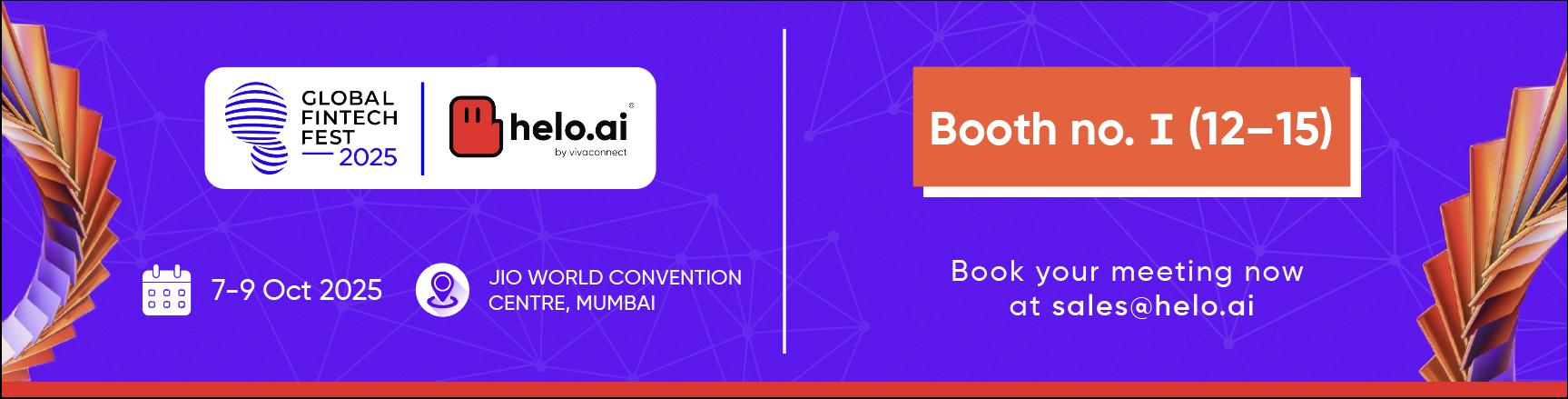
- Live Product Demos – Experience Helo Broadcast and other Helo.ai solutions in action with real-time demos that solve your biggest customer engagement challenges.
- Grand Giveaways – Stand a chance to win a brand-new iPhone 17, iPad, Apple accessories, and premium Helo.ai goodies.
- Coffee is on us! – Grab a fresh cup of coffee while you connect with our experts.
Venue: Jio World Trade Centre, Mumbai
Dates: October 7–9, 2025
Visit Helo.ai at GFF 2025 — Booth I-12,13,14,15
Principles That Indian Customers Value
To build trust in India’s fast-moving financial ecosystem, fintechs must design support systems that feel secure by default:
- Every channel must be verified WhatsApp ticks, branded RCS, official email headers.
- Conversations must be logged for compliance, ready for RBI audits.
- Automation should handle routine FAQs, but humans must step in for fraud, disputes, or emotional queries.
- No channel should ever request sensitive details like OTPs or passwords.
- Answers must be consistent across WhatsApp, app chat, call centers, and email.
- Customers should be educated proactively about fraud prevention and safe communication.
Real-World Stories That Illustrate Trust
- Fraud alert flow: A verified WhatsApp alert notifies a customer of a suspicious debit. One tap blocks the transaction, and an agent calls in Hindi within minutes. An official email confirms the case closure, building confidence that the fintech has their back.
- KYC update made easy: Instead of a confusing email, the app prompts the customer with a step-by-step Aadhaar re-verification flow. Instant confirmation reassures them, and an approval email follows the next day.
- Dispute resolution in public: A frustrated user tweets about a delayed refund. The fintech responds within minutes, moves the case to secure chat, resolves it, and posts a closing note. Transparency turns frustration into trust.
- Collections with empathy: Instead of aggressive calls, a fintech sends a polite WhatsApp reminder offering part-payment options. The respectful tone increases repayment chances and keeps the customer relationship intact.
Measuring Support with Trust Metrics
In India, efficiency metrics like resolution time and ticket volume matter, but the real measure of success is trust outcomes:
- Adoption of verified WhatsApp and RCS channels.
- Percentage of fraud alerts acted on before losses occur.
- Time it takes for a customer to feel reassured after raising a query.
- Cases closed with RBI-compliant audit records.
- Smooth handoffs between WhatsApp, app, and call center without repetition.
These metrics prove whether support is actually delivering confidence, not just speed.
Conclusion: Support as India’s Fintech Growth Engine
India’s fintech revolution powered by UPI, Aadhaar, and rapid digital adoption has changed how people bank and borrow. But no matter how advanced the technology, the foundation of long-term success remains the same: trust.
Every support interaction whether through a WhatsApp message, an in-app guide, a voice call, or a public tweet is a chance to prove reliability. Companies that design support around verification, empathy, and compliance won’t just retain customers; they'll turn them into advocates.
As highlighted at the Global Fintech Fest (GFF), the next wave of Indian fintech leaders will be those who treat customer support as their strongest product. Because in financial services, trust isn’t promised in advertisements. It’s proven in support.
Frequently Asked Questions (FAQs) on Fintech Customer Support in India
1. What is fintech customer support?
Fintech customer support refers to the services provided by financial technology companies to assist customers with payments, loans, investments, and compliance-related issues. It includes channels like WhatsApp, in-app chat, call centers, email, and self-service portals.
2. Why is customer support important in fintech?
Because fintech deals with money and identity, customers need immediate reassurance, verified communication, and clear guidance. Good support builds trust and helps companies comply with RBI regulations.
3. What are the best channels for fintech support in India?
WhatsApp and in-app chat are the most popular, while call centers, email, and SMS/RCS are also critical for fraud alerts, compliance notices, and escalations.
4. How do fintech companies ensure trust in customer support?
They use verified WhatsApp accounts, branded RCS, official email headers, audit-ready case logs, and empathetic human agents for sensitive cases. They also educate customers about fraud prevention.
5. What are fintech customer support best practices in India?
- Use verified channels like WhatsApp and RCS.
- Keep FAQs updated with RBI regulation changes.
- Provide multilingual in-app support.
- Train agents in empathy and local languages.
- Never ask for OTPs or PINs over open channels.
6. How does customer support help fintechs comply with RBI rules?
Support interactions are now part of the compliance chain. Every communication whether about KYC, AML, or fraud must be logged, traceable, and compliant with RBI standards.
7. Can AI improve fintech customer support?
Yes. AI can triage queries, summarize cases for compliance, detect fraud patterns, and provide instant answers. However, in India regulators expect sensitive cases to escalate to humans quickly.


.jpeg&w=96&q=75)