.jpeg)
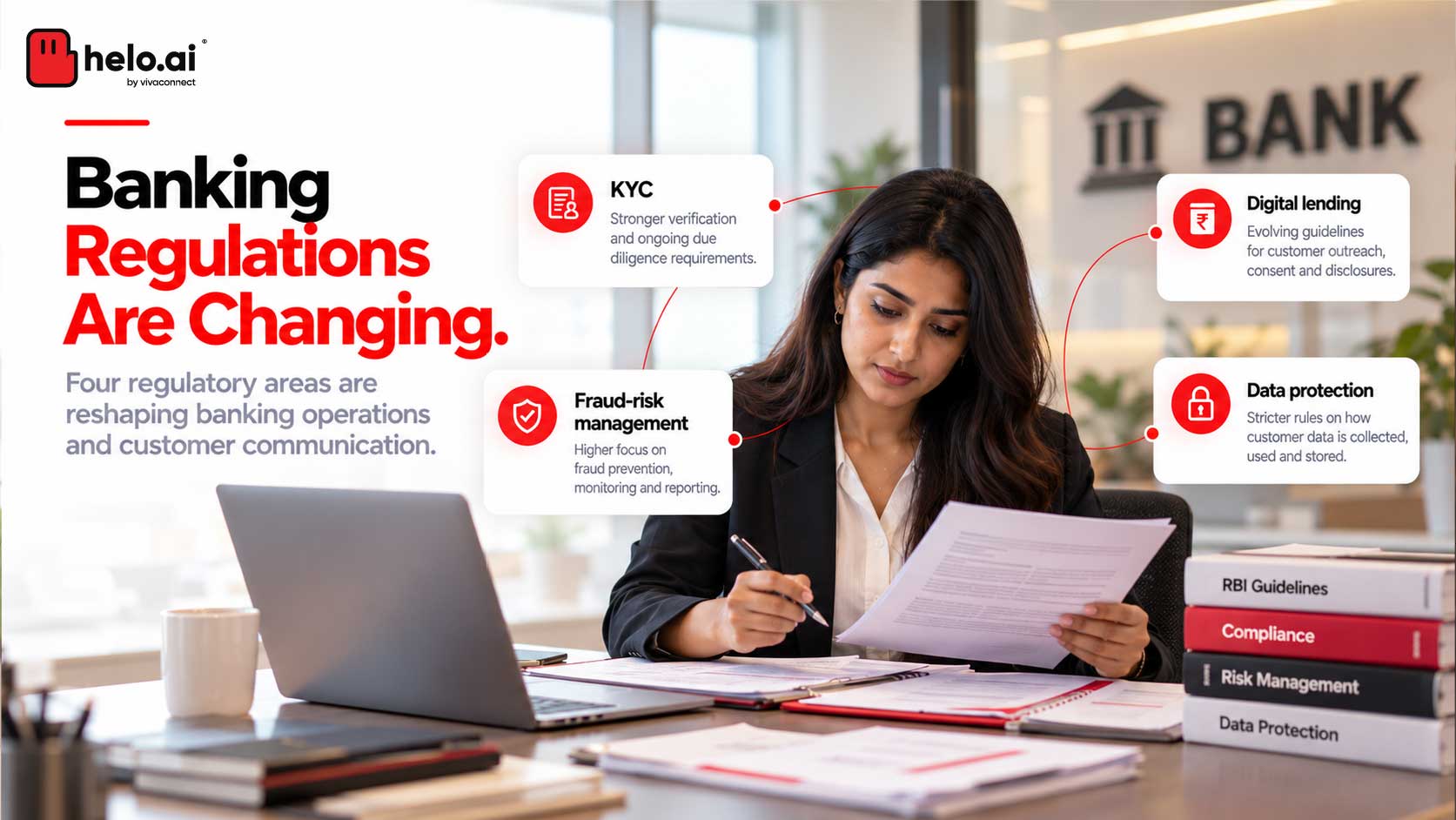


A regulatory update does not end with a policy change. Banks must translate it into processes, customer communications and records that demonstrate what happened.
In India, recent developments around KYC, digital lending, fraud-risk management and personal-data protection highlight the need to review how regulatory requirements are implemented across everyday banking operations.
1. KYC updates: more structured customer follow-ups
The RBI's KYC amendment dated 12 June 2025 requires regulated entities to send at least three advance intimations before periodic KYC is due, including at least one by letter. If the update remains overdue, at least three further reminders must be sent, again including at least one by letter. The process must be recorded in the bank's system.
The implementation deadline was 1 January 2026. Since 28 November 2025, this requirement sits in paragraph 42(7) of the RBI (Commercial Banks – Know Your Customer) Directions, 2025. Those directions replaced the 2016 KYC Master Direction.
What banks need to review: KYC due-date tracking, reminder schedules, letter-based communication and records of follow-up actions.
2. Digital lending: clearer disclosures at the right time
The RBI issued the Digital Lending Directions, 2025 on 8 May 2025. They address digital lending practices, borrower safeguards and disclosure requirements.
For digital displays of loan offers from matching lenders, specified information includes the lender's name, loan amount and tenor, annual percentage rate (APR), monthly repayment obligation and applicable penal charges, plus a link to each lender's Key Fact Statement (KFS).
What banks need to review: Whether required information appears at the appropriate stage, consent processes are properly handled, and customers can find relevant grievance information.
3. Fraud-risk management: documented processes and accountability
The RBI's Commercial Banks – Fraud Risk Management Directions, 2026, issued on 31 July 2026, provide the current framework to review for commercial-bank fraud-risk processes.
Banks should assess whether their investigation, escalation, documentation and reporting procedures reflect the applicable directions. Where formal notices or customer responses are required, those steps must follow the relevant procedure. For example, banks must give a show-cause notice and at least 21 days to reply before classifying anyone as a fraud.
What banks need to review: Case ownership, required notices, response handling, escalation and records supporting decisions. Specific deadlines and procedures should be checked against the current directions.
4. Data protection: prepare for phased requirements
The Ministry of Electronics and Information Technology published the Digital Personal Data Protection Rules, 2025 in November 2025.
The rules have a phased commencement schedule. Some provisions took effect upon publication, while others have later commencement dates. Banks should confirm which obligations apply now and plan ahead for provisions that commence later. Under the notified schedule, the consent-manager rule starts on 13 November 2026 and most obligations on 13 May 2027.
What banks need to review: Privacy notices, personal-data handling, access controls, grievance processes and procedures for responding to relevant requests or incidents.
What connects these changes?
Each regulatory area has different requirements, but banks need a consistent way to turn them into operational action.
Area | Operational priority |
KYC | Schedule required communications and retain records |
Digital lending | Present applicable disclosures at the right stage |
Fraud-risk management | Follow documented procedures and escalation paths |
Data protection | Track applicable obligations and implementation dates |
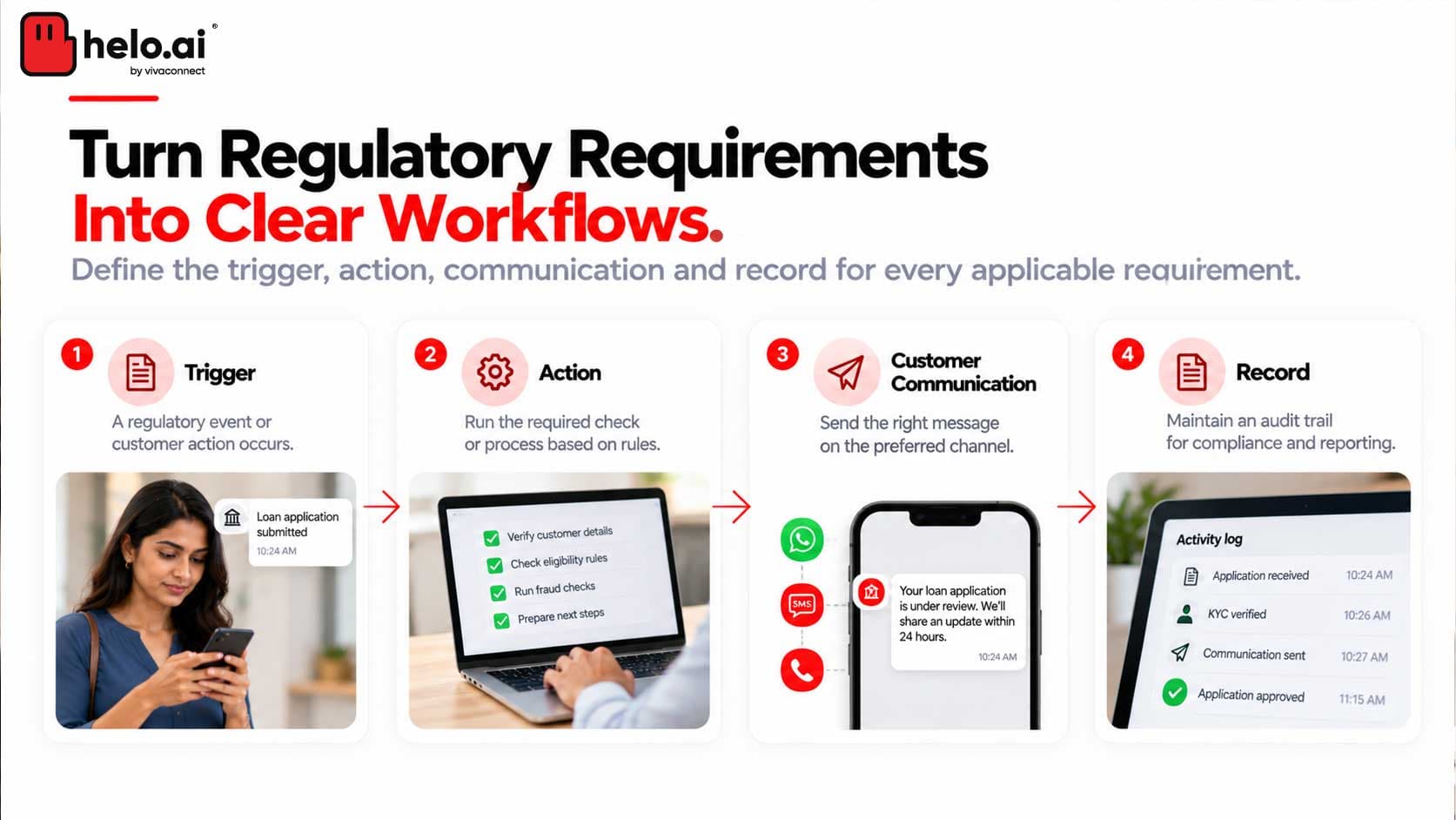
A practical review should identify the trigger for each process, the team responsible, the action or communication required, the evidence to retain and the procedure for exceptions.
Planning connected customer communication? See Helo.ai's Enterprise Playbook for AI-led customer engagement.
Where Helo.ai fits
Regulatory changes often require banks to communicate with customers at the right time, deliver relevant information and create smoother customer journeys.
Helo Clarity helps banks bring customer engagement and communication journeys together, making it easier to deliver relevant interactions across the customer lifecycle.
From customer updates to service-related communication, Helo Clarity can support more connected customer experiences while banks manage regulatory requirements through their established compliance processes and controls.
By connecting customer engagement with the wider journey, banks can work towards more consistent communication without losing sight of the processes and accountability that regulatory compliance demands.
Reviewing your bank's customer notices? Talk to the Helo.ai team about SMS, WhatsApp, RCS and voice.
The takeaway
Regulatory readiness is not just about understanding a new rule. It is about ensuring that the required action happens at the right time, responsibilities are clear and the bank can demonstrate what happened.
Banks should start by mapping each applicable requirement to its workflow, owner, customer communication and supporting records. This helps identify gaps before they become operational problems.
Frequently asked questions
How many periodic KYC reminders must banks in India send?
At least three advance intimations before the due date and three reminders after it, each set including one letter. Each notice must be recorded for audit trail.
What must a digital loan offer show under RBI's Digital Lending Directions, 2025?
Lender name, loan amount and tenor, APR, monthly repayment, penal charges where applicable, and a link to each lender's Key Fact Statement.
When do India's DPDP Rules, 2025 apply?
In phases. Data Protection Board rules applied from 13 November 2025. The consent-manager rule starts on 13 November 2026, and most data-fiduciary obligations on 13 May 2027.