.jpeg)
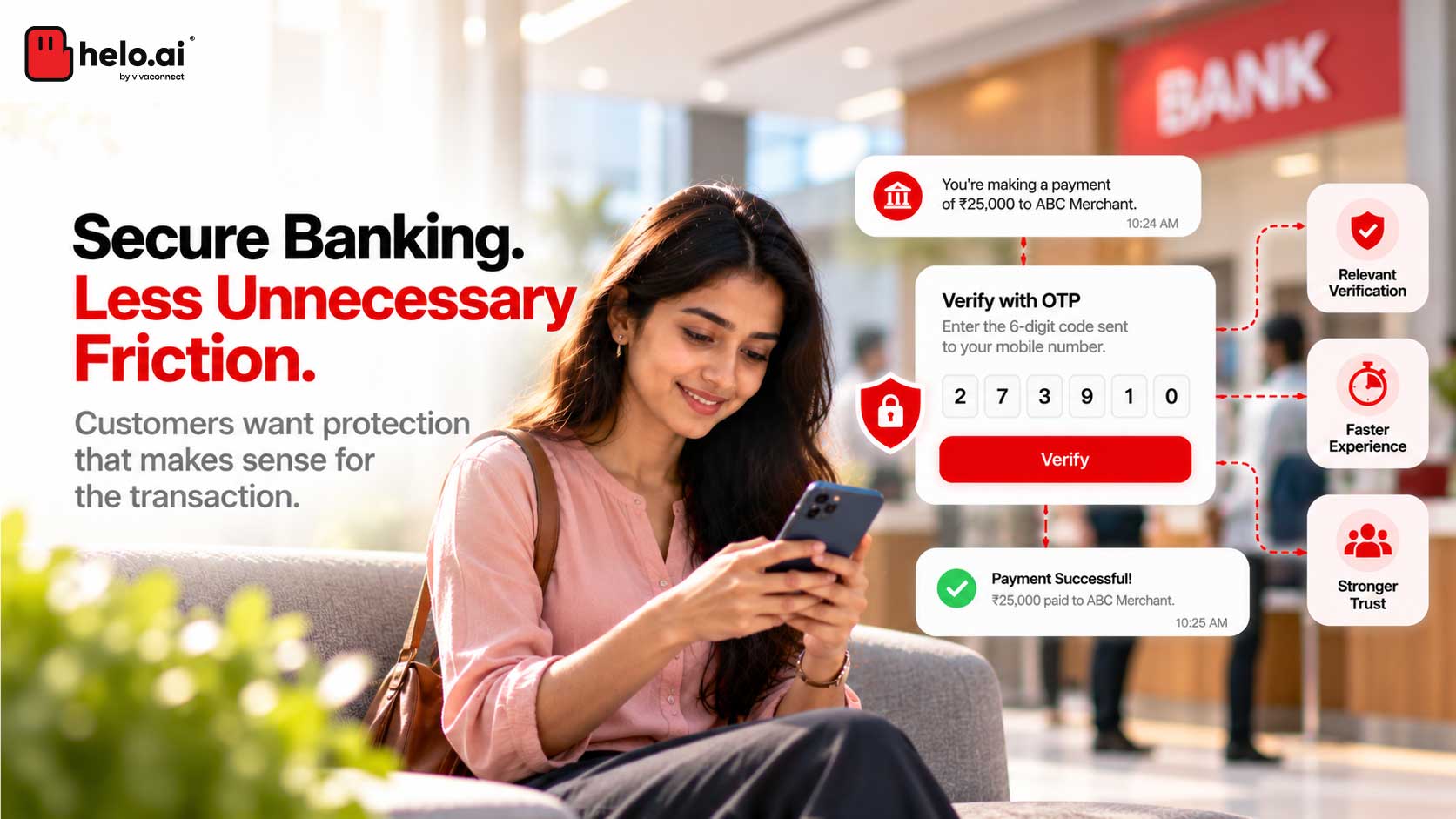


A customer makes a routine payment. The bank asks for another verification. The payment is delayed, the customer tries again, or the transaction is abandoned.
Now consider the opposite situation. A suspicious payment goes through because the bank fails to recognise the risk.
Banks have to manage both outcomes. Strong fraud controls are essential, but checks that interrupt genuine customers too often can make everyday banking frustrating.
Research in India points to a clear tension: customers want protection, but they also want security checks to feel relevant to the situation.
What does the research say about customer expectations?
A 2026 consumer survey by Outseer covered 7,029 people across seven markets, including 1,002 respondents in India. It found that fraud concerns and the experience of completing a digital transaction are closely connected.
Among respondents in India:
- 73% were very or extremely concerned about account takeover and fraud involving stolen card details.
- 80% had abandoned an online purchase at least once because security was difficult, slow or confusing.
- 56% were comfortable with additional security for a high-value payment.
- 50% accepted an extra verification step when their bank flagged a payment as unusual.
- 84% felt very or somewhat positive about passive authentication methods that assess their device or how they use it.
Source: Outseer, India Consumer Trust: Fraud Protection Is Now Part of the Customer Experience
The findings suggest that customers may be more accepting of additional checks when there is a clear reason for them. But the 80% figure relates to online shopping, not banking transactions specifically. The other figures reflect reported concerns and preferences, rather than observed behaviour in every banking journey. Outseer sells fraud-prevention software, and its page, published on 20 October 2026, does not state fieldwork dates.
The takeaway is not that customers want fewer security checks at any cost. They want protection that does not create unnecessary obstacles.
Why isn't the same security check right for every transaction?
A routine login and an unusual high-value payment do not carry the same level of risk. Applying identical checks to both can create unnecessary friction in one situation and insufficient protection in another.
Banks need to consider the context around a transaction, not just whether a customer has entered the correct credentials.
For example, an unfamiliar device, an unusual transaction pattern or a recipient that presents additional risk may warrant closer attention. Familiar, low-risk activity may not require the same level of intervention.
The signals and controls will depend on the bank's systems, policies and risk assessment. The principle is to match the level of verification to the circumstances. In India, the RBI's authentication directions of September 2025 let issuers add risk-based checks beyond two-factor authentication, due by 1 April 2026.
There is also an important difference between unauthorised fraud and scams. In some scams, the customer is genuinely logged in and initiates the payment, but has been manipulated into sending money. Successful authentication alone does not establish that a payment is safe.
That is why banks need to assess payment context alongside identity verification.
Can stronger protection improve the customer experience?
It can, when security is designed around the customer journey instead of being added as a series of disconnected hurdles.
KPMG's India CX Report '25: Banking highlights identity verification, KYC, documentation, disclosure and information availability as important parts of the account-opening experience. KPMG reports that 47 percent of customers consider account set-up the most impactful experience across all brand interactions.
Source: KPMG India, India CX Report '25: Banking
The experience begins before a customer makes their first payment. If account opening is confusing, instructions are unclear or a legitimate customer cannot understand what to do after a transaction is blocked, confidence can suffer.
Banks can address this in three ways.
1. Make additional checks proportionate
Use risk assessments to determine when stronger verification or intervention is needed. Applying the same level of friction to every transaction may be simpler, but it does not necessarily reflect the risk.
2. Explain what the customer needs to do
Give customers clear instructions when verification is required. Where appropriate, explain why an action needs an additional check and how to complete it safely.
3. Provide a secure way to resolve problems
Legitimate activity can still be flagged. Customers need an appropriate way to verify their activity, resolve a block or reach support when an automated process cannot resolve the situation. Any recovery path must follow the bank's security procedures.
These changes will not eliminate every interruption, but they can make necessary checks easier to understand and complete.
Can background checks reduce unnecessary interruptions?
Not every fraud-prevention measure needs to interrupt the customer.
Passive authentication methods can assess signals such as device characteristics and patterns of interaction in the background. When combined with other relevant risk information, these signals may help banks distinguish familiar activity from behaviour that needs closer review.
Outseer's survey found that 84% of respondents in India felt very or somewhat positive about passive authentication. This indicates openness to the approach, but it does not prove that a particular tool will reduce fraud or eliminate friction.
Background checks are not a complete solution on their own. Banks still need to decide what happens when signals conflict, risk is elevated or a scam involves a customer who is completing the steps they have been instructed to take by a fraudster.
The objective is to reduce avoidable interruptions while preserving stronger intervention where the circumstances warrant it.
How should banks measure the balance?
Fraud prevention cannot be judged by fraud losses alone, and customer experience cannot be judged by speed alone. Banks need to review both sides of the outcome.
What to measure | What it helps banks understand |
Fraud losses and confirmed incidents | Whether controls are identifying and preventing relevant threats |
Legitimate transactions flagged or declined | Whether genuine activity is being interrupted |
Verification completion and abandonment | Where customers struggle to complete a journey |
Time taken to resolve a block | How quickly genuine customers can resume activity |
Complaints and repeat support contacts | Where security processes create confusion or dissatisfaction |
Results by transaction type and risk level | Whether controls are proportionate to the situation |
These measures should be reviewed together and segmented by journey and risk level. A lower fraud rate may look positive, but if legitimate transactions are being declined more often, the full picture is more complicated.
Likewise, fewer verification steps are not automatically an improvement if fraud exposure rises. Banks should establish a baseline, define success measures and review whether each control is delivering the intended result.
Planning secure, compliant customer messaging? The free Enterprise Messaging Playbook covers channel strategy, cost-effective delivery and compliant messaging.
Security that earns customer confidence
Banks cannot remove every interruption from digital banking, nor should they. Some transactions need stronger checks, and some situations require human review.
But customers should not have to navigate unnecessary hurdles every time they use a service they already trust.
The research points towards a more considered approach: assess the transaction, apply security in proportion to the risk, explain what the customer needs to do and provide a clear way to resolve legitimate problems.
The goal is not to make every transaction frictionless. It is to make every security intervention count.
Want to explain security checks clearly to customers? Talk to the Helo.ai team.
Frequently asked questions
What is risk-based authentication in banking?
Risk-based authentication adjusts the strength of a check to the risk of a login or payment. Familiar, low-risk activity can proceed with little interruption, while unusual activity triggers stronger verification.
How can banks reduce fraud without frustrating customers?
Banks can match each check to the transaction's risk and explain why a check is needed. They can also give customers a secure way to resolve blocks and track flagged genuine transactions.
How can banks spot suspicious payments without blocking genuine ones?
Banks look at context as well as credentials, such as device signals, transaction behaviour and recipient risk. This matters for scams, where the genuine customer is logged in and starts the payment.