
.jpg)


You’ve probably come across terms like CPaaS or cloud communication platform more than once. They’re popping up in product demos, tech articles, and LinkedIn posts — but what do they really mean, and why should your business care?
The way companies communicate has changed. Customers expect real-time conversations, not contact forms. They want fast, personalized replies across channels like RCS, WhatsApp, SMS, email, and voice, and they expect it all to work seamlessly, without delays or repetition. Not just this but your company’s internal teams like remote teams need flexible tools that keep communication smooth and scalable.
In short: real-time communication is now a business essential, not a feature.
That’s where CPaaS providers step in.
In this blog, we’ll break down what a CPaaS provider actually does, why it’s gaining momentum in 2025, and how it can simplify and upgrade your business communication across every channel your customers already use.
👉 Check out our AI-powered CPaaS platform and see what’s possible.
What is a CPaaS Provider?
Let’s keep it simple:
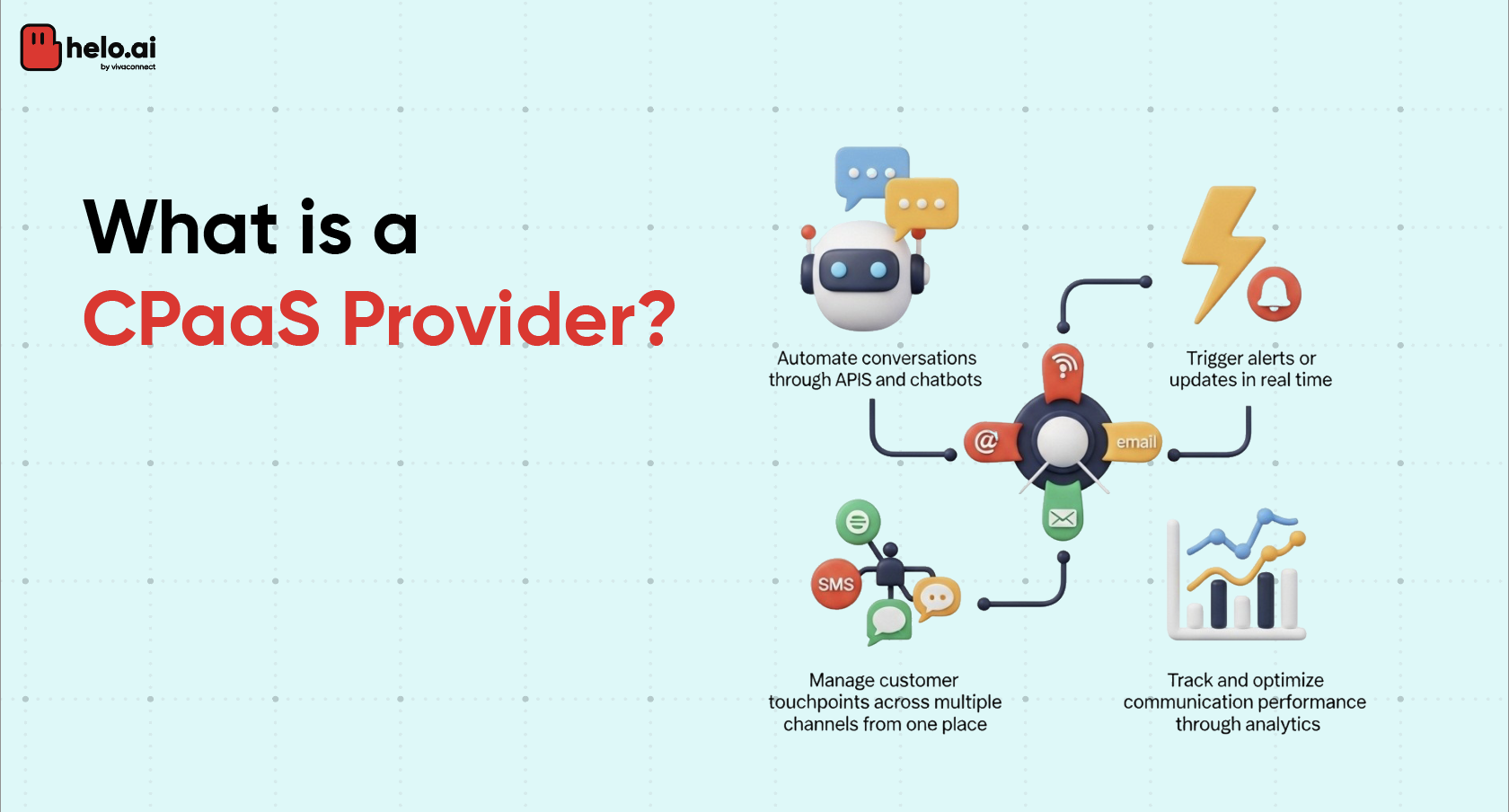
A CPaaS provider gives your business the tools to embed real-time communication like messaging, voice calls, email, and video. It enables it to embed directly into your apps, workflows, or platforms. You don’t need to build any of that infrastructure yourself.
It is a cloud communication platform that lets you connect with your customers where they already are — whether that’s RCS, WhatsApp, SMS, email, or voice without needing a massive tech stack or dev team.
A CPaaS provider helps you:
- Automate conversations through APIs and chatbots
- Trigger alerts or updates in real time
- Manage customer touchpoints across multiple channels from one place
- Track and optimize communication performance through analytics
In short, it turns complex communication systems into plug-and-play capabilities, so businesses of all sizes can scale faster, serve smarter, and stay connected.
Why CPaaS is Booming in 2025
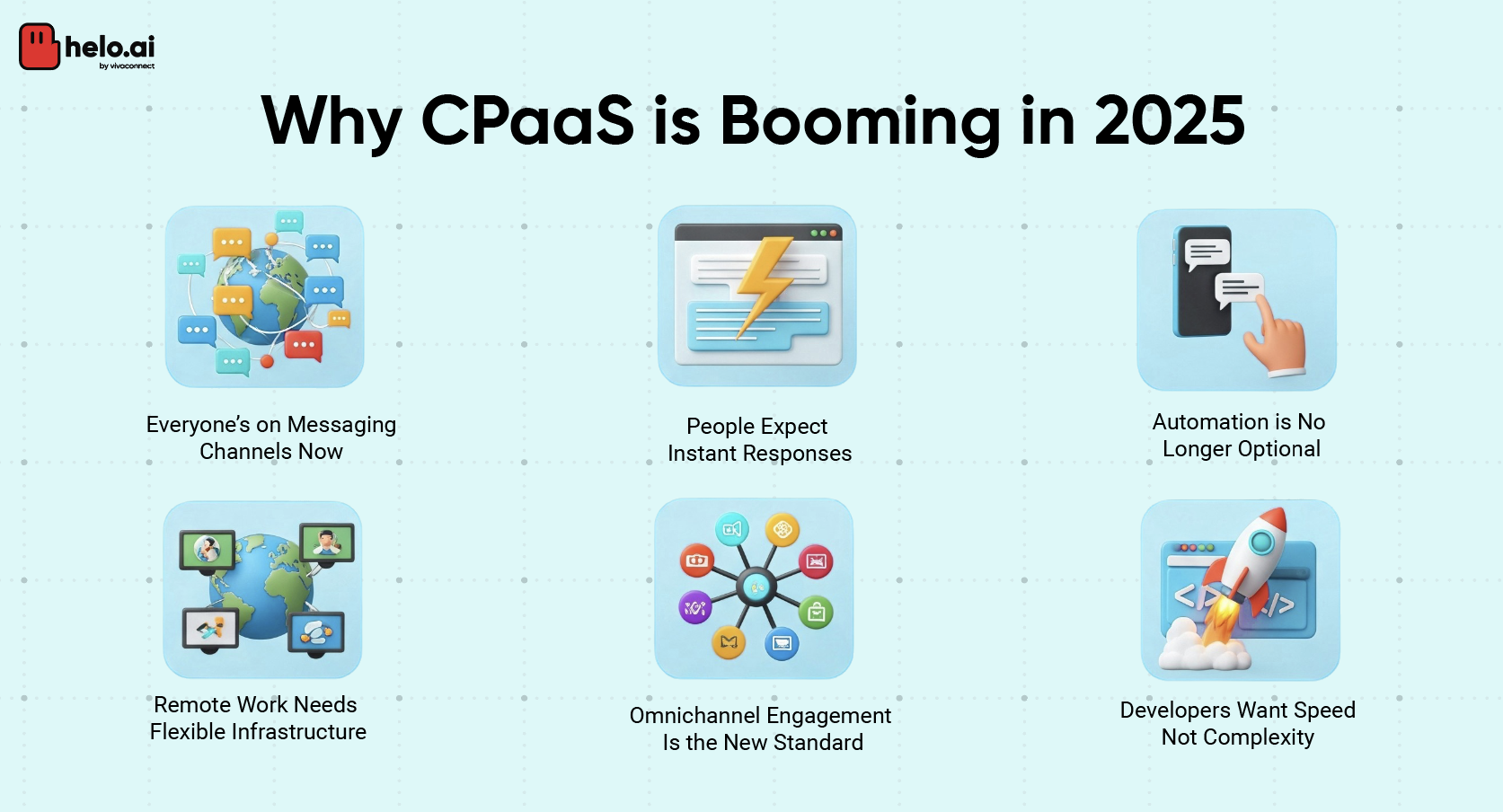
Customer communication is evolving fast and CPaaS is right at the center of that shift. Here's why businesses across industries are making it a priority in 2025:
1. Everyone’s on Messaging Channels Now
From RCS and WhatsApp to SMS, email, and voice, customers expect businesses to meet them on the platforms they already use and switch between them without friction.
2. People Expect Instant Responses
Speed matters. Whether it's a support question or a payment confirmation, waiting hours (or even minutes) feels outdated. CPaaS enables real-time interactions across all channels.
3. Automation is No Longer Optional
Customers don’t want to repeat themselves or get passed around. With CPaaS, businesses can set up intelligent workflows that automate replies, route queries, and escalate when needed — all without sacrificing the human touch.
4. Remote Work Needs Flexible Infrastructure
Distributed teams require tools that are cloud-based, scalable, and accessible. CPaaS helps unify communication under one system, without relying on legacy call centers or siloed tools.
5. Omnichannel Engagement Is the New Standard
Customers may start a conversation via SMS, continue on RCS, and follow up over email. CPaaS platforms connect these dots, enabling consistent engagement without losing context.
6. Developers Want Speed — Not Complexity
CPaaS offers ready-to-use APIs and visual flow builders, so teams can launch new communication experiences faster, without deep infrastructure work.
💡 According to Juniper Research, global CPaaS revenue is projected to exceed $34 billion in 2026, up from $30 billion in 2025, marking a 13% year-over-year growth. This surge is attributed to CPaaS platforms evolving into comprehensive customer interaction solutions, integrating campaign management tools for rich media messaging.
5 Reasons Your Business Needs a CPaaS Provider
Still wondering if CPaaS is really worth it? Let’s break down the five biggest reasons why every forward-thinking business should consider making it a core part of their communication stack.
1. It reduces response times across channels
Customers don’t want to wait. Whether it's an inquiry on RCS, a support ticket via WhatsApp, or a delivery update through SMS, speed is expected. A CPaaS provider helps you route messages, trigger replies, and sync channels in real time — so you’re always one step ahead.
2. It makes automation easy (without feeling robotic)
Nobody likes clunky bots. With CPaaS, you can build smart workflows that handle routine queries, send real-time updates, and route conversations intelligently — without sounding like a machine. It’s automation that feels human.
3. It cuts support & operational costs
Hiring more agents isn’t always the answer. By automating repetitive tasks and enabling self-serve flows, CPaaS lets your existing team do more — while reducing queue times, call volumes, and overhead.
4. It gives sales & marketing new superpowers
CPaaS isn’t just for support. Your marketing and sales teams can use it to send real-time offers, re-engage users with WhatsApp campaigns, or follow up abandoned carts with contextual messages — all through the same platform.
5. It future-proofs your business
Tech moves fast. With new channels like Google RCS and Apple Business Chat gaining traction, a CPaaS provider keeps you ready. You won’t need to rebuild infrastructure — just plug in the next channel when your audience gets there.
Not All CPaaS Providers Are Created Equal
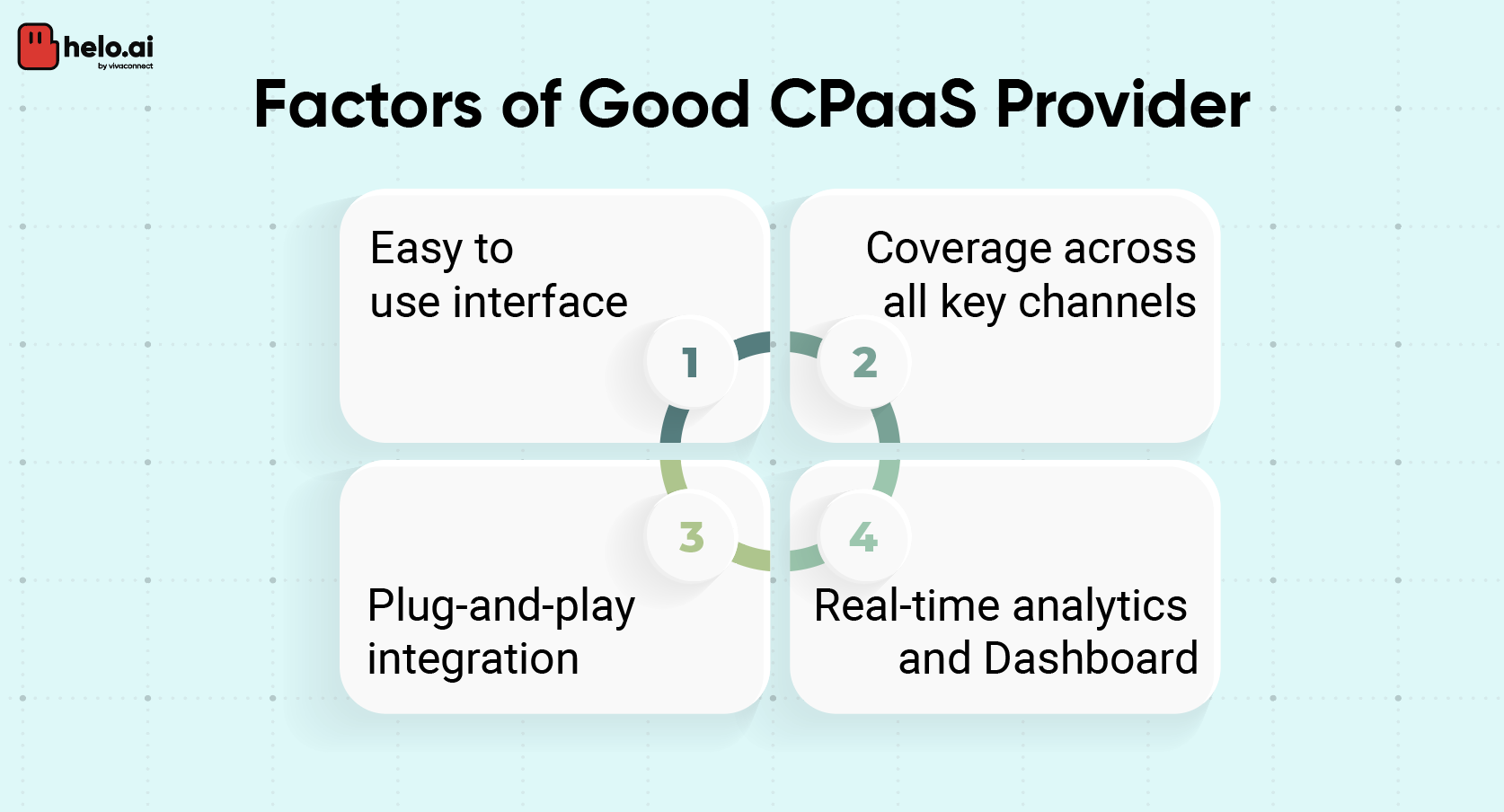
Choosing a CPaaS provider isn’t just about ticking boxes — it’s about finding a platform that actually fits how your business communicates.
Here are a few things that matter more than they seem:
1. A Clean, Easy-to-Use Interface
You shouldn’t need an engineering team to launch a campaign or set up a bot. Look for a platform with a straightforward dashboard where your team can manage messaging flows, campaigns, and automation with zero friction.
2. Coverage Across All Key Channels
A good CPaaS platform should support all critical channels — RCS, WhatsApp, SMS, email, and voice — and allow you to switch between them seamlessly based on what your users prefer.
3. Plug-and-Play Integrations
You don’t want to rebuild your tech stack. The right provider should integrate smoothly with your existing CRMs, customer support tools, ecommerce platforms, and APIs — so everything works together from day one.
4. Real-Time Analytics & Dashboards
Data isn’t optional. Your team needs clear, actionable insights into delivery rates, open rates, drop-offs, and user journeys — so you can iterate and improve quickly.
What’s Next? How to Get Started with CPaaS
If you’re curious, now’s the perfect time to explore what CPaaS can unlock for your business.
Getting started doesn’t require a huge technical lift. The right platform will let you:
- Set up workflows without writing code
- Connect with customers across RCS, WhatsApp Business API, SMS API, Email API, and Voicebot
- Go live in days, not months
Whether you're looking to reduce support load, boost campaign performance, or streamline customer journeys — CPaaS gives you the flexibility to start small and scale fast.
👉 Ready to see how it works?
Conclusion
So, we’ve had our little CPaaS talk. I hope it wasn’t as techy as it sounds!
Here’s the thing: customer expectations are changing fast, and businesses that adapt early always stay ahead of the curve.
Whether you're a growing startup or a scaled enterprise, how you communicate will play a big role in how you're perceived and how you perform. And with the right CPaaS provider, that communication can be smarter, faster, and more effortless than ever.
Because in the end, how we communicate is how we compete.
Frequently Asked Questions
1. What does a CPaaS provider do?
A CPaaS provider offers tools to help businesses add communication features like messaging, voice, or video into their existing systems without needing to build those capabilities from scratch.
2. Is CPaaS only for tech companies?
Not at all. CPaaS is used by businesses across industries. From retail and banking to healthcare and utilities, it’s for everyone. If you talk to customers, CPaaS can help you do it better.
3. How is a cloud communication platform different from UCaaS?
UCaaS (Unified Communications as a Service) is built for internal communication like video calls and team chats. CPaaS is for external communication like sending alerts, marketing messages, or support replies to customers.
4. Can I use CPaaS without a developer?
Yes. Many platforms (like Helo.ai) offer visual builders and ready-to-use tools, so non-technical teams can launch campaigns and set up flows without writing code.
5. What channels can CPaaS cover?
Helo.ai, one of the top CPaaS providers in India supports RCS, WhatsApp, SMS, email, and voice all from one place, so you can engage customers however they prefer.