.jpeg)
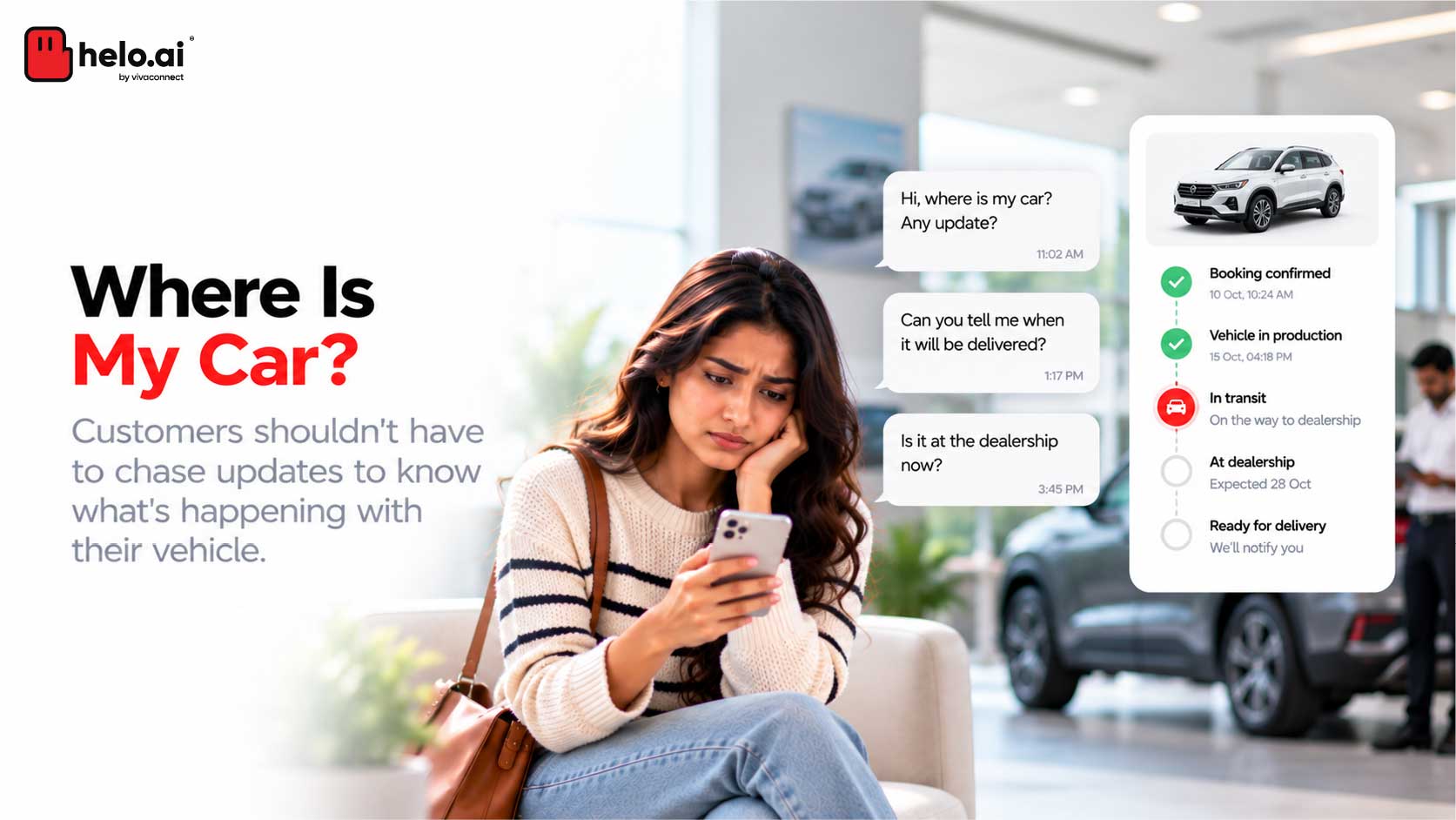


A customer leaves their car at a service centre and waits to hear what happens next. The diagnosis takes longer than expected. A replacement part is pending. The promised collection time approaches, but no update arrives.
So the customer calls.
For automotive service centres, repeated status calls can be a sign that customers are being left to fill information gaps themselves. The repair may be progressing, but without clear updates, customers cannot tell what is happening or when they will get their vehicle back.
Why do customers keep asking for updates?
What happens when customers don't know the repair status?
A vehicle may be awaiting diagnosis, parts, customer approval or final checks. If customers aren't told which stage the repair has reached, they may assume nothing is moving.
A short, specific update can answer the questions customers are most likely to have: What has been done? What is pending? What happens next?
Why do revised repair timelines lead to more calls?
Repair estimates can change because of unexpected faults, parts availability or workshop workload. Delays are not always avoidable, but silence makes them harder for customers to manage.
If the original collection time is no longer realistic, explain why and provide a revised estimate when one is available. Customers may still be disappointed by the delay, but they have clearer information to plan around.
Why do customers end up chasing different people?
Service advisers, technicians, parts teams and workshop managers may each hold different pieces of information. If those updates don't reach the customer consistently, they become responsible for chasing answers across the process.
A clear communication process helps ensure that customers receive relevant information without having to repeat the same question to multiple people.
What does research say about service communication?
J.D. Power's 2026 U.S. Customer Service Index Study continues to identify keeping customers informed about service status as an important indicator of dealer-service performance. This supports the importance of communication, although it does not establish that missing updates are the cause of every repeat call. The 2026 index draws on 51,228 owners and lessees of 1- to 3-year-old vehicles, surveyed during 2025.
Research in India points in a similar direction. J.D. Power's 2022 India Customer Service Index Study reported average satisfaction scores of 863 among customers who received all measured service-adviser interactions, compared with 838 among those who did not. These interactions included regular status updates, but the 25-point difference cannot be attributed to status updates alone. The study surveyed 5,586 new-vehicle owners face to face in 25 Indian cities in 2022.
The findings reinforce a practical lesson: keeping customers informed is part of the service experience, not just an administrative task.
Sources: J.D. Power 2026 U.S. study · J.D. Power 2022 India study
How can service centres reduce avoidable status calls?
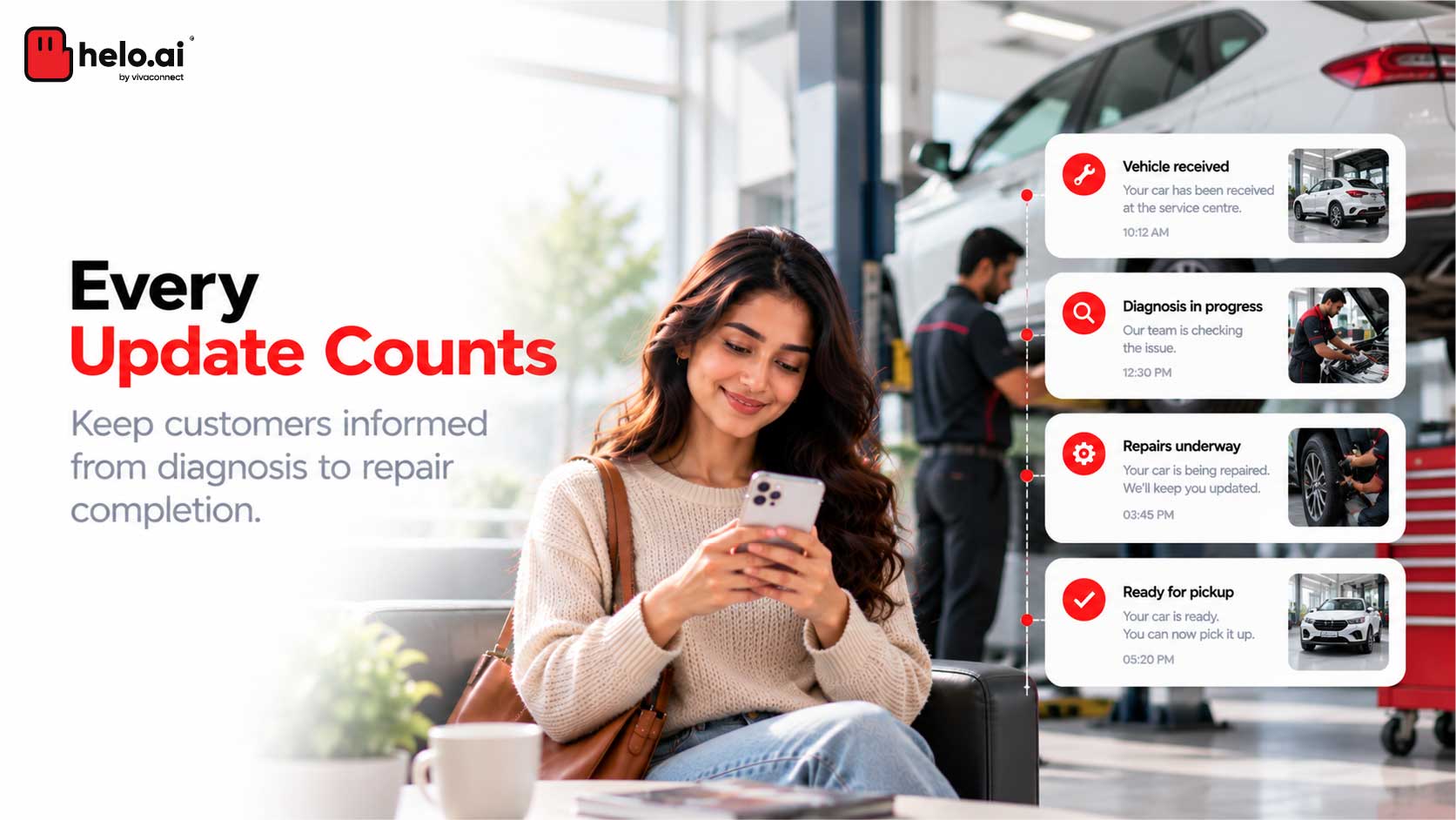
The answer isn't simply to ask staff to answer the phone faster. Service centres need a consistent process for communicating progress.
- Set expectations early. Explain the next steps and give a realistic estimated completion time.
- Share meaningful milestones. Let customers know when diagnosis is complete, approval is needed or the vehicle is ready.
- Explain delays promptly. Share the reason for a delay and provide a revised estimate when possible.
- Use the customer's preferred channel. Choose suitable options such as SMS, phone calls or supported messaging channels.
- Make every update useful. Tell customers what is pending and what happens next, rather than sending vague messages.
The goal isn't to promise that every repair will finish on time. It is to make sure customers aren't left guessing when plans change.
Want to measure repeat status calls? The CPaaS KPI Handbook covers 50+ WhatsApp, SMS and RCS metrics, with formulas and worked examples.
Can better communication make the process easier?
Service centres may use calls, SMS, messaging apps and other channels to contact customers. When updates rely entirely on staff remembering to contact each person, communication can become inconsistent during busy periods.
Platforms such as Helo.ai may help service businesses manage customer communication across supported channels and workflows. Depending on the available integrations and permissions, this could include sending repair-progress updates, sharing revised timelines or notifying customers when their vehicle is ready. Helo.ai offers SMS, WhatsApp and AI voice channels, with a shared inbox for replies.
These workflows depend on accurate information being available from the service centre's systems. Communication tools cannot fix parts shortages or accelerate a repair by themselves, but they can help customers understand the process and know what to expect.
Planning repair-status updates for your service centre? Talk to the Helo.ai team about SMS and WhatsApp updates.
The takeaway: Customers shouldn't have to chase information
Not every repeat call signals poor service. Customers may have new questions, need to approve additional work or want to clarify a collection time.
But when they repeatedly call just to find out what is happening, the communication process deserves attention.
Clear expectations, timely explanations and useful updates can reduce avoidable calls while helping customers feel informed and respected. For automotive service centres, keeping customers updated is part of delivering a good service experience.
Frequently asked questions
Why do customers keep calling car service centres?
Usually because they cannot tell which stage the repair has reached or when the car will be ready. Silence after a delay or a revised estimate makes the problem worse.
What should a vehicle repair status update include?
It should say what has been done, what is pending and what happens next, with a realistic collection time. If the estimate changes, state the reason and give a revised time.
How does service communication affect customer satisfaction?
In J.D. Power's 2022 India study, satisfaction was 863 for customers who received all measured adviser interactions and 838 for those who did not. The gap cannot be attributed to status updates alone.