.jpeg)


A customer calls a bank to check a loan application. Another calls an insurance company about a renewal. Someone else wants to know when an order will arrive. These are routine enquiries, but when thousands of customers make similar calls, handling every conversation through a human agent becomes difficult to scale.
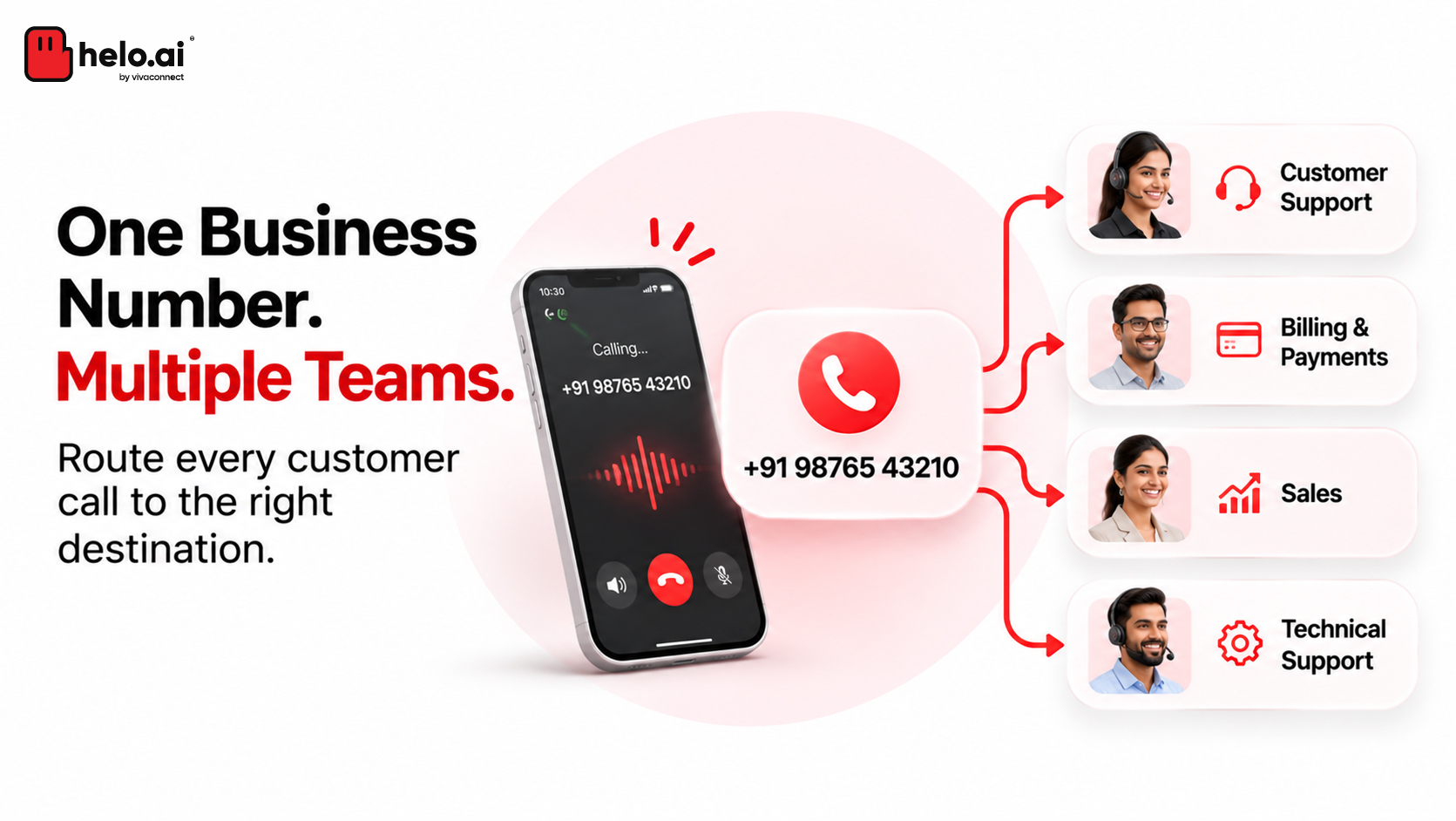
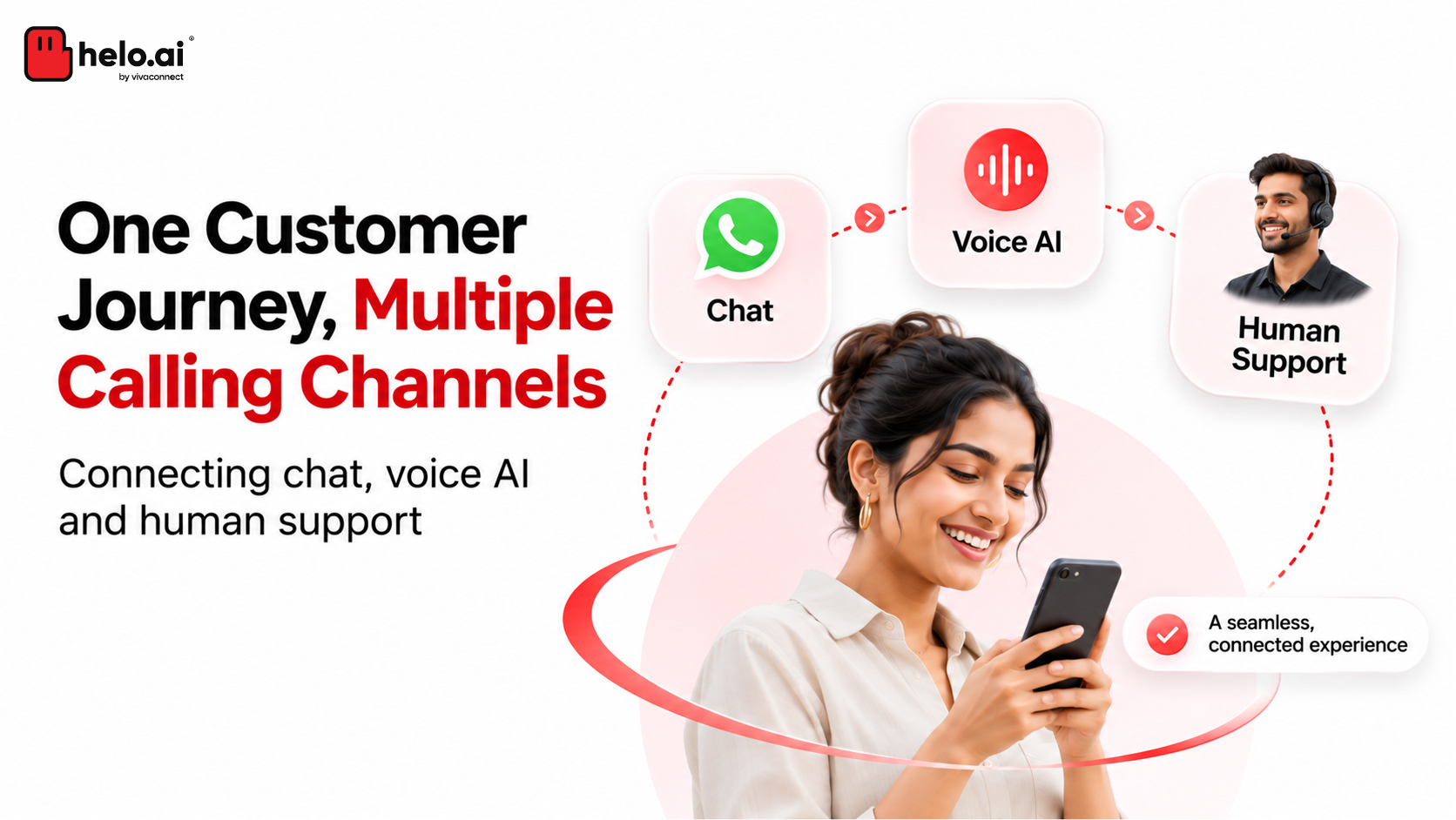
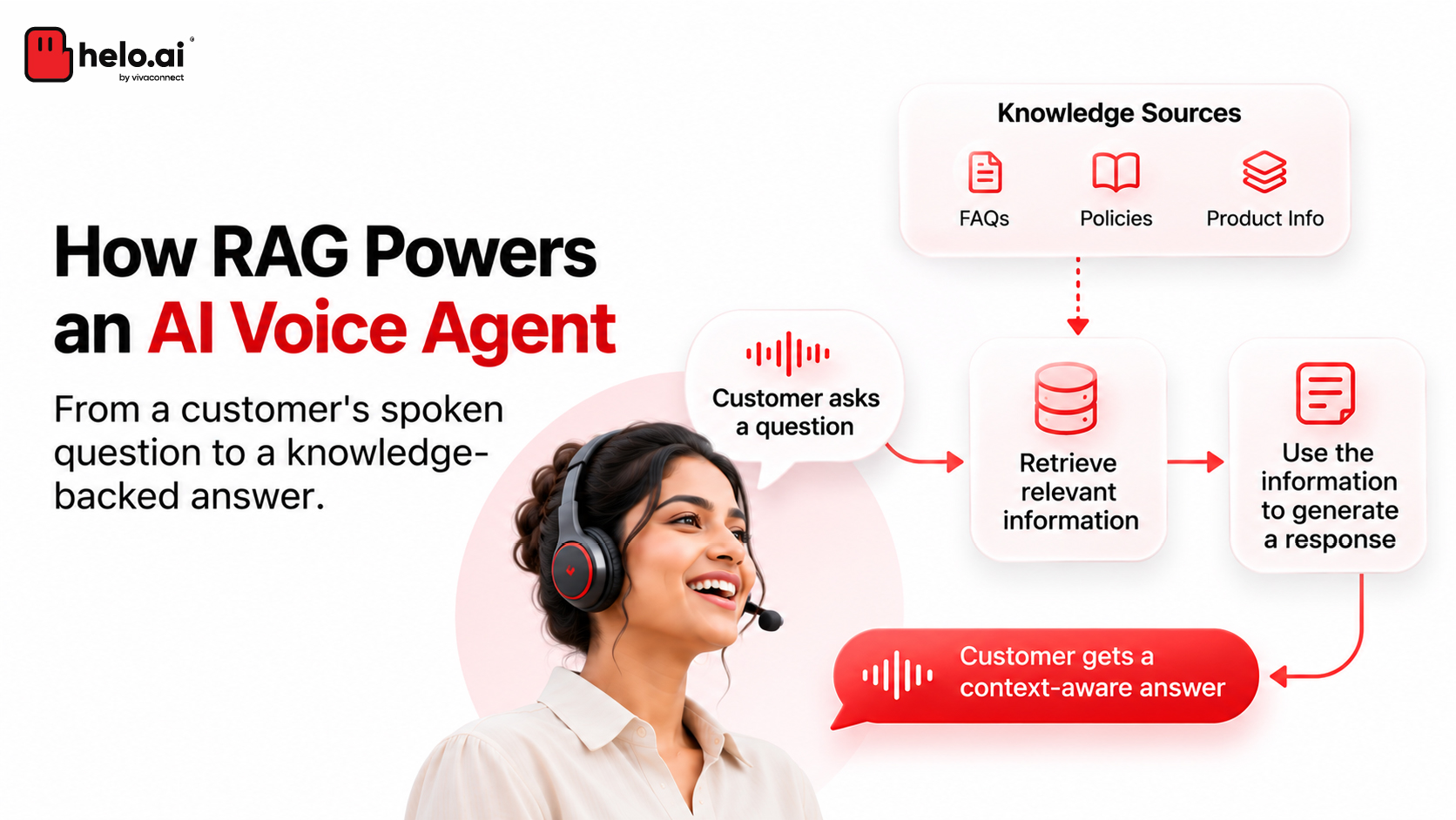
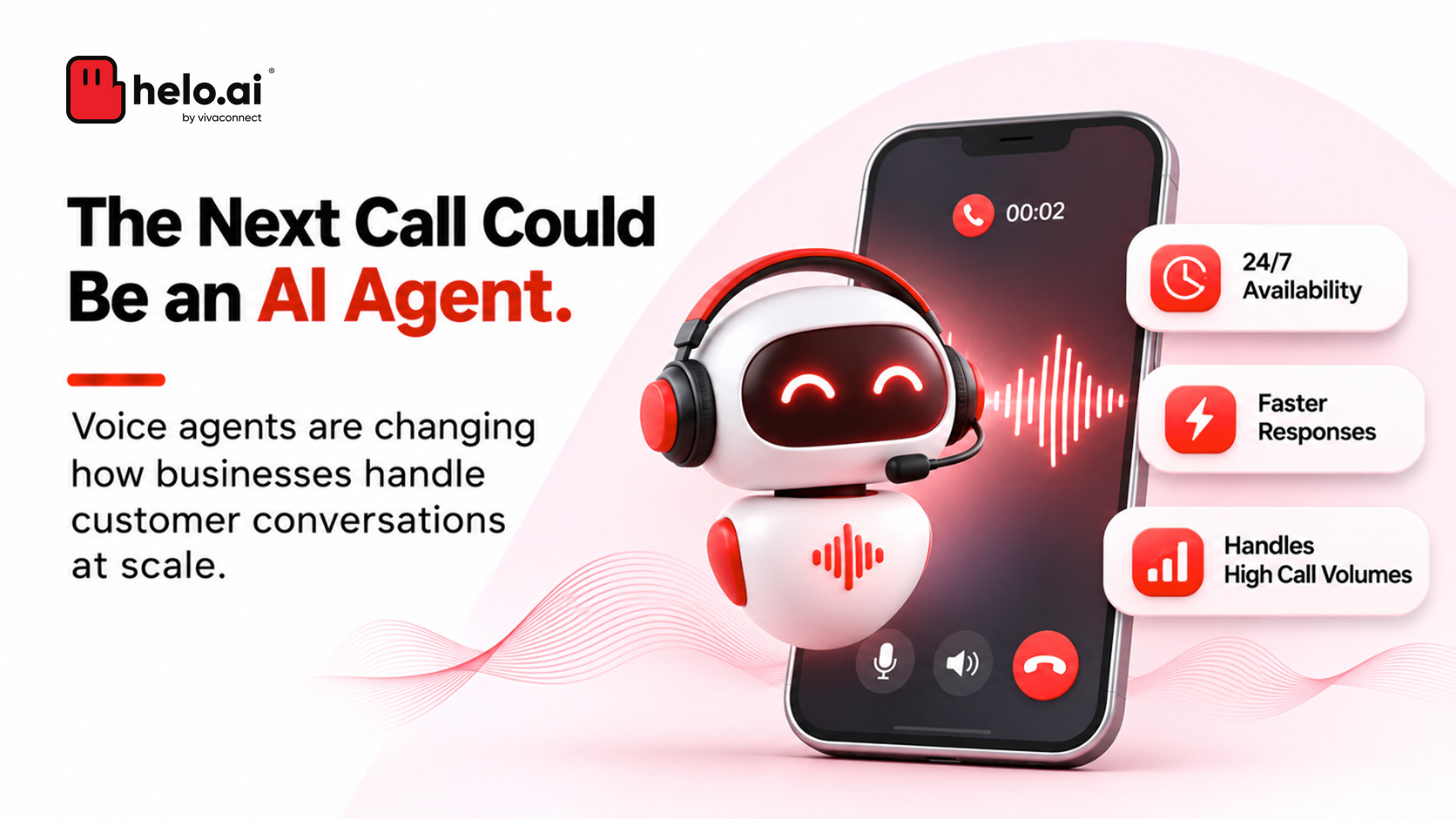
AI voice agents are changing how businesses manage these calls. They can answer inbound enquiries, make outbound calls, understand spoken requests, retrieve information and complete defined tasks during a conversation. When a request needs human attention, the call can be transferred to an agent.
The technology has also moved beyond English-language scripts and traditional IVR menus. Businesses can now build voice agents that understand Indian languages, handle code-switching and connect with systems such as CRMs, loan management platforms and customer databases.
But not every voice AI company offers the same thing. Some provide ready-to-deploy enterprise solutions, some specialise in collections and outbound calling, while others offer developer platforms for building custom phone agents.
This guide compares seven AI voice agent companies relevant to businesses operating in India. It looks at their products, use cases, language capabilities and what buyers should verify before choosing a provider.
If you are evaluating broader conversational AI platforms across voice, chat and messaging, see our guide to best conversational AI platforms. For a deeper look at enterprise voice deployments, read enterprise AI voice agents.
Top AI voice agent companies in India include Helo.ai, Gnani.ai, Skit.ai, Bolna, OmniDimension, Sarvam AI and SquadStack, each built for different needs. Compare them on language coverage, telephony, integrations, handoff and cost. Run the same pilot scenarios on every vendor before choosing.
Top AI voice agent companies in India: Comparison at a glance
The companies below are selected for their relevance to Indian business use cases, including enterprise support, BFSI, collections, sales and customer engagement. This is a buyer's shortlist, not an independently tested ranking.
Language availability is particularly important to verify. Speech recognition (understanding what a caller says) and text-to-speech (speaking back to the caller) are separate capabilities. A language appearing in a platform's catalogue does not automatically mean every voice, speech model and telephony configuration supports it.
| Company | Main focus | Calling capabilities | Indian-language position | Best suited for |
|---|---|---|---|---|
| Helo.ai – Helo Voice | Enterprise voice automation | Inbound and outbound | Multilingual support with configurable speech engines; confirm exact language and voice combinations | Enterprise support, BFSI, collections, verification and customer engagement |
| Gnani.ai | Enterprise speech AI and voice agents | Inbound and outbound, depending on deployment | 40+ languages and dialects across its speech technology; verify STT and TTS coverage separately | BFSI, insurance, healthcare and enterprise deployments |
| Skit.ai | Collection intelligence and AI agents | Voice-led customer engagement; confirm exact inbound/outbound scope | Regional-language capabilities; confirm the current production language list | Lending, debt collections and financial services |
| Bolna | Developer-friendly AI phone-agent platform | Inbound and outbound | 20+ languages, including Hindi, Hinglish, Tamil and Telugu | Developers, startups and businesses building custom voice workflows |
| OmniDimension | Prompt-led voice-agent creation | Inbound and outbound | 90+ locales listed; Indian-language support depends on selected speech engines and configuration | Teams that want to build and deploy agents through a configurable platform |
| Sarvam AI – Voice Agents | Indian-language voice-agent platform | Inbound and outbound | 11 Indian languages plus English, with code-mixed speech support | Businesses prioritising Indian-language conversations and India-based data processing |
| SquadStack | Managed and enterprise voice AI for sales and customer operations | Primarily campaign-led enterprise calling; confirm the required inbound setup | Nine Indian languages listed, including English, with code-switching | BFSI, sales, onboarding, collections and customer support |
Capabilities and language coverage above reflect vendor-published information. Availability can depend on the speech model, voice, telephony provider, product plan and deployment. Ask for a demonstration using your own call scenarios.
How this list was selected
A voice AI company may offer a complete enterprise solution, a self-service agent builder or the speech technology used to build a voice agent. These are different products, even when they all use the term "voice AI".
For this comparison, the focus is on providers relevant to Indian business calling requirements. The evaluation considers:
- Availability and relevance for Indian deployments.
- Inbound and outbound phone-call capabilities.
- Indian-language speech recognition and voice generation.
- Language switching and code-mixed conversations.
- Human handoff and telephony integration.
- CRM, API and business-system connectivity.
- Enterprise security, monitoring and deployment requirements.
The list is not based on a common independent performance benchmark. Buyers should run their own pilot before comparing vendors on call quality, language accuracy, resolution or cost.
Helo.ai – Helo Voice
Best for: Enterprises looking to automate inbound and outbound calls across customer support, BFSI, utilities, retail and e-commerce.
Product: Helo Voice
Helo Voice is an enterprise voice AI platform designed to manage customer conversations over the phone. It goes beyond traditional IVR menus by allowing callers to speak naturally, ask questions and complete tasks through a conversation.
The same voice agent can handle inbound support and outbound campaigns. It can retrieve customer information, qualify leads, collect payment commitments, book appointments and transfer a live call to a human agent when needed.
One important part of the platform is its telephony architecture. Helo Voice supports native SIP, WebRTC and PSTN, allowing businesses to connect compatible carriers and configure their calling infrastructure around regional requirements.
Key capabilities
- Inbound customer support and enquiry handling.
- Outbound campaigns for reminders, renewals, collections and follow-ups.
- Natural conversations with interruption handling.
- Multilingual speech processing and language switching.
- Native SIP, WebRTC and PSTN support.
- CRM, API and business-system actions during calls.
- Live human handoff with conversation context.
- Call transcripts, stage-wise latency and action logs.
- Sensitive-data redaction and configurable data retention.
Where Helo Voice fits
Consider a lending company making pre-due payment reminder calls. The voice agent can retrieve the customer's due amount from a connected system, explain the payment details, respond to questions and record a promise to pay. If the customer raises a complex issue, the agent can transfer the active call to a human representative with the available conversation context.
The same platform can also answer inbound queries, qualify sales leads, support verification workflows and schedule appointments.
Helo Voice is designed for enterprise calling operations where conversations need to connect with business systems, not just answer a fixed list of questions.
What to evaluate before buying
Ask for a demonstration using your actual customer scripts and telephony setup. Test the languages your customers speak, how the agent handles interruptions and background noise, whether it switches languages naturally, and how it behaves when an API or connected system is unavailable.
Also review concurrency requirements, carrier connectivity, call transfer behaviour, data retention and reporting access.
A good fit when: You need an enterprise voice-agent platform for inbound and outbound calls, with telephony, integrations, multilingual conversations and human handoff.
Gnani.ai
Best for: Enterprises that need Indian-language speech technology and voice automation for high-volume customer interactions.
Website: Gnani.ai
Gnani.ai develops enterprise voice AI and speech technologies. Its platform brings together speech recognition, text-to-speech, language models and voice-agent capabilities.
The company has a particular focus on telephonic speech, where audio quality, regional accents and code-mixed conversations can make recognition difficult.
Its speech technology includes Vachana speech-to-text, Timbre text-to-speech and Evon language models. Gnani describes its speech technology as supporting more than 40 languages and dialects, with models trained on real-world telephonic audio. Its newer speech announcements also distinguish between speech recognition and voice generation capabilities, which buyers should evaluate separately.
Language check: Gnani's model page lists 10 Indian languages plus Hinglish for speech-to-text and 10+ for text-to-speech. The 40+ figure on its website includes global languages.
Key capabilities
- Enterprise AI voice agents.
- Speech-to-text and text-to-speech models.
- Language models for business conversations.
- Speech analytics and agent assistance.
- Voice biometrics.
- Multilingual speech processing.
- Enterprise deployment options, subject to product and agreement.
Where Gnani.ai fits
A bank or insurance company may receive calls from customers who use different regional languages and accents. The ability to recognise the caller's speech accurately is important before an AI agent can provide a useful answer.
Gnani's speech technology is relevant for organisations that want to build voice automation around Indian-language recognition and enterprise speech processing.
What to evaluate before buying
Ask for separate language lists for speech recognition and voice generation. Test regional accents, code-switching, numbers, names and financial terminology using real phone recordings. Also confirm whether the required deployment is available through its managed voice-agent platform or requires separate model and orchestration components.
A good fit when: Speech accuracy, Indian-language processing and enterprise voice technology are important priorities.
Skit.ai
Best for: Lenders, financial institutions and collections teams looking to automate customer engagement and recovery workflows.
Website: Skit.ai
Skit.ai has a strong focus on voice AI and collection intelligence. The company describes its platform as combining AI agents, decisioning and customer-engagement workflows for the collections lifecycle.
Collections calls require more than reading out a payment reminder. An agent may need to establish the purpose of the call, understand the customer's response, record a commitment, handle an objection and identify when a conversation should move to a human representative.
Skit.ai's focus on financial-services collections makes it relevant for lenders and organisations that manage large customer portfolios. Its company materials also describe a broader approach to collections using voice, SMS and email.
Key areas to evaluate
- Voice AI for collections and customer engagement.
- Collection intelligence and account-level workflows.
- Payment reminder and recovery conversations.
- Customer response and outcome capture.
- Integration with lending and collections systems.
- Multichannel engagement, including voice and messaging.
- Compliance and audit requirements.
Where Skit.ai fits
An NBFC managing a large number of repayment accounts may want to automate pre-due reminders and follow-ups. A voice agent can communicate the relevant payment information, capture a customer's response and record the outcome for the collections team.
The platform's collections focus is worth evaluating when the requirement involves more than placing outbound calls.
What to evaluate before buying
Confirm the current product modules, inbound and outbound availability, supported languages for both recognition and voice generation, human handoff and integration options. Ask for a live demonstration of a collections workflow, including customer identification, payment commitment capture and escalation.
Also review how the platform handles consent, call records, audit trails and applicable financial-services requirements.
A good fit when: Collections intelligence and customer recovery workflows are central to your voice automation requirement.
Bolna
Best for: Developers, startups and businesses that want to build and customise their own AI phone agents.
Website: Bolna
Bolna is a voice-agent platform for building inbound and outbound phone agents. Teams can create agents through its dashboard or use APIs to connect voice automation to their own applications.
It supports batch outbound calling, call transfers and integrations with telephony providers. Businesses can also connect their own speech and language model providers, depending on the workflow and configuration.
Bolna's current platform materials list 20+ languages, including Hindi, Hinglish, Tamil and Telugu. It also describes language switching during calls and Indian telephony integrations through providers such as Exotel, Plivo and Vobiz.
Key capabilities
- Inbound and outbound AI phone agents.
- Dashboard-based agent creation.
- API-based agent development.
- Batch outbound calling.
- Call transfers and custom function calls.
- Telephony integrations and SIP options.
- Multilingual conversations and language switching.
- CRM and custom API connectivity.
Where Bolna fits
A startup may want an AI agent to call new leads, ask qualification questions and pass interested prospects to its sales team.
With an API-led platform, developers can connect the agent to internal systems, configure the call flow and automate the next step based on the conversation outcome.
What to evaluate before buying
Check whether the platform's bundled models meet your requirements or whether you need to bring your own provider keys. Calculate the full per-minute cost, including platform usage, telephony and model charges.
Also test call transfer, concurrent calls, language switching and how much technical work is needed to maintain the agents.
A good fit when: You have technical resources and want control over voice-agent creation, integrations and calling workflows.
OmniDimension
Best for: Businesses that want to create and deploy AI phone agents through a prompt-led and configurable platform.
Website: OmniDimension
OmniDimension provides a platform for creating AI voice agents using prompts, configuration tools and integrations. Teams can build an agent, configure its conversation behaviour, connect a knowledge base and deploy it for phone calls.
Its documentation describes support for inbound and outbound calling, call transfers, integrations and monitoring. The platform also supports buying Indian phone numbers and configuring language preferences for individual calls.
OmniDimension lists more than 90 languages and locales across its voice platform. Its documentation identifies Indian languages including Hindi, Bengali, Telugu, Marathi, Tamil, Urdu, Gujarati, Kannada, Malayalam, Punjabi, Assamese, Maithili, Odia and Sanskrit. However, its speech recognition and voice-generation capabilities can depend on the selected speech providers.
Key capabilities
- Prompt-led voice-agent creation.
- Dashboard-based agent configuration.
- Inbound and outbound calling.
- Indian phone-number options.
- Per-call language configuration.
- Language switching during conversations.
- Knowledge-base connections.
- CRM, workflow and API integrations.
- Call monitoring and quality insights.
Where OmniDimension fits
A business may want to build separate agents for appointment booking, lead qualification and customer support without developing the entire voice stack itself.
The platform's configuration tools can help teams create and test these workflows, while APIs and integrations connect the agent to business systems.
What to evaluate before buying
Check which speech-to-text and text-to-speech providers are being used for the required languages. A language appearing in the platform's support matrix does not necessarily mean every voice and speech engine supports it equally well.
Test interruptions, noisy calls, code-switching, phone-number provisioning, concurrency and call transfers before moving into production.
A good fit when: You want a configurable voice-agent builder with Indian telephony options and the flexibility to select speech providers.
Sarvam AI – Voice Agents
Best for: Businesses that want to build voice agents around Indian-language speech technology and India-based data processing.
Website: Sarvam Voice Agents
Sarvam AI offers an end-to-end voice-agent platform that brings speech recognition, conversational reasoning, voice generation, telephony, testing and analytics into one environment.
Its Voice Agents documentation describes support for 11 Indian languages plus English: Hindi, Tamil, Telugu, Bengali, Marathi, Gujarati, Kannada, Malayalam, Punjabi, Odia and Assamese.
The platform also describes code-mixed speech support, language switching during calls, interruptions, outbound campaigns and call analytics. Businesses can bring their own telephony provider or use available phone-number options.
Key capabilities
- Voice-agent creation and testing.
- Inbound and outbound telephony.
- Indian-language speech recognition and synthesis.
- Code-mixed conversations and language switching.
- Call campaigns and phone-number deployment.
- Human call transfer.
- Call logs, analytics and custom dashboards.
- India-based data processing as described in its documentation.
Where Sarvam AI fits
A financial-services company serving customers across multiple Indian states may want to automate payment follow-ups in the customer's preferred language.
Sarvam's platform is relevant for teams that want an integrated voice-agent setup with Indian-language models and telephony rather than assembling every component separately.
What to evaluate before buying
Test language quality using real customer audio, especially for regional accents and mixed-language conversations. Confirm phone-number availability, call-transfer requirements, concurrency, data-processing arrangements and how the platform integrates with your CRM or lending systems.
A good fit when: Indian-language voice automation and India-based data processing are key requirements.
SquadStack
Best for: Enterprises running high-volume sales, onboarding, collections and customer engagement campaigns.
Website: SquadStack
SquadStack offers voice AI for business calling programmes, including sales, onboarding, collections and support. Its platform is relevant for enterprises that need to run structured calling workflows at scale.
The company lists nine supported languages: Hindi, English, Tamil, Telugu, Kannada, Marathi, Malayalam, Gujarati and Bengali. It also describes code-switching during conversations, rather than limiting language changes to the start of a call.
Language check: SquadStack's pages say it supports 9 Indian languages but name only some of them. Another page cites 6+ languages, so ask for the production list.
Key capabilities
- AI voice agents for sales and customer engagement.
- Outbound campaign automation.
- Lead qualification and onboarding workflows.
- Collections and follow-up calls.
- Multilingual conversations.
- Code-switching support.
- Call quality and sentiment analysis.
- Campaign-specific performance measurement.
Where SquadStack fits
A consumer business may need to qualify a large number of sales enquiries. An AI agent can make the initial call, understand the customer's requirement, capture details and route qualified leads to the relevant team.
For lending and financial services, similar workflows can be used for onboarding and collections.
What to evaluate before buying
Confirm whether the deployment is a self-service platform or a managed calling programme. Check the level of customisation, inbound availability, integration requirements, campaign reporting and how human agents are brought into the workflow.
A good fit when: You need voice AI for structured, high-volume sales, onboarding or customer-engagement programmes.
What about Exotel and Voice.ai?
Both names may come up when researching voice automation, but their current public information needs to be considered before treating them as direct alternatives in an India-focused shortlist.
Exotel
Exotel is an established cloud telephony and contact-centre provider. Its support documentation currently describes its AI voicebot as an Alpha preview and states that a separate general-availability announcement will follow. The preview documentation lists English and Hindi as currently supported, with other languages described as planned.
Newer Exotel documentation: Exotel's voice AI language page lists English and Hindi as generally available, with Tamil, Telugu and other languages in Alpha. Its Voice AI Agents page lists 30+ languages. The Alpha support article behind this section was last modified on 25 September 2025.
That does not mean Exotel is irrelevant to enterprise voice automation. It means buyers should distinguish its established telephony and contact-centre offerings from the availability status of the specific AI voicebot product.
Recommendation: Evaluate Exotel's telephony and contact-centre capabilities separately. Confirm the AI voicebot's production availability before treating it as a fully deployable voice-agent alternative.
Voice.ai
Voice.ai offers voice-agent technology and developer capabilities, but its public information does not establish enough India-specific telephony details for a confident India-market recommendation.
Before considering it, confirm Indian phone-number support, SIP or carrier connectivity, regional-language performance, data-processing location and local support arrangements.
Language check: Voice.ai's TTS quickstart lists English plus ten European languages. It lists no Indian language.
Recommendation: Keep it on an international vendor watchlist rather than treating it as a verified India-ready choice until those points are confirmed.
Voice AI company vs. voice AI agency: What's the difference?
The terms are sometimes used interchangeably, but they describe different types of providers.
A voice AI company typically develops or sells a platform, product or technology used to create and run AI voice agents.
A voice AI agency may design, build, customise or manage voice-agent solutions for businesses. It may use one or more third-party platforms rather than owning the underlying voice technology.
| Voice AI company | Voice AI agency |
|---|---|
| Offers a platform, product or technology | Offers implementation and managed services |
| Provides tools for creating and running agents | Builds or configures agents for a client |
| May offer APIs, dashboards and integrations | May work across multiple platforms |
| Product features and pricing are usually defined by the provider | Scope and pricing may depend on the project |
| Business operates or manages the platform | Agency may manage ongoing operations |
If you are searching for a voice AI agency, ask who owns the underlying platform, where the calls are processed, who maintains integrations and what happens if you change implementation partners.
For enterprises planning long-term voice automation, platform ownership, support and data access should be clear from the beginning.
How to choose an AI voice agent company in India
A polished demo can make almost any voice agent sound convincing. The real test is how it performs when a customer interrupts, speaks quickly, changes languages or asks something outside the prepared script.
Before choosing a provider, evaluate the following.
1. Start with the calling use case
Decide what you want the voice agent to do.
Inbound use cases
- Customer support and service enquiries.
- Application and order-status updates.
- Appointment booking and rescheduling.
- Verification and onboarding.
- Ticket creation and complaint handling.
Outbound use cases
- Payment and EMI reminders.
- Collections and promise-to-pay capture.
- Lead qualification.
- Renewal and appointment reminders.
- Feedback surveys and follow-ups.
A vendor may be strong in outbound campaigns but less suitable for complex inbound support. Evaluate the product against the actual workflow.
2. Test Indian-language understanding and voice generation separately
Do not choose a provider based only on how many languages it advertises.
For each required language, ask:
- Can the system recognise the caller's speech?
- Can it respond naturally in that language?
- Can it switch languages mid-call?
- Does it understand regional accents and colloquial expressions?
- Can it handle English terms within an Indian-language sentence?
- Are names, locations, dates and financial amounts recognised correctly?
For example, a caller might say:
"Sir, mera EMI next week kar sakte hain? Salary thoda late hai."
The agent needs to understand the request, identify the relevant account and follow the correct business workflow. Translating the sentence into English is not enough.
3. Evaluate natural conversation and response time
A voice agent should not sound like an IVR menu with longer sentences.
During a pilot, test whether it can:
- Handle interruptions without losing the conversation.
- Recognise when the caller has finished speaking.
- Respond without unnatural pauses.
- Ask relevant follow-up questions.
- Handle silence and unclear speech.
- Recover when it misunderstands a request.
- Avoid repeating the same information.
Measure the complete response experience, from the end of the customer's speech to the beginning of the agent's reply. A model's processing latency alone does not represent the entire call experience.
4. Check integrations and actions during calls
A voice agent becomes more useful when it can work with business systems.
Depending on your use case, this may include:
- CRM and customer databases.
- Loan management systems.
- Ticketing and helpdesk software.
- Payment and billing systems.
- Appointment and booking tools.
- APIs and internal business applications.
Ask the vendor to demonstrate an actual task. For example, can the agent retrieve a loan application status, update a customer's contact record or schedule a callback during the call?
5. Check human handoff
Not every customer request should be automated.
The agent should recognise when it needs to transfer a conversation to a human representative. Check whether the receiving agent gets the transcript, customer details and reason for escalation.
Also test what happens when the receiving team is unavailable. Does the system arrange a callback, create a ticket or offer another route?
6. Review telephony and infrastructure
The quality of a voice agent depends on the phone network as well as the AI models.
Check:
- Indian phone-number and carrier availability.
- SIP and PSTN connectivity.
- Concurrent call capacity.
- Inbound and outbound routing.
- Failover and call recovery.
- Call recording and transcript access.
- Regional latency and support.
- Number-series and calling requirements for your use case.
A platform that performs well in a browser demo may need a different configuration for large-scale phone campaigns.
7. Review security and regulatory requirements
For enterprise deployments, examine:
- Call recordings and transcript storage.
- Customer-data processing and retention.
- Access controls and audit logs.
- Encryption and sensitive-data redaction.
- Private cloud or on-premise deployment, if required.
- Vendor and subprocessor arrangements.
- Applicable industry and regulatory requirements.
For outbound calls in India, businesses should review applicable TRAI requirements, calling-number allocation, DLT requirements where relevant, customer consent, DND preferences and campaign-specific rules with their telecom provider and compliance team.
AI automation does not make an otherwise non-compliant calling campaign compliant. The business remains responsible for ensuring that its calling programme follows applicable requirements.
See Helo Voice on your own calls
Share your languages, scripts and telephony setup with the Helo.ai team and test a voice agent against your real scenarios.
How to run a voice AI pilot before choosing a vendor
Rather than selecting a platform after one demonstration, run a controlled pilot using real call scenarios.
A practical test plan could look like this:
| Test | What to evaluate | What to record |
|---|---|---|
| Regional-language call | Recognition and voice quality in the target language | Transcription accuracy and customer understanding |
| Code-switching | Switching between English and an Indian language | Whether the agent follows without restarting |
| Noisy call | Background noise and mobile-network quality | Recognition errors and dropped interactions |
| Interruption | Caller speaks while the agent is responding | Whether the agent stops and responds appropriately |
| Business action | Agent retrieves or updates a customer record | Correctness of the API action |
| Human handoff | Call transferred to a representative | Context passed and transfer experience |
| Unclear request | Customer asks something the agent cannot resolve | Safe fallback and escalation |
| Outbound call | Agent handles a real campaign scenario | Connection, conversation outcome and call duration |
Run the same scenarios across shortlisted vendors. This makes the comparison more meaningful than relying on separate vendor demonstrations.
How much does an AI voice agent cost in India?
AI voice-agent pricing varies according to call volume, average duration, telephony, model usage, concurrency and the complexity of the workflows.
Some providers offer usage-based pricing, while enterprise deployments may involve a custom commercial agreement.
When comparing quotes, check the following components:
| Cost component | What to check |
|---|---|
| Platform fee | Monthly subscription, usage fee or agent licence |
| Voice minutes | Per-minute charges and billing increments |
| Telephony | Number rental, inbound and outbound calling charges |
| Speech recognition | Speech-to-text model usage |
| Voice generation | Text-to-speech model usage |
| AI processing | Language-model and per-interaction charges |
| Concurrency | Additional charges for simultaneous calls |
| Integrations | CRM, API and third-party system connectivity |
| Deployment | Cloud, private cloud or on-premise setup |
| Implementation | Conversation design, testing and workflow configuration |
| Support | Technical support, service commitments and ongoing optimisation |
A low per-minute rate may not result in a lower total cost once telephony, speech models, implementation and integrations are included.
For a fair comparison, ask each vendor to quote the same scenario: monthly call volume, average duration, simultaneous calls, required languages, integrations and expected human handoffs.
Frequently asked questions
What is an AI voice agent?
An AI voice agent is software that listens to a person speaking, understands the request and responds through a generated voice. It can handle phone conversations, retrieve information, trigger business workflows and transfer calls to human agents when required.
Which are the best AI voice agent companies in India?
Companies worth evaluating include Helo.ai, Gnani.ai, Skit.ai, Bolna, OmniDimension, Sarvam AI and SquadStack. They serve different needs, from enterprise voice automation and collections to developer-led agent creation and Indian-language calling.
Can AI voice agents handle Hindi and regional Indian languages?
Yes. Several providers support Hindi and regional Indian languages. However, speech recognition and voice generation are separate capabilities. Check both, and test accents, pronunciation and code-switching with actual customer audio.
Can AI voice agents make outbound calls?
Yes. They can support payment reminders, collections, lead qualification, appointment confirmations, renewals and customer feedback calls. Outbound campaigns must still follow applicable consent and telecom requirements.
Can AI voice agents handle inbound customer support?
Yes. They can answer common questions, retrieve customer information, create tickets, provide status updates and transfer complex requests to human agents. The tasks they can complete depend on their integrations and configured workflows.
How are AI voice agents different from traditional IVR systems?
Traditional IVR systems generally guide callers through predefined menus and keypad inputs. AI voice agents can understand spoken requests, respond conversationally and interact with connected business systems to complete tasks.
Are AI voice agents suitable for banks and NBFCs?
They can support use cases such as payment reminders, application-status enquiries, verification and customer servicing. Financial institutions should assess security, auditability, data handling, customer consent and applicable regulatory requirements before deployment.
What is the difference between a voice AI company and a voice AI agency?
A voice AI company typically develops or sells the underlying platform or technology. A voice AI agency may implement and manage a solution using one or more platforms. Businesses should clarify who owns the software, customer data, integrations and ongoing support.
How do I measure the performance of an AI voice agent?
Track call connection rates, average response time, task completion, resolution, escalation, repeat calls, customer feedback and language-wise accuracy. The most relevant metrics depend on whether the agent is handling support, sales, collections or reminders.
Final takeaway
AI voice agents are becoming a practical option for businesses that manage large volumes of customer calls. But choosing the right provider requires more than listening to a convincing demo.
Test how the agent handles real conversations, regional accents, interruptions, business workflows and human handoffs. Check the telephony setup, security requirements, integrations and the full cost of running it at your expected call volume.
For enterprise teams, the right platform is the one that fits the way customers actually speak and the way the business operates. Start with one clearly defined use case, run a controlled pilot and measure the results before expanding automation across more customer journeys.
Plan your first voice agent pilot
Tell the Helo.ai team which calls you want to automate and the languages your customers speak, and they can help you plan a pilot.
Note. Helo.ai publishes this guide and lists its own product first. The list reflects vendors' public pages, not a hands-on test or benchmark. Languages, products and availability change, so check each vendor's current documentation. Facts were checked on 21 November 2026.