


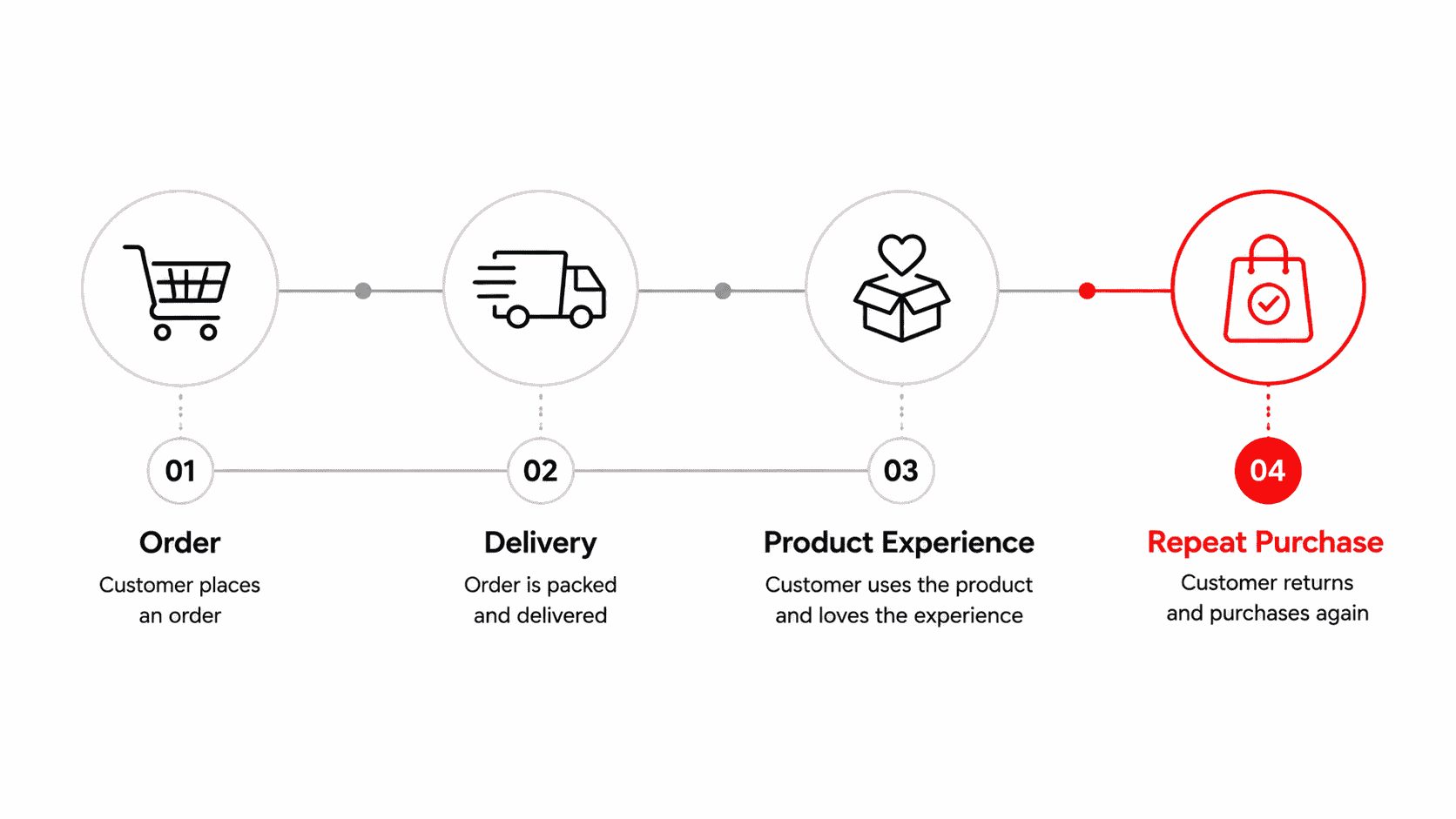
Most D2C brands invest heavily in getting customers to buy. Far fewer invest in what happens after the purchase.
That's a problem because customer experience doesn't end at checkout. In many ways, it begins there. If you're wondering how to improve customer experience after purchase, the answer starts with understanding what customers feel once they've paid.
They don't stop thinking about the order. Instead, they start asking questions.
Has my order been confirmed? When will it ship? How long will delivery take? What happens if there's an issue?
The brands that answer those questions proactively create better experiences, stronger customer relationships, and higher retention.
The Post-Purchase Experience Shapes How Customers Remember Your Brand
A great shopping experience can quickly be forgotten if the post-purchase journey feels frustrating.
Customers often spend far more time waiting for a product than they spend buying it. That waiting period becomes a critical part of the overall experience.
Unfortunately, many brands go silent after checkout. The customer receives a payment confirmation and then hears nothing for days.
That silence creates uncertainty.
Good post-purchase experiences replace uncertainty with clarity.
See how proactive post-purchase communication builds trust and retention in our guide: How Post-Purchase Communication Improves Customer Retention.
Communication Is the Foundation of a Better Experience
One of the easiest ways to improve customer experience after purchase is simply keeping customers informed.
Customers want visibility. They want to know:
- The order was received
- The order is being processed
- The order has shipped
- The expected delivery date
- Whether there are any delays
These updates may seem operational, but they directly influence customer satisfaction.
When customers know what's happening, they feel more confident about their purchase.
Learn how instant confirmations and updates build immediate trust in our guide: Instant Order Confirmation Customer Trust.
Order Updates Reduce Anxiety
Every purchase creates a small amount of post-purchase anxiety. This is especially true for first-time customers.
They've paid money but haven't received the product yet.
Without updates, uncertainty grows. With updates, confidence grows.
Order confirmations, shipping notifications, and delivery alerts reassure customers that everything is moving as expected.
Many brands focus heavily on acquisition while overlooking this simple trust-building opportunity.
Explore how fast updates and support reduce friction in our guide: How Fast Customer Support Increases D2C Sales.
Fast Support Matters After Checkout Too
Customer support isn't only important before a purchase. It becomes even more important after one.
Questions about shipping, exchanges, delivery timelines, product usage, or returns can arise at any point in the journey.
When customers encounter problems, response speed shapes their perception of the brand.
A delayed reply creates frustration. A quick reply creates confidence.
The quality of support often determines whether a customer buys once or buys again.
See how automation helps scale fast support without increasing headcount in our guide: Reduce Customer Support Load Using Automation.
The Best Customer Experience Feels Proactive
Customers shouldn't have to chase updates.
The best brands anticipate questions before customers ask them.
For example:
- Sending shipping notifications before customers request tracking information
- Sharing delivery estimates proactively
- Providing return instructions before confusion arises
- Offering product tips after delivery
This proactive approach reduces friction while making the experience feel smoother and more thoughtful.
It's one reason leading D2C brands generate fewer support tickets while maintaining higher satisfaction.
Reviews and Feedback Complete the Journey
Many brands stop communicating after delivery. That's a missed opportunity.
The period immediately after product delivery is often when engagement is highest.
Customers are actively using the product and forming opinions about their experience.
This makes it an ideal time to:
- Collect reviews
- Request feedback
- Answer product questions
- Resolve concerns
- Encourage repeat purchases
A strong post-purchase flow helps transform a completed order into an ongoing customer relationship.
Great Experiences Lead to Better Retention
Customer retention is often viewed as a marketing challenge. In reality, it's also a customer experience challenge.
Customers who feel informed, supported, and valued are more likely to return. Customers who feel ignored often don't.
The difference between a one-time buyer and a repeat customer is frequently determined by what happens after the first purchase.
That's why the post-purchase journey deserves as much attention as acquisition.
Customer Experience Is a Revenue Driver
It's easy to think of post-purchase communication as a service function. The reality is that it directly impacts revenue.
Better experiences can lead to:
- More repeat purchases
- Higher customer lifetime value
- Better reviews
- More referrals
- Fewer support tickets
When customers trust the experience, buying again feels easier.
And in D2C, repeat customers are often far more valuable than first-time buyers.
According to 2026 benchmarks, the average DTC ecommerce retention rate is around 31%, with top performers reaching 45-55% through strong post-purchase programs. Proactive communication can significantly reduce churn and boost CLV.
Conclusion
Improving customer experience after purchase isn't about adding complexity. It's about removing uncertainty.
Customers want communication, visibility, support, and reassurance throughout their journey.
Brands that consistently provide those things create stronger relationships, better retention, and more repeat revenue over time.
Because the customer experience doesn't end when someone places an order. That's where it truly starts.
Improve Customer Experience with Better Post-Purchase Communication
helo.ai helps D2C brands create seamless post-purchase journeys with WhatsApp order updates, shipping notifications, delivery alerts, support automation, and customer engagement workflows that keep customers informed at every stage.
Build better post-purchase experiences with helo.ai — book a demo.
FAQs
How to improve customer experience after purchase?
The most effective approach is proactive communication, timely order updates, responsive support, and a structured post-purchase journey that keeps customers informed and reduces uncertainty.
Why is post-purchase communication important?
Post-purchase communication reduces uncertainty, improves customer satisfaction, builds trust after checkout, and directly drives retention and repeat purchases.
What should brands send after a customer purchases?
Brands should send order confirmations, shipping updates, delivery notifications, support information, review requests, and relevant follow-up messages like product tips or reorder reminders.
Does customer experience affect retention?
Yes. Positive post-purchase experiences significantly increase the likelihood of repeat purchases and long-term customer loyalty. Poor experiences lead to higher churn.
How can D2C brands improve post-purchase engagement?
D2C brands can improve engagement through personalized updates, proactive support, review collection, educational content, and retention-focused communication flows on channels like WhatsApp.

.jpeg&w=96&q=75)