.jpeg)
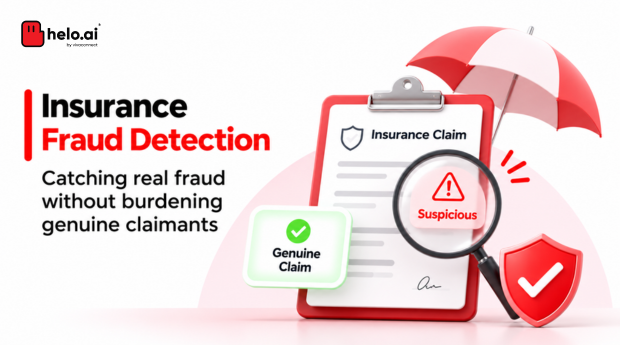


A customer submits a health insurance claim after a hospital stay. The documents are complete, the treatment is covered and the claim appears straightforward. But the insurer's systems identify an unusual billing pattern, so the claim is flagged for further review.
That review may be necessary. It may also mean the customer has to wait longer, submit additional documents or explain details they have already provided.
This is the challenge insurers are trying to address: detecting suspicious activity without treating every unusual claim as a fraudulent one.
Insurers are strengthening fraud investigations, using data to identify suspicious patterns and improving coordination across the industry. At the same time, regulators are emphasising fair, transparent and time-bound claim settlement.
The objective is not simply to reject more suspicious claims. It is to identify genuine risks accurately while ensuring legitimate policyholders are not burdened by unnecessary checks.
Indian insurers are adding structured fraud monitoring, data-driven checks and proportionate review, while regulators require fair, time-bound claim settlement. A flagged claim should trigger a closer look, not automatic rejection.
- IRDAI's Insurance Fraud Monitoring Framework Guidelines, 2025 are effective from 1 April 2026 and define five fraud categories.
- Detection combines automated checks, human review and industry information sharing through the Insurance Information Bureau.
- Health cashless timelines are one hour for pre-authorisation and three hours for final authorisation.
- Track false positives, genuine claim settlement time and repeat document requests, not only fraud caught.
- Survey figures here come from five insurers and are not representative of the whole market.
Fraud patterns are becoming more complex
Insurance fraud can involve policyholders, intermediaries, service providers, vendors or employees within an organisation. In some cases, multiple parties may work together.
The patterns also vary by insurance segment.
Health insurance
In health insurance, suspicious activity can include inflated hospital bills, fabricated medical documents, false hospitalisation records and non-disclosure of pre-existing medical conditions.
Motor insurance
In motor insurance, concerns can involve staged accidents, exaggerated repair estimates, manipulated documents or duplicate claims.
Digital processes introduce additional vulnerabilities. Remote interactions can make identity verification harder, while incomplete or manipulated documents may be difficult to identify without appropriate checks.
A 2025 Gen Re survey involving five participating companies in India's non-life insurance market identified bill inflation, false hospital documents without an actual admission, non-disclosure of pre-existing conditions and fabricated documents among the commonly reported fraud patterns.
The survey also highlighted challenges associated with remote customer interactions, obtaining evidence, claims digitisation and customer authentication.
Here is the share of the five respondents that cited each challenge.
insurers cited more remote or digital interactions with customers
Gen Re 2025 survey (80%)
cited difficulty in obtaining evidence
Gen Re 2025 survey (80%)
cited claims digitisation
Gen Re 2025 survey (60%)
cited customer authentication challenges
Gen Re 2025 survey (60%)
The findings cover selected product lines and a small group of participating insurers. They should not be treated as representative of the entire Indian insurance market. However, they illustrate why insurers need to look beyond traditional document checks.
Gen Re's summary lists product lines such as loan cover, critical illness, hospital indemnity and travel, so the results describe those lines only.
Insurers are moving towards structured fraud monitoring
Fraud detection cannot depend only on individual claims investigations or isolated internal controls. Insurers need a coordinated approach that covers their products, employees, distribution partners, vendors and technology systems.
A significant regulatory development in India is the IRDAI Insurance Fraud Monitoring Framework Guidelines, 2025, issued on 9 October 2025 and effective from 1 April 2026.
The guidelines identify five broad categories of insurance fraud:
Internal fraud: Involving employees or senior management.
Distribution channel fraud: Involving intermediaries and distribution partners.
Policyholder or claims fraud: Involving dishonest activity during policy purchase, servicing or claims.
External fraud: Involving vendors, service providers or other external parties.
Affinity or complex fraud: Involving collusion between multiple parties.
The framework also clarifies responsibilities within an insurer.
The Risk Management Committee (RMC) is responsible for the effective implementation and oversight of the fraud risk management framework. Each insurer must also establish a Fraud Monitoring Committee (FMC) to operationalise the framework and oversee fraud prevention, detection, investigation and reporting. A Fraud Monitoring Unit (FMU), independent of internal audit, supports the committee.
Insurers are also expected to establish board-approved anti-fraud policies, identify relevant warning indicators and review their effectiveness regularly.
This is an important shift. Instead of treating suspicious claims as isolated incidents, insurers are expected to identify vulnerabilities across the organisation, examine emerging patterns and strengthen controls as risks change.
Data and technology are helping insurers identify suspicious patterns
Insurers are increasingly combining automated checks with human investigation.
Technology can help identify patterns that may be difficult to spot when claims are reviewed individually. Examples include:
- Repeated claims involving the same hospital, repair centre or service provider.
- Unusual billing patterns across multiple claims.
- Duplicate documents or inconsistent claim information.
- Repeated use of similar photographs or supporting evidence.
- Unusual activity linked to customer identities or accounts.
Note: These indicators do not establish fraud on their own. They help insurers decide which cases may need additional attention.
The Gen Re 2025 survey offers a limited but useful view of how participating Indian insurers approach detection. All five respondents reported using automated risk-scoring systems during underwriting. Separately, 40% reported using AI to identify questionable applications.
For claims, the survey reported a different picture: 80% of participating companies used system automation to identify suspicious claims, while 80% also reported manual identification by staff.
insurers used automated risk scoring
Underwriting. Gen Re 2025 survey (100%)
used AI to identify questionable applications
Underwriting. Gen Re 2025 survey (40%)
used system automation to identify suspicious claims
Claims. Gen Re 2025 survey (80%)
also reported manual identification by staff
Claims. Gen Re 2025 survey (80%)
These findings should not be confused. The 40% AI figure relates to questionable applications during underwriting, while the claims findings concern system automation and manual identification. The survey does not establish that 40% of insurers use AI specifically for claims fraud detection.
Another important development is industry-level information sharing. Under the 2025 IRDAI framework, insurers are required to participate in the Insurance Information Bureau's Fraud Monitoring Technology Framework, as applicable to their businesses. The IIB is expected to facilitate threat intelligence sharing through an industry-wide database and maintain a caution repository containing relevant information about blacklisted distribution channels, hospitals, third-party vendors and fraud perpetrators.
This can help insurers identify patterns that may not be visible within one company's claims data alone.
BCG's November 2025 analysis of India's health insurance ecosystem estimates that ₹8,000–10,000 crore in annual claim payouts are lost through fraud, waste and abuse (FWA). This estimate covers more than deliberate fraud. Wasteful practices and abuse are also included, so the entire amount should not be interpreted as confirmed fraudulent claims.
estimated annual health claim payouts lost to fraud, waste and abuse
BCG, November 2025. An estimate, not confirmed fraud.
BCG recommends stronger data interoperability, standardised processes and technology-supported checks as part of a broader response.
The opportunity is to improve the quality of claim assessment, not simply increase the number of claims flagged.
A warning sign should trigger investigation, not automatic rejection
One of the most important distinctions in fraud management is the difference between a suspicious claim and a proven fraudulent claim.
A high-value claim, an unusual treatment pattern or a mismatch in documents may justify further verification. But there can also be legitimate explanations.
A hospital may charge more because a treatment is complex. A customer may have incomplete documentation because of an emergency. A vehicle repair estimate may differ because of the extent of damage or the availability of parts.
If every exception leads to the same level of investigation, genuine customers may experience avoidable delays.
Insurers therefore need a proportionate review process:
- Routine claims: Claims that meet standard requirements and can move through the regular settlement process.
- Claims requiring clarification: Cases where a missing document or inconsistent detail can be resolved through a targeted request.
- Claims requiring investigation: Cases where multiple indicators suggest that a more detailed review is necessary.
The exact process will vary by product and insurer, but the principle remains the same: the level of scrutiny should reflect the evidence and risk involved.
Human review is particularly important before a final decision is made. Claims professionals and investigators can consider the circumstances, verify explanations and distinguish genuine irregularities from deliberate misrepresentation.
Remember: A claim being flagged should not, by itself, be treated as proof of fraud.
When a claim is flagged, tell the customer what is being checked and which document is still needed. This avoids asking for the same information twice. Insurers can send these updates by WhatsApp or SMS where the customer has agreed to receive them.
Keeping genuine claimants informed during review?
Read about Helo.ai's insurance solutions, or talk to the team about customer communication in your claims journey.
Fraud prevention must work alongside fair and timely claim settlement
Stronger fraud controls cannot become a reason for indefinite delays or unclear decisions.
IRDAI's policyholder protection framework requires insurers to follow transparent and fair claim-settlement processes. In motor insurance, insurers must have board-approved claim-settlement policies, and claim deductions and settlements must be reasonable and supported by documentary explanations.
There are also provisions for simpler assessment routes in certain motor claims. For motor losses below ₹50,000, assessment by a registered surveyor is not mandatory in every case under the applicable framework. A Ministry of Finance release in December 2025 also described insurers' use of app-based methods, including AI-supported assessment, for such claims. This does not mean every claim below the threshold is automatically approved.
Health insurance has separate requirements. IRDAI has prescribed a one-hour timeline for cashless pre-authorisation and three hours for final authorisation.
These examples show that faster claim processing and stronger controls do not have to work against each other. The objective is to use appropriate assessment methods for different types of claims rather than apply the same process to every case.
cashless pre-authorisation timeline in health insurance
IRDAI, per Ministry of Finance, 26 March 2026
final authorisation timeline for cashless claims
IRDAI, per Ministry of Finance, 26 March 2026
motor losses below this need not be mandatorily surveyed by a registered surveyor
Ministry of Finance, 16 December 2025
general and health insurance grievances on Bima Bharosa in FY 2024–25
Ministry of Finance. Not fraud-specific.
The scale of customer concerns makes this balance important. According to a Ministry of Finance response published in March 2026, 1,37,361 general and health insurance grievances were reported through IRDAI's Bima Bharosa portal in FY 2024–25. These include different types of grievances and should not be interpreted as fraud-related complaints or claim delays alone.
The same release says 1,27,755 of them, or 93%, were disposed of within FY 2024–25.
They nevertheless underline why claim processes need to remain understandable and accessible even as fraud controls become more sophisticated.
What should insurers measure to balance fraud control and customer experience?
The effectiveness of a fraud prevention programme cannot be measured only by the number of suspicious claims identified or the value of claims rejected.
Insurers also need to understand what happens to claims after they enter the review process.
A balanced measurement framework should include:
| Measure | What it helps insurers understand |
|---|---|
| Claims flagged for review | How many claims trigger additional scrutiny |
| Investigation outcomes | How many investigated claims result in substantiated fraud findings |
| Claims cleared after review | How many flagged claims are found to be genuine |
| False-positive rate | How often genuine claims are incorrectly flagged |
| Investigation turnaround time | Whether suspicious claims are reviewed within defined timelines |
| Genuine claim settlement time | Whether additional checks are delaying legitimate claims |
| Repeat document requests | Whether customers are being asked for information already submitted |
| Complaint and escalation trends | Whether fraud controls are creating confusion or dissatisfaction |
| Recovery and loss prevention | Whether controls are reducing established fraud losses and preventing repeat incidents |
These measures should be examined together.
For example, an increase in flagged claims may initially look like improved fraud detection. But if many of those claims are later cleared, it could also indicate that the warning indicators are too broad.
Similarly, a reduction in fraud-related payouts is not necessarily a sign of better controls if genuine claims are also being delayed or incorrectly rejected.
Insurers should therefore track the complete journey from detection to investigation outcome. This helps distinguish between better identification of fraud and simply increasing the volume of claims sent for review.
Conclusion: Stronger fraud controls should make claim decisions more accurate
Insurance fraud creates financial losses, affects pricing and weakens trust in the industry. Insurers have good reason to strengthen their detection and investigation processes.
India's 2025 Insurance Fraud Monitoring Framework Guidelines, effective from 1 April 2026, mark an important step towards more structured fraud management. They establish clearer responsibilities, stronger monitoring and greater industry-level information sharing.
But stronger controls must be accompanied by better judgement. A suspicious pattern should lead to appropriate verification, not an automatic assumption of wrongdoing.
Insurers that combine relevant data, proportionate checks, experienced human review and transparent processes can protect themselves against fraud without making genuine claimants navigate an unnecessarily difficult process.
The measure of effective fraud prevention is not how many claims an insurer flags. It is how accurately it identifies fraud while allowing genuine claims to move forward.
Planning claim communication for genuine customers?
Tell the Helo.ai team about your claims journey and channels, and they can help you plan how customers are kept informed.
Frequently Asked Questions
What are the common types of insurance fraud in India?
In health insurance, common patterns include inflated hospital bills, fabricated medical documents, false hospitalisation records and non-disclosure of pre-existing conditions. In motor insurance, they include staged accidents, exaggerated repair estimates, manipulated documents and duplicate claims.
How do insurers detect fraudulent insurance claims?
Insurers combine automated checks with human investigation. Checks look for repeated claims at one provider, unusual billing, duplicate documents and inconsistent information. These indicators do not prove fraud on their own.
How is AI used in insurance fraud detection?
In Gen Re's 2025 survey of five Indian non-life insurers, two (40%) used AI to identify questionable applications at underwriting. The survey covers selected product lines and does not show that 40% of insurers use AI for claims fraud detection.
What are IRDAI's Insurance Fraud Monitoring Framework Guidelines?
They are IRDAI's 2025 guidelines on fraud management, effective from 1 April 2026. They define five fraud categories, require a Fraud Monitoring Committee and an independent Fraud Monitoring Unit at each insurer, and require participation in the Insurance Information Bureau's fraud monitoring technology framework.
How can insurers prevent fraud without delaying genuine claims?
Insurers can match scrutiny to the evidence. Standard claims settle normally, missing details trigger a targeted request, and only claims with multiple indicators get detailed investigation. Human review comes before a final decision, and insurers can track false positives and settlement time for genuine claims.
What happens when an insurance claim is flagged for investigation?
A flag means the claim needs a closer look, not that it is fraudulent. Depending on the case, the insurer may ask for a missing document or clarification, or carry out a detailed review. The exact process varies by product and insurer.
Note. This article is an editorial guide and general information, not legal or financial advice. Regulations, figures and surveys change, so confirm current requirements with IRDAI and your advisers. Survey figures come from five insurers and are not representative of the whole market. Helo.ai is a CPaaS provider and publishes this guide. Facts were checked on 13 November 2026.