

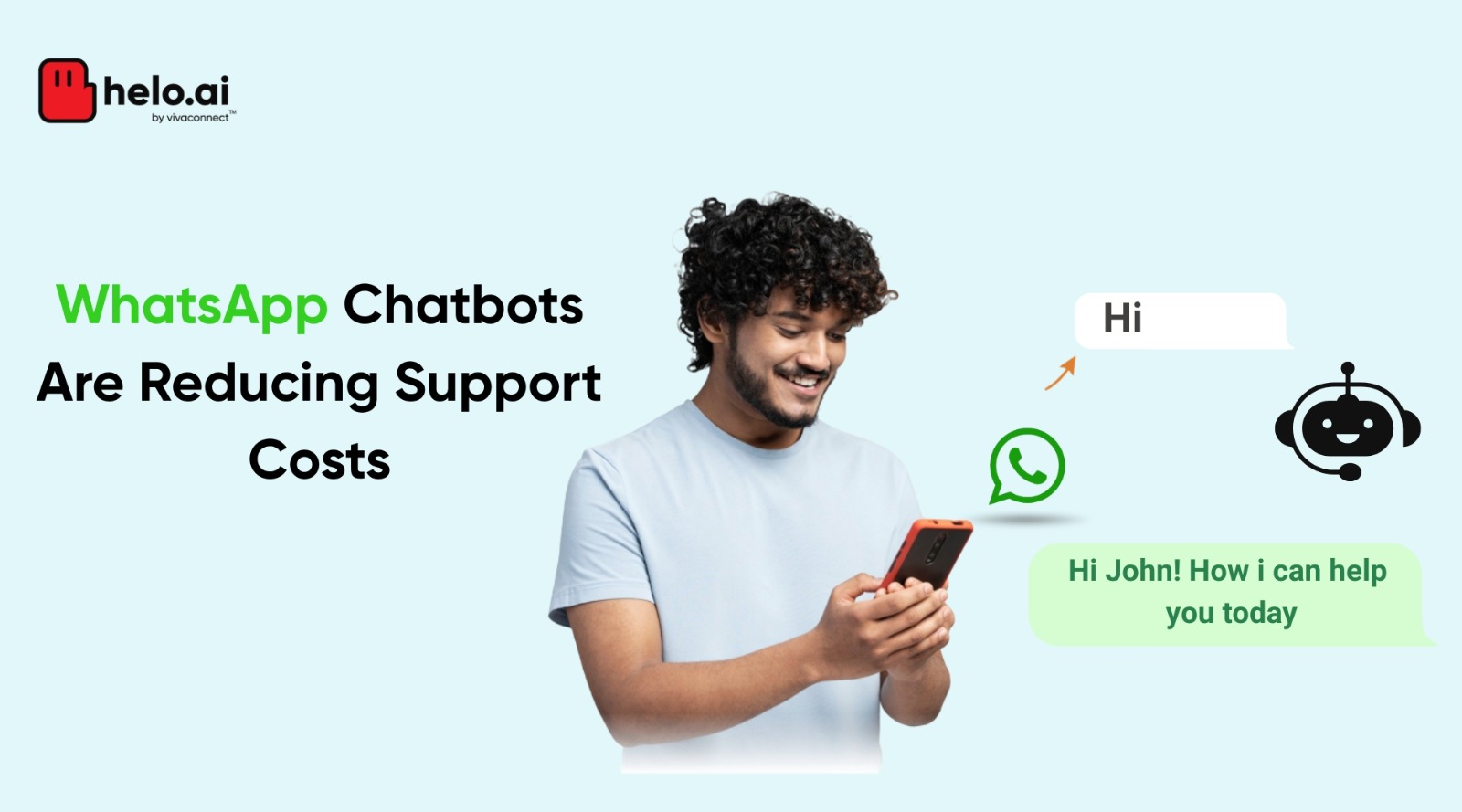


It is a long proven fact that customer support is one of the most important pillars for any reputable brand if they want to survive in the market.
Good customer support = longer CLTV and retention. But here is the issue. Businesses today are facing rising support costs and growing customer expectations for faster, better responses.
The good news? You don’t have to choose between cutting costs and improving service.
According to a recent report by Salesforce, 78% of customers expect consistent interactions across departments, but only 50% say they actually experience it.
At the same time, delivering 24/7 support across multiple channels like WhatsApp, RCS, SMS, email, and voice can significantly drive up operational expenses.
So, how do businesses strike the right balance?
WhatsApp chatbot for business — a smart, scalable middle ground that automates routine support tasks, delivers faster responses, and frees up human agents for more complex issues.
In this blog, we'll show how WhatsApp chatbots are helping businesses automate support, reduce costs, and deliver better customer experiences — all at once.
Explore how Helo Conversations — a no-code AI chatbots builder that can help you simplify customer support
What Is a WhatsApp Chatbot for Business?
A WhatsApp chatbot for business is an automated conversational tool that runs on the WhatsApp Business API. It allows businesses to interact with customers in real-time, answering queries, providing information, and even completing transactions. All of this without needing a human agent at every step.
Think of it as a virtual support assistant that lives inside WhatsApp, available 24/7.
Here’s what a WhatsApp chatbot can typically do:
- Answer FAQs like product availability, shipping times, refund policies, etc.
- Book appointments or schedule services directly through chat.
- Process orders and confirmations without redirecting customers to external websites.
- Provide instant updates on order status, deliveries, and support tickets.
Because WhatsApp chatbots work on a platform customers already trust and use daily, they naturally drive higher engagement, faster response rates, and better customer satisfaction.
And the best part?
They’re always on — ready to engage customers whether it’s noon, midnight, or a public holiday.
Why Support Costs Are a Growing Problem
Keeping customers happy today isn’t as simple or as affordable as it used to be.
Here’s why support costs are climbing year over year:
1. Rising Customer Expectations
Customers expect instant, 24/7 support — not just during business hours.
Whether it’s a WhatsApp message at midnight or a follow-up SMS in the morning, brands are expected to respond fast, across every channel.
2. Explosion of Communication Channels
It’s no longer just phone and email.
Now it’s WhatsApp, RCS, SMS, email, and voice — and customers expect a consistent, connected experience across all of them.
Managing multiple channels manually requires larger, more specialized support teams, and that drives costs up fast.
3. Scaling with Humans Alone Is Expensive
Hiring more agents isn’t always a scalable solution:
- Salaries, training, overtime, and infrastructure costs pile up quickly.
- Peak seasons like holidays or sales events make it even harder to scale without overspending.
4. The Pressure to Balance Quality and Efficiency
Today, businesses need to do two hard things at once:
- Keep customer satisfaction high
- Keep operational costs low
Failing on either side can directly impact customer loyalty and profitability.
5 Ways WhatsApp Chatbots Help Reduce Customer Support Costs
Still wondering how a WhatsApp chatbot for business can make such a big difference?
Let’s break it down into the five most impactful ways.
1. Automating Common Customer Queries
The reality is that 70–80% of customer inquiries are repetitive — things like:
- "Where’s my order?"
- "What’s your return policy?"
- "How do I reset my password?"
A WhatsApp chatbot can handle these instantly, without involving a human agent.
This means faster resolutions for customers and massive time savings for your team.
2. Scaling Support Without Scaling Team Size
One agent can only handle a few conversations at once.
A chatbot? It can manage thousands — all at the same time.
This allows businesses to scale up during busy periods (like festive sales or product launches) without hiring a whole new support team.
3. Reducing Response and Resolution Times
Nobody likes waiting.
When customers get immediate answers through a chatbot, it reduces frustration and prevents small issues from escalating into bigger problems that require more time and resources to fix.
Fast responses also boost customer loyalty and CSAT (Customer Satisfaction) scores.
4. Cutting Down After-Hours Support Costs
Maintaining 24/7 live support usually means:
- Paying night shift wages
- Hiring global teams
- Managing complicated hand-offs
A WhatsApp chatbot is available around the clock.
No night shifts, no added cost. Keep customers supported even when your office lights are off.
5. Freeing Human Agents for Complex Queries
By taking care of simple and repetitive tasks, WhatsApp chatbots free up human agents to:
- Handle escalations
- Manage sensitive conversations
- Provide personalized, high-value interactions
This improves both agent satisfaction and customer experiences — while keeping your overall support costs under control.
According to IBM, businesses that implement chatbots save up to 30% in customer support costs in the first year alone.
Real-World Examples: Industries Leading the Shift
It’s not just tech giants or startups using WhatsApp chatbots anymore.
Industries across the board are tapping into automation to cut support costs and improve customer experiences.
Here are some of the sectors leading the way:
E-commerce
- Automating order confirmations, shipping updates, and returns.
- Providing instant answers about product availability, delivery times, and payment options — all through WhatsApp chat.
Banking & Finance
- Verifying transactions securely through WhatsApp.
- Handling basic FAQs about account management, loan applications, and payment reminders — without human agents.
Healthcare
- Scheduling appointments and sending automated appointment reminders.
- Answering common questions about services, insurance policies, and prescriptions.
Travel & Hospitality
- Managing booking confirmations, flight updates, and hotel reservations.
- Resolving customer inquiries like baggage policies, check-in details, and refund requests — instantly, via chat.
When businesses in these industries use a WhatsApp chatbot for business, they not only reduce support costs but also increase customer satisfaction by providing fast, 24/7 service on a platform people already trust.
What to Look for in a WhatsApp Chatbot Solution
Not all chatbot solutions are built the same. When choosing a WhatsApp chatbot for business, it's important to pick a platform that makes automation easy — without adding more complexity.
Here’s what to look for:
1. Easy Setup (No Heavy IT Lift)
You shouldn’t need a dedicated engineering team to get started. A good chatbot solution should offer fast, no-fuss onboarding.
2. Drag-and-Drop No-Code Bot Builder
Setting up conversation flows should feel as simple as arranging blocks — not writing lines of code.
A visual bot builder empowers marketing, sales, and support teams to make updates without waiting on developers.
3. AI-Powered with Human Fallback Options
Smart chatbots can handle most queries, but when things get tricky, they should seamlessly hand over the conversation to a live agent — ensuring a smooth customer experience.
4. CRM and Backend Integrations
Your chatbot should sync with your CRM, order management, and support ticket systems — so every conversation is informed, personalized, and actionable.
5. Multilingual Chatbot Capabilities
Serving a diverse customer base?
Make sure your chatbot can communicate in multiple languages to break down barriers and improve engagement.
6. Analytics and Reporting Features
Look for built-in dashboards that track:
- Message delivery rates
- Customer wait times
- Query resolution rates
- Customer satisfaction scores
You can’t improve what you don’t measure.
💡 Hint: Helo.ai’s WhatsApp chatbots are built to make this easy, powerful, and scalable.
Launch Basic Automations First, Expand Over Time
Start simple:
- Automate FAQs
- Set up order tracking
- Enable after-hours support
Then grow into:
- Personalized offers
- Proactive notifications
- Cross-channel campaigns
Ready to get started?
👉 Explore our WhatsApp chatbot for business Book a free demo to see how easy automation can be.
Conclusion
Support costs aren’t going down but with the right tools, you can make them manageable while keeping your customers happy.
WhatsApp chatbots for business are no longer just a “nice-to-have.” They’re becoming a crucial part of how modern businesses scale their support operations, cut costs, and stay competitive without sacrificing customer experience.
And remember: automation isn’t about replacing people — it’s about making support teams more powerful. It’s about letting humans focus where they’re needed most, while smart automation handles the heavy lifting.
So if you're looking for a way to deliver faster, better support without stretching your team thin — maybe it’s time to put a WhatsApp chatbot to work.
FAQs
1. What kinds of queries can WhatsApp chatbots handle?
WhatsApp chatbots can manage a wide range of queries, including:
- Order tracking
- FAQs
- Booking appointments
- Shipping updates
- Refund requests
- Basic account management
Anything repetitive or rule-based is ideal for automation.
2. Are chatbots expensive to set up for small businesses?
Not at all.
With no-code builders and pay-as-you-grow models, even small businesses can deploy powerful WhatsApp chatbots without heavy upfront costs or development expenses.
3. How do chatbots maintain a human touch?
Smart chatbots are designed to sound conversational, not robotic.
When a query becomes too complex, the chatbot can hand the conversation over to a live agent, ensuring a smooth, personalized experience.
4. Can I customize the chatbot experience?
Yes.
You can fully customize:
- Conversation flows
- Messaging tone
- FAQs
- Branding elements
- Integrations with backend systems like CRMs
This allows you to personalize replies based on customer data.
5. What’s the ROI timeline for WhatsApp chatbot adoption?
Most businesses start seeing measurable returns within the first 3–6 months, through:
- Reduced support costs
- Improved customer satisfaction



.jpeg&w=96&q=75)