
.png)


It is a well known fact that today every brand is fighting for consumer attention. And with the shift towards AI, the regular ads are no longer the only channel. The new way of marketing is conversational marketing and as a result inboxes are more cluttered than ever.
Earlier the way brands used to reach out to their target audience was through SMS but it just doesn’t stand out anymore. Why? It's boring. In the era of social media nobody wants to read boring plain text.
Rich Communication Services (RCS) — Google’s next-gen messaging protocol — is emerging as a powerful alternative.
First, what is RCS?
RCS (Rich Communication Services) is the modern upgrade to SMS. It looks and feels like texting — but comes packed with features you’d expect in an app.
It supports verified sender IDs, brand logos, custom colors, delivery/read receipts, and real-time responses.
Instead of plain text, brands can send carousels, GIFs, images, videos, CTAs, and even pre-filled reply buttons — all inside the phone’s default Messages app.
No need to install anything. RCS is built into 800M+ Android phones, and soon, RCS messages will show up inside iMessage too — Apple is officially rolling it out by early 2026.
Why brands are turning to RCS
Well, it’s obvious brands are switching from SMS to RCS, but let’s take a quick look at what RCS offers and how brands are leveraging it.
1. It gets seen
RCS lives in the phone’s default inbox — not a third-party app or promotional tab. That means zero install friction and high open rates.
Also, brands can’t just spam users, improving better user experience and ethical marketing. Google allows only 4 promotional RCS messages per customer per month by default. This helps reduce noise and improve trust. If you’re consistently seeing good engagement, you can apply to increase that limit.
3. It’s immersive
RCS turns your messages into micro-apps. You can send:
- Product carousels
- Flash sale banners
- Feedback forms
- Live order tracking
— all inside the same message thread. - Web-view
It feels like a website — but it’s not. It’s leaner, faster, and friction-free.
4. It feels personal
Every RCS message comes from a verified business profile, not a random short code. That means users know who’s talking to them — and can reply.
Two-way messaging is native, meaning RCS can power real conversations, not just notifications.
5. It’s measurable
RCS offers read receipts, delivery confirmations, and click-through tracking — without relying on external links or third-party integrations. All data stays within the messaging flow.
The shift in brand messaging behavior
As we discussed earlier today, marketing and CX teams are expected to deliver seamless, consistent conversations across every touchpoint. But doing that often means stitching together multiple platforms, managing channel-specific limitations, and juggling rising costs. It’s a lot.
That’s why RCS is becoming a preferred option in the channel mix.
It combines the simplicity and scale of SMS with the interactivity and visual richness of modern apps — all inside the phone’s default messaging inbox. No separate apps. No added friction.
You can add carousels, videos, buttons, and quick replies. You can track reads, clicks, and delivery. You can brand your messages with verified business profiles and custom colors. And you can do it all in a format that feels native, not intrusive.
RCS doesn’t replace your other channels — it complements them. For many brands, it’s becoming the go-to for promotional bursts, transactional nudges, and mobile-first journeys where visual storytelling matters.
And it’s not just a trend.
→ Juniper Research predicts RCS business messaging traffic will reach 630 billion messages by 2026.
That’s a clear signal: rich, contextual messaging is no longer a nice-to-have — it’s the new standard.
What RCS unlocks for enterprises
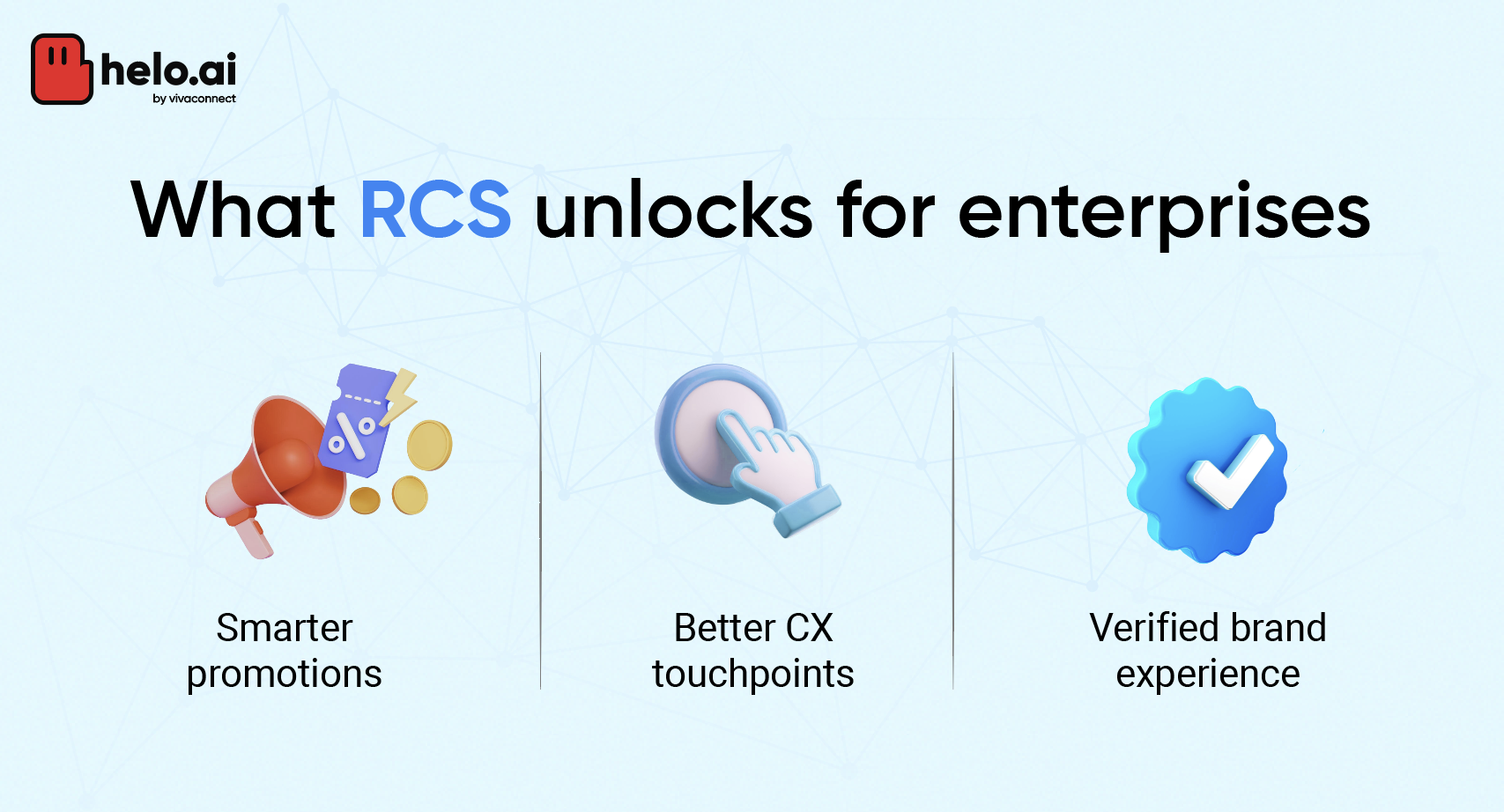
RCS for enterprices is a goldmine. Here's what it unlocks for them:
1. Smarter promotions
Want to run a 24-hour flash sale or launch a new product? RCS lets you do it with:
- Eye-catching visuals
- Countdown timers
- Direct CTAs like “Shop Now” or “Claim Offer”
— all in a single message.
2. Better CX touchpoints
RCS is great for post-purchase and service journeys. Use it for:
- Delivery updates
- Feedback forms
- Password resets
- Loyalty reminders
And customers don’t have to switch apps or go looking for details. It all comes through the same verified sender thread.
3. Verified brand experience
Every RCS profile is vetted and verified by Google. This means users see your logo, business name, and even brand colors — instantly building credibility.
Note: To register on RCS, your business needs a verified Google Business account and must comply with Google's messaging policies, including acceptable use and consent requirements. In your website’s terms — general consent language for brand communications should be mentioned and accepted.
Want to get started? Explore Helo.ai — our ready-to-scale RCS messaging platform.
Is RCS ready for scale?
Absolutely. It’s not a beta test anymore.
- 800M+ Android users already have RCS by default
- iPhone support is coming by early 2026, starting with iOS 18
- Google has standardized compliance and delivery through selected BSPs (Business Service Providers)
Currently, Helo.ai is a RCS BSP, ensuring end-to-end message routing, reporting, and compliance. We're also working on letting enterprises bring their own BSPs in the future, while still using Helo.ai for orchestration and control.
The future of messaging looks rich
The days of sending plain SMS blasts and hoping for the best are over.
Brand messaging is moving toward conversational, visual, and trusted experiences — and RCS is a cornerstone of that shift.
With Helo.ai, you don’t need to stitch together 10 tools to make RCS work. We’ve already built it into your stack — ready to launch, scale, and optimize.
Conclusion
RCS isn’t the future of messaging. It’s already here just quietly reshaping how brands show up on phones.
It’s not loud. Not hyped. But it’s doing the one thing that matters: getting through.
If you’ve ever felt like your campaigns are solid but somehow still getting lost — this is your signal to try something different. Something native, rich, and built for how people actually use their phones today.
No pressure to go all in. Just a good moment to start exploring.
With Helo.ai you can start your RCS journey!
Frequently Asked Questions
1. What is RCS messaging?
RCS (Rich Communication Services) is an upgraded version of SMS that allows brands to send rich, interactive, and app-like messages directly inside the phone’s default messaging app — without needing third-party apps.
2. How is RCS different from SMS and WhatsApp?
RCS combines the simplicity and reach of SMS with the visual interactivity of WhatsApp. Unlike WhatsApp, RCS doesn’t require users to install a separate app and offers verified sender IDs, read receipts, and branded content natively in the inbox.
3. Is RCS available on iPhones?
Not yet. Apple has officially announced RCS support starting with iOS 18, expected by early 2026. Messages will appear inside iMessage with RCS features.
4. Can small businesses use RCS?
Yes. While RCS has traditionally been used by large enterprises, small and mid-sized businesses can also benefit from its promotional and service-based capabilities using platforms like Helo.ai.
5. What kind of content can be sent via RCS?
Brands can send carousels, GIFs, videos, CTAs, order tracking, feedback forms, and more — all within the native messaging app, offering a rich and seamless user experience.
6. Is RCS messaging secure and compliant?
Yes. RCS messages are sent from verified business profiles and are subject to Google’s compliance rules, including consent requirements. BSPs like Helo.ai also handle delivery, routing, and policy enforcement.
7. How do I get started with RCS for my brand?
To start using RCS, you’ll need a verified Google Business profile and a trusted BSP (Business Service Provider) like Helo.ai to manage delivery, reporting, and compliance.