




Key Highlights
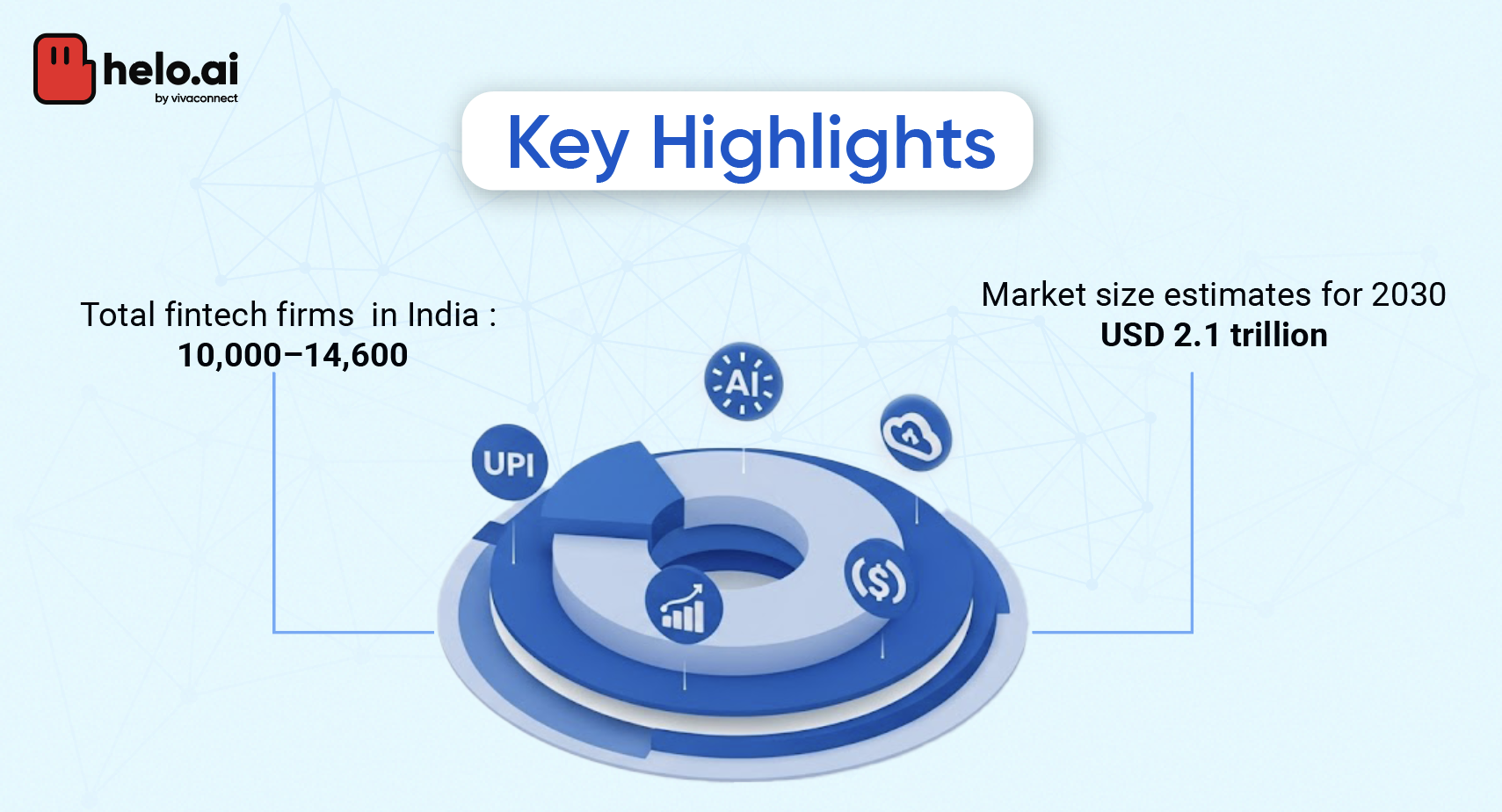
- The fintech industry in India is now leading globally. There are over 10,000 –14,600 fintech companies in the country.
- The market is set to reach a value of $2.1 trillion by the year 2030.
- Digital payments using ways like UPI, are growing rapidly. This change is shaping how people use money in the country.
- Government initiatives, strong digital infrastructure, and good policy rules help drive fintech adoption. You can see this even in rural areas of the country.
- New technology plays a big part as well. Things like artificial intelligence (AI), machine learning (ML), and cloud computing move the sector ahead.
- Fintech innovation is changing the old way of banking. It makes services work better. This push is helping new startups and unicorns grow in many areas.
The fintech landscape in India has changed a lot in recent years. This change came from big technological advancements. Now, more people in the country want to use digital tools in their day-to-day lives. There are more fintech companies working in India than before. These companies try hard to make customer experience better and easier for everyone. The ecosystem is growing, and this will help more people in the future.
There are strong policy moves going on, and financial services are changing a lot. This is making the industry grow fast. A lot of companies now use machine learning and artificial intelligence.
These tools help banks do their work faster and easier. The rise of artificial intelligence also means more people get access to financial services. With all these changes, the future of financial services in India looks stronger. Right now, it is a good time for financial inclusion, and there will be more growth as we keep moving forward.
5 Key Technologies Transforming the FinTech Industry
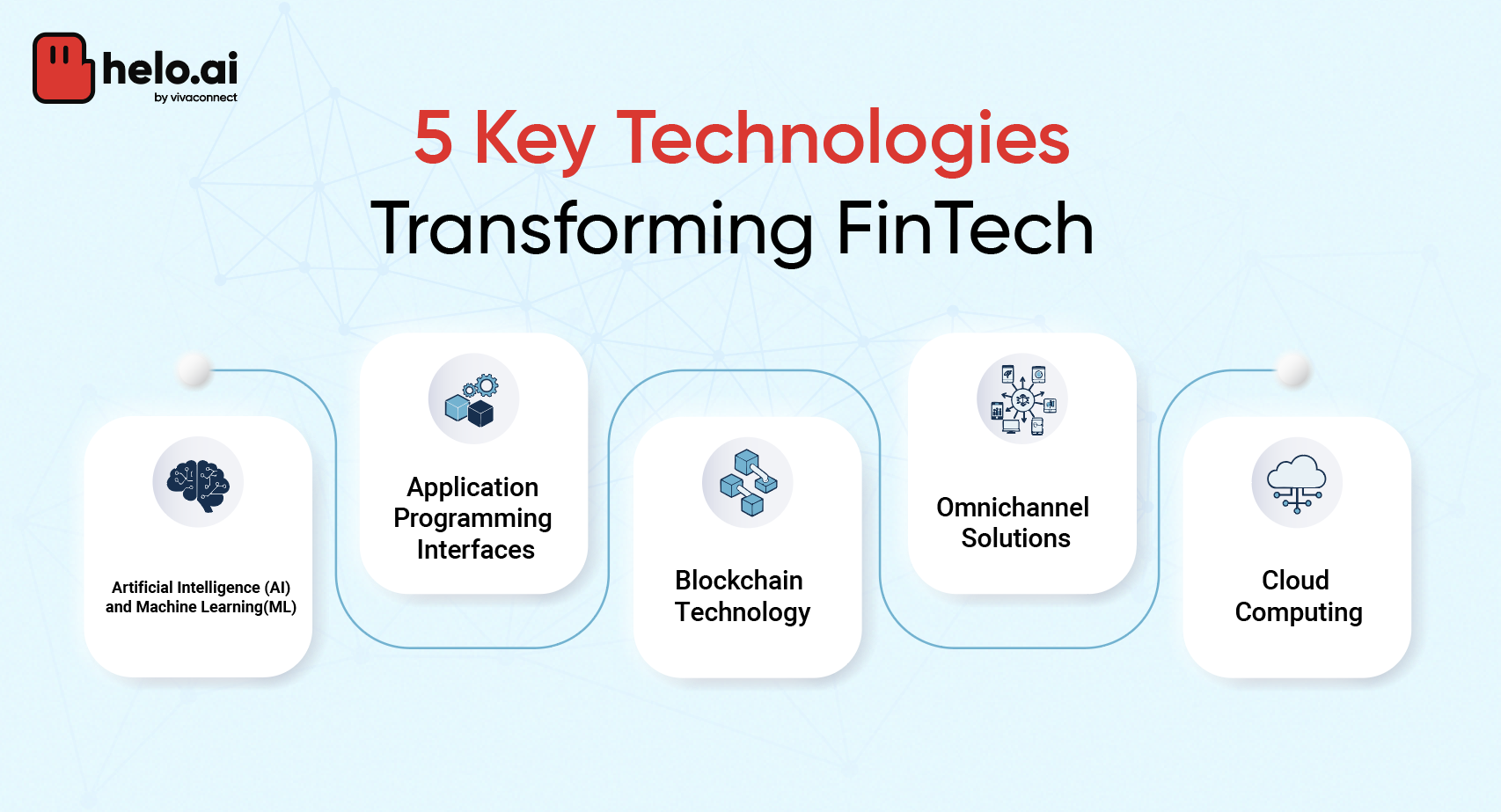
These new ways of using tech move the fintech revolution forward. They help people use their money, save, and pay in easy and safe ways.
- Artificial Intelligence (AI) and Machine Learning (ML): The use of artificial intelligence and machine learning is now helping to change how customer service and data collection work in the financial services sector. When fintech companies use AI and machine learning, they can do things faster and in a better way. The work goes quicker, and customers feel happy with the help they get.
- Cloud Computing: Many fintech companies use cloud computing today. The cloud helps these firms grow bigger and be more useful. With cloud computing, they can follow market changes much better and give out new ideas fast. This is good for people who want better financial services.
- Application Programming Interfaces (APIs): APIs make it simple to join several services together. This way, banks and fintech companies can work as one. A connected financial services system means that each company can give more choices to people.
- Blockchain Technology: Blockchain brings more safety and makes everything clear in financial services. This change helps companies make sure their transactions and records are safe and true. The sector gets more honest and strong with this new technology.
- Omnichannel Solutions: Now, fintech firms reach customers through many ways like RCS, SMS APIs, and WhatsApp API. They can talk with people on several channels. This means customers have a smooth time using the service on any place or app. A great customer experience keeps people coming back, which helps fintech companies grow in the year.
If you're looking to improve your fintech communication, our RCS Business Messaging Service , SMS API Provider, and WhatsApp Business API Provider solutions are exactly what you need. Engage customers instantly, send secure updates, and deliver a seamless experience across all channels.
Key Drivers Powering Fintech Growth
India’s fintech sector is growing fast due to rising smartphone use, internet access, and government initiatives. RBI’s supportive regulations and the use of AI and ML are boosting innovation, improving customer experiences, and driving the fintech revolution forward.
Smartphone & Internet Penetration
The big use of smartphones and the internet has changed the fintech market in India. Now, more people, including those far from cities, can use financial services that they did not have before. This means fintech companies can do data collection with mobile phones.
It helps make the customer experience better. It also helps bring more people into the system, so there is more financial inclusion for all.
Because of this, the fintech adoption rate is going up fast. We see more digital payments, more alternative lending, and many new, innovative solutions in several sectors. All of this helps people get the most out of the new fintech market in India.
Pro Tip: Leverage SMS and WhatsApp APIs for personalized messaging to boost customer trust and engagement.
Policy Initiatives and Government Support
The growth of the fintech industry is getting a big boost from the government and smart plans. There are some programs that work to improve digital infrastructure. These programs also help bring financial services to more people through better financial inclusion. Because of this, there is now an easier way for ideas to show up in the fintech industry.
The Reserve Bank of India has an important job in this. It gives rules that help fintech firms work better. The rules make sure each company is following the law. They also help with risk management. This makes the system feel safer for all of us.
The government gives help to startups, and this can make it easier for them to find new customers. Because of this support, these companies can reach more people in big cities and small towns. This help is very important for the fintech ecosystem. It lets these businesses see significant growth and helps them last a long time.
Major fintech events like the Global Fintech Fest (GFF) play a big role in the growth of the fintech ecosystem. The events bring together people from the government, groups that make the rules, startups, investors, and large companies.
At GFF, people talk about the latest trends in fintech. They also show new ideas and form new partnerships that help. When people come together this way, they share what they know and work together. This helps the fintech ecosystem in India be stronger than before.
Pro Tip: Attend major fintech events like the Global Fintech Fest to network, learn industry trends, and form key partnerships.
Major Segments Within the Indian Fintech Ecosystem
.png&w=3840&q=75)
The government's support and RBI regulations directly strengthen digital payments and alternative lending. These initiatives not only improve compliance and risk management but also drive financial inclusion, enabling fintech innovation to thrive and reach more people across India.
Digital Payments and Wallet Solutions
The way payment solutions work in India has changed a lot, and this has helped the fintech ecosystem to grow. Digital wallets make online payments fast and simple for everyone. They are also good for financial inclusion, as more people can now use online payments.
With better internet and mobile phones everywhere, fintech startups use machine learning to make things even better for their users. This makes every transaction safe and quick. More people now like contactless payments, so the industry is set to see significant growth. There are always new and innovative solutions coming up that fit what people want from financial services.
Alternative Lending and Credit Platforms
Alternative lending and credit platforms are changing the fintech industry. A big reason for growth in the fintech industry is that people want faster and clearer financial services. These new alternative lending choices use machine learning and artificial intelligence. They make new ways to do credit scoring and risk management. This helps more people get the money they need and makes them use banks less.
They want to make the customer experience better. Now, small businesses and people who could not get help from big financial institutions can get the money they need. This helps with financial inclusion. It also makes the fintech ecosystem stronger by letting more people and businesses join in and grow.
How to Choose and Leverage the Best APIs in India
The way fintech companies choose and use APIs, like Omnichannel solutions, SMS API, WhatsApp API, and RCS, is a big part of the fintech revolution happening in India. These digital tools help fintech companies and financial institutions work with each other without any problems.
This makes their work smoother and helps give customers a much better experience. It also helps everyone improve their operational efficiency and make the most out of each process.
When you use APIs like SMS and WhatsApp, you get strong payment solutions. These help make digital lending faster. The tools also help with risk management. As fintech firms grow, having good and trusted APIs is important. They help you keep up with what the market wants now and in the future. They also make it easier to stay in line with regulatory requirements and try new things.

The Fintech Revolution in India: Top Companies, Unicorns, and Innovative Startups
Many fintech companies are changing the way people use financial services in India. This is evident in the popularity of digital wallets such as Paytm and PhonePe. There are also other options, like Lendingkart and PaySense, which help people access loans.
Fintech companies bring new and innovative solutions to the market. They also support individuals in personal finance management and asset management. By using artificial intelligence (AI) and machine learning (ML):
- They improve customer experience
- Help teams work faster and more efficiently
- Enhance operational efficiency
As a result, there has been significant growth in this field. These fintech startups play a big role in India’s economic growth and help drive progress.
Rise of Indian Fintech Unicorns
The rise of Indian fintech unicorns has transformed how people use financial services. These companies leverage AI and ML to create innovative business models.
Now, there are more choices for customers, with solutions that are better suited to their needs. While some companies focus on digital payments, others specialize in alternative lending.
Strong government support and improved digital infrastructure have fueled their rapid growth. This has led to:
- An expanding fintech ecosystem
- The emergence of multiple unicorn startups
- Greater financial inclusion
- Improved customer experience across sectors
Innovative Startups and Niche Players
A new group of startups is moving up fast in the fintech ecosystem. They use new ways, like artificial intelligence and machine learning, to improve digital payments, lending, and investment services. Every company in this group has a special answer to help all people.
They focus on people who do not get enough from traditional banks. With this, they make the door wider for financial inclusion. That way, more people have good access to these services.
These startups also bring strong competition for traditional banks. They work hard to make the customer experience better, faster, and easier. This change makes it clear the fintech revolution is here. To do well in this area now, businesses need to be quick and ready for change.
Regulatory Environment for FinTech Industry in India and Its Impact
It is very important for the fintech industry in India to follow the rules set by the government. This helps bring more people into the money system, which is called financial inclusion. The rules keep changing, and this will have a big impact on how fast fintech companies grow and how good they are at what they do. You will see this in many parts of the fintech ecosystem.
RBI Guidelines and Compliance Framework
The Reserve Bank of India (RBI) plays a big role in building a good base for the fintech ecosystem. It does this by making rules for the financial services sector. These rules help fintech companies follow the law. They also help these companies lower risks and keep user data safe. When all of this happens, people and businesses feel good. They feel they can trust each other.
The RBI always works to update its compliance rules so they can keep up with new, innovative solutions. This makes it easier for fintech startups to give the people and the country what they want. These things can be more financial inclusion and safer money services. Because of these rules, the financial services sector grows well. Fintech adoption spreads to more areas every year.
Regulatory Technology (RegTech) Adoption
Regulatory technology, known as regtech, is now an important part of the fintech market. It helps financial institutions keep up with all the rules that they need to follow. A lot of fintech firms are now using machine learning and data analytics to make risk management better.
This makes it easier for them to finish jobs quickly with less manual effort and with fewer mistakes. Regtech is also good for boosting data security. As the fintech market grows, more companies will start to use new regtech. These tools help them meet all regulatory requirements, work faster, and give better customer service.
Challenges and Future Opportunities
Big problems in fintech include regulatory compliance, data security, and the need for strong digital infrastructure. These factors can slow innovation and delay the rollout of new solutions.
Despite these challenges, positive changes like financial inclusion and alternative lending are emerging, giving people and businesses better access to funds. As fintech firms adopt advanced technologies, they are transforming financial services, improving customer experiences, and boosting efficiency across sectors.
Major Hurdles Facing the Industry
Strict regulatory requirements slow down fintech growth:
- Hard for companies to introduce new ideas quickly.
- Longer time needed to adjust to changes in the financial services space.
Data security issues and lack of trust:
- Privacy concerns make users hesitant to adopt fintech services.
- Low trust slows down customer acquisition and reduces usage of digital financial services.
Competition from traditional financial institutions:
- Some banks see fintech companies as rivals.
- They may block new ideas instead of collaborating with fintech firms.
Low digital literacy among users:
- Many people are not familiar with digital financial services.
- Lack of knowledge discourages adoption and slows financial inclusion efforts.
Emerging Trends and Future Prospects
AI and ML are transforming fintech operations:
- Improve customer service in financial services.
- Enable smarter risk management and credit scoring.
Rising adoption of digital services:
- Growing usage of digital payments and wealth management tools.
- Increase in the number of users joining the fintech ecosystem.
Traditional banks adapting to fintech trends:
- Banks are working to keep pace with fintech innovation.
- Collaboration between fintech firms and financial institutions is increasing.
Benefits of partnerships in fintech:
- Joint efforts lead to better operational synergy.
- Drive new ideas and innovation in financial services.
Geographical Distribution and Regional Hubs
India's fintech ecosystem varies by region. Bengaluru, Mumbai, and Delhi lead with a high concentration of startups, strong digital infrastructure, and widespread use of digital payments and alternative lending.
Meanwhile, Tier II and Tier III cities are now catching up. With increasing smartphone usage and strong government initiatives promoting financial inclusion, fintech services are expanding rapidly. This has led to significant growth in digital payments and alternative lending, strengthening India’s financial inclusion network.
Metropolitan Fintech Clusters
Cities in India are now busy places for fintech companies. These big cities help the financial technology sector grow a lot. Many new startups and well-known fintech companies are found here. They use strong digital infrastructure to support their work. This setup makes it easy for people to use digital payments. It also helps to give more ways for people and businesses to take out loans.
Technological advancements and different government initiatives help people start using digital technologies faster. This also gives businesses an easier way to get and keep their customers. When these things grow, they change the whole fintech ecosystem. This makes financial inclusion better. It also helps bring new and better ways to give financial services to people.
Tier II & III Cities as New Growth Centers
Tier II and III cities in India are now important for the fintech industry. Many people in these places are starting to use more financial services. Smartphone penetration and internet use have gone up, so it's much easier now for people to try fintech startups and use new solutions. This has happened because of some good government initiatives. The government is building better digital infrastructure. Because of this, these places are now a good spot for fintech startups to grow.
Small businesses and people who did not have good access to traditional banks before can now get the financial services they need. The fintech industry is making special services for them. This is helping them grow and feel more included in the new digital world.
Old-style banking does not get to many places in these areas. So, there is a good chance for digital payments and alternative lending to grow. This will let more people use money and banking services. Because of this, fintech companies can focus on getting new customers and making financial inclusion better.
Top Fintech Companies in India
Many fintech companies are now changing how money is used in India. These are some of the top fintech companies that make a big impact:
- Paytm: Paytm has changed how people use digital payments in the country. It lets millions of people send or get money with just a few taps. The app makes every transaction feel quick and simple for them.
- PhonePe: PhonePe is another top name in digital payments. Many people pick PhonePe because it is easy to use and understand. The app gives them a smooth experience at home or when they want to pay quickly.
- Cred: Cred uses artificial intelligence and machine learning to help with credit scoring. Now, people do not need to put in a lot of manual effort to get a loan. Cred makes the loan process simple and fast.
- Lendingkart: Lendingkart helps small and mid-sized businesses get loans. The company uses data and analytics in new ways. It can get people loan approvals fast and with less trouble.
- Groww: Groww is known for wealth management. The platform lets people use new and innovative solutions to manage their savings and investments. It helps people make better money choices.
These fintech companies make things easier for customers. They also help more people get into financial services in different parts of India.
Conclusion
The fintech industry in India is changing fast. It is now a big part of how people use financial services. There are new digital payments. People now see more ways to get money from alternative lending. New rules from the government are also helping this area to grow. Fintech companies and traditional banks now work with each other in new ways. This helps to improve financial technology.
This also makes customer experience better for everyone. More people now get financial inclusion. This means more people in India can use financial services. India now has better digital infrastructure. There are strong government initiatives that support this. All these changes help the fintech ecosystem in India to get better and keep growing. The future is bright for fintech in India. This area will help change many sectors for a long time.
Frequently Asked Questions
How big is the Indian fintech industry today?
The fintech industry in India was worth more than $50 billion in 2023. It is growing very fast. By 2025, it could reach $150 billion. This rapid growth is because many people now use digital tools to handle money. The market also has many new and innovative solutions. The government has good rules that help the fintech industry keep growing.
What are the biggest trends shaping Indian fintech in 2025?
In 2025, the Indian fintech world will change a lot. Many people will start to use AI. A lot more people will go to digital banking. The rules for these services will get better and also be stronger. There will be a big shift to embedded finance, too. All these things are set to help with financial inclusion. They will also make the customer experience better for everyone.
How does fintech contribute to financial inclusion in India?
Fintech gives many people in India a way to use banking services that do not cost a lot. It helps people get credit, even if they did not have the chance before. With fintech, you can make digital payments in an easy way. These new ways fix problems that old banks did not fix. Because of this, people and small businesses save more money and be a part of the economy with others. When small businesses use digital payments, they get a good chance to grow. All of these things help make financial inclusion better for everyone.
How big is the fintech industry in India?
The fintech industry in India is getting bigger very quickly. In 2021, the value of this industry was over $31 billion. This number could go up to about $84 billion by 2025. There are several reasons for this. More people now use smartphones, and the internet is more available to them. Also, government initiatives support new ideas and help with financial inclusion for all people.
Which is the top fintech company in India?
Paytm is the top fintech company in India. It is known for the digital wallet and a wide range of payment services. PhonePe and Razorpay are also good choices for people who want new payment solutions. These companies lead in new ideas for payments and financial services. They help shape the fintech ecosystem in India and make it strong today.
What is fintech in India?
Fintech in India is when companies use new ideas and tools with financial services. This includes things like digital payments, lending sites, and other easy ways to put money in or get money out. The aim is to help people in the country use these financial services more quickly and easily. Companies want to give everyone what they need by using technology in digital payments and more.
Can you explain how the fintech industry has transformed India's financial landscape in recent years?
The fintech industry has changed how people in India use money. It is now easy for people all over the country to use digital payments. A lot more people can also get credit because of this. The growth of the fintech industry helps with financial inclusion in India. It brings many new and innovative solutions that make things better for everyone. These new ways do not just make things faster. They also help people who did not have enough support before. Now, the fintech industry gives people from different places better access to many services.
What are the top fintech companies operating in India and what services do they provide?
Some of the top fintech companies in India are Paytm, Razorpay, and PhonePe. They are very big in digital payments now. These companies help people send and get money fast. They also give new ways for people to get loans or invest their money. ZestMoney is there for people who need a better way to get credit. CRED gives rewards to people if they pay their bills on time. All of these fintech companies make it easy for us to use digital payments and help people handle their money in new ways.
What are some key statistics and facts about the size and growth of the fintech market in India?
The fintech market in India is set to grow fast in the next few years. Experts think it will have a 22% growth rate from 2021 to 2026. By 2025, the market could be worth $150 billion. There are more than 2,100 fintech companies in India today. The country is now the third largest in the world for fintech adoption. This shows the use of digital finance is getting bigger and better in India.