.jpeg)


Email marketing gives businesses room to share product information, promote offers, educate customers and build relationships over time. It remains useful for communication that needs more than a short message.
But email also has limitations. Messages compete for attention in crowded inboxes, deliverability needs regular attention, and customers may not respond immediately. WhatsApp and SMS offer alternatives when businesses need more direct communication.
So, what are the advantages and disadvantages of email marketing? And when should a business choose email over WhatsApp or SMS?
The answer depends on the message, the audience and the action you want customers to take.
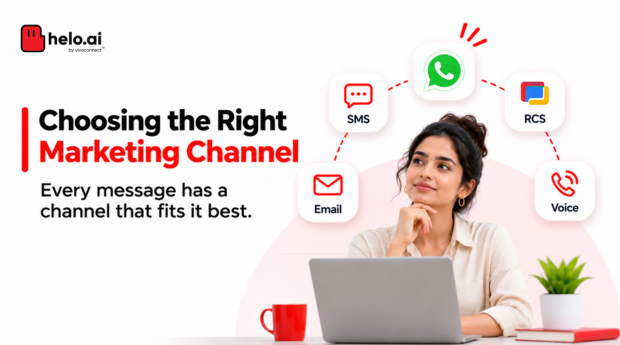
Email suits detailed content that people read at their convenience, WhatsApp suits two-way conversations with opted-in customers, and SMS suits short, urgent messages. Most businesses use all three for different jobs.
- Email gives room for detail, segmentation, automation and measurable results. Its limits are inbox competition, deliverability and slower response.
- Google asks senders to keep user-reported spam rates below 0.1% and never let them reach 0.3%.
- WhatsApp needs approved templates to start a conversation. Free-form replies are allowed only within 24 hours of a customer message.
- A single SMS holds 160 GSM-7 characters or 70 Unicode characters. In India, promotional SMS also needs DLT-registered headers and templates.
- In Litmus's 2025 survey of nearly 500 marketers, 35% reported $10 to $36 returned per $1 spent on email. The figures are self-reported.
What are the advantages of email marketing?
1. More room to share information
Email gives businesses space to explain an offer, introduce a product or share useful information in detail.
A single email can include text, images, product links, multiple calls to action and supporting information. This makes it suitable for newsletters, product launches, event invitations and educational content.
For example, a retailer introducing a festive collection can use email to showcase products, explain offers and direct customers to its website.
2. Helps build long-term customer relationships
Email is useful beyond one-time promotional campaigns. Businesses can use it to stay connected with customers through welcome messages, newsletters, product education, loyalty updates and re-engagement campaigns.
The key is to send content that gives recipients a reason to stay subscribed.
3. Supports segmentation and personalisation
Businesses can organise their subscriber lists based on interests, purchase history, location or engagement.
This allows them to send more relevant messages to different groups.
For example:
- New subscribers can receive a welcome email.
- Repeat customers can receive product recommendations.
- Inactive subscribers can receive a re-engagement campaign.
Personalisation works best when the underlying customer information is accurate and the message is genuinely relevant.
4. Makes automated communication possible
Email platforms allow businesses to schedule campaigns and trigger messages based on customer actions.
Common examples include welcome emails, order confirmations, event reminders and follow-ups after a customer downloads a resource.
Automation helps maintain consistent communication without manually sending every message. The quality of the experience still depends on the timing, content and customer data behind it.
5. Provides measurable campaign results
Email marketing platforms provide metrics such as delivery, bounce rate, clicks, conversions and unsubscribes.
These help marketing teams understand what is working and where campaigns need improvement.
For example, if an email receives clicks but few conversions, the landing page or offer may need attention.
Open rates should be interpreted carefully because privacy features and email-client behaviour can affect their accuracy.
6. Can deliver strong returns when managed well
Email can be a cost-efficient way to communicate with an existing subscriber base. However, results depend on list quality, content, platform costs and campaign management.
Litmus's 2025 research, based on nearly 500 marketing professionals, found that 35% reported returns of $10–$36 for every dollar spent on email marketing, while 30% reported $36–$50. These are self-reported survey findings, not guaranteed returns for every business.
The takeaway is that email can deliver value, but businesses need to measure their own results rather than rely on industry averages.
What are the disadvantages of email marketing?
1. Emails compete for attention
Customers receive messages from many businesses, subscriptions and service providers. Even a relevant campaign can get buried in the inbox.
What to do: Segment audiences, use clear subject lines and avoid sending messages too frequently.
2. Delivery does not guarantee inbox placement
An email can be accepted by a receiving server and still land in spam. Sender reputation, authentication, bounce rates and spam complaints can all affect inbox placement.
What to do: Configure SPF, DKIM and DMARC, maintain clean lists and monitor deliverability. Google recommends keeping the user-reported spam rate below 0.1% and preventing it from reaching 0.3% or higher. Applicable bulk marketing senders must also support one-click unsubscribe. Google defines bulk senders as those sending close to 5,000 or more messages a day to personal Gmail accounts.
3. Building a quality subscriber list takes time
A large email database is not necessarily a valuable one. Invalid, outdated or poorly sourced contacts can lead to bounces and spam complaints.
What to do: Build your list through relevant sign-up points, explain what subscribers will receive and honour unsubscribe requests.
4. It may not be suitable for urgent communication
Email is often read when convenient. That makes it less suitable when a business needs a customer to notice a short, time-sensitive update.
What to do: Consider WhatsApp or SMS for urgent reminders and concise notifications, depending on customer preference and the nature of the message.
5. Content needs regular attention
Poor formatting, long paragraphs and unclear calls to action can make emails difficult to read, especially on mobile devices. Different email clients may also display designs differently.
What to do: Use responsive layouts, keep the message focused and test emails across devices before sending.
6. Privacy and compliance require care
Businesses need to manage subscriber information responsibly, explain how contact details will be used and provide appropriate ways to manage preferences or unsubscribe.
What to do: Review applicable privacy laws and email-provider requirements, maintain accurate contact records and make unsubscribe processes easy to use.
Email vs WhatsApp vs SMS: Which channel should you choose?
Each channel serves a different communication purpose. The best choice depends on how much information the message needs and whether the customer needs to respond.
| Factor | SMS | ||
|---|---|---|---|
| Message format | Detailed content, images and links | Conversational messages, media and interactive formats | Short text and links |
| Best suited for | Newsletters, product information and detailed offers | Customer conversations, updates and interactive campaigns | Short reminders and notifications |
| Interaction | Usually asynchronous | Supports two-way conversations | Primarily short, direct communication |
| Main limitation | Inbox competition and deliverability | Platform policies, templates and messaging costs | Limited space and message segmentation |
When should you use email?
Use email when customers need more information or when the message is better suited to reading at their convenience.
Examples include:
- Monthly newsletters.
- Product launches and announcements.
- Educational guides and resources.
- Detailed promotional campaigns.
- Event invitations and registration details.
When should you use WhatsApp?
Use WhatsApp when a direct or conversational experience is important.
Examples include:
- Customer updates that may need a response.
- Product or service enquiries.
- Interactive campaigns.
- Follow-ups where customers may need assistance.
Businesses using the WhatsApp Business Platform must follow Meta's messaging policy. Business-initiated conversations require approved message templates. Businesses can reply without a template within the 24-hour customer service window after a user message. Outside that window, approved templates are required.
Meta charges for WhatsApp template messages per delivered message, so the cost model differs from email. See Meta's pricing page and Helo.ai's guides to WhatsApp marketing and WhatsApp vs email for D2C brands.
When should you use SMS?
Use SMS when the message is short and direct.
Examples include:
- Appointment reminders.
- Time-sensitive alerts.
- Short promotional announcements.
- Important notifications.
SMS has character limits that depend on encoding. A single GSM-7 message supports up to 160 characters, while Unicode supports up to 70. Longer messages are split into segments, with lower character limits per segment (153 for GSM-7 and 67 for Unicode, per Twilio's documentation).
In India, promotional SMS also needs registered headers and templates. See Helo.ai's guide to promotional SMS and TRAI rules and its DLT management service.
Why businesses should use email, WhatsApp and SMS together
A business does not have to choose just one channel. A coordinated strategy can use each channel for the type of communication it handles best.
Consider an online retailer launching a festive sale:
- Email: Introduces the collection, showcases products and explains the offer.
- WhatsApp: Shares relevant campaign messages with customers who have opted in and supports follow-up conversations.
- SMS: Sends a short reminder about the sale deadline.
The important part is coordination. Sending the same message through every channel can create unnecessary repetition and frustrate customers.
Marketing teams should consider the message, customer preferences, timing and previous interactions before selecting a channel.
How Helo.ai supports omnichannel communication
Managing email, WhatsApp and SMS through separate platforms can make campaign coordination difficult.
Helo.ai's Helo Inbound lets teams manage communication across SMS, WhatsApp and email from a single platform. That gives marketing and support teams a common place to handle conversations across channels.
The objective is not to send every message everywhere. It is to choose the channel that fits the communication and coordinate customer outreach more effectively.
Want to explore how your business can coordinate communication across email, WhatsApp and SMS?
Talk to the Helo.ai team about your channels and customer journeys.
Frequently asked questions
What is the biggest advantage of email marketing?
Email gives businesses room to share detailed information, images and links in one message. It also supports segmentation, automation and ongoing customer communication.
What are the main disadvantages of email marketing?
The main disadvantages include inbox competition, deliverability challenges, the time required to build a quality subscriber list, ongoing content requirements and privacy responsibilities.
Is email marketing better than WhatsApp marketing?
Neither is universally better. Email is useful for detailed communication and newsletters, while WhatsApp is suited to direct and conversational experiences. The right choice depends on the message and customer expectations.
Is email marketing still effective?
Yes. Email can be effective when businesses send relevant content to a well-maintained subscriber list. Results depend on content, timing, deliverability and how campaign performance is measured.
Can businesses use email, WhatsApp and SMS together?
Yes. Businesses can coordinate all three channels. Email can carry detailed information, WhatsApp can support interaction and SMS can deliver concise reminders.
What spam complaint rate is acceptable for marketing emails?
Google recommends keeping the user-reported spam rate below 0.1% and preventing it from reaching 0.3% or higher. Senders that sit above 0.3% lose eligibility for mitigation support.
Is email cheaper than WhatsApp or SMS?
Costs are structured differently. Meta charges per delivered WhatsApp template message, SMS is sent in segments, and email platforms price in their own ways. Compare the cost per customer outcome, not the cost per message.
Conclusion
Email marketing remains valuable because it gives businesses room to explain, educate and maintain customer relationships. But it is not the right channel for every message.
Use email when customers need detail, WhatsApp when interaction matters and SMS when a short, direct message is enough.
A strong communication strategy brings these channels together around the customer, rather than making the customer deal with repeated or disconnected messages.
Planning to run email, WhatsApp and SMS together?
Explore Helo Inbound to manage conversations across SMS, WhatsApp and email from one platform.
Disclaimer. This article is general information, not legal, compliance or marketing advice. Sender requirements, platform pricing and channel rules change, so confirm current terms with your email, WhatsApp and SMS providers. Statistics are survey-based and not guaranteed results. Reviewed November 2026. Helo.ai is the publisher and offers Helo Inbound. Product and company names belong to their owners.