


Today speed and personalization is what defines customer experience and businesses can’t afford to rely on outdated support methods. Customers today expect fast, frictionless interactions—on their terms, across their preferred channels. And this shift isn’t a trend—it’s a new standard.
The introduction of conversational AI is resolving this very issue.
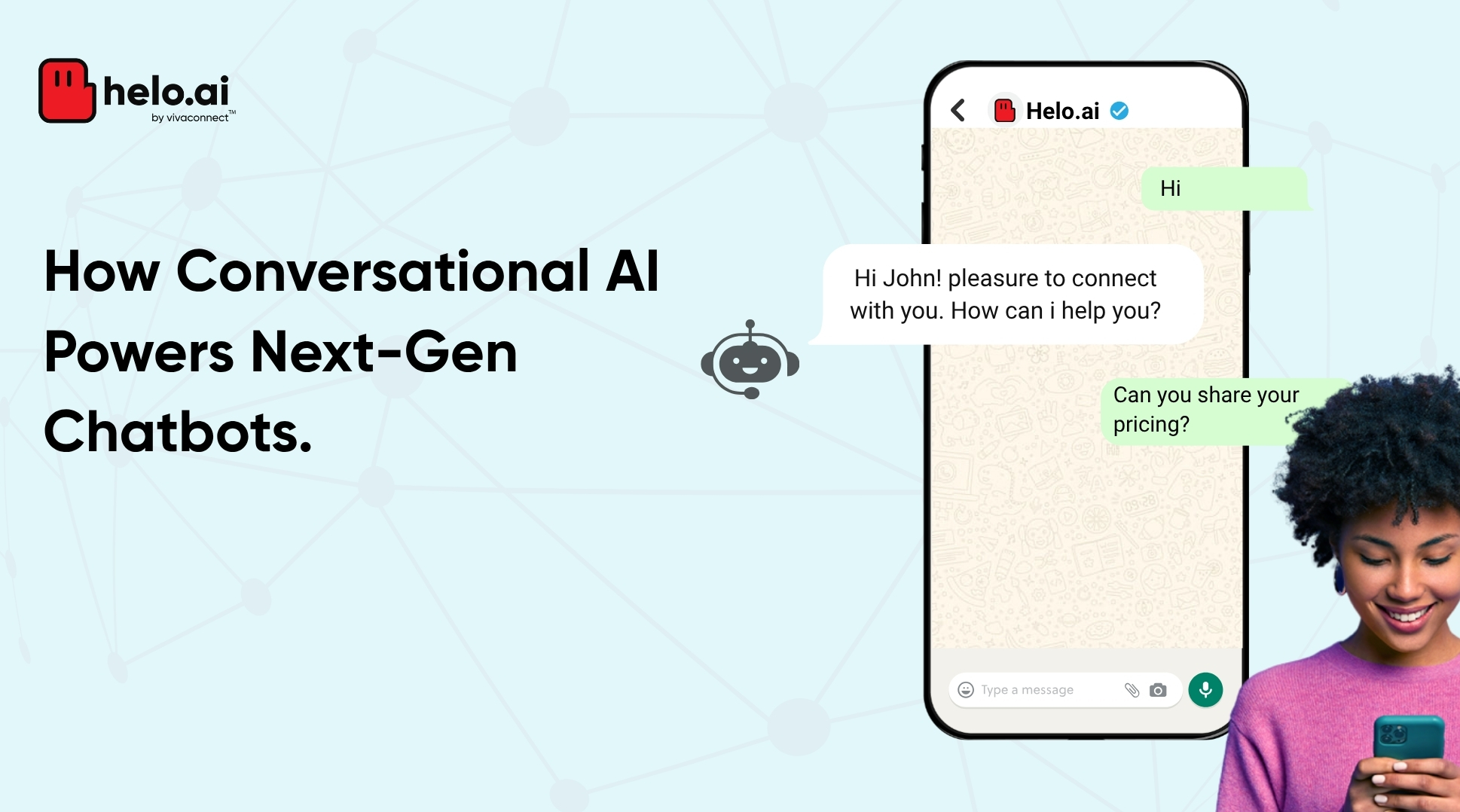
Modern AI-powered chatbots are redefining how businesses interact with customers. They are moving from scripted replies to intelligent, contextual, and deeply personalized conversations. These aren't just bots answering questions—they're virtual agents that adapt, learn, and engage in real time.
In this blog, we’ll explore how conversational AI transforms ordinary chatbot experiences into meaningful, efficient, and high-converting interactions.
The Evolution: From Rule-Based Bots to Conversational AI
Early chatbots were rigid, limited, and purely transactional. They operated on “if-then” logic—responding only to exact keywords or predefined inputs. That meant clunky interactions, high dropout rates, and frustrated users.
Today’s chatbots, powered by machine learning (ML) and natural language processing (NLP), can:
- Understand what users mean (even when it’s not said perfectly)
- Recognize context across multiple messages
- Adapt their tone, sequence, and logic in real time
This evolution from static scripts to smart conversations is at the heart of why businesses are rapidly adopting conversational AI.
How Conversational AI Understands Humans: NLP in Action
At the core of conversational AI is Natural Language Processing (NLP), the technology that helps machines understand human language.
Here’s how it enables AI-powered chatbots to communicate more like people and less like programs:
1. Contextual Understanding
Chatbots don’t just process keywords—they understand meaning. If a user says, “I want to upgrade my plan,” and later adds, “What are my options?” The chatbot can link both messages to the same intent and offer relevant options without asking the user to repeat themselves.
2. Intent Recognition
Conversational AI classifies the user’s goal—whether it’s finding information, solving an issue, or placing an order—and routes the conversation accordingly. This reduces friction and improves accuracy.
3. Sentiment Detection
Advanced systems can detect user sentiment—whether someone is confused, annoyed, or happy—and adapt responses accordingly. If tension is detected, the chatbot can escalate to a human or offer support in a more empathetic tone.
Superpowers of AI-Powered Chatbots
Let’s take a look at why AI-powered chatbots are gaining traction from businesses and users are loving it.
1. Personalization: The Engagement Engine
Generic responses don’t convert. Personalization is what drives engagement—and AI-powered chatbots make that possible at scale.
By tapping into CRM data, chat history, and customer behavior, chatbots can:
- Recommend products based on past purchases
- Auto-fill information for returning users
- Offer customized troubleshooting steps
- Greet users by name and speak in their preferred language
Use Case Examples:
- E-commerce: “Welcome back! Would you like to reorder your previous purchase?”
- Banking: “Based on your recent activity, would you like to increase your credit limit?”
- Healthcare: “Hi Alex, your next appointment is due. Would you like to reschedule or confirm?”
With conversational AI, chatbots become customer memory keepers—delivering value without asking users to start from scratch every time.
2. Omnichannel Capabilities: Meet Customers Where They Are
Your customers are not confined to one platform—and neither should your chatbots be.
Modern conversational AI allows businesses to deploy chatbots across:
- RCS (Rich Communication Services)
- SMS
- Web and in-app chat
- Email and voice interfaces
What makes this powerful is context carry-over. A customer who begins chatting via WhatsApp and then continues on your website shouldn’t have to start over. AI-powered chatbots maintain the conversation thread across channels, delivering a seamless and connected experience.
This omnichannel continuity is critical for CX leaders looking to unify support and increase customer retention.
3. Machine Learning: Smarter Conversations Over Time
AI-powered chatbots aren’t static—they improve with every interaction.
Through machine learning, chatbots:
- Identify frequently asked questions and build automated responses
- Learn new intents from failed queries or escalations
- Adapt tone and flow based on successful outcomes
- Refine models based on feedback and usage patterns
What starts as a basic assistant becomes a domain expert over time. This makes conversational AI a long-term investment in efficiency, not just a short-term fix.
4. Combining Automation with Human Support
Even the smartest AI doesn’t replace the value of a human when empathy, negotiation, or complex decision-making is required.
That’s why effective chatbot experiences are designed with seamless escalation paths:
- If a query is too nuanced or emotionally charged, the chatbot can instantly transfer the conversation to a live agent.
- The agent receives full context—no repeat explanations from the customer.
This hybrid approach ensures automation handles volume, while humans handle exceptions—delivering speed without losing the human touch.
5. Data-Driven Optimization: Insights from Every Conversation
Every chatbot interaction is a source of insight.
AI platforms analyze:
- Drop-off points in flows
- Sentiment trends
- Frequently used phrases
- Conversion rates by message variation
These insights help businesses:
- Improve conversation design
- Refine messaging for better results
- Identify friction points before they escalate into support tickets
And because this feedback loop is continuous, your chatbot keeps getting better—without needing to be manually updated every week.
How is Helo.ai Contributing to this Revolution?
At Helo.ai, we are building a communication platform by leveraging conversational AI that doesn’t just answer questions — it drives results. Whether you're in eCommerce, BFSI, utilities, or healthcare, with Helo Conversation you can build AI-powered chatbots that can:
- Automate 70–80% of customer support queries
- Increase engagement across WhatsApp, RCS, and SMS
- Reduce operational costs while increasing resolution rates
- Integrate deeply with your CRM and existing workflows
- Scale support without scaling your team
And most importantly — keep your customers talking (and buying).
The Future Is Conversations
We’re long past the point where chatbots were a novelty. With AI-powered chatbots and conversational AI, businesses can now deliver faster, smarter, and more meaningful customer interactions — at scale.
The future of engagement is real-time, personalized, and fully automated — but never robotic.
And it’s already here.