.jpeg)
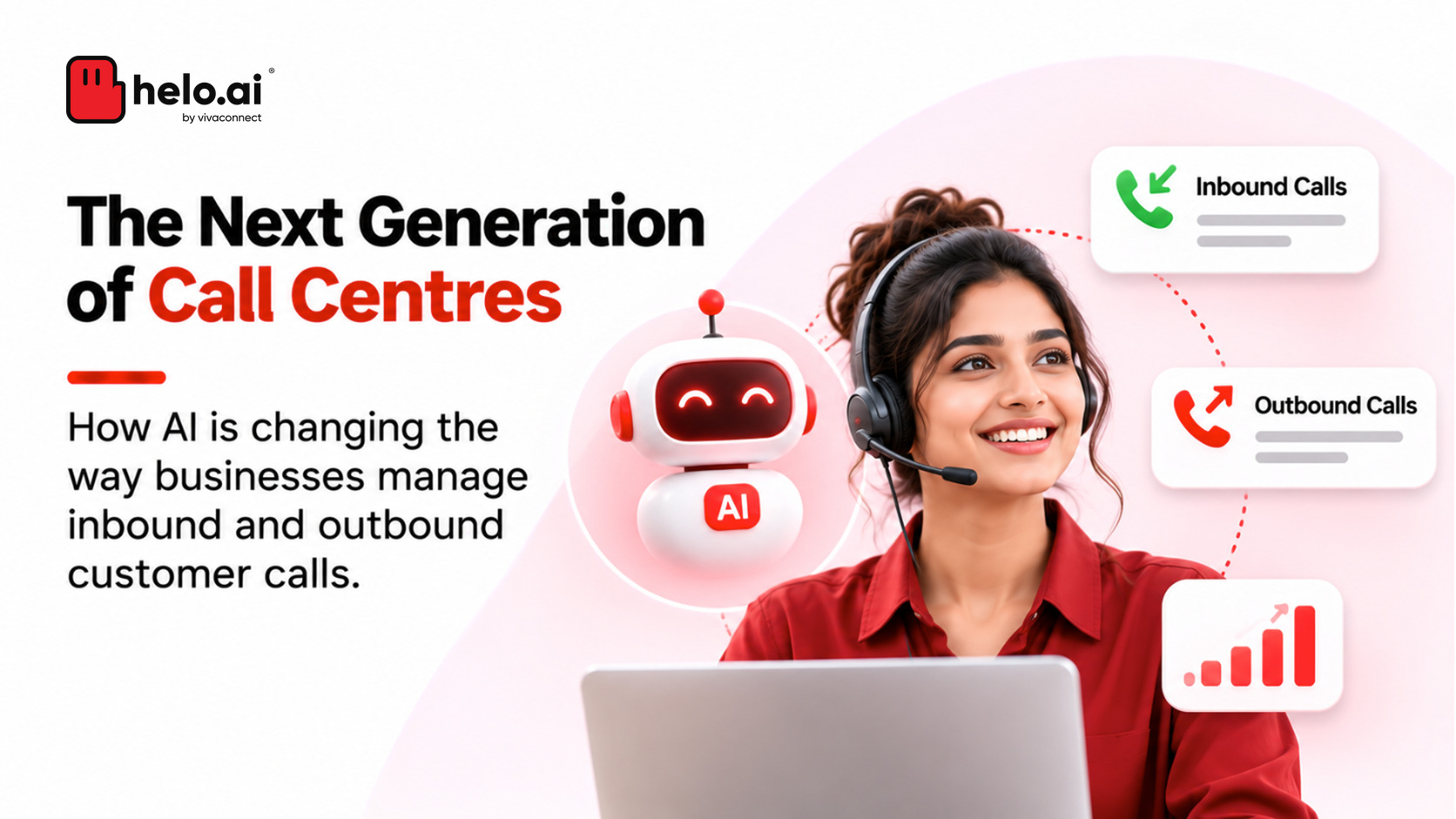


A customer calls a bank to check a loan application. Another calls an insurance company about a policy renewal. Meanwhile, a collections team is trying to reach thousands of customers before their payment due dates.
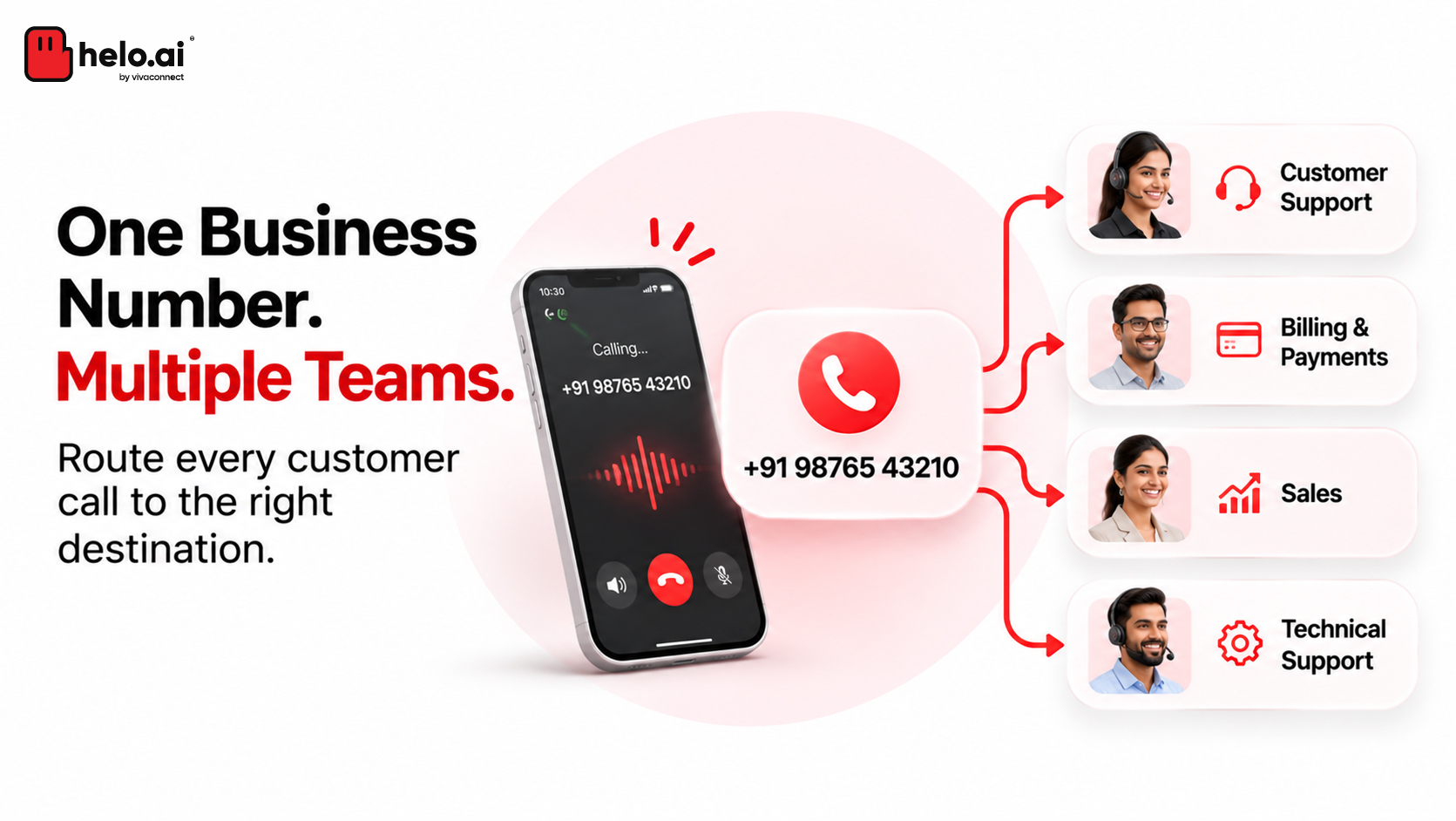
For businesses handling calls at this scale, a basic IVR and a team of phone agents may not be enough. Customers expect quick answers, agents need the right information during calls, and operations teams need a reliable way to manage incoming and outgoing conversations.
This is where AI call center software comes in.
Modern platforms combine cloud telephony, intelligent call routing, AI voice agents, automated diallers, agent assistance and conversation analytics. Some focus on managing human contact-centre teams. Others use AI agents to handle conversations from start to finish. Enterprise platforms may bring both approaches together.
But these products do not all solve the same problem.
This guide compares some of the best AI call center software available to businesses evaluating solutions in India. It covers inbound and outbound calling, multilingual support, automation, human handoff, integrations, compliance and the features worth checking before you buy.
The best AI call center software in India depends on whether you need agent-led contact-centre tools or AI voice agents. Compare Helo Voice, Exotel, Ozonetel, Knowlarity, Yellow.ai and Voice.ai on calling, languages, integrations, handoff and cost. For outbound calls, also check TRAI number series and auto-dialler rules.
What is AI call center software?
AI call center software helps businesses manage customer calls using a combination of telephony, automation and artificial intelligence.
Traditional call centre software focuses on receiving calls, routing them to agents, managing queues, recording conversations and tracking agent performance.
AI-powered software adds capabilities such as:
- AI voice agents: Answer calls, understand customer requests and respond through natural conversations.
- Intelligent call routing: Direct callers to the right agent based on language, department, customer details or query type.
- Automated outbound calling: Run reminders, follow-ups, surveys, lead qualification and collections campaigns.
- Agent assistance: Give human agents relevant information, suggested responses and conversation summaries.
- Speech and conversation analytics: Analyse calls to identify customer intent, recurring issues, sentiment and service gaps.
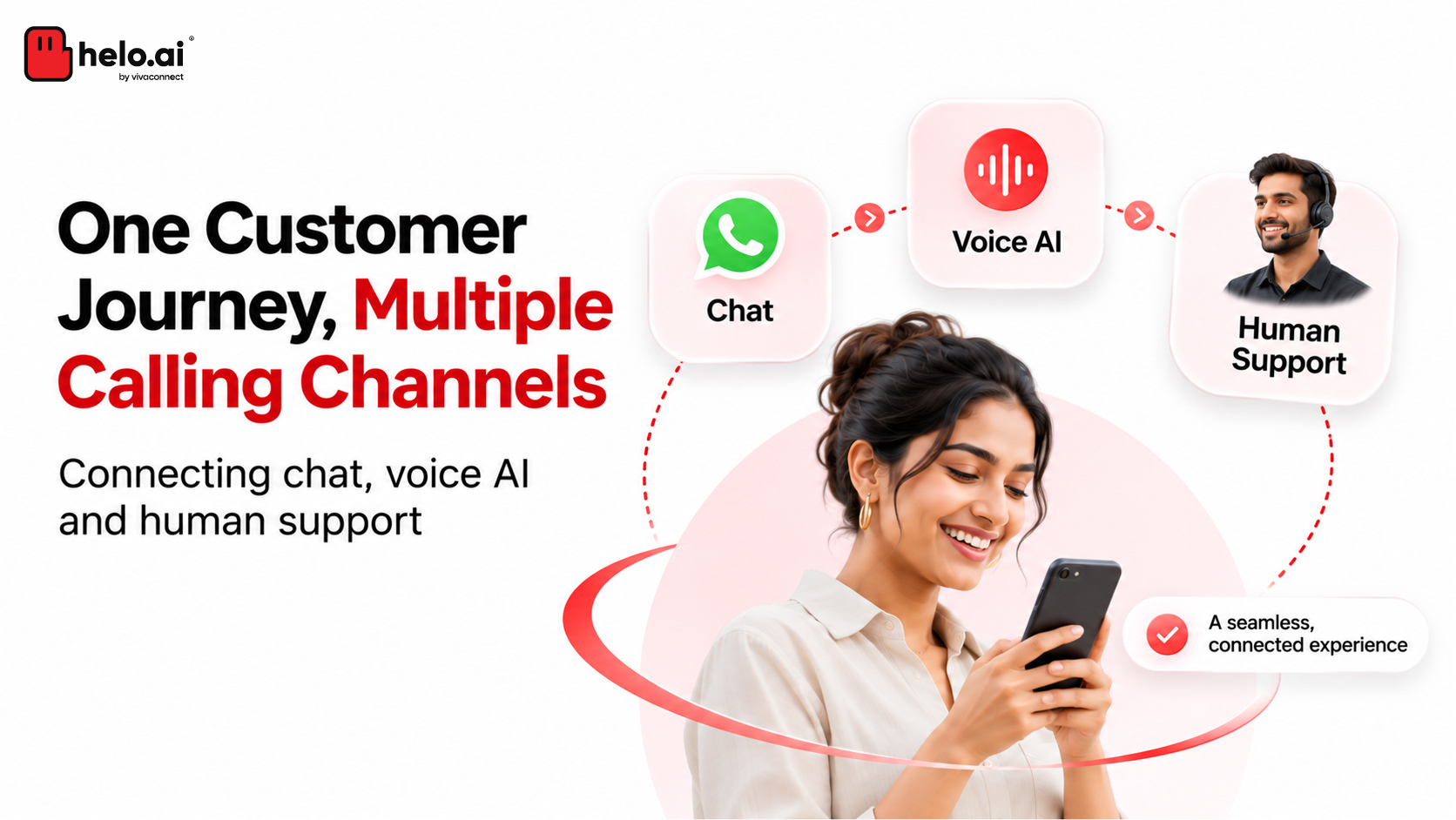
- Human handoff: Transfer conversations to a live agent when a query needs human attention.
The exact combination depends on the product. A traditional cloud contact-centre platform may offer strong routing and dialler controls but limited autonomous voice automation. An AI voice-agent platform may handle conversations independently but not include all the workforce-management features required by a large human contact centre.
That distinction matters when comparing software for call centers.
Best AI call center software in India: Comparison at a glance
The platforms below cover different parts of the contact-centre market. Some are broader CCaaS or cloud telephony products, while others focus more heavily on conversational AI and autonomous voice agents.
| Platform | Product category | Inbound and outbound | Main strengths | Best suited for |
|---|---|---|---|---|
| Helo Voice | Enterprise AI voice-agent platform | Both | Multilingual conversations, API actions, telephony connectivity and human handoff | Enterprises automating customer conversations |
| Exotel / Ameyo | Cloud contact-centre platform and voice AI | Both | Routing, diallers, agent workflows, AI assist and voicebots | Large agent-led and blended contact centres |
| Ozonetel CloudAgent | CCaaS platform | Both | ACD, IVR, diallers, quality monitoring and voicebots | Businesses managing large inbound and outbound teams |
| Knowlarity | Cloud telephony and contact-centre solutions | Both | IVR, virtual numbers, outbound calling, voicebots and speech analytics | Businesses upgrading business calling operations |
| Yellow.ai | Conversational AI and voice-agent platform | Both | Voice automation, integrations and multilingual workflows | Enterprises building AI-led customer journeys |
| Voice.ai | AI voice-agent platform | Both, according to vendor offering | Automated phone conversations and cloud/on-premise deployment options | Businesses exploring AI phone assistants |
Important: "Inbound and outbound support" does not mean that every platform offers identical capabilities in both directions. A contact-centre platform may provide extensive agent and dialler controls, while a voice-agent platform may focus on autonomous conversations. Check the exact product, plan and deployment before comparing them.
1. Helo Voice
Helo Voice
Enterprise AI voice-agent platform
- Inbound: Customer enquiries, support and configured service workflows.
- Outbound: Reminders, collections, lead qualification and follow-ups.
- Key strengths: Multilingual conversations, SIP/WebRTC/PSTN connectivity, API-based actions and live human handoff.
- Best fit: Enterprises automating high-volume customer conversations.
Helo Voice is an enterprise AI voice platform designed for businesses that want to manage customer conversations over phone calls.
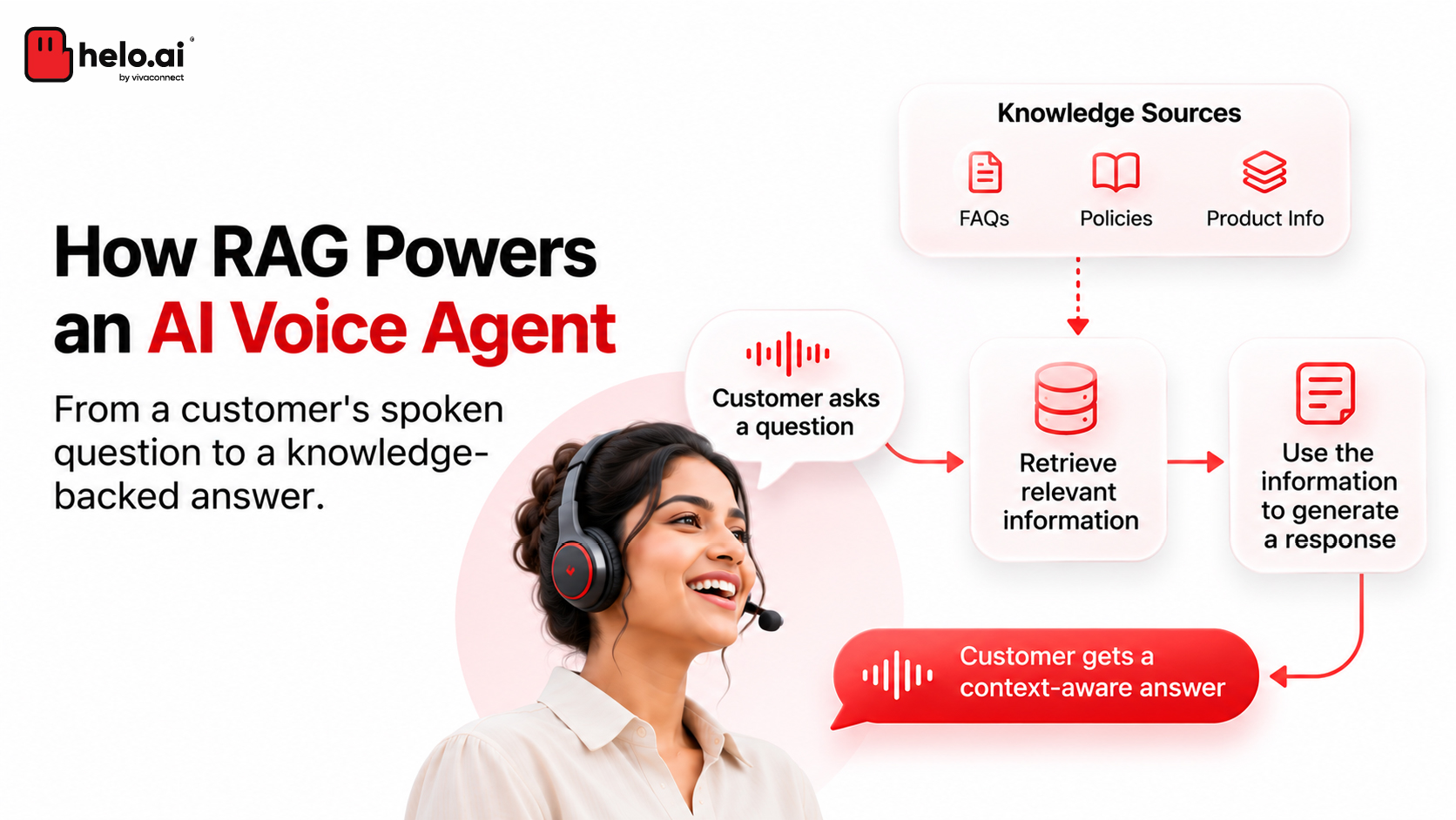
Instead of limiting interactions to fixed IVR menus, Helo Voice allows customers to speak naturally. The agent can understand a request, retrieve information from connected systems, perform configured actions and transfer the conversation to a human when needed.
The platform supports both inbound and outbound calling, making it relevant to businesses that manage customer service as well as proactive calling operations.
Key capabilities
- Inbound and outbound calling: Handle customer enquiries, service requests, collections, reminders and follow-ups.
- Multilingual conversations: Configure speech capabilities for Hindi, English and regional Indian languages based on the business use case.
- Language switching: Support conversations where callers move between languages, subject to the configured speech and conversation setup.
- Native telephony: Support SIP, WebRTC and PSTN connectivity.
- Business-system integration: Use APIs to retrieve customer information, update records, raise tickets and complete configured actions.
- Live human handoff: Transfer a call to an agent with conversation context.
- Conversation visibility: Access call transcripts, stage-level timing and records of actions taken during conversations.
Where it fits
- Banking and financial services customer support.
- Loan lead qualification and onboarding.
- Pre-due and overdue collections.
- Insurance renewal and policy-service calls.
- Appointment booking and reminders.
- High-volume customer enquiries and service updates.
What to evaluate: Confirm the speech engines and languages available for your use case, the integrations required to complete the workflow, expected call volumes and the human-agent setup needed for escalation.
Helo Voice is particularly relevant when the objective is not simply to route more calls to agents, but to resolve suitable conversations through AI before human intervention is needed.
Explore Helo Voice and book a demo.
2. Exotel / Ameyo
Exotel / Ameyo
Cloud contact-centre platform and voice AI
- Inbound: Intelligent routing, IVR, queues and agent handling.
- Outbound: Campaign management and automated dialling.
- Key strengths: Agent assist, voicebots, call monitoring, CRM integration and omnichannel workflows.
- Best fit: Enterprises managing large agent teams alongside AI automation.
Exotel offers cloud telephony and contact-centre solutions, including its Ameyo contact-centre platform and AI capabilities.
Its offering is relevant to businesses that need to manage human-agent operations while introducing automation into customer interactions.
Key capabilities
- AI voicebots: Automate selected customer conversations and routine interactions.
- Agent assistance: Provide suggestions, transcripts and conversation support during live interactions.
- Call routing: Route calls based on agent skills, availability and configured rules.
- Outbound diallers: Support preview, predictive and other campaign dialling modes through relevant contact-centre products.
- Quality monitoring: Monitor calls and review agent performance.
- Omnichannel operations: Connect voice with digital customer-interaction channels, depending on the product configuration.
- Business integrations: Connect contact-centre workflows with CRM and other systems.
Where it fits
- Large customer-support operations.
- BFSI contact centres.
- Sales and collections teams.
- Businesses managing voice and digital interactions.
- Operations that need agent assistance and call-quality monitoring.
What to evaluate: Ask which features belong to the specific Exotel or Ameyo product being proposed. Confirm whether AI voice automation, diallers, agent assist and omnichannel functions are included in the same deployment or require separate modules.
Explore Exotel's contact-centre solutions.
3. Ozonetel CloudAgent
Ozonetel CloudAgent
Cloud contact-centre software
- Inbound: ACD, IVR, queue management and agent routing.
- Outbound: Multiple dialler modes, call campaigns and retries.
- Key strengths: Voicebots, call monitoring, quality management and integrations.
- Best fit: Businesses managing agent-led inbound and outbound contact-centre operations.
Ozonetel CloudAgent is a cloud-native contact-centre platform designed to manage customer interactions across voice and digital channels.
It combines telephony workflows with agent management, intelligent call distribution, outbound diallers, monitoring and reporting. Its platform also offers voicebots and conversational AI capabilities for businesses introducing automation into their operations.
Key capabilities
- Automatic call distribution: Route incoming calls to appropriate agents or skill groups.
- IVR: Build call journeys that direct customers to the right department or service.
- Outbound diallers: Support automated calling campaigns and different agent dialling modes.
- Voicebots: Automate selected repetitive customer interactions.
- Call monitoring: Track agent activity and contact-centre performance.
- Quality management: Review calls and monitor service quality.
- Integrations and APIs: Connect the platform with CRM and ticketing systems.
Where it fits
- Customer-support teams with multiple departments.
- Sales and telecalling operations.
- Collections and follow-up teams.
- Businesses that need blended inbound and outbound calling.
- Contact centres moving from on-premise systems to cloud operations.
What to evaluate: Check how voicebot capabilities connect with agent workflows, which integrations are available for your CRM and whether the platform supports your deployment, reporting and compliance requirements.
Explore Ozonetel CloudAgent.
4. Knowlarity
Knowlarity
Cloud telephony and contact-centre solutions
- Inbound: IVR, virtual numbers and call routing.
- Outbound: Automated outbound calling and dialler capabilities.
- Key strengths: Voicebots, speech analytics, lead management and business-call integrations.
- Best fit: Businesses upgrading from basic telephony to managed calling operations.
Knowlarity provides cloud communication and contact-centre solutions for businesses that need to manage customer calls across teams and locations.
Its product portfolio includes cloud contact-centre solutions, virtual numbers, IVR, number masking, automated outbound calling, auto diallers, lead management and AI-related capabilities such as speech analytics and voicebots.
Key capabilities
- Inbound contact centre: Receive and route customer calls to available agents.
- Outbound calling: Support outbound contact-centre operations and follow-ups.
- IVR and call routing: Direct callers based on configured menus and routing rules.
- Virtual numbers: Manage business numbers and customer calls.
- Lead management: Connect telecalling workflows with customer and lead records.
- Speech analytics: Analyse calls and extract insights from customer conversations.
- Voicebots: Automate selected customer interactions.
Where it fits
- Small and mid-sized business call centres.
- Sales and lead-management teams.
- Customer-support operations.
- Businesses that need inbound and outbound calling in one setup.
What to evaluate: Confirm the availability and scope of speech analytics and voicebot features in the specific package. Check agent capacity, outbound usage charges, CRM integration requirements and whether the AI capabilities match your automation needs.
Explore Knowlarity's voice products.
5. Yellow.ai
Yellow.ai
Conversational AI and voice-agent platform
- Inbound: Automated customer enquiries and service workflows.
- Outbound: Reminders, notifications and configured calling journeys.
- Key strengths: Conversational AI, telephony integration, language handling and business workflows.
- Best fit: Enterprises building AI-led customer journeys across channels.
Yellow.ai provides a conversational AI platform that supports automated customer interactions through voice and other channels.
Its voice agents can handle inbound customer enquiries and outbound calls for use cases such as reminders, notifications, surveys and follow-ups. The platform combines speech recognition, conversation logic and speech synthesis to manage these interactions.
Key capabilities
- Inbound voice agents: Handle customer enquiries and configured service requests.
- Outbound voice campaigns: Initiate calls for reminders, alerts, surveys and other workflows.
- Multilingual automation: Configure voice agents for supported languages using available speech engines.
- CRM and API integrations: Retrieve information and update business systems.
- Human handoff: Transfer calls when a customer needs human assistance.
- Conversation analytics: Review call activity, outcomes and performance.
Where it fits
- Enterprise customer support.
- Digital-first businesses expanding into voice.
- Organisations with multiple automated customer journeys.
- Businesses connecting voice with existing conversational AI workflows.
What to evaluate: Confirm the production telephony setup for India, the available speech engines and language combinations, outbound calling controls and integration requirements for your existing contact-centre team.
Explore Yellow.ai's voice capabilities.
6. Voice.ai
Voice.ai
AI voice-agent platform
- Inbound: Automated phone conversations and customer enquiries.
- Outbound: AI-led calling and follow-up workflows.
- Key strengths: Voice-agent automation, analytics and cloud or on-premise deployment options advertised by the vendor.
- Best fit: Businesses exploring AI phone assistants.
Voice.ai offers AI voice-agent products designed to manage inbound and outbound calls. Its use cases include answering customer enquiries, capturing lead details, qualifying prospects and scheduling appointments.
It is more useful to evaluate as an AI voice-agent option than as a like-for-like replacement for every traditional contact-centre platform.
Key capabilities advertised by the vendor
- Inbound and outbound AI phone conversations.
- Customer support and lead qualification workflows.
- Appointment scheduling and receptionist use cases.
- Multilingual voice interactions.
- Cloud and on-premise deployment options.
- Analytics and custom voice-agent workflows.
Language check: Voice.ai's TTS quickstart lists English plus ten European languages. It lists no Indian language, and its agent pages do not state Indian-language support.
Where it fits
- Businesses receiving sales and service enquiries by phone.
- Teams looking to automate routine calls.
- Appointment-based businesses.
- Organisations evaluating AI phone assistants alongside existing telephony.
What to evaluate: Before shortlisting it for an Indian contact centre, confirm Indian number availability, SIP or carrier connectivity, inbound and outbound call routing, regional-language performance, local compliance requirements and integration with your existing agent setup.
Explore Voice.ai AI Voice Agents.
AI call centre software vs traditional call centre software
A traditional call-centre platform and an AI-powered contact-centre platform may share features such as IVR, call routing and reporting. The difference is in how much of the customer interaction can be understood and handled automatically.
| Area | Traditional call-centre software | AI-powered call-centre software |
|---|---|---|
| Call answering | IVR and human agents | IVR, AI voice agents and human agents |
| Customer interaction | Menus and agent-led conversations | Natural-language conversations and agent-led support |
| Call routing | Fixed rules, queues and skills | Rules combined with intent, language and customer context |
| Outbound calls | Manual, preview or automated diallers | Diallers and configured AI calling workflows |
| Customer queries | Mostly handled by human agents | Routine queries can be automated; complex queries can be escalated |
| Agent support | Call controls and customer information | AI suggestions, summaries and knowledge assistance |
| Call analysis | Reports and manual quality reviews | Speech analytics and automated interaction analysis |
| Scalability | Often linked to agent capacity | Routine interactions can be automated alongside human teams |
AI does not make human agents unnecessary. It changes how the work is divided.
A voice agent may handle a routine balance enquiry or appointment confirmation. A human agent may still be needed for a disputed transaction, a sensitive complaint or a complex financial decision.
The useful question is not whether a platform can replace every agent. It is which calls can be resolved safely and reliably without requiring a person at every step.
Inbound vs outbound AI call centre software: What should you look for?
Inbound and outbound operations have different requirements. A platform that performs well for customer support may not offer the controls needed for large outbound campaigns.
Inbound call centre requirements
Inbound operations begin when a customer calls the business. The objective is to answer quickly, understand the reason for calling and resolve the request or route it correctly.
Look for:
- Automatic call distribution and skill-based routing.
- Queue management and callback options.
- IVR and conversational voice automation.
- Language-based routing.
- CRM lookup and customer context.
- Live human-agent transfer.
- Call recording, transcripts and quality monitoring.
- Service-level and resolution reporting.
Example: A bank customer calls to check a loan application. An AI voice agent can verify the required information, retrieve the application status through an approved integration and explain the next step. If the customer raises a complex issue, the call can move to a human agent with context.
Outbound call centre requirements
Outbound operations begin when the business initiates a call. These calls may support collections, renewals, lead qualification, reminders, surveys or customer follow-ups.
Look for:
- Campaign and contact-list management.
- Predictive, progressive and preview diallers where relevant.
- API-triggered calling.
- Retry and call-outcome rules.
- Customer and campaign-level reporting.
- CRM updates and disposition management.
- Consent and preference controls.
- Human handoff for calls that need further attention.
Example: An NBFC wants to contact customers before their EMI due date. An AI voice agent can make configured reminder calls, state the due amount retrieved from the business system, answer routine questions and record a payment commitment. More complex cases can be routed to the collections team.
How AI voice agents support multilingual call centres in India
India's contact centres serve customers who speak different languages, accents and combinations of languages.
A customer may begin in Hindi, use an English banking term and switch to Marathi when explaining a problem. Another customer may prefer Tamil for the entire conversation.
A multilingual AI voice agent needs to do more than play a translated script. It must recognise what the customer says, understand the request and generate a response that sounds clear over a phone connection.
When evaluating multilingual capabilities, check:
1. Speech recognition and speech generation separately
A vendor may support Hindi speech recognition but use a different set of languages for speech generation. Ask for the exact language list for both.
2. Regional pronunciation
Check names, locations, financial terms and everyday expressions with native speakers. A model that performs well with standard Hindi may not handle a regional accent equally well.
3. Code-switching
Test sentences where customers naturally move between English and an Indian language.
4. Mid-call language changes
Ask whether a customer can switch languages without restarting the conversation or being transferred to a different bot.
5. Human-agent language routing
If escalation is needed, check whether the platform can route the caller to an agent who speaks the preferred language.
6. Real-call audio quality
Test on mobile and landline connections, not just through a laptop or studio microphone. Background noise, network quality and phone audio compression can change how a voice sounds.
For pan-India businesses, these checks should happen before deployment, not after the first large customer campaign.
How much does AI call centre software cost in India?
There is no single price for AI call centre software. The total cost depends on the platform, call volumes, number of human agents, telephony arrangement and level of automation.
Most enterprise proposals combine some of the following costs:
| Cost component | What it covers |
|---|---|
| Platform subscription | Access to the contact-centre or voice-AI platform |
| Agent licences | Human-agent seats, where pricing is seat-based |
| Telephony | Phone numbers, call connectivity and usage |
| AI voice usage | Speech, model or connected-call charges, depending on the provider |
| Setup and implementation | Configuration, deployment and workflow development |
| Integrations | CRM, helpdesk, billing and other business-system connections |
| Support and maintenance | Ongoing support, service commitments and account management |
Calculate the total cost, not just the monthly subscription
A platform with a low subscription fee may still become expensive when telephony, outbound usage, AI processing and implementation are added.
Before comparing quotes, estimate:
- Monthly inbound call volume.
- Monthly outbound call volume.
- Average call duration.
- Number of human agents.
- Expected AI-handled conversations.
- Peak concurrent calls.
- Required integrations.
- Recording and retention requirements.
Ask every shortlisted vendor for an itemised commercial proposal. Compare the total monthly cost and the cost per successfully resolved interaction, not only the headline subscription price.
For a deeper breakdown, read Contact Centre Cost Breakdown: AI and Cost Reduction.
What to check before buying AI call centre software
A product demonstration can make almost any platform look straightforward. The real test is whether it can handle your actual call volume, languages, integrations and escalation requirements.
Use this checklist during vendor evaluation.
1. Telephony and infrastructure
- Does the platform support inbound and outbound calls?
- Can it connect to your existing carrier or SIP provider?
- Does it support the deployment model your organisation requires?
- How does it handle peak call volumes and concurrent calls?
- What happens if a telephony connection fails?
2. AI conversation quality
- Can the voice agent handle open-ended questions?
- Does it understand Indian accents and code-mixed speech?
- Can it handle interruptions and resume naturally?
- Can it manage customers who change their minds or go off-script?
- Can it recognise when it should stop and transfer the call?
3. Business integrations
- Can it retrieve live information from your CRM or core business systems?
- Can it create tickets and update customer records?
- Can it trigger calls through APIs?
- Can it log call outcomes automatically?
- Can it pass customer context to a human agent?
4. Human-agent operations
- Is there a live handoff option?
- Does the receiving agent get the conversation history?
- Can calls be routed by language, skill or department?
- Does the platform support agent monitoring and quality reviews?
- Does it offer workforce-management features if your operation needs them?
5. Reporting and visibility
- Can supervisors monitor live calls and queues?
- Are transcripts and recordings available?
- Can the team track call outcomes and resolution rates?
- Are AI actions and API activity logged?
- Can reports be exported or connected to business intelligence tools?
6. Security and customer-data protection
This is particularly important for banks, NBFCs, insurers and other businesses handling sensitive customer information.
Ask vendors:
- Where are call recordings and transcripts stored?
- How is customer data protected during transfer and storage?
- Can access be restricted by user role?
- Are access and AI actions recorded in audit logs?
- Can sensitive information be masked in recordings or transcripts?
- What retention and deletion controls are available?
- Are subprocessors and external AI-model providers involved?
- Can the vendor meet your organisation's security, privacy and sector-specific requirements?
Do not assume that a platform's general security certification automatically covers every deployment configuration. Ask for the relevant documentation and review it with your security team.
7. Commercial terms
- Is pricing based on seats, minutes, calls or usage?
- Are telephony and AI charges separate?
- Are there minimum commitments?
- What are the implementation and integration costs?
- What support and service commitments are included?
Test a voice agent on your own calls
Share your languages, call volumes and CRM with the Helo.ai team to see how Helo Voice handles your inbound and outbound scenarios.
AI calling and TRAI compliance in India
When choosing software for outbound calling, businesses should evaluate telecom compliance alongside the product's features.
India's commercial communication framework distinguishes between promotional calls and service or transactional calls. The applicable requirements depend on the nature of the communication, the entity making the call and the calling arrangement.
A few requirements deserve particular attention.
1. Understand the designated calling-number series
TRAI and the Department of Telecommunications have introduced designated numbering series to help customers distinguish different types of commercial calls.
| Number series | Purpose and current position |
|---|---|
| 140xx | Promotional voice calls under the applicable framework. |
| 1600xx | Service and transactional calls by eligible regulated BFSI entities and government entities. |
| 1601xx | Service and transactional calls for eligible entities outside BFSI and government, introduced through a phased rollout. Phase I covers utilities and courier/logistics sectors. |
The 1600 series is designated for service and transactional calls by regulated BFSI entities, including entities regulated by RBI, SEBI, IRDAI and PFRDA, and government-to-citizen communications. TRAI has also clarified that calls originating from the 1600 series should not be tagged, blocked or filtered under the relevant TCCCPR provision.
The 1601 series was introduced for eligible entities outside BFSI and government. Its first phase covers utilities, including electricity and water distribution, city gas and LPG providers, and courier and logistics businesses. The direction provides for a 90-day onboarding and migration period from 10 August 2026. Additional sectors may be notified separately.
Migration window: The 90-day window ended around 8 November 2026, by my count. TRAI's direction asks access providers to file a final compliance report within 15 days after it ends.
Do not assume that every business can use 1600 or 1601 numbers. Eligibility and allocation are subject to the relevant directions and telecom-provider verification.
2. Follow the applicable commercial communication requirements
Businesses making commercial calls should confirm the correct registration, number series, calling category and access-provider requirements.
For BFSI organisations, RBI's directions also address the use of designated numbering resources for service and transactional calls. Businesses should check the applicable regulator and telecom-provider instructions for their category.
3. Declare auto-dialler and robocall usage
Under the 2025 amendment to TCCCPR, every sender must notify its originating access provider in advance about the use of auto-diallers or robocalls and the intended objective of those calls.
A platform offering predictive or automated dialling does not remove this obligation. Businesses should confirm the declaration process and any additional requirements with their originating access provider before launching campaigns.
4. Respect customer preferences and consent
Promotional calling must follow applicable customer preference and consent requirements. Do not assume that an existing customer relationship gives unrestricted permission for promotional calls.
Your calling workflow should account for the purpose of the communication, the customer's preferences and the applicable regulatory rules.
5. Keep the call category accurate
A reminder about an existing service is not automatically promotional. But adding advertising or an unrelated sales offer can change how the communication is classified.
Make sure the call's actual purpose, script and registered calling arrangement are consistent.
Important: An AI voice agent does not receive a regulatory exemption simply because it is software. The business remains responsible for ensuring that the underlying calling activity is permitted and correctly configured. Confirm current requirements with your access provider and compliance team before going live.
For official updates, refer to TRAI's Advice to Telemarketers and TRAI's TCCCPR directions.
AI call centre software vs AI voice answering desk vs traditional IVR
These terms can sound similar, but they describe different ways of handling phone interactions.
- Traditional IVR: Guides callers through menus, keypad inputs and predefined call routes.
- AI voice answering desk: Uses conversational AI to answer calls, understand questions and handle configured requests. It may focus on front-desk enquiries, bookings and basic support.
- AI voice-agent platform: Supports more involved conversations, including business-system actions, outbound calling, escalation and workflow completion.
- AI call centre software: May combine voice agents with telephony, human-agent desktops, queues, diallers, routing, analytics and contact-centre management.
A business with a small reception team may need an AI answering desk. A large bank with inbound support, outbound collections and hundreds of agents needs a broader contact-centre setup.
For a closer comparison, read AI Voice Answering Desk vs Traditional IVR.
Frequently asked questions
1. Which is the best AI call center software in India?
The right platform depends on your operation. Helo Voice is worth evaluating for enterprise AI voice agents and inbound/outbound automation. Exotel and Ozonetel offer broader contact-centre capabilities, while Knowlarity is relevant for cloud telephony and contact-centre management. Yellow.ai and Voice.ai are options to consider for conversational voice automation. Compare them against your call volumes, languages, integrations and human-agent requirements.
2. What is the difference between call center software and contact center software?
Call-centre software primarily manages phone interactions, including inbound calls, outbound diallers, IVR and agent workflows. Contact-centre software may manage voice alongside WhatsApp, email, web chat, SMS and other customer channels through a unified platform.
3. Can AI call center software handle both inbound and outbound calls?
Yes. Several platforms support both. Inbound use cases include customer support, enquiries and service requests. Outbound use cases include reminders, collections, lead qualification, surveys and follow-ups. Confirm that both call directions are supported in the specific product and deployment you are evaluating.
4. Can AI voice agents speak Indian languages?
Many platforms offer multilingual speech capabilities, including Indian languages. However, speech recognition and speech generation coverage can differ. Test the exact languages, accents and code-mixed conversations your customers use.
5. Can AI call center software integrate with a CRM?
Many platforms offer APIs and pre-built integrations for CRM and helpdesk systems. Depending on the configuration, these integrations can retrieve customer details, create tickets, update records and store call outcomes. Confirm which integrations are ready to use and which require custom development.
6. Can AI replace human call centre agents?
AI can handle selected routine interactions, but not every customer conversation should be automated. Complex complaints, sensitive financial matters, exceptions and situations requiring human judgement may still need an agent. A good platform should support a clear handoff between AI and human teams.
7. How is AI call center software priced?
Pricing may include platform subscriptions, agent licences, telephony usage, AI processing, implementation and integration charges. Some vendors price by minute or connected call, while others use enterprise contracts. Request an itemised quote based on your expected call volumes.
8. Is AI call center software suitable for banks and NBFCs?
It can support use cases such as customer enquiries, loan lead qualification, reminders, collections and service requests. BFSI organisations should also assess authentication, data protection, call recording, audit trails, escalation controls and applicable RBI and TRAI requirements before deployment.
9. What should I check before choosing an AI call centre platform?
Start with inbound and outbound calling, telephony compatibility, language quality, integration options, human handoff, reporting, security and total cost. Then run a pilot using real call scenarios before committing to a full deployment.
Final takeaway
The best AI call center software is not necessarily the platform with the longest feature list. It is the one that fits the way your customers call, the way your teams work and the outcomes your business needs to deliver.
If your priority is managing a large human-agent operation, look closely at routing, diallers, queues, agent tools and quality monitoring. If you want to automate conversations, test the voice agent's language understanding, business integrations and ability to complete tasks. If you need both, make sure the two work together rather than operating as separate systems.
Shortlist a few platforms, test them with your actual call scenarios and compare the complete cost of running them.
For enterprises looking to move beyond IVR menus and automate inbound and outbound conversations, Helo Voice is worth seeing in action.
Book a Helo Voice demo to explore how AI voice agents can fit into your calling operation.
Plan your AI calling setup
Tell the Helo.ai team how your customers call and which outbound campaigns you run, and they can help you plan the right setup.
Note. Helo.ai publishes this guide and lists its own product first. The comparison reflects each vendor's public pages, not a hands-on test. Features, plans and TRAI directions change, so check current versions. This is general information, not legal advice. Facts were checked on 21 November 2026.