


Direct answer
Most businesses do not lose revenue because demand disappears. They lose revenue because follow-up systems break under real operating conditions. Leads go cold, renewals are contacted too late, payment reminders get missed, and teams mistake activity for coverage. AI voice agents solve that problem by making follow-up execution faster, more consistent, and easier to scale.
The real issue is not lead generation. It is follow-through.
Marketing teams spend to generate enquiries. Sales teams work to open opportunities. Retention teams build renewal calendars. Operations teams create reminders, SLAs, and callback queues.
Yet revenue still leaks out.
That usually happens in the space between customer intent and business response. A prospect requests a callback but hears from nobody for 48 hours. A policyholder meant to renew next week never gets a timely reminder. A patient misses an appointment because the confirmation call did not happen. A collections team plans to follow up, but the queue is already too large.
The opportunity does not usually end with a dramatic failure. It just weakens quietly until it disappears.
Why follow-up failure becomes expensive so quickly
Follow-up problems look small when viewed one customer at a time. At scale, they become a structural commercial issue.
Revenue leakage is often invisible in dashboards
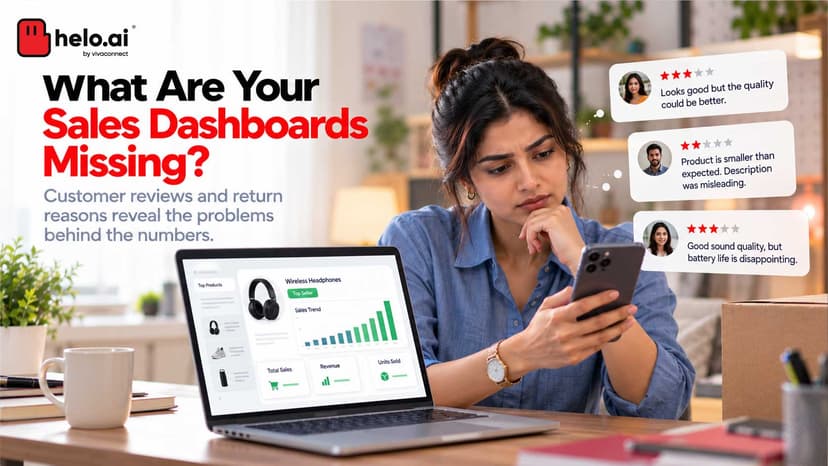
Most teams track top-of-funnel leads, conversion, and retention. Fewer teams track how much revenue is lost because response timing was inconsistent.
What this looks like in practice
A business may believe it has a lead quality problem when the real issue is delayed callback coverage. A renewal team may blame churn when the real problem is poor reminder timing. A service business may blame low attendance when confirmations and rescheduling calls are inconsistent.
Customer intent decays fast
A follow-up workflow is competing against delay, distraction, and rival vendors.
When a customer expresses intent, the clock starts immediately. That is true for a quote request, a loan enquiry, a subscription renewal, a service booking, or an overdue payment conversation.
This is one reason faster outreach tends to improve outcomes. Helo.ai's guide to AI voice lead qualification shows how rapid first contact helps teams qualify inbound demand while intent is still fresh.
Manual discipline does not scale cleanly
Most follow-up systems start as a combination of CRM notes, spreadsheets, reminders, and team discipline. That can work when volumes are low.
It breaks when customer volume rises, channels multiply, and multiple queues compete for attention.
Where manual follow-up systems usually fail
Lead callbacks become uneven
New leads feel urgent, so teams focus on the latest enquiries first. Older but still-qualified leads sit in the queue too long.
Commercial consequence
By the time the business calls back, the prospect may have shortlisted a competitor, deprioritized the purchase, or stopped responding altogether.
Renewal outreach happens too close to expiry
Many businesses know when renewal windows open. The failure is not awareness. It is consistent execution across every eligible account.
Common renewal breakdowns
Late reminders, weak pre-expiry engagement, inconsistent hand-offs, and no clear reattempt logic all reduce renewal conversion.
For teams focused on churn prevention, Helo.ai's article on Voice AI for policy renewals shows how structured reminder flows can improve timing and retention.
Payment and collections queues become reactive
When teams are overloaded, reminders happen in bursts instead of a controlled cadence. That weakens recovery performance and creates inconsistent customer experience.
Appointment and service reminders get deprioritized
Businesses that depend on attendance often underestimate the value of reminder calls. If confirmations happen late or not at all, no-shows rise and capacity gets wasted.
The commercial case for AI voice follow-ups
The best reason to automate follow-ups is not labor reduction on its own. It is revenue protection.
AI voice agents make timing repeatable
A properly designed voice workflow does not forget to call, skip a reattempt, or depend on who is available on a given shift.
Why that matters
Follow-up performance is usually less about creativity and more about consistency. The customer does not need a poetic reminder. They need a timely one.
AI handles the structured parts of the journey well
Many follow-up conversations are predictable.
- Confirming whether interest still exists
- Asking a small set of qualifying questions
- Reminding a customer about a due date
- Confirming or rescheduling an appointment
- Capturing a payment intent or callback request
- Logging the outcome and triggering the next step
Those are strong candidates for automation because the objective is clear and the decision paths are narrow.
Human teams still stay in control where it counts
The goal is not to remove people from important conversations. The goal is to keep people focused on the conversations where judgment, empathy, and persuasion matter most.
Best cases for human escalation
Negotiation, complex objections, exception handling, high-value accounts, sensitive service failures, and emotionally charged cases should move to a live rep quickly.
This hybrid model is now standard thinking across modern service operations. NiCE's overview of call center AI is a useful external reference for how automation and live agents work together.
Where AI voice follow-ups create the fastest commercial impact
Inbound lead callbacks
Fast outreach improves coverage, protects spend on lead generation, and helps sales teams focus on qualified demand instead of chasing every enquiry manually.
Renewals and retention outreach
A proactive reminder sequence is usually more effective than a last-minute scramble near expiry.
Payment reminders and collections follow-ups
Consistency matters in collections. AI voice helps run that cadence without overwhelming agents.
Appointment confirmations and rebooking
If attendance drives revenue, confirmations should be treated as revenue operations, not just admin work.
For this use case, Helo.ai's article on AI appointment booking voice agents is especially relevant.
Reactivation of dormant customers
When inactive customers have not responded to email or SMS, voice can act as the next operational step rather than leaving those records untouched.
How to roll out follow-up automation intelligently
Step 1: start with one painful queue
Do not start with the broadest workflow. Start with the queue where delays already create visible commercial damage.
Good starting points
Lead callbacks after inbound forms, pre-renewal reminder calls, appointment confirmations, or outstanding payment reminders.
Step 2: define the objective before the script
Know whether the call exists to qualify, remind, confirm, recover, or escalate. Workflow design gets much easier when the commercial outcome is explicit.
Step 3: write escalation rules before launch
Customers should never get trapped in automation. They should either complete the structured path or move to the right human team quickly.
Step 4: measure coverage, not just call volume
Track time-to-follow-up, contact rate, conversion rate, renewal rate, payment commitment rate, reattempt success, and escalation quality.
Frequently asked questions
Why do follow-ups get missed even when teams know they matter?
Because most teams rely on a mix of manual reminders, uneven prioritization, and overloaded queues. Awareness is not the same as operational consistency.
Can AI voice automate follow-up calls without damaging customer experience?
Yes, especially when the workflow is structured, time-sensitive, and paired with clear hand-off rules for exceptions and high-intent cases.
Which follow-up journeys are the best candidates for automation?
Lead callbacks, renewals, payment reminders, appointment confirmations, reactivation campaigns, and other routine next-step conversations are usually the best first use cases.
Does AI replace sales or retention teams?
No. It usually handles the repetitive layer of outreach so live teams can spend more time on persuasion, exceptions, and complex customer needs.
Final takeaway
If your business is already investing in acquisition, retention, and customer operations, then weak follow-up execution is not a minor process flaw. It is a direct drag on revenue efficiency.
Helo.ai's Voice Bot platform helps teams automate structured follow-up journeys across sales, service, renewals, and collections while keeping live teams focused on high-value conversations. If you want to identify the first workflow worth rebuilding, contact Helo.ai.
Further reading
For teams also improving written follow-up sequences, HubSpot's guide to sales follow-up emails is a useful companion resource.

.jpeg&w=96&q=75)