.jpeg)
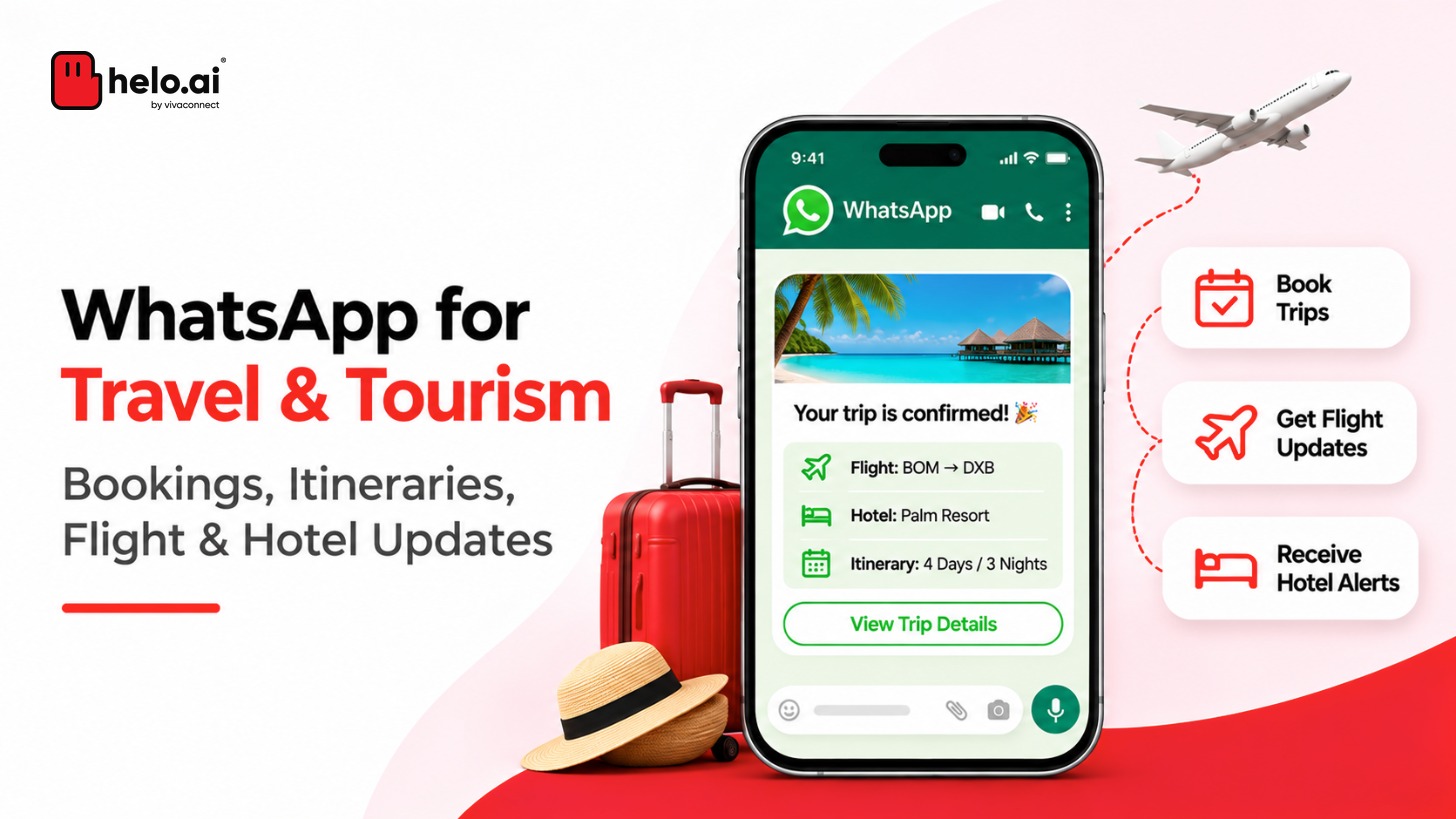


Planning a trip often involves multiple conversations. Travellers enquire about destinations, compare packages, confirm bookings, collect tickets, check hotel details and look for updates when plans change.
For travel agencies, airlines, hotels and tour operators, managing these conversations across different channels can become difficult. WhatsApp offers a convenient way to handle enquiries, share travel information, send booking updates and stay connected with customers throughout their journey.
From the first destination enquiry to post-trip feedback, businesses can use WhatsApp to make travel communication more accessible, timely and organised.
Travel businesses can use WhatsApp for enquiries, quotations, booking confirmations, itineraries, flight and hotel updates and post-trip feedback. Match each message to a template category, get consent and keep a path to a human agent. This guide covers eight journey stages, ten templates, automation and channel choice.
Why Travel Businesses Use WhatsApp
Travel decisions rarely happen in one conversation. Customers may ask about packages, prices, accommodation, travel dates, inclusions and cancellation policies before making a booking.
WhatsApp gives travellers a familiar way to ask questions and receive information without waiting for an email or calling an agent.
Travel businesses can use it to:
- Respond to destination and package enquiries.
- Share brochures, photos, itineraries and quotations.
- Follow up with interested travellers.
- Send booking confirmations and payment reminders.
- Communicate travel updates and changes.
- Handle guest requests and routine support.
- Collect feedback and encourage repeat bookings.
It also gives businesses an opportunity to keep important customer communication in one accessible conversation.
How to Use WhatsApp Across the Travel Customer Journey
Travel communication begins before a booking and continues well after a traveller returns. WhatsApp can support each stage.
1. Destination Enquiries and Package Discovery
Travellers often begin by asking about destinations, packages, prices, accommodation and the best time to visit.
Travel agencies can receive enquiries through WhatsApp from website visitors, social media campaigns and click-to-WhatsApp advertisements.
Businesses can share:
- Destination brochures and package details
- Hotel options and accommodation images
- Suggested itineraries
- Seasonal travel recommendations
- Package inclusions and pricing
They can also collect essential details such as destination, travel dates, number of travellers and budget before recommending suitable packages.
Example message:
Hi Rahul! Thanks for enquiring about our Bali packages.
Are you planning to travel in December? Share your preferred dates, number of travellers and budget, and we'll help you find suitable options.
Source check: Meta’s pricing page says a free entry point window can stay open for up to 7 days after a customer messages from a click-to-WhatsApp ad on Android or iOS. Marketing, utility, authentication and service messages are free during it. Meta’s service messages page says only approved templates can be sent outside the 24-hour customer service window.
2. Booking Assistance and Payment Follow-ups
Once a traveller selects a package, WhatsApp can help keep the booking process moving.
Businesses can send quotations, clarify package inclusions, share payment links where supported by their setup and remind customers about pending payments or booking requirements.
This is particularly useful for customers who have shown interest but haven't completed their booking.
Example message:
Hi Rahul, we've shortlisted two Bali packages based on your travel dates.
You can check the package details here: [Package Link]
Let us know which one you'd prefer, and we'll help you with the next steps.
3. Booking Confirmations and Travel Documents
After a booking is confirmed, customers need access to the details of their trip.
Travel businesses can use WhatsApp to share:
- Booking reference numbers
- Flight details
- Hotel reservation information
- Payment receipts
- Travel vouchers
- Tickets and other documents
- Important travel instructions
Keeping these details accessible in a conversation can make it easier for travellers to refer to them when needed.
Example message:
Hi Priya, your Goa holiday booking is confirmed!
Booking ID: TRV24891
Travel dates: 18–22 December
Travellers: 2 Adults
Your hotel voucher and itinerary are attached. Please save this chat so you can easily access your travel details.
Policy check: Meta’s messaging policy says not to share or ask people to share full-length payment card numbers, financial account numbers, personal ID card numbers or other sensitive identifiers. Collect passport or ID numbers through your secure booking system, not in chat. Meta’s media page allows documents such as PDFs up to 100 MB and images up to 5 MB.
4. Itinerary Sharing and Pre-Trip Reminders
Travellers need to know what to expect before departure. Instead of sending one long message with everything, businesses can share relevant information at the right time.
A travel itinerary shared through WhatsApp could include:
| Travel detail | Information to share |
|---|---|
| Trip dates | Departure and return dates |
| Flight details | Flight number, departure time and airport |
| Hotel | Name, address, check-in and checkout |
| Daily plan | Activities, timings and locations |
| Transfers | Pickup location and driver details, when available |
| Travel checklist | Documents, baggage and other requirements |
Businesses can also send pre-trip reminders about check-in, documents, pickup arrangements or scheduled activities.
Example message:
Your Bali trip is just 3 days away!
Here's a quick checklist before departure:
- Check your flight details.
- Keep your travel documents ready.
- Confirm your hotel voucher.
- Review your pickup arrangements.
Your complete itinerary: [Itinerary Link]
5. Flight Updates, Delays and Cancellations
Flight-related changes can create uncertainty for travellers. When departure times change, customers may need to adjust airport arrival, pickup, connecting travel or other arrangements.
Airlines, travel agencies and booking platforms can use WhatsApp to communicate relevant updates such as:
- Flight delays
- Schedule changes
- Check-in reminders
- Gate information
- Boarding-related notifications
- Cancellations
- Rebooking instructions
Airlines may send updates directly to passengers, while travel agents or booking platforms can communicate information relevant to reservations they manage.
Example message:
Hi Ananya, here's an update regarding your flight AI 624.
Your departure time has changed from 6:30 PM to 7:15 PM.
Please check your updated flight details before leaving for the airport.
For time-sensitive travel information, businesses should have appropriate delivery monitoring and alternate communication options in place.
Source check: Meta’s template categorization page lists non-promotional disruption notices as utility and gives no flight-specific example. It says a delay message that offers a credit is marketing, because the category is based on content. Business Today reported that DGCA’s January 2024 fog-delay SOPs asked airlines to alert passengers by text message, WhatsApp and email. Confirm the current DGCA requirements for your airline.
6. Hotel Reservations and Guest Communication
Hotels can use WhatsApp to communicate with guests before arrival, during their stay and after checkout.
Common use cases include:
- Reservation confirmations
- Pre-arrival instructions
- Check-in information
- Hotel location and directions
- Restaurant and facility details
- Guest requests
- Checkout reminders
- Feedback and review requests
Guests can ask routine questions or request assistance without needing to call reception for every query.
Example message:
Hello Neha, we're looking forward to welcoming you to The Palm Resort tomorrow.
Check-in begins at 2 PM. You can find our location and directions here: [Location Link]
If you need any assistance before arrival, reply to this message.
7. Tour Schedules, Pickups and Local Experiences
Tour operators and tourism businesses often coordinate multiple travellers, activities, guides and pickup points.
WhatsApp can be used to share:
- Tour departure timings
- Meeting-point locations
- Pickup instructions
- Guide contact details
- Activity schedules
- Changes due to weather or operational conditions
- Local travel information
For group tours, timely messages can reduce confusion about meeting points and schedules.
Example message:
Hi! Your city tour starts tomorrow at 9 AM.
Meeting point: Main hotel lobby
Please arrive 15 minutes before departure.
View your tour details here: [Tour Link]
8. Post-Trip Feedback and Repeat Bookings
Once the trip is over, businesses can use WhatsApp to stay connected with customers and understand their experience.
They can request:
- Trip feedback
- Hotel and tour reviews
- Service ratings
- Suggestions for improvement
- Interest in future destinations
Customers who have enjoyed their trip can also receive relevant package recommendations or seasonal offers, subject to their marketing consent.
Example message:
We hope you had a wonderful trip to Kerala!
We'd love to know how your experience was. Share your feedback here: [Feedback Link]
Planning your next holiday? We'd be happy to help you explore another destination.
Category check: Meta’s template categorization page says a feedback survey is utility only when tied to a specific order or interaction and free of promotion. It lists “Looking for a getaway this fall?” as marketing. The last line of this example message (“Planning your next holiday?”) is similar, so a template that includes it is likely to be reviewed as marketing and needs marketing consent.
WhatsApp Use Cases by Travel Business
Different travel businesses have different communication needs. WhatsApp can support each of them in different ways.
| Business | WhatsApp use cases |
|---|---|
| Travel agencies | Package enquiries, quotations, follow-ups, booking assistance, itinerary sharing |
| Tour operators | Group coordination, tour schedules, meeting points, pickup reminders, activity updates |
| Airlines | Flight updates, check-in information, schedule changes, cancellations and rebooking communication |
| Hotels & resorts | Reservations, pre-arrival information, guest requests, check-in instructions and feedback |
| Online travel platforms | Booking confirmations, ticket sharing, payment updates, cancellation and refund communication |
| Tourism & activity providers | Activity bookings, location details, timings, guide information and visitor instructions |
The communication needs may vary, but the goal remains the same: provide travellers with the information they need, when they need it.
WhatsApp Message Templates for Travel Businesses
| Use case | Sample message |
|---|---|
| New enquiry | Planning your next getaway? Tell us your destination, travel dates and budget. We'll help you find a suitable package. |
| Package follow-up | Hi Rahul, did you get a chance to check the package we shared? Let us know if you'd like us to customise it. |
| Booking confirmation | Your booking is confirmed! Your reference number, travel dates and hotel details are attached. |
| Payment reminder | Your remaining travel payment is due on 10 December. You can complete it here: [Payment Link]. |
| Pre-trip reminder | Your trip is just 3 days away! Please check your itinerary and travel documents before departure. |
| Pickup update | Your airport pickup is scheduled for 9:30 AM. Your driver details and meeting point are shared here. |
| Flight update | Your flight timing has changed. Please check the updated details before proceeding to the airport. |
| Hotel check-in | Welcome! Check-in begins at 2 PM. Here's the hotel location and information to help you plan your arrival. |
| Tour reminder | Your guided tour begins tomorrow at 9 AM. Please arrive at the meeting point 15 minutes early. |
| Post-trip feedback | We hope you had a wonderful trip! Share your experience with us here: [Feedback Link]. |
Category check: Under Meta’s template categorization page, booking confirmations fit order management and payment reminders fit account alerts, both utility if they carry no promotion, upsell or offer. The new enquiry sample is closer to Meta’s awareness marketing example. Pre-trip, pickup, check-in and tour reminders are non-promotional booking updates, so they are utility candidates. Meta can recategorise a template, so check the category after review.
Planning travel campaigns on WhatsApp, SMS and RCS?
See how Helo Broadcast manages campaigns across WhatsApp, SMS and RCS.
How Travel Businesses Can Automate WhatsApp Communication
Travel businesses handle repetitive enquiries and updates every day. Automation can help manage these conversations, collect information and reduce manual follow-ups.
Here are some practical workflows.
Travel enquiry qualification
When a customer enquires about a package, a configured chatbot can ask:
- Which destination are you interested in?
- When do you plan to travel?
- How many people are travelling?
- What is your approximate budget?
- Are you looking for flights, accommodation or a complete package?
The responses can help the team identify suitable packages and prioritise enquiries.
Package recommendations and follow-ups
Businesses can share relevant package information based on the traveller's preferences and follow up with interested customers who haven't made a booking.
Booking communication
Configured workflows can send booking confirmations, payment reminders, documents and pre-departure messages when the required booking information is available through the business's setup.
Travel support and agent handover
Automated responses can handle routine queries about timings, hotel information, itineraries and travel instructions.
Requests involving cancellations, refunds, booking changes, emergencies or special assistance should be routed to the appropriate support team.
Feedback and post-trip engagement
Businesses can send feedback requests after a trip and follow up with relevant destinations or packages based on customer interest and applicable messaging consent.
Automation should make communication easier for travellers. It should not make them struggle to reach a human when they need one.
WhatsApp vs SMS vs Email for Travel Communication
Travel businesses don't need to rely on a single channel. Different messages require different formats and levels of urgency.
| Channel | Best suited for |
|---|---|
| Enquiries, booking assistance, itineraries, documents, customer conversations and engagement | |
| SMS | Short, urgent alerts, reminders and alternate communication where configured |
| Detailed itineraries, invoices, longer documents and formal communication |
For example, a travel company may share a complete itinerary through email, send a convenient copy on WhatsApp and use SMS for a short, urgent flight or pickup alert.
Choosing the right channel depends on the type of information, customer preference, urgency, consent and the business's communication setup.
Source check: For SMS in India, Exotel’s TCCCPR summary says transactional and service messages have no time restriction, while promotional SMS can be sent only between 9 AM and 9 PM IST. CleverTap’s SMS regulations page says businesses register their entity, sender IDs and templates on the DLT platform, and whitelist links. Helo.ai’s promotional SMS guide covers the Indian SMS rules.
Best Practices for WhatsApp Travel Communication
To make WhatsApp useful for travellers, keep these practices in mind:
- Get customer consent: Follow applicable WhatsApp messaging policies and consent requirements.
- Send relevant updates: Contact customers about their bookings, travel plans or preferences.
- Verify travel details: Check flight, hotel, pickup and booking information before sending.
- Avoid unnecessary notifications: Send meaningful updates instead of overwhelming travellers.
- Keep messages clear: Make dates, timings, locations and action points easy to find.
- Use automation responsibly: Automate routine questions but allow human assistance.
- Plan for critical updates: Use appropriate delivery monitoring and configured alternate channels for important communication.
- Respect message policies: Use approved templates where required and follow applicable messaging rules.
Source check: Meta’s opt-in page requires opt-in before you message people on WhatsApp, and Meta’s messaging policy says businesses must respect opt-out requests.
Managing Travel Communication at Scale
A travel business may communicate with thousands of customers across different stages of their journey.
One group may be exploring holiday packages. Another may have pending payments. Confirmed travellers may need itinerary details, while customers already travelling may need schedule updates or assistance.
Sending the same message to everyone is neither useful nor efficient.
Businesses need to organise communication according to customer status, travel dates, destination, booking details and the purpose of the message.
For example:
| Customer segment | Communication |
|---|---|
| New travel enquiries | Package recommendations and follow-ups |
| Interested but not booked | Relevant offers and booking reminders |
| Confirmed travellers | Booking details, documents and pre-trip reminders |
| Travellers departing soon | Check-in and travel instructions |
| Customers currently travelling | Relevant trip updates and assistance |
| Completed travellers | Feedback, reviews and future destination offers |
A structured communication setup can help teams manage these interactions, coordinate campaigns and send relevant updates without treating every traveller the same way.
For enterprises, this also means considering message delivery, channel availability, communication volume, support escalation, monitoring and service expectations when selecting a communication platform.
How Helo.ai Helps Travel Businesses Manage Communication
Travel businesses managing enquiries, bookings, campaigns and customer updates at scale need a way to coordinate communication across channels.
Helo.ai helps enterprises manage communication across WhatsApp, SMS and RCS through a unified platform.
For travel businesses, this can support communication such as:
- Promoting holiday packages and seasonal destinations to relevant customer segments.
- Sending booking-related updates and travel reminders.
- Managing WhatsApp campaigns alongside SMS and RCS communication.
- Coordinating configured channel fallback workflows.
- Tracking campaign performance and engagement.
- Managing large volumes of customer communication through an enterprise communication setup.
For example, a travel company could run a destination campaign for customers interested in international holidays, send booking confirmations to customers who have confirmed their trips, remind travellers about pending payments and communicate important updates through the appropriate configured channel.
The goal is to make customer communication more organised, relevant and consistent throughout the travel journey.
Scope check: The Helo Broadcast page lists SMS, WhatsApp, RCS and email from a single control plane. Helo.ai’s campaign management page lists SMS, WhatsApp, RCS and voice, with segmentation and live analytics. Neither page describes channel fallback, or how booking data feeds confirmations and reminders, so confirm both with the team before keeping those lines. Helo’s products are separate offerings, so confirm which one this section refers to.
Managing travel enquiries, booking updates and customer communication across channels?
Talk to our team about coordinating your customer communication with Helo.ai.
Frequently Asked Questions
How can travel agencies use WhatsApp?
Travel agencies can use WhatsApp to receive enquiries, share travel packages, send quotations, follow up with customers, assist with bookings, share itineraries and provide travel support.
Can WhatsApp be used for travel bookings?
Yes. Businesses can use WhatsApp to assist customers with package discovery, travel preferences, quotations and booking communication. Completing a booking or payment depends on the business's integrations and setup.
Can airlines send flight updates through WhatsApp?
Airlines and travel partners can use approved WhatsApp messaging workflows to communicate relevant flight information, such as schedule changes, check-in reminders and other booking updates.
Can hotels send reservation and check-in details on WhatsApp?
Yes. Hotels can send reservation confirmations, pre-arrival instructions, check-in information, location details and other relevant guest communication.
Can WhatsApp automate travel enquiries?
Configured chatbots and workflows can collect traveller details, answer frequently asked questions, share relevant package information and route enquiries to human agents.
Can WhatsApp be used to send travel itineraries?
Businesses can share itineraries, booking documents, hotel vouchers, tickets, travel instructions and other supported files or links through WhatsApp, subject to applicable message and file restrictions.
Is WhatsApp enough for travel communication?
WhatsApp can handle many customer conversations and updates, but travel businesses may also need SMS and email for specific messages, customer preferences, formal documents and critical communication. An omnichannel setup can help coordinate these channels.
Conclusion
Travel is built around experiences, but communication plays a major role in making those experiences smooth.
From destination enquiries and booking confirmations to itineraries, hotel information, flight updates and post-trip feedback, WhatsApp gives travel businesses a convenient way to stay connected with customers.
When combined with automation and other communication channels, it can help travel businesses respond faster, keep travellers informed and build relationships that extend beyond a single trip.
Note. Helo.ai offers communication products and published this guide. Meta, news and vendor pages were checked on 25 November 2026. Message categories, airline rules and WhatsApp policies change, so confirm them before sending.